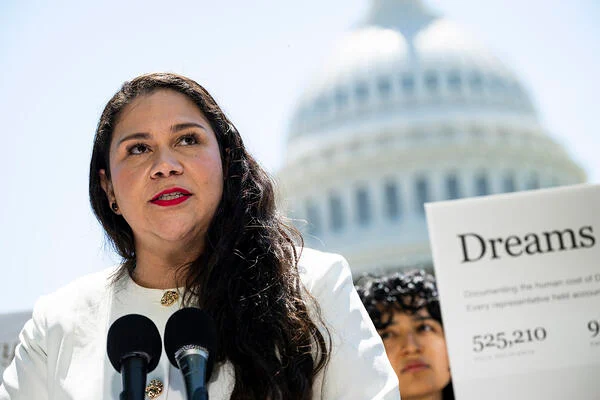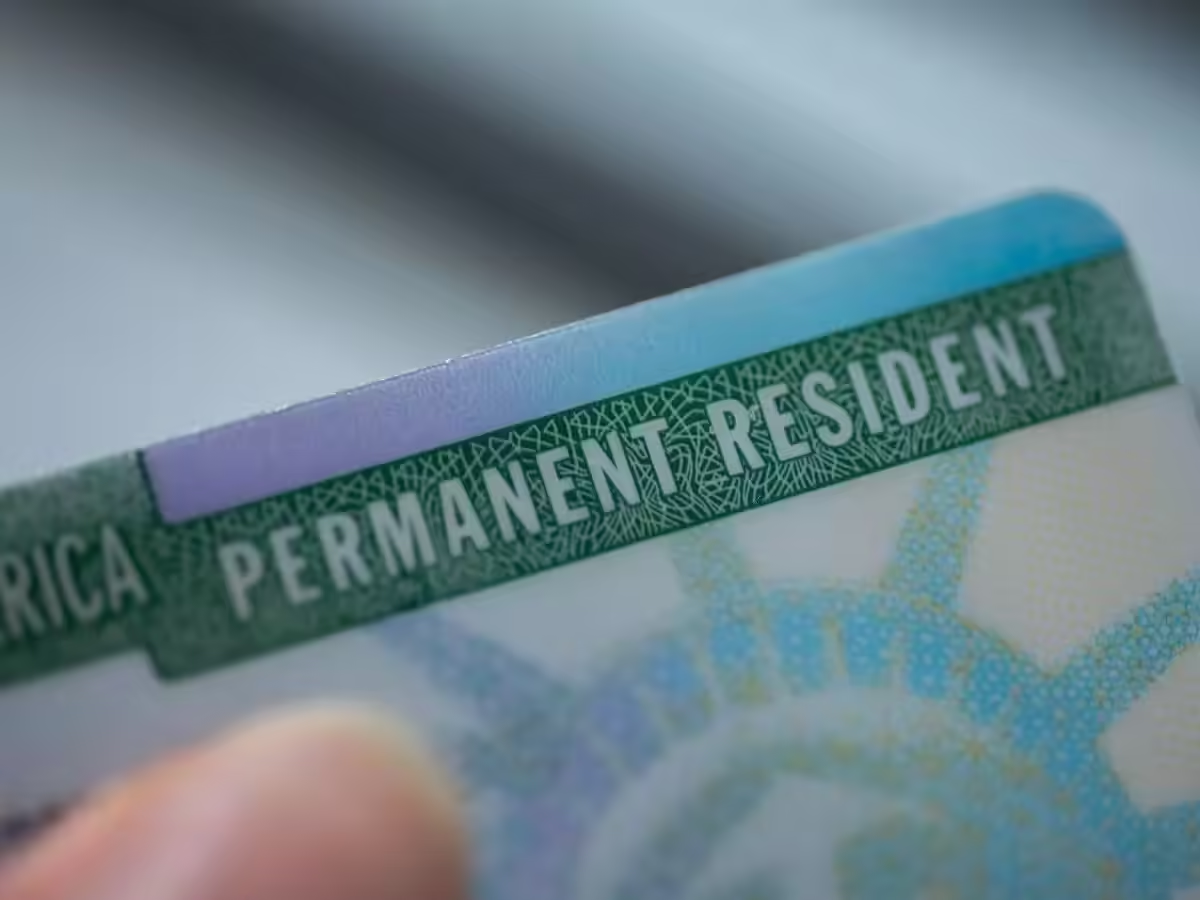
After years of immigration debates in Washington, the American Dream and Promise Act of 2025 is back in the spotlight. Democratic lawmakers are trying to force a vote in the US House through a discharge petition, reviving legislation that would give eligible Dreamers, DACA recipients and certain Temporary Protected Status (TPS) and Deferred Enforced Departure (DED) beneficiaries a pathway to lawful permanent residence—and eventually US citizenship. The bill has not become law, but if enacted, it could affect millions of immigrants who have lived in the United States for years.Here's what the bill proposes.Who are Dreamers?Dreamers are undocumented immigrants who arrived in the United States as children, usually brought by their parents. Many have spent most of their lives in the US, attended American schools and built careers there.Some are protected under the Deferred Action for Childhood Arrivals (DACA) programme introduced in 2012. DACA protects eligible recipients from deportation and allows them to work legally, but it does not provide permanent residency or citizenship. The Dream and Promise Act seeks to change that.Also Read| Trump administration weighs $100,000 bond for some green card applicantsWhat does the bill aim to do?The legislation has three broad goals:Create a pathway to permanent residency for eligible Dreamers.Allow certain TPS and DED beneficiaries to obtain green cards.Establish application procedures, background checks, judicial review and applicant protections.Unlike DACA, which offers temporary protection, the bill would place eligible immigrants on a route to becoming lawful permanent residents.Who would qualify?To qualify under the Dream Act portion, applicants generally would need to:Have been continuously physically present in the US since January 1, 2021. Have entered the US at 18 years of age or younger.Meet criminal and national security requirements.Satisfy education-related requirements, such as graduating from high school, earning a GED, enrolling in qualifying education programmes or being admitted to higher education or technical education institutions.Would applicants get a green card immediately?Not necessarily.Most eligible applicants would first receive conditional permanent resident status, valid for 10 years. This status would allow them to live and work legally while meeting additional requirements for a full green card.However, some applicants who already satisfy all the requirements—including many existing DACA recipients—could apply directly for lawful permanent residence without first spending time in conditional status.How can conditional residents become permanent residents?To remove the conditions on their status, applicants generally must complete one of the following:Earn a college degree or complete at least two years of qualifying higher education or career education.Serve at least two years in the US military and receive an honourable discharge if separated.Demonstrate about three years of employment, with adjustments for time spent pursuing qualifying education.Applicants must also continue meeting admissibility requirements and pass background checks.What about DACA recipients?The legislation creates a streamlined process for DACA recipients.Those who qualify for permanent residence at the time of application could bypass conditional status and, in some cases, avoid paying the initial application fee.What happens to TPS and DED holders?The second part of the legislation—the American Promise Act of 2025—would allow certain immigrants with Temporary Protected Status (TPS) or Deferred Enforced Departure (DED) to apply for lawful permanent residence.Generally, applicants must have:Lived continuously in the United States for at least three years.Been eligible for TPS based on countries designated on January 1, 2017, or eligible for DED as of January 20, 2021.Cleared background and admissibility checks.Who would be excluded?The bill bars applicants convicted of certain serious crimes, including:Felonies.Three or more qualifying misdemeanours.Certain domestic violence offences.National security and terrorism-related grounds.It also gives the Department of Homeland Security limited authority to waive certain misdemeanours in humanitarian, family unity or public interest cases.Also Read| Applying for a US green card? Your fate will be in the hands of Trump's officersWhat protections does the bill offer while applications are pending?Applicants who appear eligible generally could not be removed while their cases are being decided.During that period, they could:Apply for work authorisation.Seek advance parole for international travel.Challenge denials through administrative and judicial review.How would applicants prove eligibility?The legislation allows a wide range of documents, including:School and college records.Employment and tax records.Medical records.Utility bills and leases.Military records.Passports and government-issued identity documents.Bank records.Sworn affidavits.Applicants would also have to submit biometric information and undergo security and law enforcement background checks before approval.Would applicants have to pay fees?Yes.The bill allows application fees of:Up to $495 for Dream Act applicants.Up to $1,140 for TPS and DED applicants.Fee waivers would be available for certain minors, low-income applicants, people in foster care and individuals with serious disabilities.Does the bill grant US citizenship automatically?No.The legislation creates a pathway to lawful permanent residence, not automatic citizenship.After obtaining a green card, applicants would still have to meet existing US naturalisation requirements before becoming American citizens.Has the bill become law?No.The American Dream and Promise Act of 2025 remains pending in Congress. It was introduced in February 2025 and recently returned to the spotlight after lawmakers launched a discharge petition that could force a House vote if it secures the support of 218 members. Until Congress passes the bill and it is signed into law, the proposed pathway to permanent residency does not take effect.
Green cards for Dreamers? Inside the Dream and Promise Act that may give millions US permanent residency - The Economic Times
The American Dream and Promise Act of 2025 proposes a pathway to US permanent residency for eligible Dreamers, DACA recipients and certain TPS and DED holders. The bill outlines eligibility rules, background checks and education, work or military requirements, but it has not become law and still requires congressional approval before taking effect.
843 words~4 min read