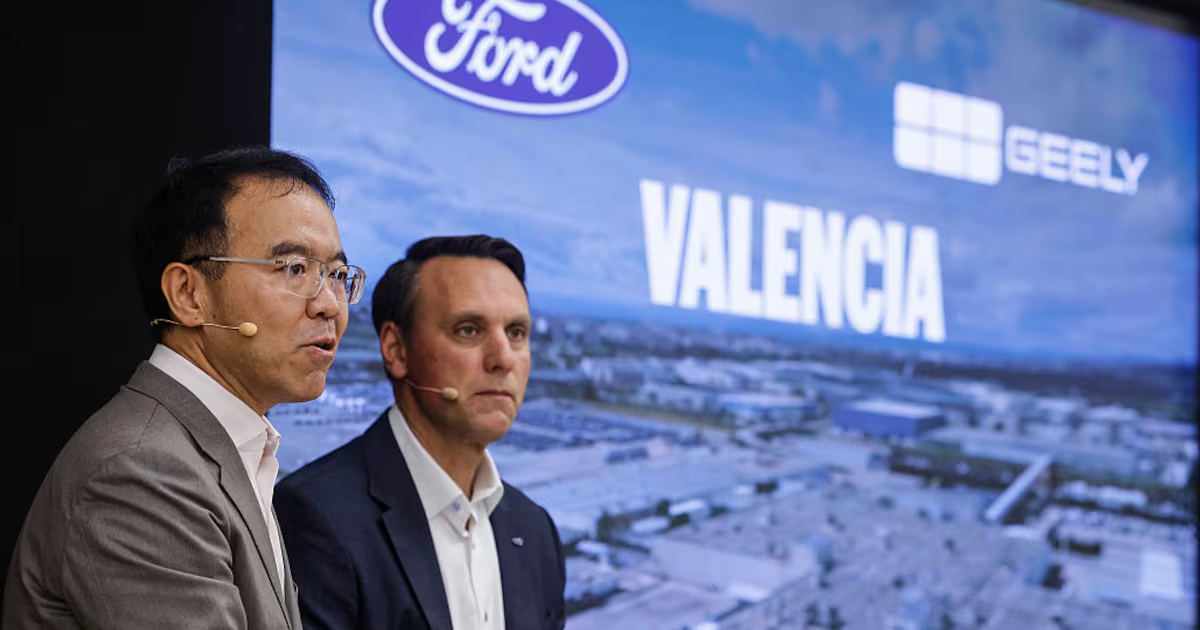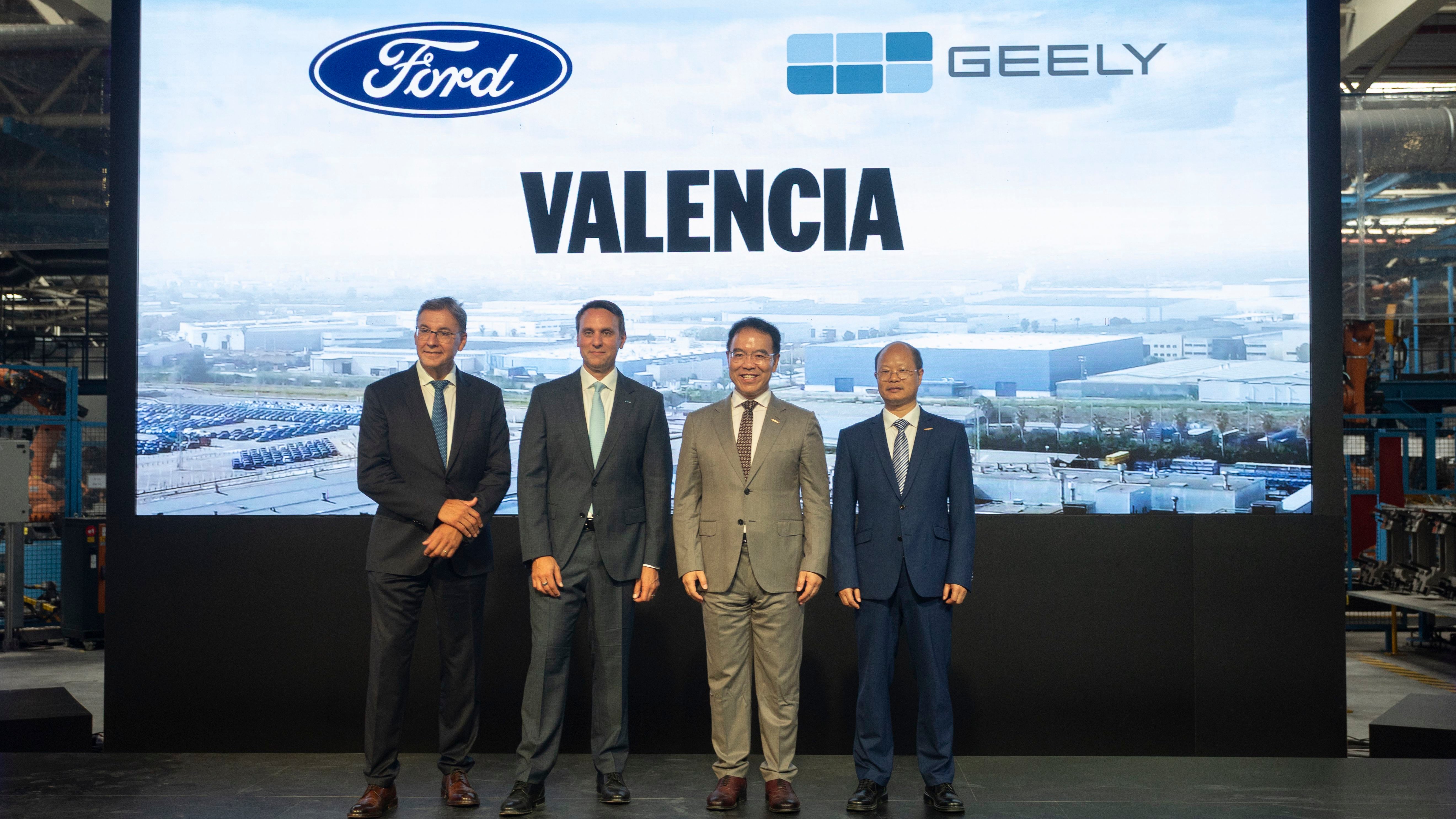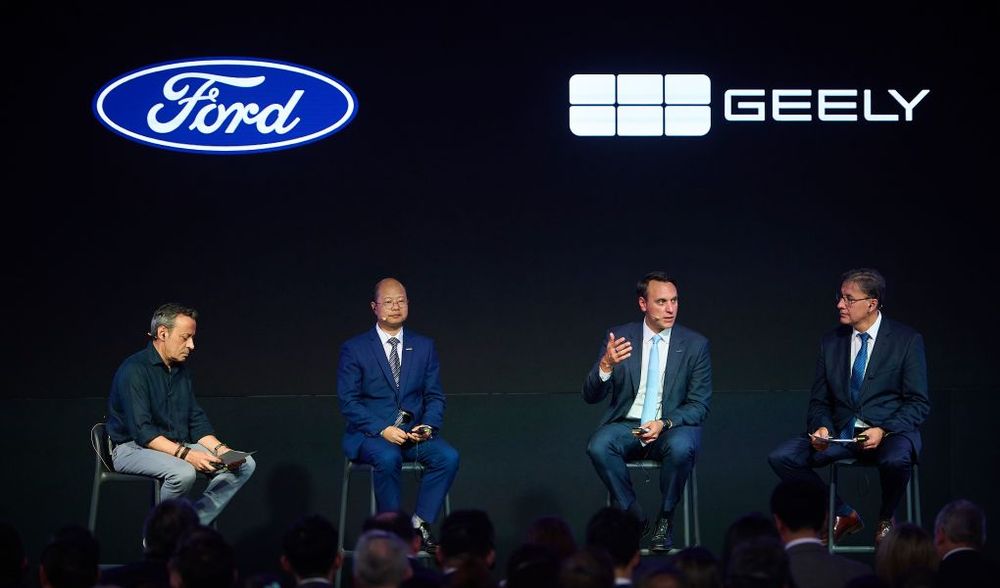
Ford and Geely announced this week that they'll build two electric SUVs together at Ford's plant in Valencia, Spain, in a joint venture 66% owned by Ford and 34% by the Chinese automaker. The first cars roll off the line in 2028. On the surface, it looks like an odd pairing: an American icon handing factory space to a Chinese competitor. Look closer, and it's actually one of the clearest signals yet of where the global car industry is heading.Empty factories meet a closing windowFord's Valencia plant was running at just 26% of its capacity in 2025, according to GlobalData, a huge chunk of unused machinery and workers sitting idle. That's not unique to Ford. Boston Consulting Group estimates European auto plants are averaging around 60% utilisation, when 80% is generally needed to turn a real profit. Across the continent, that adds up to roughly 5.4 million vehicles' worth of spare capacity, the equivalent of more than 35 idle assembly plants.At the same time, Chinese automakers are racing against the clock. Brussels is finalising rules, expected to require EVs be at least 70% made in Europe, to qualify for state subsidies, alongside a broader "resilience test" that could restrict support for supply chains too dependent on any single non-EU country, China chief among them. Chinese brands like BYD, Chery, Xpeng and SAIC are all scrambling to lock down European production sites before that window closes, because a foothold secured now is worth far more than one applied for after the rules bite. Geely's Valencia deal, Leapmotor's tie-up with Stellantis in Zaragoza, and Hongqi's talks with Stellantis over another Spanish plant are all the same race, run by different players.Why Spain, and why nowSpain is Europe's second-largest car-manufacturing country, with lower labour and energy costs than Germany, which makes it a natural landing spot. And the numbers explain the urgency: China's share of the Western European car market hit 8.6% in early 2026, nearly double what it was a year earlier, while Chinese-backed EV and battery investment in Europe has already topped €30 billion this year alone.For Ford, the logic is almost as simple as Geely's. Ford's European head, Jim Baumbick, put it bluntly: the goal is to "load up" the underused facility. A decade ago Ford was Europe's fourth-biggest automaker, selling over a million cars a year; last year it sold barely 426,000 and slipped to eighth. Filling idle capacity with Geely's production, while also bringing its own Bronco SUV to the same plant, is as much a survival strategy as it is a partnership.The politics are messier than the economicsNot everyone's cheering. US Representative John Moolenaar, who chairs the House committee on China, called Ford's decision "incomprehensible", pointing out that while Ford partners with a Chinese automaker in Europe, it's simultaneously lobbying for tougher restrictions on Chinese automakers entering the US market, where the Senate just advanced legislation to toughen exactly that kind of ban. Ford's response was essentially: different market, different rules, Europe's competitive landscape is changing fast, and standing still isn't an option.Local unions in Spain are cautiously supportive, but with a condition: they want real technology transfer and a genuine local supply chain, not just an assembly line running someone else's parts. As union leader Juan Jose Picazo put it, "We can't be just an assembly plant."The bigger storyThis deal is less about Ford and Geely specifically and more about a car industry being reshaped from two directions at once, European regulation trying to slow Chinese market entry, and Chinese manufacturers racing to get inside the walls before the door closes. Expect more of these odd-couple factory-sharing deals before Brussels' local-content rules take final effect.Written by:*Chloe Maluleke Associate at BRICS+ Consulting GroupRussia & Middle East Specialist**The Views expressed do not necessarily reflect the views of Independent Media or IOL.** MORE ARTICLES ON OUR WEBSITE https://bricscg.com/ ** Follow @brics_daily on Twitter for daily BRICS+ updates and instagram @brics_daily
Ford Just Rented Its Factory Floor to a Chinese Rival
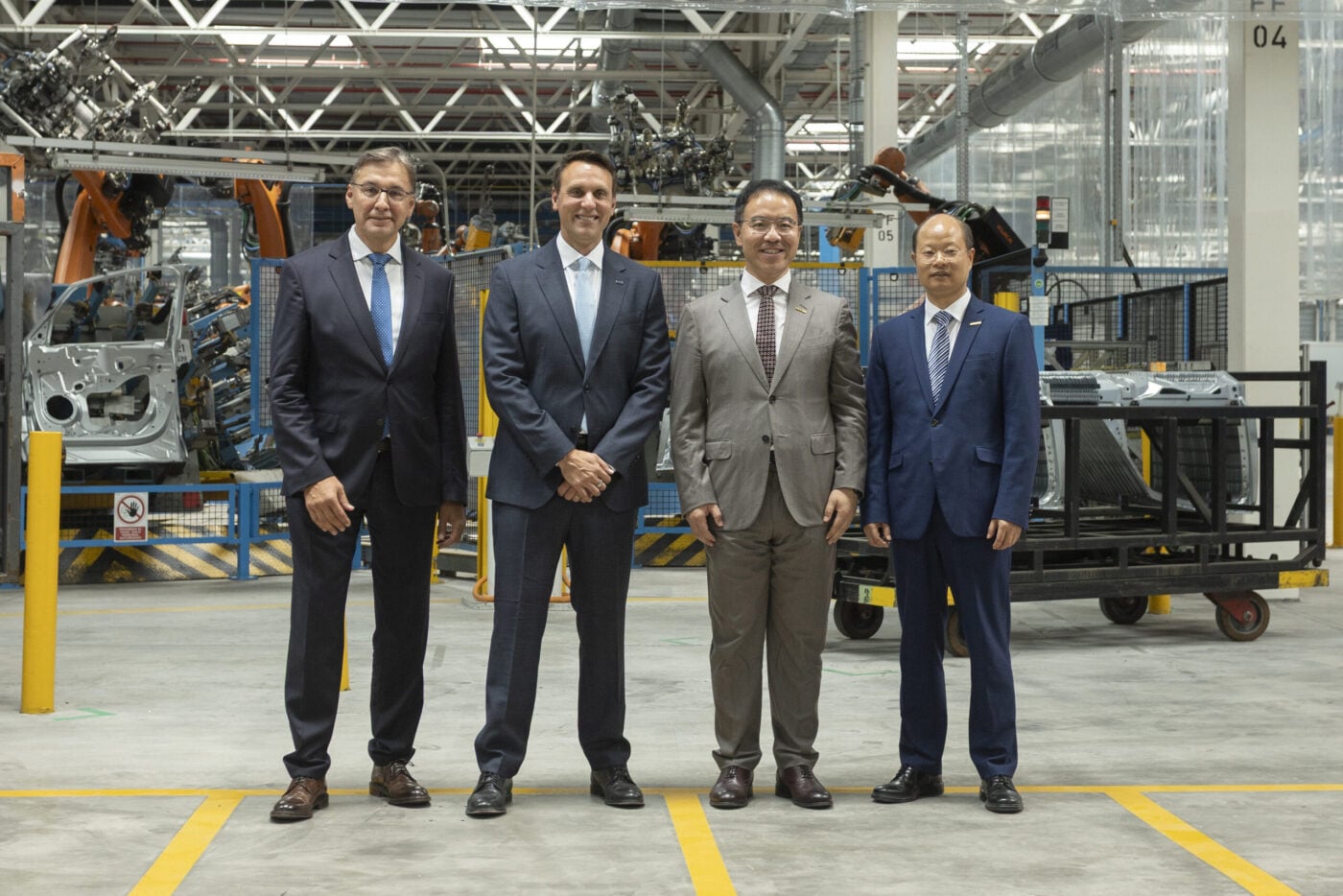
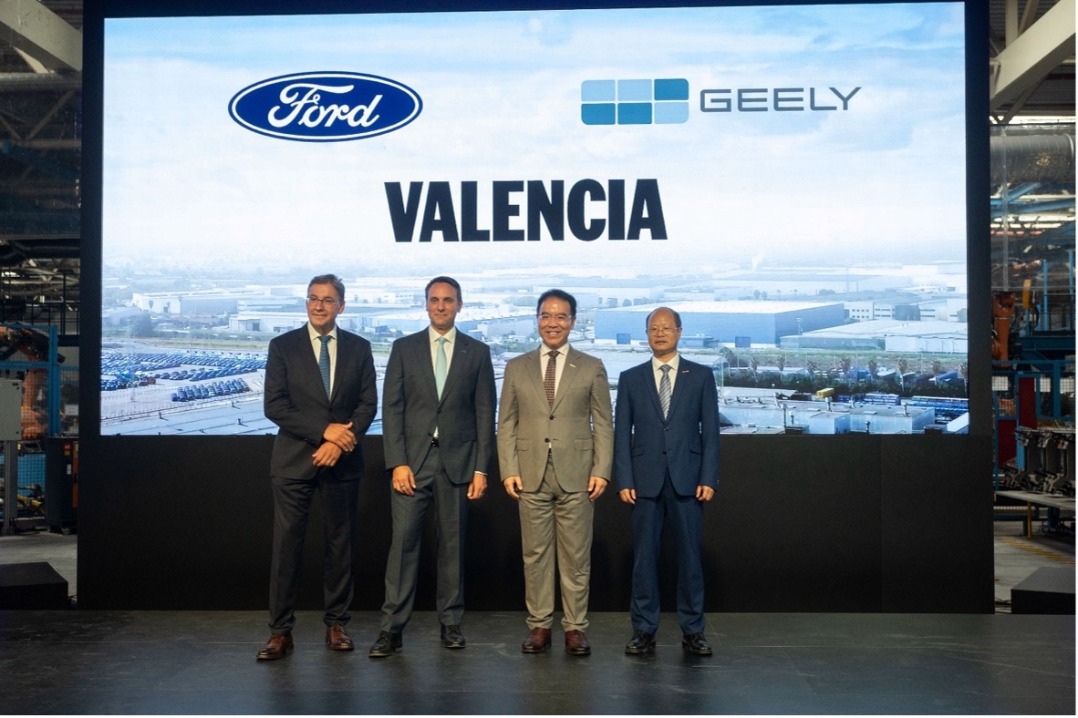
Ford and Geely announced this week that they'll build two electric SUVs together at Ford's plant in Valencia, Spain, in a joint venture 66% owned by Ford and 34% by the Chinese automaker. The first cars roll off the line in 2028. On the surface, it looks like an odd pairing: an American icon handing factory space to a Chinese competitor.
651 words~3 min read