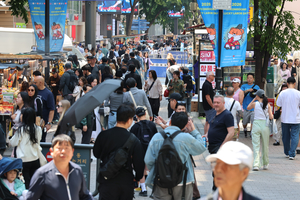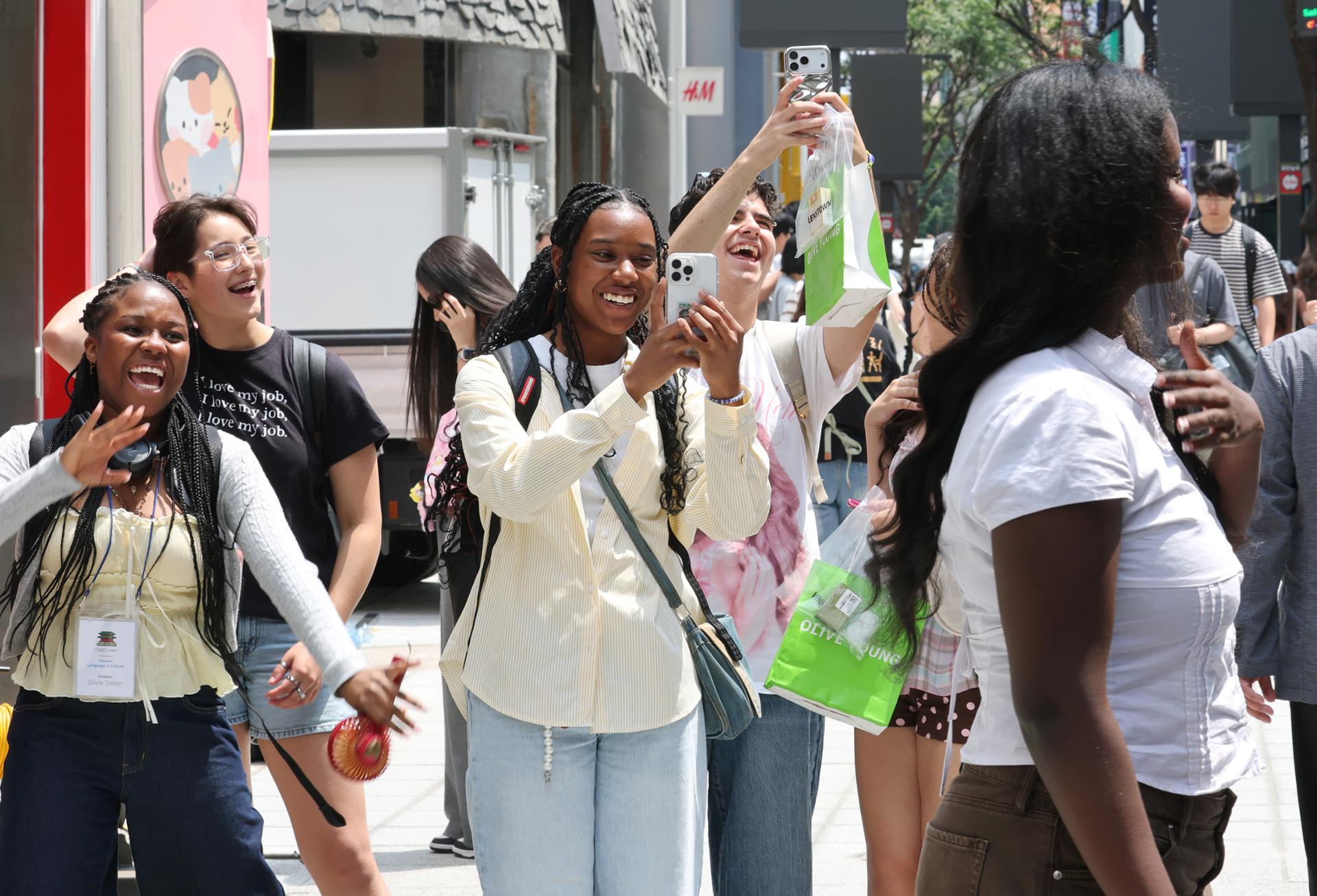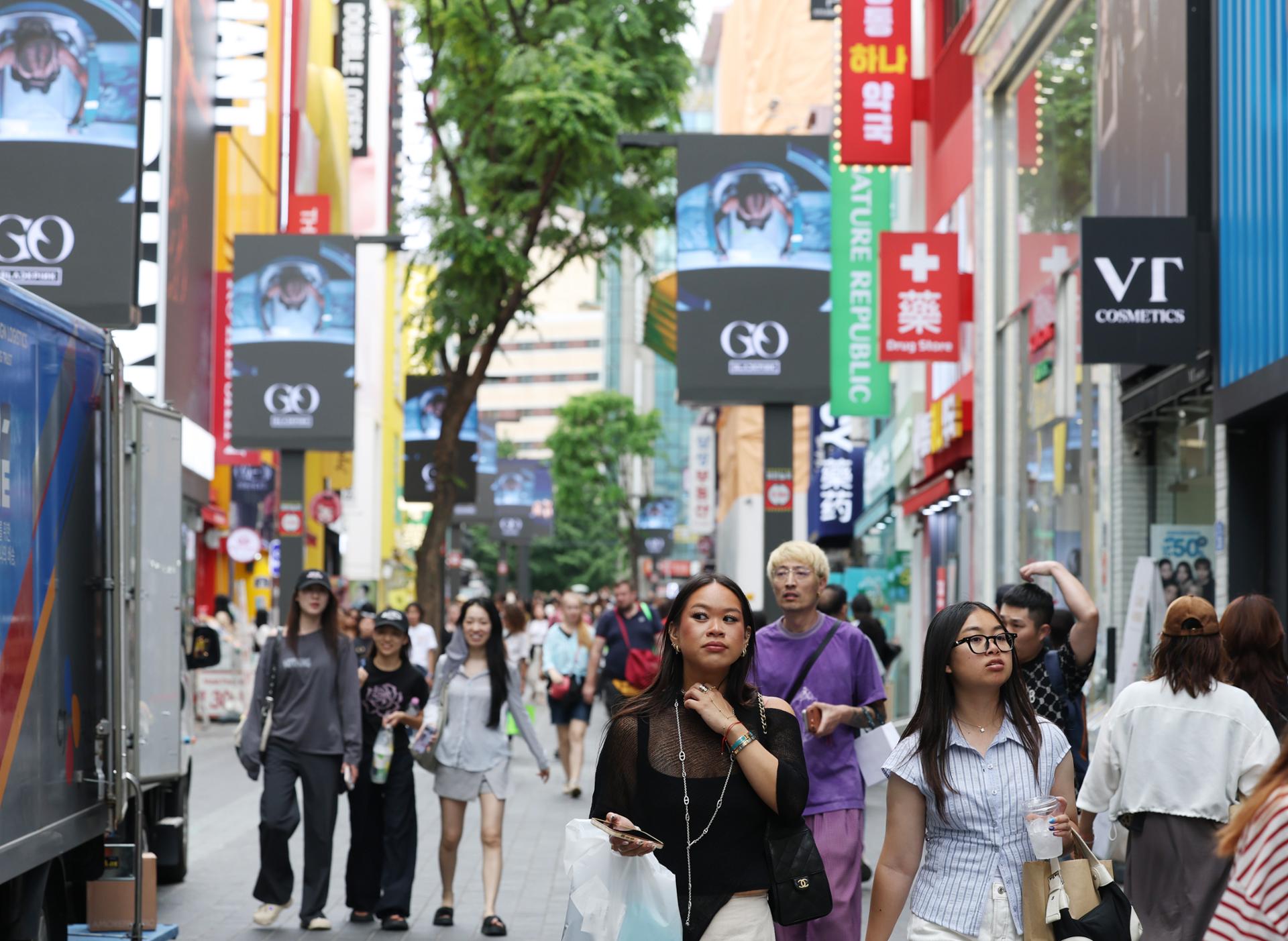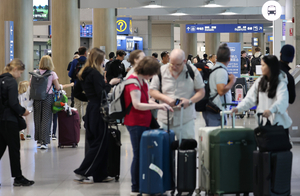
Travelers crowd the arrivals hall at Incheon Airport’s Terminal 1 in July. (Yonhap) South Korea welcomed a total of 10.7 million international visitors from January through June, up 21.3 percent from 8.8 million during the same period last year, according to data released by the Korea Tourism Organization on Thursday.The figure exceeded the first-half total in 2019 by 26.9 percent, marking not only a full recovery from the COVID-19 pandemic, but continued growth beyond prepandemic levels. Gyeongbokgung is bustling with visitors in central Seoul on Thursday, amid growing interest in Korean traditional culture. (Yonhap) China remained the largest source of visitors with 3.21 million arrivals, followed by Japan (1.95 million), Taiwan (1.15 million), the United States (810,000) and the Philippines (360,000). Among major markets, Taiwan and the US recorded some of the strongest growth, at 188.4 percent and 168.6 percent, respectively, of their visitor numbers during the first half of 2019.The latest figures come after South Korea surpassed the 10 million inbound visitor mark in late June, roughly a month earlier than last year, strengthening expectations that the government could achieve its goal of attracting 22 million to 23 million visitors from overseas this year. Officials expect growth to continue in the second half, supported by the extension of a temporary visa-free policy for Chinese group tourists, the summer vacation season and increased international flights to regional airports. International students learn to play samulnori at Pusan National University in Busan on July 7, as part of a four-week summer school program. (Yonhap) International students pose with samgyetang, a chicken dish traditionally eaten during the hottest days of summer, as part of a program at Hansung University in Seoul on July 14. (Yonhap) The tourism boom is also reshaping where visitors are going.According to a report by the city-run Seoul AI Foundation on Wednesday, foreign tourists are increasingly venturing beyond traditional attractions to explore local markets and hiking trails.Dongdaemun Design Plaza recorded the largest year-on-year increase in foreign visitors at 12.1 percent in 2025, followed by Achasan at 11.8 percent, while Hongdae, Naksan Park, Gwangjang Market, Gyeongbokgung and Gwanaksan also posted double-digit growth. Visitors walk through Jongmyo Shrine, a popular heritage attraction in central Seoul, July 13. (Yonhap)
Foreign visitors to Korea reach record high, surpass prepandemic levels
South Korea welcomed a total of 10.7 million international visitors from January through June, up 21.3 percent from 8.8 million during the same period last year
368 words~2 min read