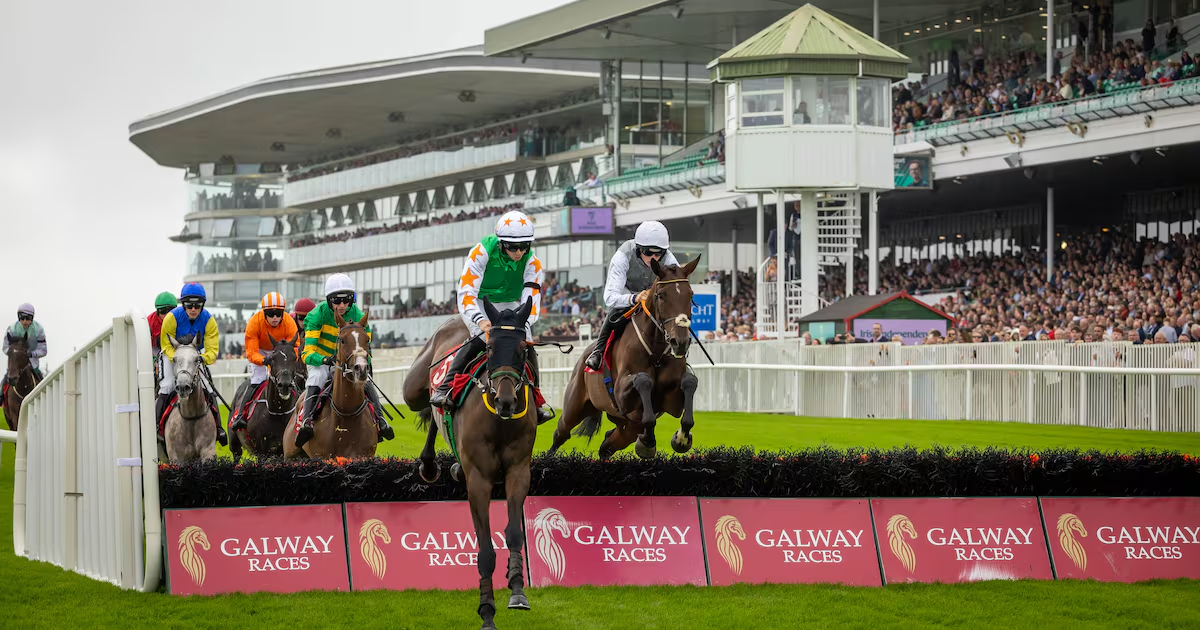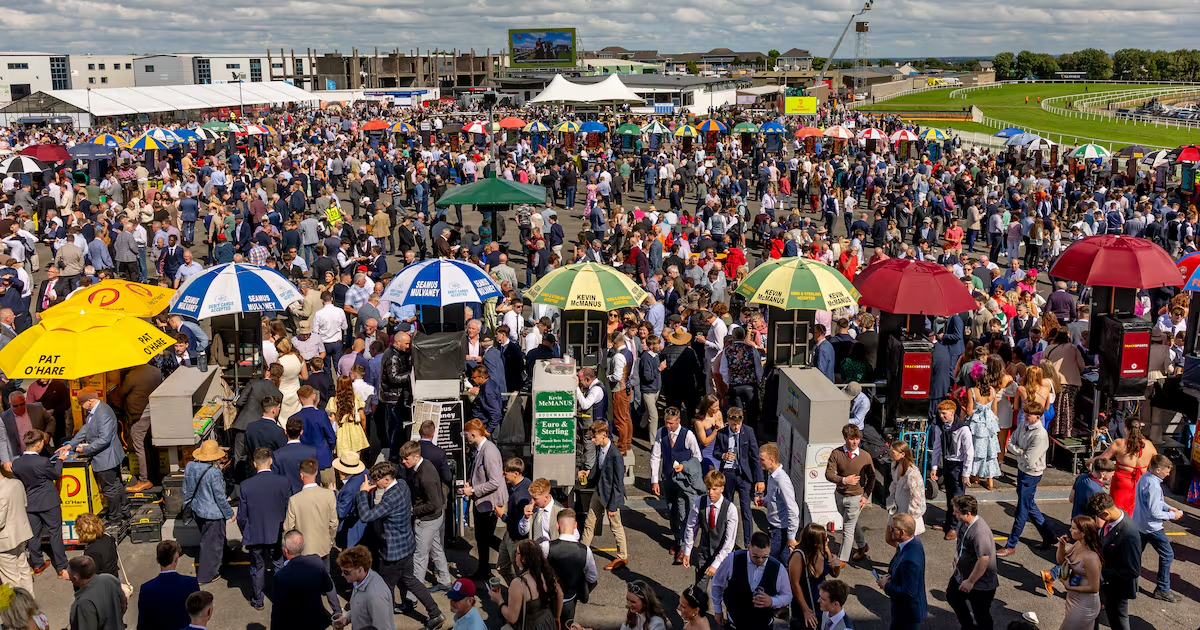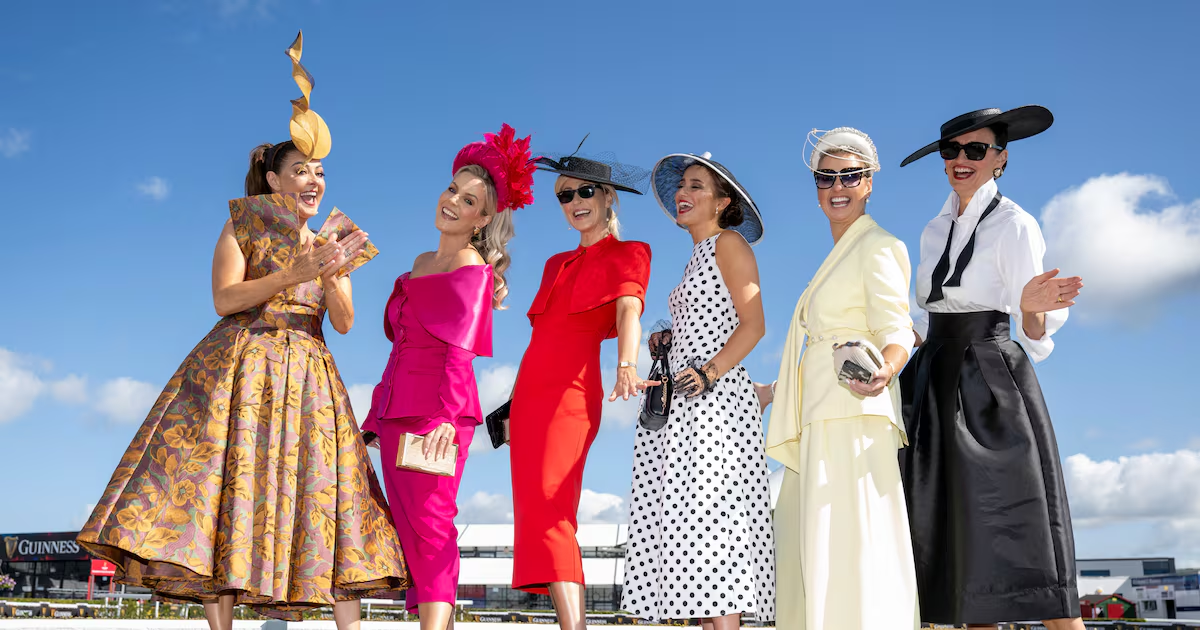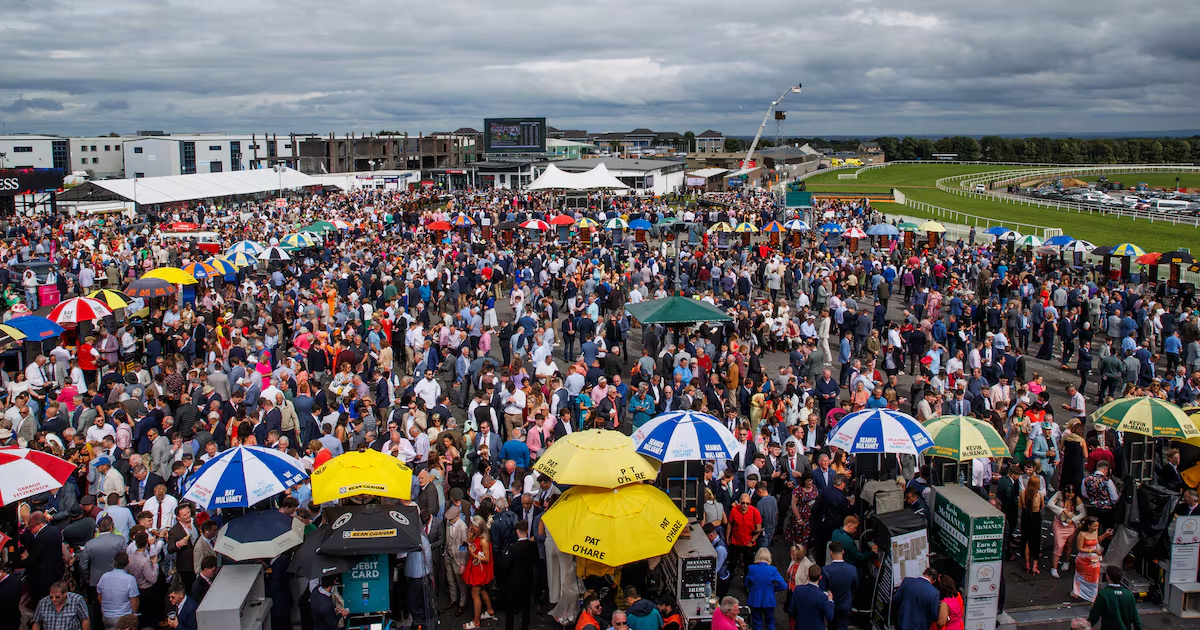
Why the Galway Races Summer Festival has such a hold on the public imagination is difficult to precisely define. The playwright John B Keane described it as a state of mind, a neat line open to all kinds of interpretation. Yet, it remains a singular racing experience and, next week, it will be the case both literally and figuratively.Time was when mixed cards of both flat and National Hunt action were commonplace in Irish racing. Galway will be the only meeting in 2026 where it occurs. All seven days contain flat and jumps races. Other tracks will watch enviously and wonder how they might benefit if they were allowed do the same. The festival’s popular appeal has always been about more than just racing. Ballybrit turns into a hive of social activity and plenty in the near 130,000 attendance over the seven days will barely see a racehorse in the flesh. For others, the mix of codes is an important ingredient in the Galway Races cocktail.Any view that the vital sense of “event” that surrounds Galway means the quality of the action on the track is peripheral bumps into how occasions need fulcrums, and next week’s action is essentially about the big jumps’ races. Wednesday’s Tote Galway Plate and the following day’s Guinness Galway Hurdle are each worth €270,000. They rank among the most coveted and traditional prizes on the National Hunt calendar. That they take place at the height of the summer is an oddity. It’s impossible to precisely define their value to the festival, but without them next week is a very different beast.Danny Gilligan, on Western Fold, celebrates winning The Tote Galway Plate (Handicap Steeplechase). Photograph: Morgan Treacy/Inpho The preference of most Irish racing fans for the jumps is a given. The phrase “wouldn’t cross the road to watch it” is a cliche now about the flat. It’s almost a badge of honour. What the impact of that popular mood would be if the Galway festival had to adopt a policy of exclusively flat or jumps cards is probably one to make track officials shudder. The sport’s traditional solution to this was to provide racegoers with a bit of both, particularly on the summer festival circuit, but that has been mostly phased out. The Covid-19 pandemic, and the logistical requirements required to keep the show on the road, firmed up what had become a remorseless trend.[ Danny Gilligan wins second Galway Plate in three years as Western Fold powers to Ballybrit gloryOpens in new window ]Exclusively flat or jumps action suits racing professionals. The cost and inconvenience of travelling to Kerry from racing’s heartlands, for instance, for one or two opportunities, makes little sense from a practical point of view. The challenge of providing suitable going for each code, often with limited ground to work with, is substantial for those in charge of racecourses. However, regarding attendances, it’s hard not to argue with a policy of giving the paying public what it wants. If fans find the flat unappealing, there’s a logic to sticking in some jumps action into a programme. Reluctance to do so begs the question as to whom the show is being run for. The other big date at this time of year is the Listowel Harvest Festival, and officials there have said they could break the 100,000-attendance barrier if they’d mixed cards to work with. Other tracks on the summer circuit such as Ballinrobe and Killarney would look obvious candidates too. The other big date at this time of year is the Listowel Harvest Festival, and officials there have claimed they could break the 100,000-attendance barrier if they’d mixed cards to work with. Photograph: Bryan Keane/Inpho The reality is, though, the sport has mostly answered the question as to where its priorities lie. Horse Racing Ireland reflects its constituent industry parts and much of them want the codes split. So too does the betting market, which is worth in the region of €47 million a year to Irish racing in media rights sales alone. Irish racing can seem a quirky enough proposition to overseas eyes anyway without mixing the disciplines. Racecourses are at the top of that financial pecking order and, for many of them, there’s little appeal in upsetting any applecart. Most meetings are basically there to give opportunities for horses to run and generate betting turnover. Getting racegoers through gates is well down most priority lists.Galway, however, is different. Crowds are what so much of the Galway races are about. It is an annual ritual. If attendance levels aren’t at the pitch of the crazed Celtic Tiger years any more, the festival is still a unique phenomenon. Galway’s CEO Michael Moloney says mixed cards are key to that. It begs another question then as to why that can’t be expanded in certain circumstances.The summer festival circuit in Ireland is a chance for people to go racing. Whether they’re already fans, or potential fans, a combination of weather, holidays, or simply keenness for a day out represents an opportunity for the sport here to showcase itself. That’s something in the best interests of everyone in the sport. Maybe it’s simply not doable any more. Or maybe only a state of mind prevents it. Something for the Weekend The King George VI & Queen Elizabeth Stakes is a different proposition from its heyday, but tomorrow’s renewal looks a spectacular proposition. There is a meaningful representative from the classic generation in Irish Derby winner Benvenuto Cellini. However, he faces a huge task in trying to overcome some top older horses and the Japanese star Masquerade Ball (3.35) could prove too much for them all.He renews rivalry with Calandagan whom beat him by a head in last November’s Japan Cup. Now they clash again on the other side of the world. The difference this time may be conviction from the Masquerade Ball camp that he’s a significantly better horse now. Expecting improvement from Calandagan is surely expecting too much. There’s also a suspicion, despite a subsequent Grand Prix de Saint-Cloud success, that a tortuous run in a bog at Epsom last month may have left a mark. Months of preparation has gone into Masquerade Ball’s attempt to become a first Japanese winner at Ascot. This is his priority. Such prioritisation can pay off. Item, ninth in the Epsom Derby, returns to action against older horses in an intriguing Group Two at York. He’s dropping in trip while Damysus (2.35) is going back up from a mile. The move can work in the flashy chestnut’s favour.
Galway Races Summer Festival serves up what race fans want with mixed programmes
Galway festival will be the only racing action in 2026 with a mix of flat and jumps racing on each day
1,090 words~5 min read