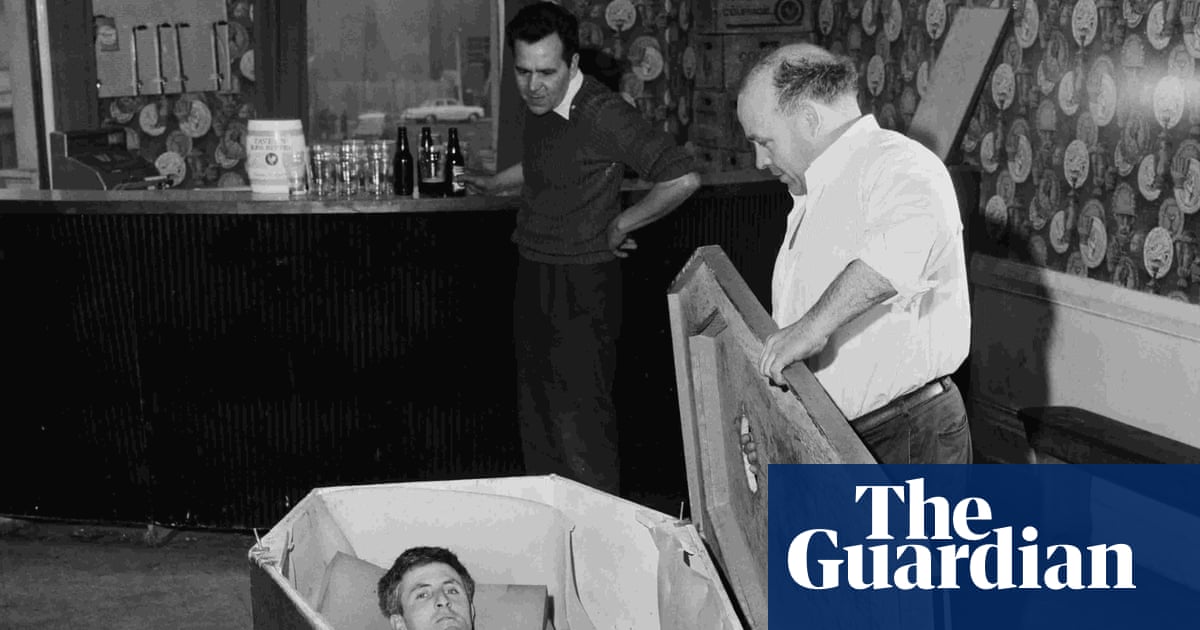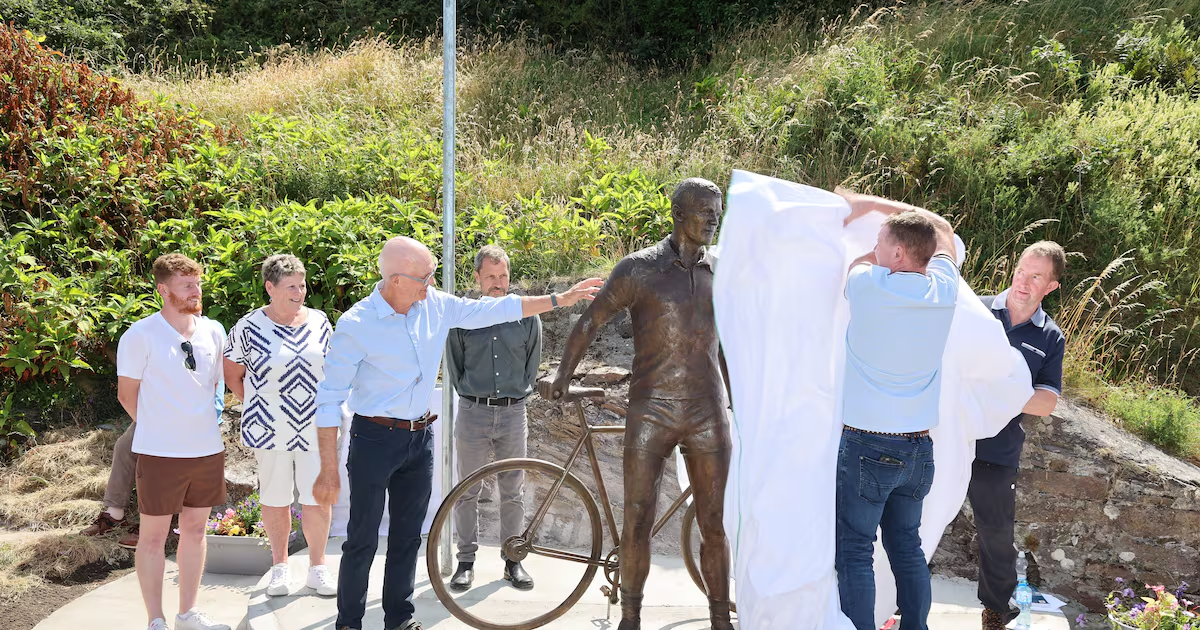
The 1958 Rás Tailteann winner, who helped put Kerry cycling on the national racing map, was also a ‘farmer, runner, boxer, wrestler, circus performer and maverick’A statue of Rás Tailteann winner Mick Murphy was unveiled last week in Cahersiveen, near his homeplace in Srugreana, Co Kerry. Photograph: Alan Landers Fri Jul 24 2026 - 06:00 • 4 MIN READThe place where Mick Murphy now stands next to his bicycle is right where the soon-to-be-completed South Kerry Greenway will enter Cahersiveen, and not far from where he was born, raised and died in Srugreana, high in the valley above.It’s a perfectly apt location, given Murphy helped put Kerry cycling on the national racing map, with the rider known as “The Iron Man” now cast magnificently in bronze.There is also an inscription on Valentia Island slate that reads: “Farmer, runner, boxer, wrestler, circus performer, cyclist and maverick, and winner of the 1958 Rás Tailteann.” All of which Murphy certainly was, although there is still no more enigmatic champion in all Irish sport. “It wasn’t so much the worry that he might be forgotten, but more so that his story would stop being told,” says Mike Greaney, one of the driving forces behind the effort to create some lasting memorial to Murphy after his death in 2015, aged 81. “Because it is such an inspiring story, of an ordinary man, who did extraordinary things, who came from the countryside and captured the hearts of the nation.“And it wasn’t just the local community who got behind this project, but the national and international cycling community too. We’d lots of people come from abroad to cycle our fundraising sportives, and all that money was put into the statue. It’s taken some time to get over the line, but a worthy tribute to one of the great cyclists of his time.”Murphy was indeed of a different era, although his eccentrically isolated existence and utter disregard for sporting celebrity set him apart then as much as it would today. What helped cement his mythical status was the incredible nature of his 1958 Rás victory, at age 24, which began when he took the lead on stage two, from Wexford to Kilkenny.Only Murphy’s stage didn’t end there: he then cycled around 30 miles, to “cool down”, before finishing up in a quiet field to do weight training for an hour (random iron-and-stone implements being his preference). Then, after locating a suitably docile cow, he used the small penknife he always carried in his sock to cut a vein in its neck, letting the blood run into his water bottle, which he promptly drank.The statue was unveiled in front of a crowd in Cahersiveen on Saturday, July 18th. Photograph: Alan Landers Murphy termed this a “transfusion”, admitting to performing it several times during the race, although this was a common nutritional practice in Kerry going back to famine times.On stage three, from Kilkenny to Clonakilty, his bike jammed approaching Glanmire, so he famously “borrowed” a farmer’s bike to stay in the race. Crashing the next day, breaking his collarbone, he still rode from the front on the last stage, for 100 miles, in the end winning that Rás by five minutes.“Attack is the best defence,” is how Murphy once described his race tactics. “And I have no doubt about it, I was the greatest solo rider in Ireland, I was a different breed.”From left: Mike Greaney, Anne Reidy, Ferdia Greaney, Tom Daly, sculptor Mark Rode, Maureen O'Donnell, Cllr Norma Moriarty and Brendan O'Sullivan. Photograph: Alan Landers At the statue’s unveiling last Saturday, author and former Cycling Ireland president Tom Daly recalled his several meetings with Murphy, which formed the basis of an entire chapter within his seminal 2003 publication, The Rás.“Interviewing Mick was no easy task,” Daly says. “He wasn’t inclined very much to answer your questions, or even to listen to them, he’d tell you in no uncertain terms the story and opinion he felt you should be hearing.“And I was very conscious that cycling was only a very small part of this fascinating life. He only raced the bike on the road for four years, and it would be wrong if his life was defined by just his Rás win. But I’m not sure if anyone has the full picture ... he remains that enigma for me at least.”The statue is the work of Mayo-based sculptor Mark Rode, who also created the bronze assembly of four Gaelic footballers leaping into the air on one of the roundabouts entering Tralee. Rode originally sketched an image of Murphy getting off his bike and holding a trophy in the air, although on further research discovered that wasn’t in his nature. Murphy was unquestionably an entertainer, but he was no show off.The Mick Murphy statue After his third Rás, in 1960, Murphy never rode competitively again. He later moved into professional wrestling, before touring much of Britain and Germany, performing as a sword swallower and fire-eater, while also working as a bricklayer to help pay his way. He then settled back in Srugreana, declining to draw the State pension, living in the small family farmhouse without electricity or running water.The local cycling sportives raised just over €20,000, with additional funding from the South Kerry Development Partnership, ensuring the statue and entire site completion came in at around €80,000, and “excellent value at that”, says Greaney.[ Ian O’Riordan: Is Tour de France leader Tadej Pogacar simply too good for his own good?Opens in new window ]“If you were tasked with chiselling a character that represented Iveragh I don’t think you could do better than Mick Murphy,” says Daly. “In terms of ruggedness and individuality, stoicism and creativity, wit and wisdom.“Visitors here will now see this beautiful sculpture and wonder about the Iron Man. And let us all continue to wonder about him, and let him remain that bit incomprehensible, intriguing and enigmatic.”IN THIS SECTION
Mick ‘The Iron Man’ Murphy: One of the most intriguing champions in all Irish sport
The 1958 Rás Tailteann winner, who helped put Kerry cycling on the national racing map, was also a ‘farmer, runner, boxer, wrestler, circus performer and maverick’
982 words~4 min read