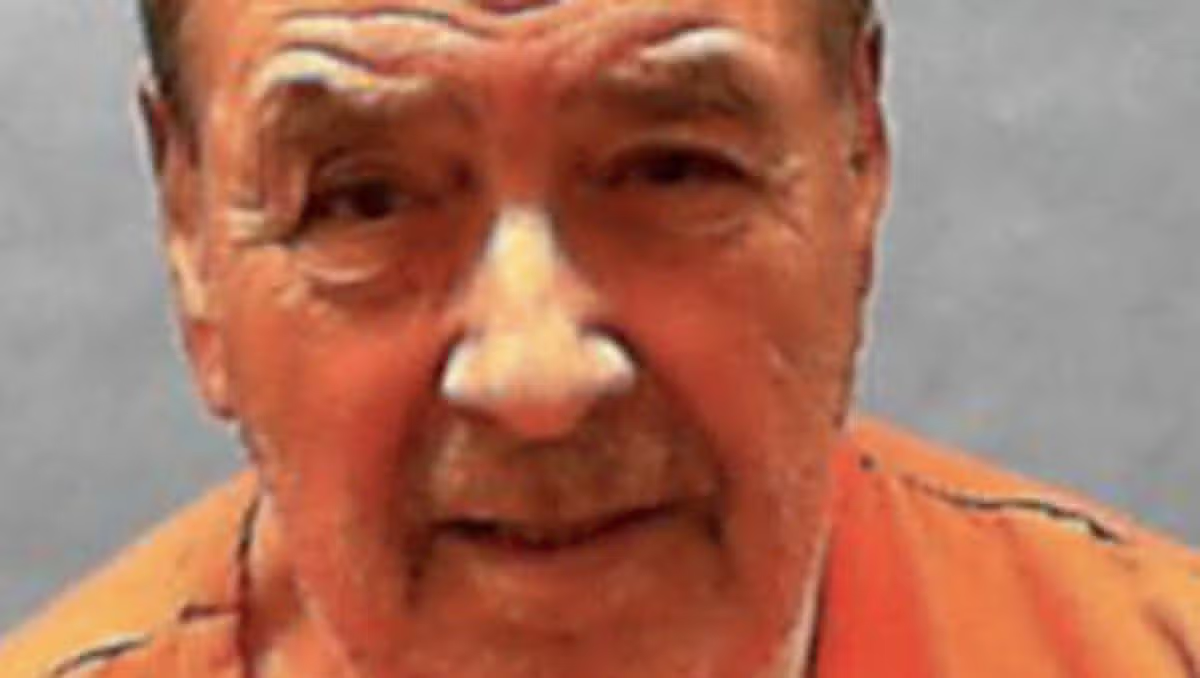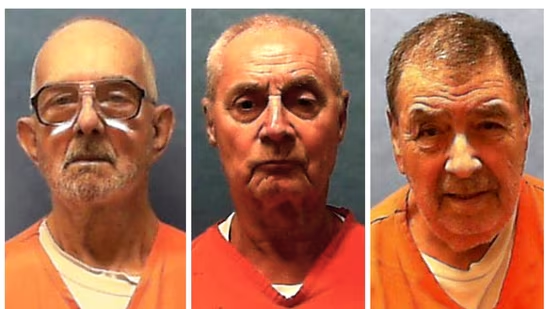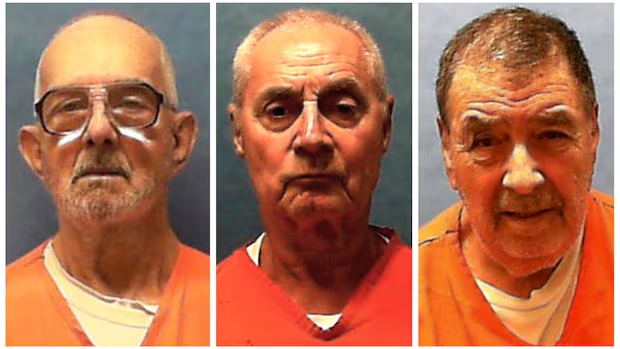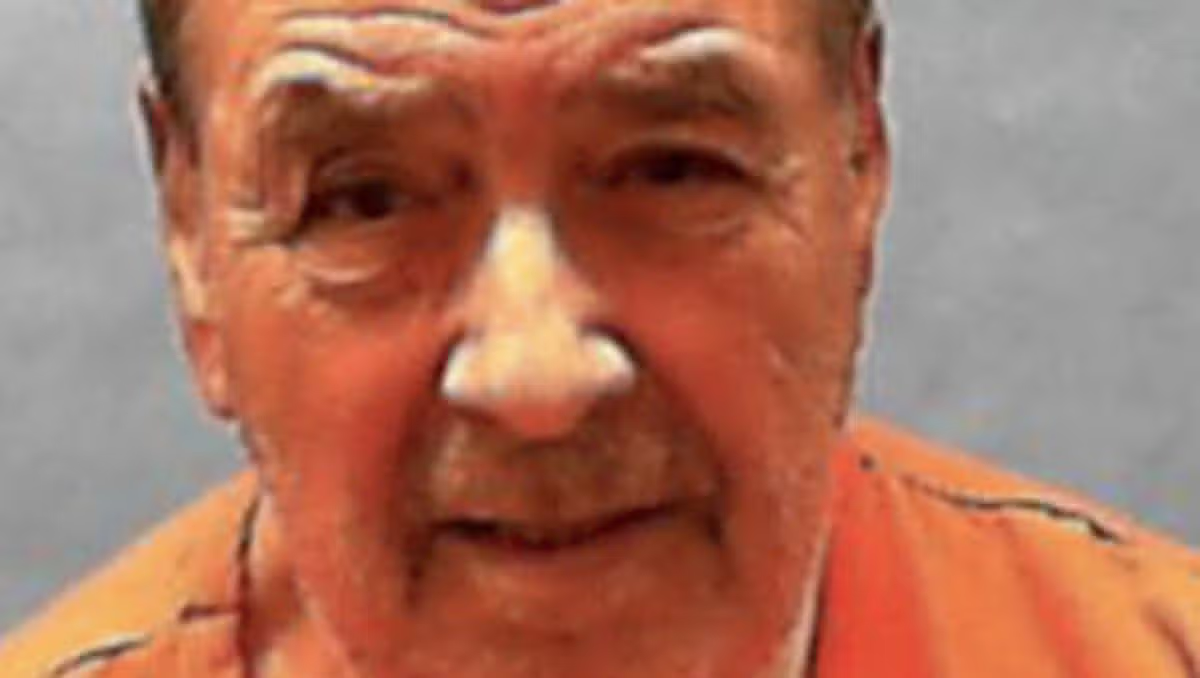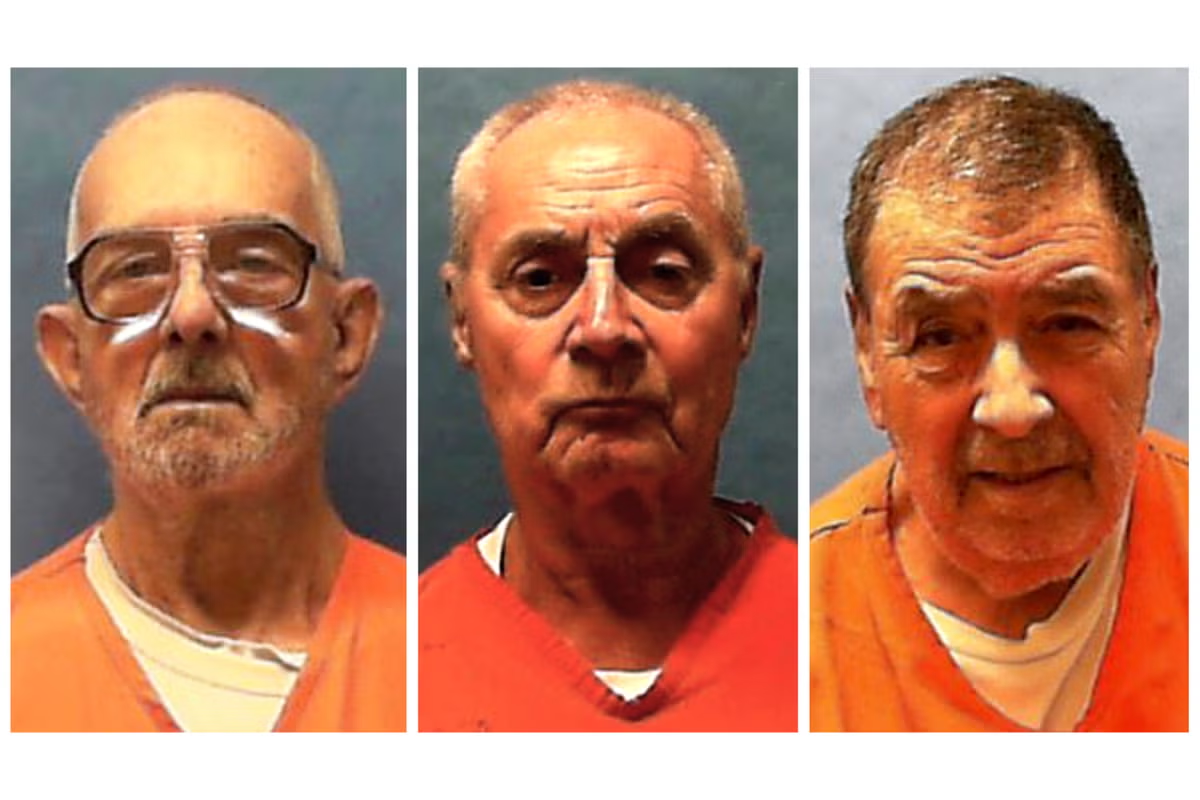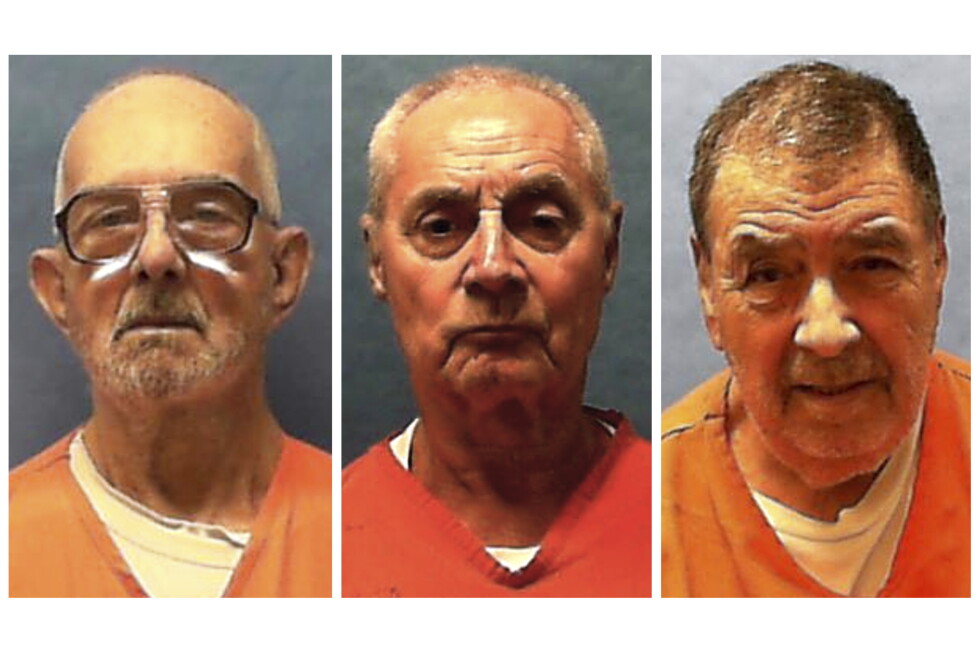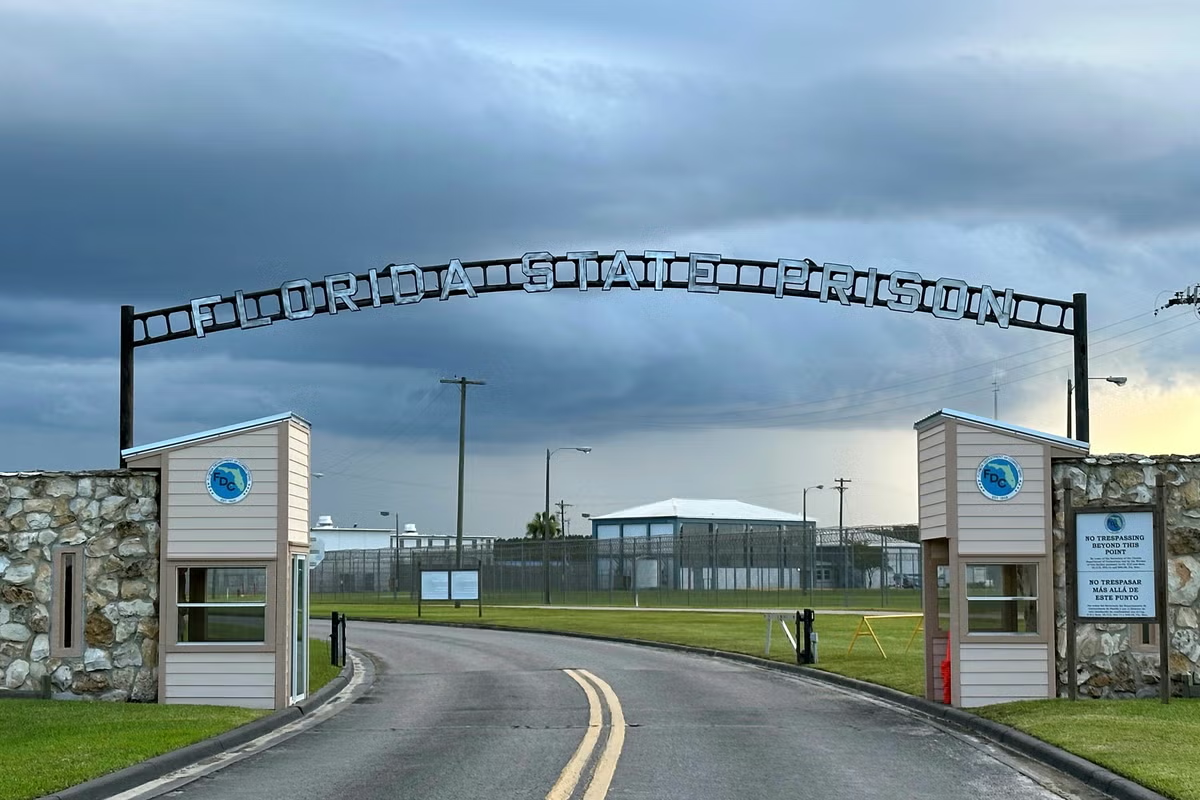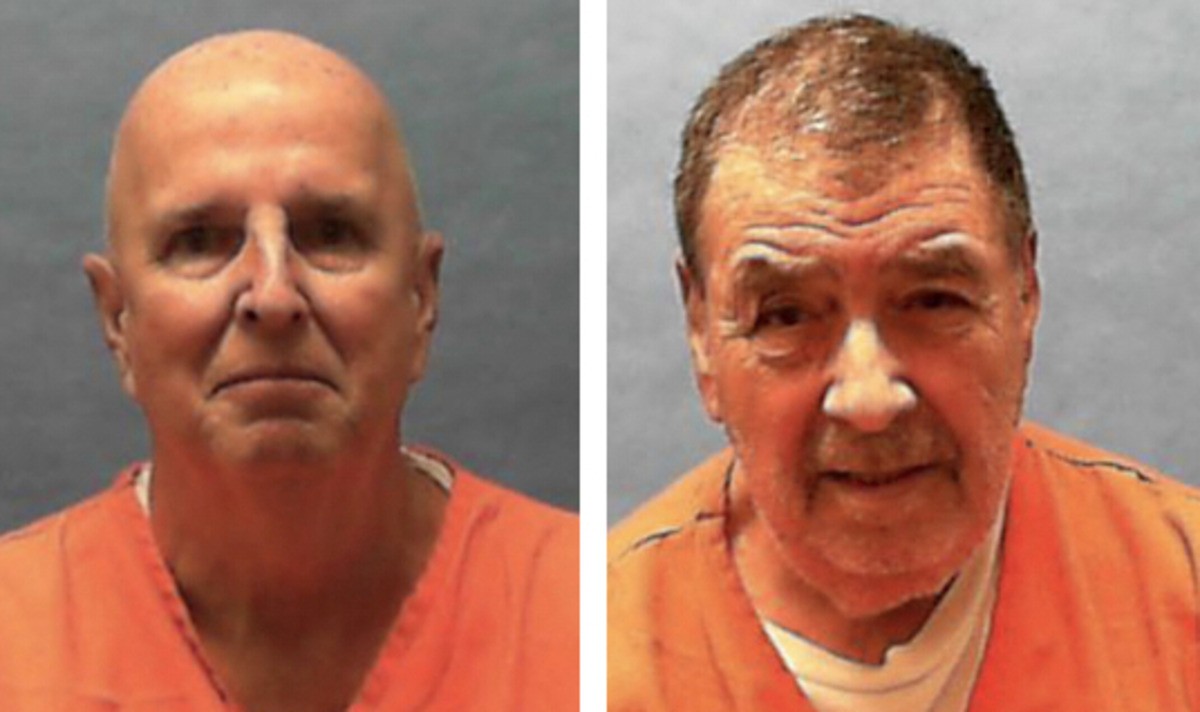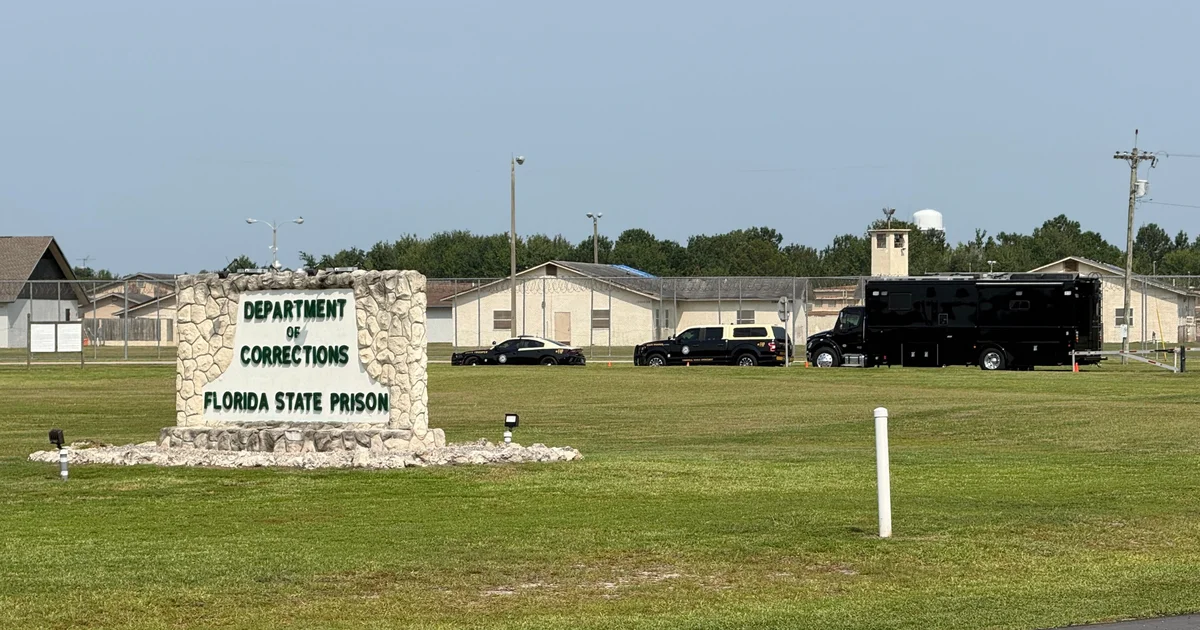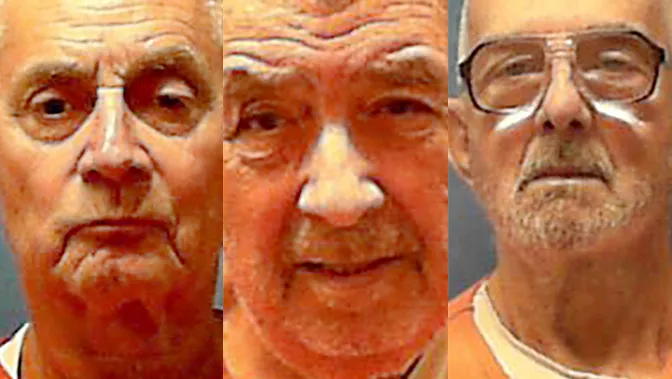
Eighty-year-old Dominick Occhicone is set to be executed in Florida on July 28. He's among a growing number of sickly and elderly inmates finally facing their sentences. Is it justice?Show Caption
At 80 years old, Florida death row inmate Dominick Occhicone has a heap of health issues: heart trouble, poor kidney function, an enlarged prostate, arthritis, and degenerative disc disease, according to his attorneys.Occhicone has difficulties hearing, seeing, and walking, to the point that guards have to help him in and out of the shower and up and down stairs, according to court records filed by his lawyers.The Grim Reaper clearly has designs on Occhicone, but Florida Gov. Ron DeSantis wants to get there first.The Republican governor signed a death warrant last month for Occhicone for the 1986 murder of his ex-fiancée's mother. Now the octogenarian is set to become the second-oldest inmate ever executed in the U.S. and the oldest to ever be executed in Florida on July 28, when he's scheduled to be put to death by lethal injection.Occhione is among a growing number of elderly death row inmates who are facing their execution dates up to five decades after their crimes. The age and health of such inmates is raising an increasingly relevant question in the court of law and the court of public opinion: How old is too old to be executed?“This is cruel and unusual punishment and an affront to the conscience of everyone involved,” said Grace Hannah, executive director of Floridians For Alternatives to the Death Penalty. “(Occhicone) is 80 years old. He looks like he is 80 years old and has the health problems of an 80-year-old.”Occhicone's attorneys argue in a recent Florida Supreme Court filing that executing such a "sickly" man is unconstitutional and amounts to "manifest injustice which shocks the conscience.""(It) no longer serves any retributive value based on his advanced age and would serve only the purpose of vengeance, offending the dignity of our society," they argue.The state of Florida, which is executing more elderly inmates than any other state, disagrees."Occhicone has failed to demonstrate any national consensus against executing the elderly," the Florida Attorney General's Office wrote in a recent filing. "Because executing Occhicone serves both a retributive and a deterrent effect, he has failed to demonstrate that his execution would result in a manifest injustice.""If anything," the state continued, "the fact that the Florida Legislature has not prohibited the execution of individuals of advanced age illustrates that such a punishment does not offend any evolving standard of decency."Here's what you need to know about the rising population of elderly death row inmates, how many are being executed and the debate over whether killing them amounts to justice or cruel and unusual punishment.Elderly inmates, by the numbersOf the more than 1,900 death row inmates in the U.S., at least 470 are older than 64, according to a USA TODAY analysis of state corrections department data and statistics from the nonprofit Death Penalty Information Center. That's 25%.By all accounts, the elderly death row population is growing as the appeals process and other delays add up to sometimes five decades. Many inmates have had their executions scheduled multiple times over the years, only to have a last-minute appeal add years to their lives.In 2023, the average age of prisoners on death row was 54. That's compared to 39 years old in 2001, according to U.S. Department of Justice statistics and the Death Penalty Information Center.The oldest death row inmates in the U.S. were born in the 1930s. They include 93-year-old Blanche Taylor Moore, convicted of fatally poisoning a boyfriend in 1986 and suspected in the poisoning deaths of three other relatives in North Carolina.Others on death row include 92-year-old Joseph "Crazy Joe" Naso, convicted of killing at least four women in California in the 1970s and 80s, and 96-year-old David Carpenter, who was known was the Trailside Killer and was convicted of killing at least six women and a man in the 1970s and 80s in California.Over the years, many death row inmates have died of natural causes before their executions are carried out. In Utah in November, for instance, 67-year-old Ralph Leroy Menzies died of presumed natural causes after spending 37 years on death row for the 1986 murder of 26-year-old Maurine Hunsaker, a married mother of three. His death came two months after the Utah Supreme Court stopped a firing squad from executing him over concerns that his dementia was so severe, that he wouldn't understand why he was being killed.After Menzies' death, Utah Attorney General Derek Brown said that the state had pursued justice for decades: "The path has been long and filled with pain, far more than any victim's family should ever have to endure."Executing the elderly in recent yearsFlorida is executing more elderly inmates than any other state, by far.In 2025 and so far this year, six states have executed 23 inmates who were at least 62 years old, according to Death Penalty Information Center data analyzed by USA TODAY. Sixteen of them were in Florida. That's 70%.Florida already made state history this year when 74-year-old Dusty Ray Spencer became the oldest prisoner put to death in the state on June 25. He was executed for the sadistic death of his wife in front of her teenage son in 1992 in Orange County.Then on July 14, Florida broke that record when 74-year-old Dennis Michael Sochor was executed by lethal injection for killing an 18-year-old woman on New Year's Eve in Broward County in 1981. Spencer was born just under two weeks before Sochor in 1952, but Sochor lived 19 days longer.If Dominick Occhicone's execution moves forward on July 28, he will become the oldest inmate ever executed in the state and the second oldest in the nation. The oldest inmate ever put to death in the U.S. was 83-year-old Walter Leroy Moody Jr., who was was executed in 2018 in Alabama for the pipe bomb assassination of a federal judge.Not only is Florida planning to execute Occhicone on July 28. The state also plans to put to death another elderly inmate, 68-year-old former cop James Duckett, on the same day for the 1987 kidnapping and murder of an 11-year-old girl. If both executions are carried out, it will be the first time in more than six decades that Florida will have put two inmates to death on the same day.Florida's execution of elderly inmates reflects Gov. Ron DeSantis' aggressive push to put more inmates to death in the state than ever before. DeSantis recently told ProPublica that meeting with the loved ones of victims reinforced his determination to see old death sentences carried out. “There’s a saying: Justice delayed is justice denied,” DeSantis said. “We’re doing it to be able to bring justice to the victims’ families.”Are putting the elderly to death worth the cost to taxpayers?Recent executions call into question not only putting to death older and often infirm inmates but also the decades it takes for victims to obtain justice. Occhicone has cost Florida taxpayers $850,000 for his incarceration, not taking into account his legal appeals, Tampa television station WTVT has reported.The loved ones of victims have repeatedly told USA TODAY that the extended appeals process that allows killers to live on death row for decades only compounds their pain. That includes the family of 33-year-old stay-at-home mom of three Tressa Lynn Pettibone, whose brutalized body was discovered on the kitchen floor by her 8-year-old son in Panama City, Florida, in 1989.Pettibone's killer, 58-year-old Mark Allen Geralds, was executed by lethal injection on Dec. 9, nearly four decades after the murder.“Tomorrow, when we wake up, it will be the first time in nearly 37 years that we don’t have to worry about another appeal being filed or another law changing that could potentially thwart the justice we have been fighting so hard for for so long,” the family said in a statement after the execution, adding that they had “endured so much as this long legal journey has seemed unending at times.”After the April 30 execution of 70-year-old James Ernest Hitchcock for the 1976 murder of 13-year-old Cindy Driggers in Winter Garden, Florida, the teen's cousin talked to reporters about the five-decade wait for justice.“I’ve lived with this for 50 years. I can breathe today," Chip Driggers said. "Free at last, free at last. Our monster is dead.”Some victim family members die before they see justice carried out.“I’m just happy it’s even happening in our lifetime," Marilyn Gifford, whose 18-year-old sister Patty was murdered in 1982, recently told The Associated Press about the killer's execution earlier this month. "I wish my mother was alive to see it.”What do the courts say about executing the elderly?Courts have found that certain inmates can't be executed based on factors related to age, like in Menzies' case in Utah, but there is no such thing in the U.S. as being too old to be executed if other factors like dementia aren't at play.The Florida Supreme Court, all but one of whom were appointed by DeSantis, recently rejected arguments from 74-year-old Dusty Ray Spencer's attorneys that he should be spared the death penalty because of his age. The court also rejected Occhicone's appeals based on his age and condition on July 21."No decision from the Supreme Court has read the Eighth Amendment as categorically exempting defendants of advanced age from execution, and we are not about to create one now," the court said.The U.S. Supreme Court currently recognizes three categorical exemptions from execution: those who are mentally incompetent, those who are intellectually disabled and people who were younger than 18 when they committed murder.In 2017, then-Supreme Court Justice Stephen Breyer − a Clinton nominee − expressed concerns about a 67-year-old inmate who had been on death row nearly half his life for the 1985 fatal shooting of an Alabama police officer. The inmate, Vernon Madison, had suffered strokes, vascular dementia, was legally blind, couldn't walk on his own and was incontinent, Breyer pointed out."His disability leaves him without a memory of his commission of a capital offense," Breyer said at the time.“Given this trend, we may face ever more instances of state efforts to execute prisoners suffering the diseases and infirmities of old age,” Breyer continued. “And we may well have to consider the ways in which lengthy periods of imprisonment between death sentence and execution can deepen the cruelty of the death penalty while at the same time undermining its penological rationale.”Amanda Lee Myers is a senior crime reporter who covers the death penalty, cold cases and breaking news for USA TODAY. Follow her on X at @amandaleeusat. John Pacenti is the Government Impact Reporter for The USA TODAY NETWORK-FLORIDA.