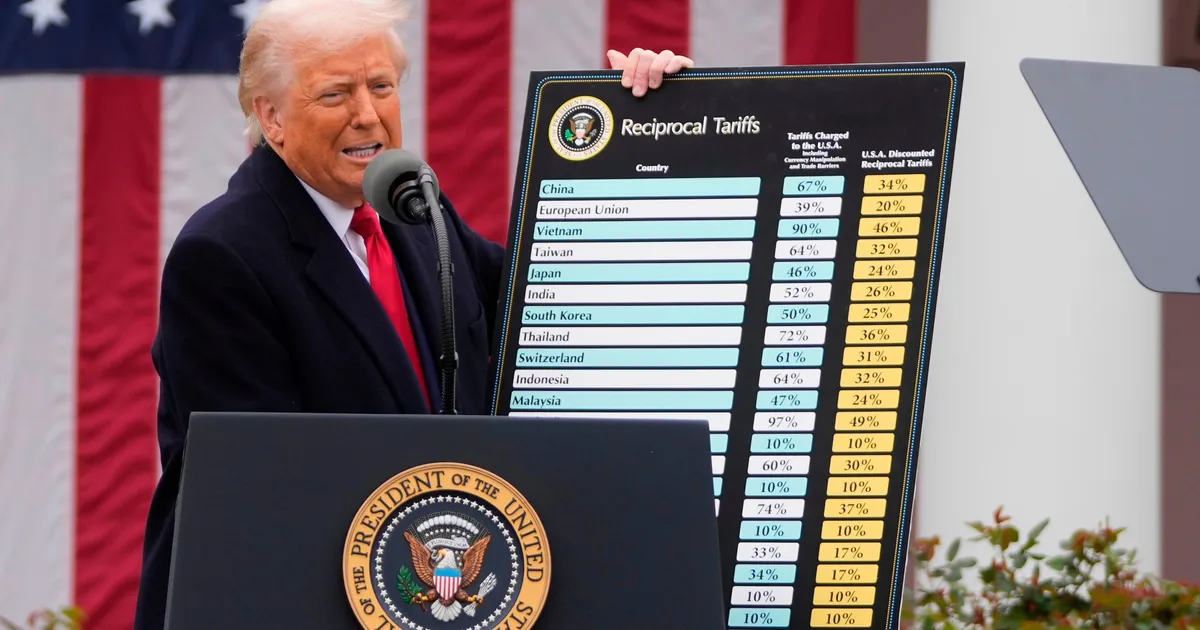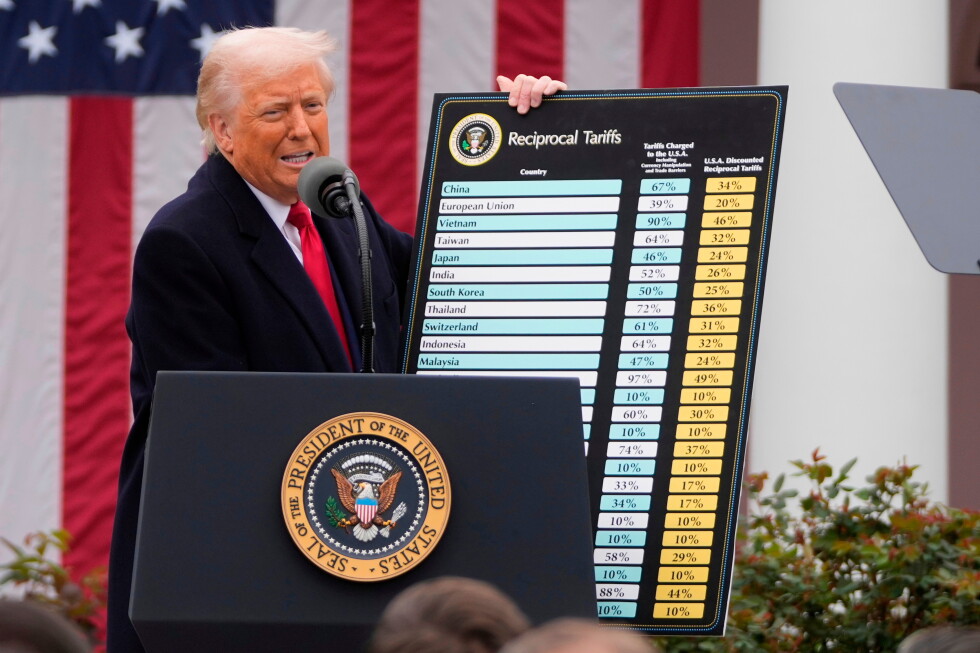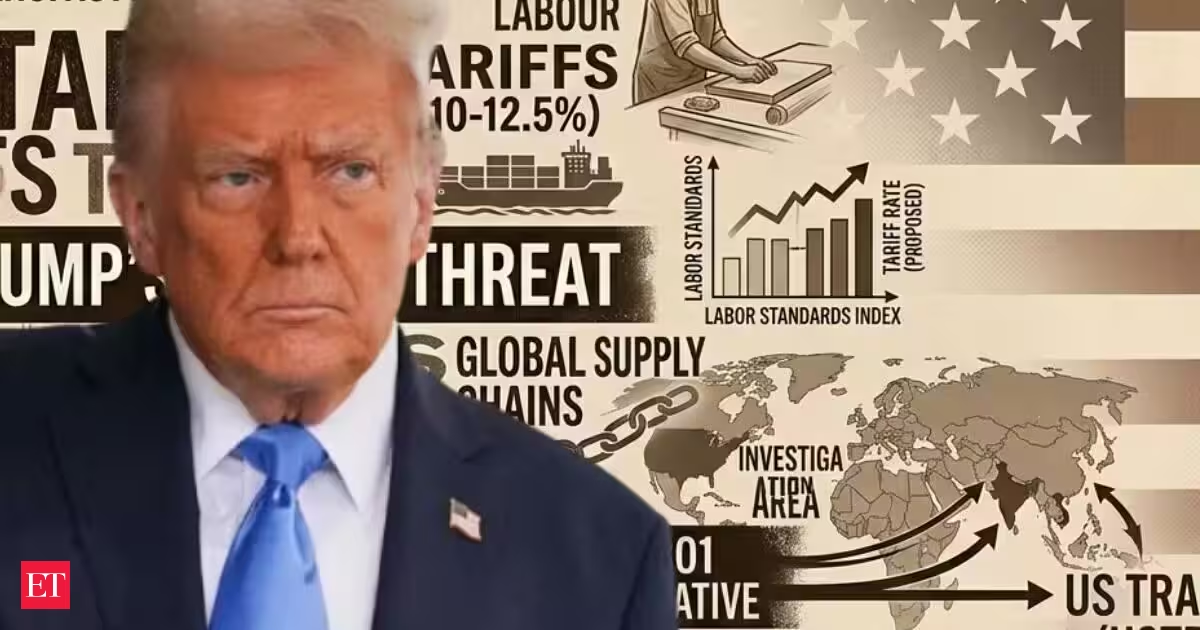
US President Donald Trump's latest tariffs have drawn criticism from several Asia-Pacific economies after Washington unveiled a new round of import duties tied to forced labour enforcement, marking a fresh attempt to rebuild its trade strategy following a major legal setback earlier this year.The United States will begin imposing tariffs of 10% to 12.5% on imports from 60 trading partners from Friday, replacing temporary worldwide duties that expire the same day. The countries affected, including India, account for almost 99% of US imports. Washington said the new Trump tariffs are aimed at economies that have not adequately adopted or enforced bans on imports made with forced labour.Also Read: US imposes 10% tariff on India, Pak, Bangladesh, UK, others in forced labour probe"The United States has had a forced labor import ban for nearly a century, and rigorously enforces it; it's well past time for our trading partners to do the same," US Trade Representative Jamieson Greer said.Trump tariffs: Japan, Australia, Singapore and New Zealand reject The announcement prompted criticism from Japan, Australia, Singapore and New Zealand, although none signalled plans to retaliate against the United States.Singapore Foreign Minister Vivian Balakrishnan questioned the economic basis for the new Trump tariffs, saying there was no justification for the additional duties.Japan also sought clarification from Washington over whether the latest measures remain consistent with the bilateral trade understanding reached last year.Also Read: Forced labour explained: Why India changed its import policy"It is regrettable that tariffs are being imposed on Japan," Chief Cabinet Secretary Minoru Kihara said at a regular press briefing on Friday. "We are also confirming with the US that, ultimately, no tariffs exceeding those stipulated in last year's agreement will be imposed on Japan."Australia argued the new Trump tariffs were inconsistent with its free trade agreement with the United States and urged Washington to withdraw them. Trade Minister Don Farrell said Australia's framework to tackle forced labour and modern slavery ranks among the world's strongest."Australia's measures to combat forced labor and modern slavery are among the strongest in the world, and we are recognised globally, including in the US, for our leadership," Farrell said.Canberra said the latest decision would lift tariffs on Australian goods to 12.5% from 10%."This really, in our view, makes no sense," Defence Minister Richard Marles told ABC Radio.New Zealand Trade and Investment Minister Todd McClay described the decision as disappointing, though unsurprising."The decision is very disappointing but not unexpected. President Trump campaigned on tariffs and this is the consequence," he said.McClay also disputed the US findings, saying "it's just not credible that imports created with forced labor play any measurable role" in New Zealand's economy. He described the US investigation as a "legal pretext" for imposing new duties.The Global Trade Research Initiative (GTRI) said the US decision to impose a 10% Section 301 tariff on Indian exports over forced labour concerns lacks credible evidence and appears intended to keep existing trade barriers in place."The United States has not produced evidence that India imports goods made with forced labour," the India-based trade policy think tank said.Also Read: GTRI questions US 10% Section 301 tariff on Indian exportsForced labour & new Trump tariffsThe latest Trump tariffs replace temporary global tariffs introduced after the US Supreme Court ruled in February that the administration had exceeded its authority by using emergency powers to impose broad import duties.Following that judgment, the White House introduced temporary 10% worldwide tariffs under Section 122 of the Trade Act of 1974. Those measures expire on Friday.The administration has now shifted to Section 301 of the same law, which allows tariffs and other trade actions against countries found to engage in trade practices considered unjustifiable, unreasonable or discriminatory. Trump relied on Section 301 during his first term to impose tariffs on China, and those measures survived legal challenges.Also Read: What is Section 301?The administration first proposed the forced labour tariffs last month. According to a senior administration official, some countries strengthened their enforcement during the review period and therefore qualified for lower tariff rates.India was among them. The official said India's tariff was initially set at 12.5% but was reduced to 10% after New Delhi amended its foreign trade policy on June 14 to prohibit imports made using forced labour.In its final report released on Friday, the Office of the US Trade Representative said: "Based on the findings in the investigation of India, including India's adoption of a forced labor import prohibition…and considering the public comments and testimony, the advice of the Section 301 Committee, as well as the advice of advisory committees, and in accordance with the specific direction of the President, the Trade Representative has determined to impose 10% tariffs on products of India, except…."The agency said countries that have adopted and effectively enforce forced labour import prohibitions will face 10% tariffs, while those that have not introduced such restrictions will face duties of 12.5%.More Trump tariffs may follow The latest measures may not be the final round of Trump tariffs.The US Trade Representative is separately examining whether 16 countries, together accounting for around 70% of US imports, have created excess production capacity that depresses prices and harms American manufacturers. That investigation remains under way and Washington has yet to publish its draft findings.Although the new Trump tariffs affect a broad range of trading partners, their impact on exports may be moderated by existing exemptions. Oil, natural gas and fertiliser are excluded from the latest duties, while products qualifying for duty-free treatment under the US-Mexico-Canada Agreement will also remain exempt.Some free trade agreements could further soften the effect. More than 40% of New Zealand's exports to the United States in the latest quarter consisted of beef, which enters the US market at an almost zero tariff rate. Australian beef exports also continue to avoid import duties.Wendy Cutler, a former US trade negotiator now with the Asia Society Policy Institute, said the latest Trump tariffs are less likely to be overturned in court than the previous measures because they rely on a stronger legal framework."Our trading partners will be disappointed with these results, but retaliation is not expected," she said. "They will continue efforts, however, to reduce their dependence on the US market, by forging trade deals among themselves."Critics question forced labour justification behind Trump tariffsThe new Trump tariffs also drew criticism within the United States."Today's forced labor justification is too convenient to be taken seriously," said US Representative Richard Neal of Massachusetts, the top Democrat on the House Ways and Means Committee. "Forced labor is a real and pervasive problem in our supply chains and demands serious enforcement. It should never be cheapened into a pretext for a tariff policy built on dubious legal theories and personal grievances."The latest measures come after the Supreme Court ruled that the administration could not rely on emergency powers under the International Emergency Economic Powers Act to maintain last year's reciprocal tariffs. The White House responded with temporary global tariffs while developing a new framework centred on forced labour enforcement. The parallel investigation into excess industrial capacity remains pending, suggesting Washington's trade agenda could expand further in the coming months.
Donald Trump finds a new way to impose tariffs but Asia isn't buying the reason
US President Donald Trump's new tariffs of 10% to 12.5% on imports from 60 trading partners, including India, have sparked criticism from Japan, Australia, Singapore and New Zealand. The Trump tariffs, linked to forced labour enforcement under Section 301, replace temporary global duties after a US Supreme Court setback.
1,181 words~5 min read