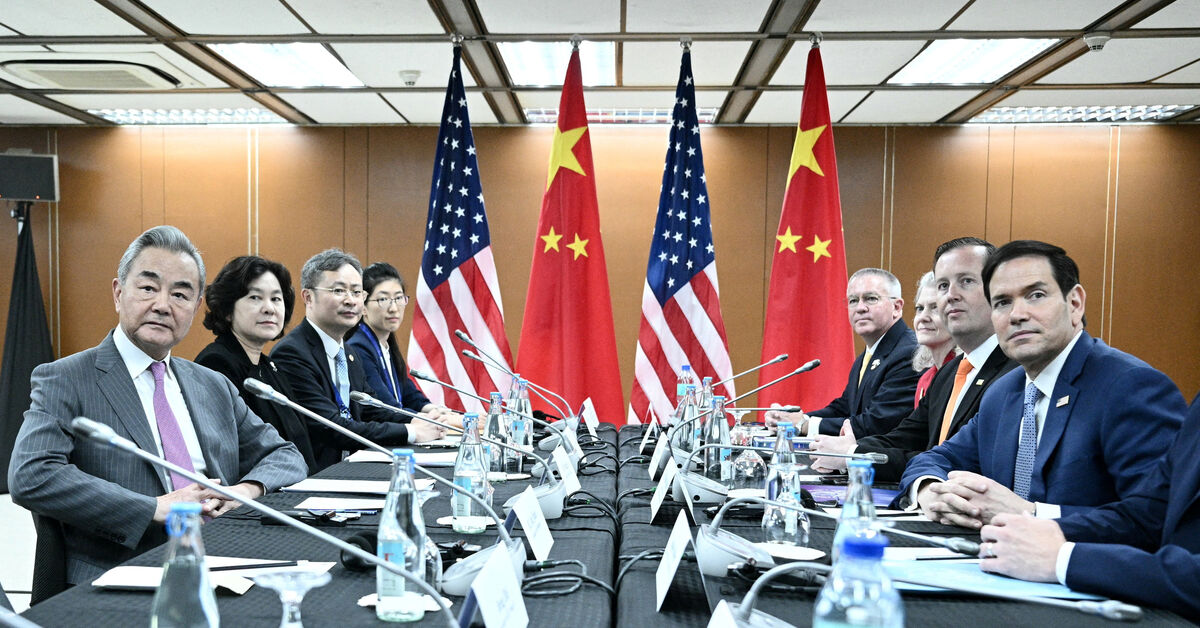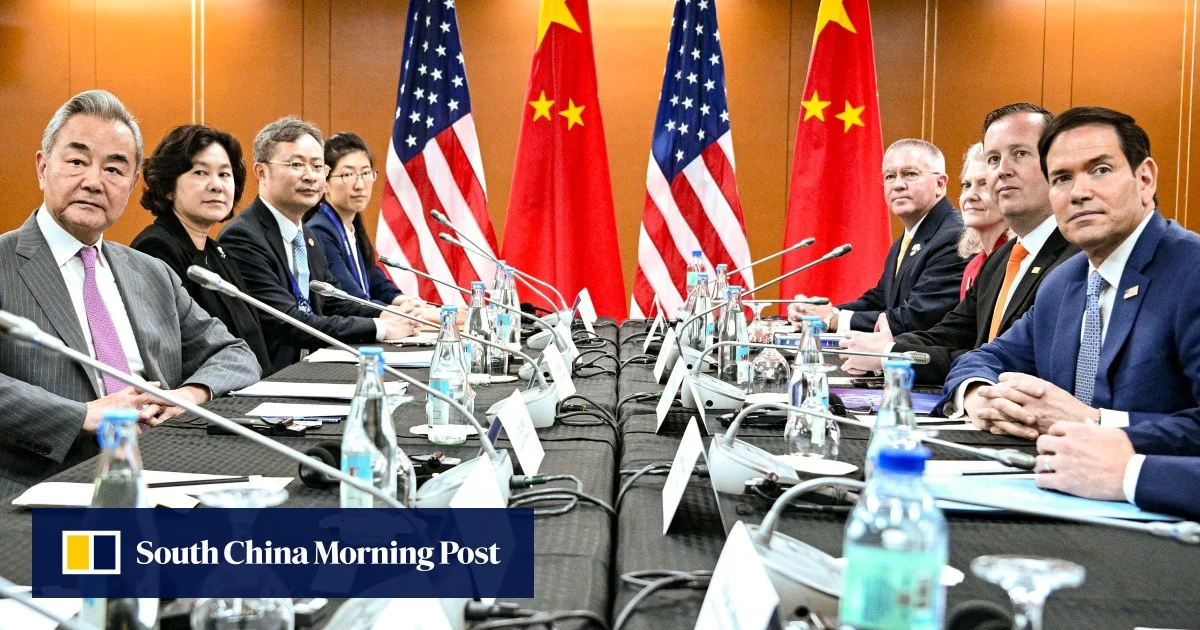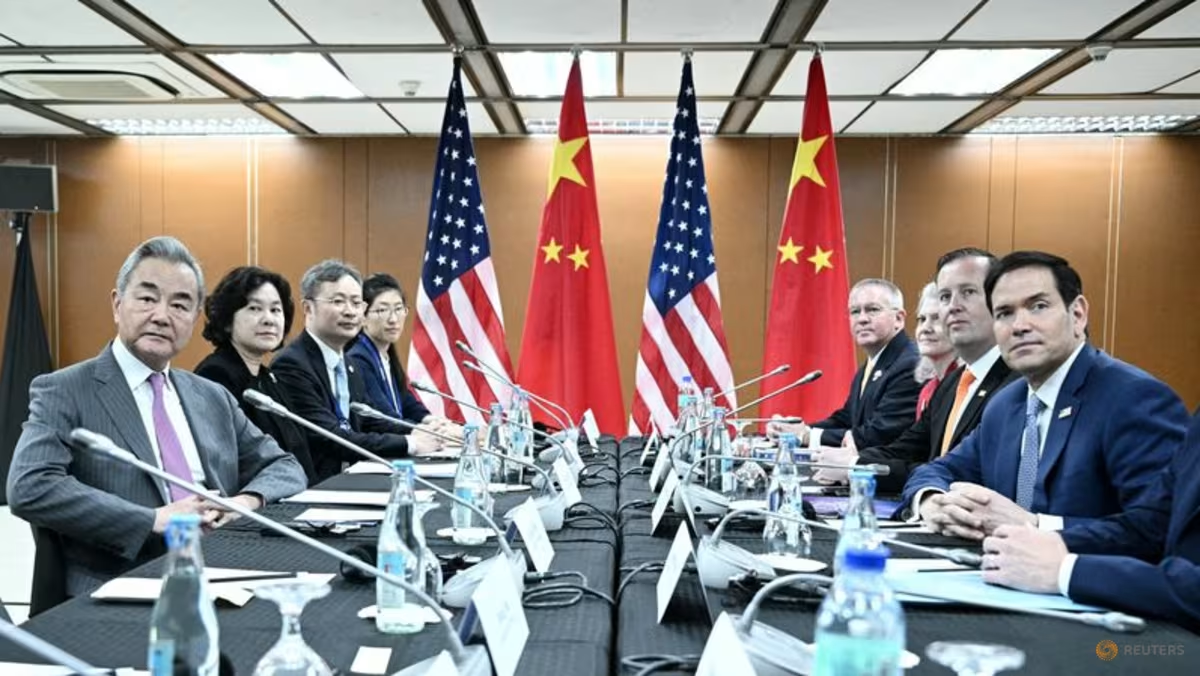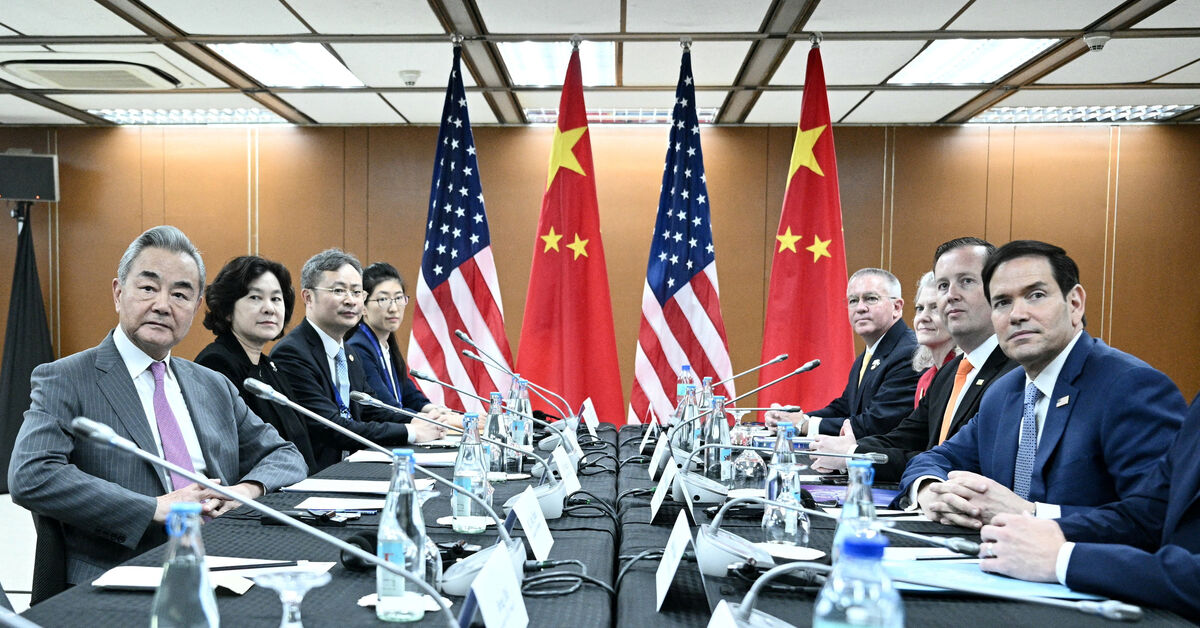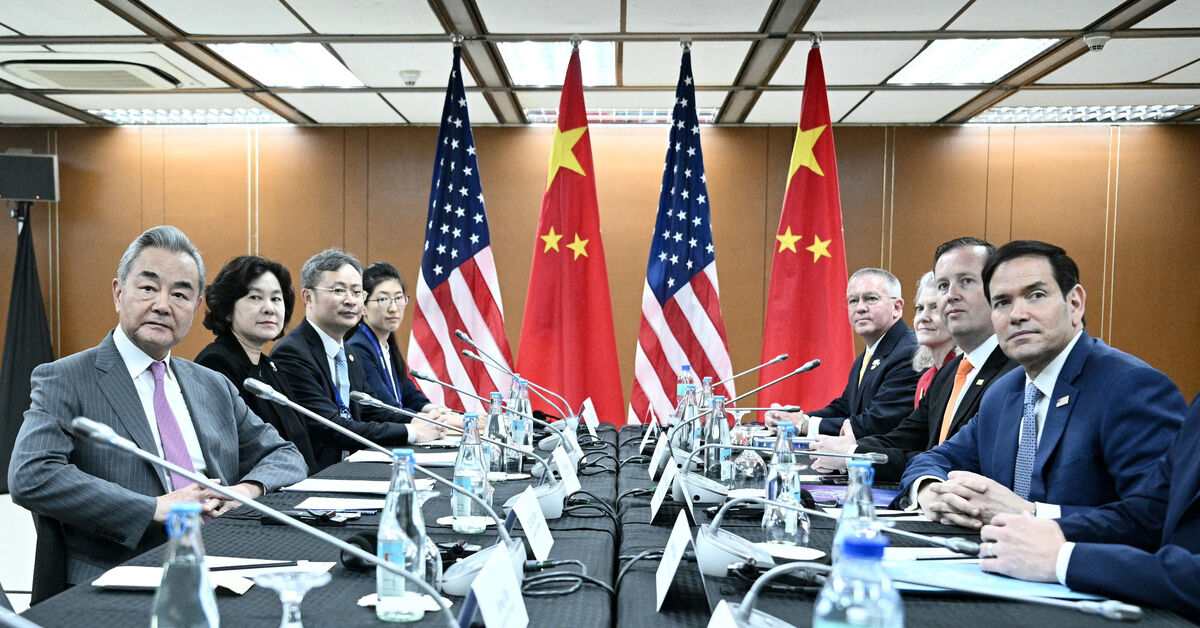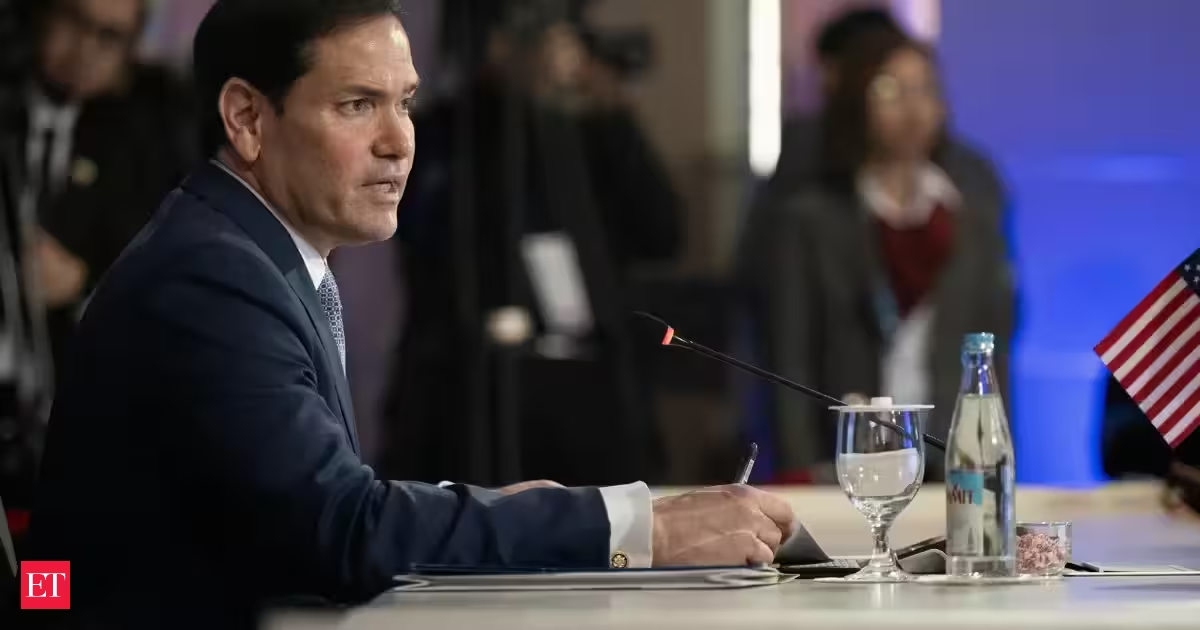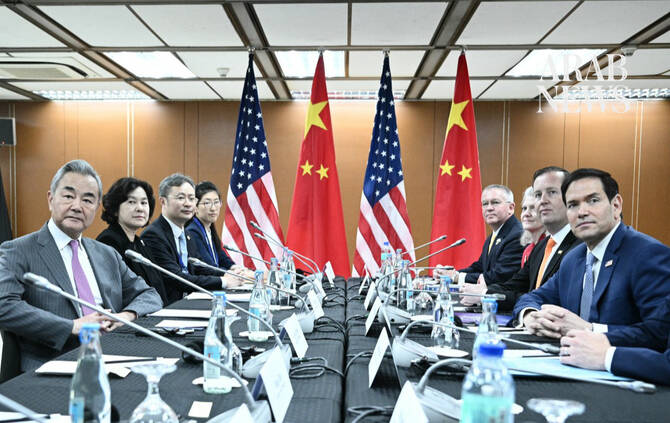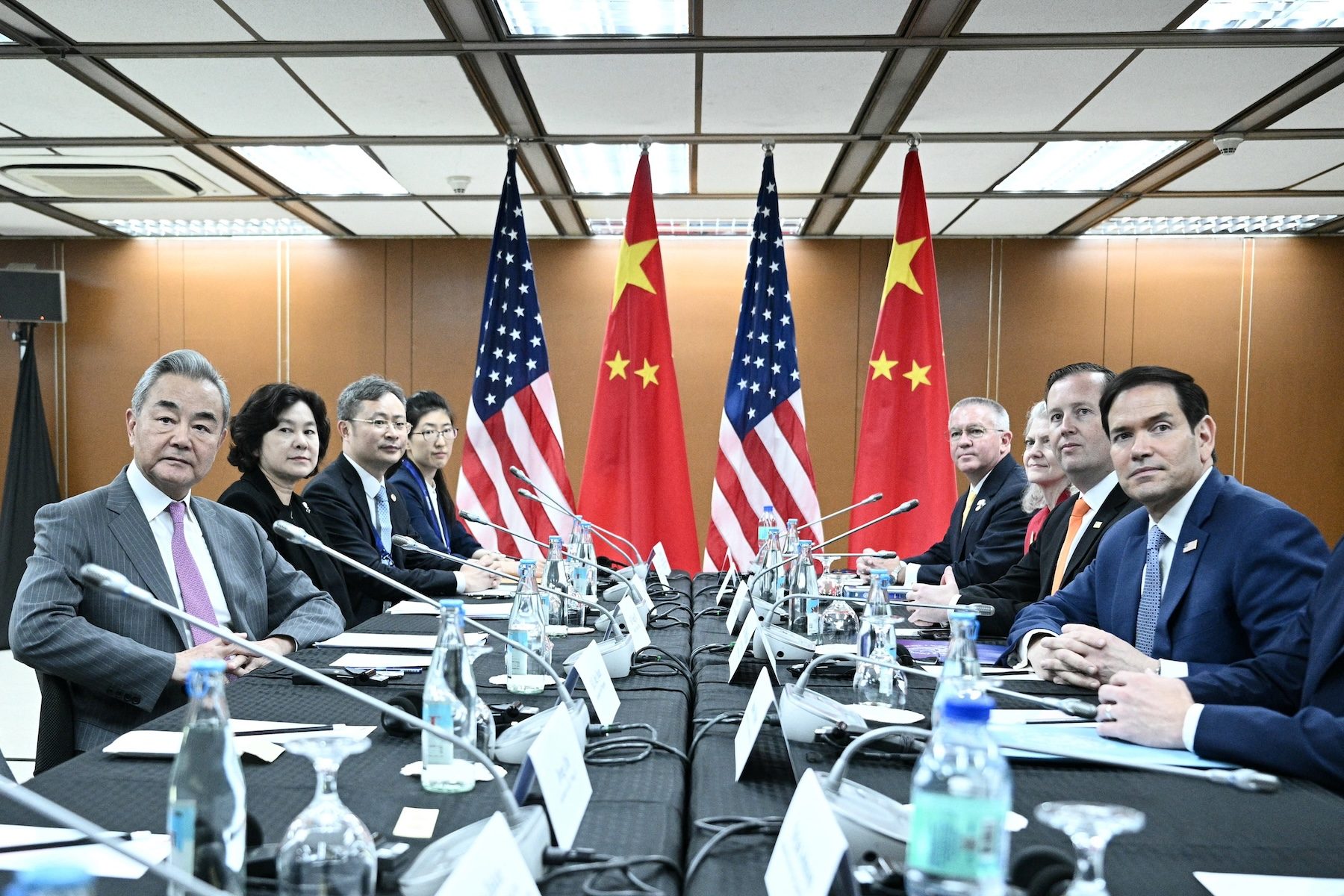
Donald Trump used a prime time address from the Oval Office last week to accuse China of interfering in the United States presidential election in 2020. But secretary of state Marco Rubio said that when he met Chinese foreign minister Wang Yi in the Philippines capital of Manila this week, the subject did not come up.Rubio and Wang spent 90 minutes together on the margins of a meeting of the Association of Southeast Asian Nations (Asean), and their chief focus appears to have been on preparing for Xi Jinping’s visit to the US in September. Trump issued the invitation during his visit to Beijing in May and the two sides seem determined that it should go ahead. “I mean, we have to have a relationship. And obviously, there are areas of great differences. Both sides will acknowledge that. We’ll have to work through those. And I think these differences will exist for the foreseeable future, and our job is to sort of manage those so that they never get out of control,” Rubio told reporters after the meeting.“We’re obviously always going to defend our national interest. And I expect they’ll do the same, as they define it. But I think there are some areas of potential co-operation. So the work we need to do between now and September is to identify what those areas are so that we can lay the groundwork for a very positive visit to Washington.”Wang did not mention Trump’s claims about election interference but said he had conveyed to Rubio China’s position on what he called the “recent series of negative words and actions by the US” and called on Washington to respect China’s core interests.“Our responsibility now is to follow the path set by the two heads of state, eliminate interference and overcome obstacles, and ensure that the consensus reached by the leaders is translated into consensus and action across the entire government and all sectors,” he said.As foreign ministers, Wang and Rubio are not responsible for the trade talks between Washington and Beijing or the boards of investment and trade that Xi and Trump agreed to establish. But they did talk about the war in Iran and although Beijing has condemned the US and Israel for starting the conflict, Rubio welcomed Wang’s endorsement of the principle of freedom of navigation through the Strait of Hormuz. “I don’t think they’re big fans of what Iran is trying to do in the straits. In fact, they’ve said so publicly – that they oppose tolling or any sort of restraint on freedom of navigation in the straits. And we hope they’ll continue to say that, and it’s important that other countries say that as well,” he said.The Asean foreign ministers’ meeting gave Wang an opportunity to catch up with his southeast Asian counterparts, including Philippines foreign secretary Theresa Lazaro. It was an awkward meeting, not least because a Philippines marine had just suffered a head injury when he was hit with a baton by Chinese coast guard personnel near the disputed Scarborough Shoal in the South China Sea.Wang warned Lazaro that Manila would suffer “bitter consequences of its own making” if it provoked Beijing over the South China Sea with the help of outside powers. China has been watching with some discomfort the deepening security and defence relationship between the Philippines and Japan as well as the US, a treaty partner.The two foreign ministers reproached one another over their countries’ conduct in the South China Sea, but Lazaro had another bone to pick with Wang over a series of videos from China Daily that depicted Filipinos as monkeys. The videos were part of a series marking the 10th anniversary of an arbitration tribunal finding that rejected China’s sweeping maritime claims.One video showed a monkey wearing a traditional Philippine shirt holding a piece of paper with the arbitration ruling before two hands marked USA and Japan lift it up and throw it into the sea, where it is blown away by a Chinese water cannon. The newspaper, which is published by the Chinese government, said the videos were allegorical and suggested that Manila’s sensitivity was an expression of its colonial legacy.“Historical scholarship shows that Spanish colonial rule produced complex status hierarchies, while American imperial discourse often portrayed Filipinos as savage, childish, or in need of tutelage,” it said. “American political cartoons frequently represented colonies as children lacking agency, and wartime propaganda placed Filipino resistance within a racialised framework of civilisation and barbarism. These historical experiences can leave deep cultural scars and may make contemporary Philippine society particularly alert to certain visual symbols.”China’s ambassador to Manila Jing Quan distanced the Chinese government from the videos, saying the authorities in Beijing do not control the content produced by every media organisation in China. This will come as a surprise to anyone who works there, however.
China, US and Philippines seek to put a stamp on Manila envelopment
US secretary of state and Chinese foreign minister meet to prepare for Xi Jinping’s visit to US in September
805 words~4 min read