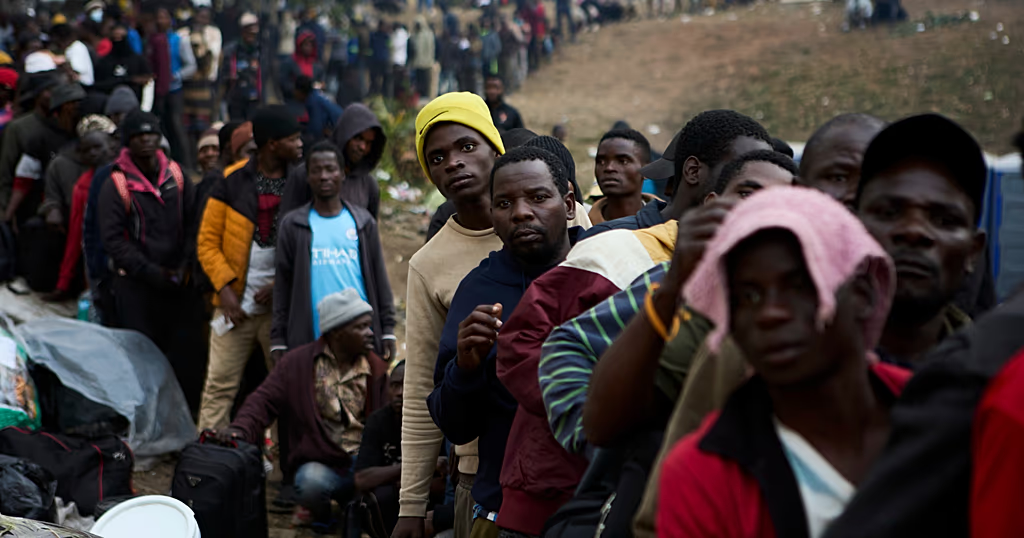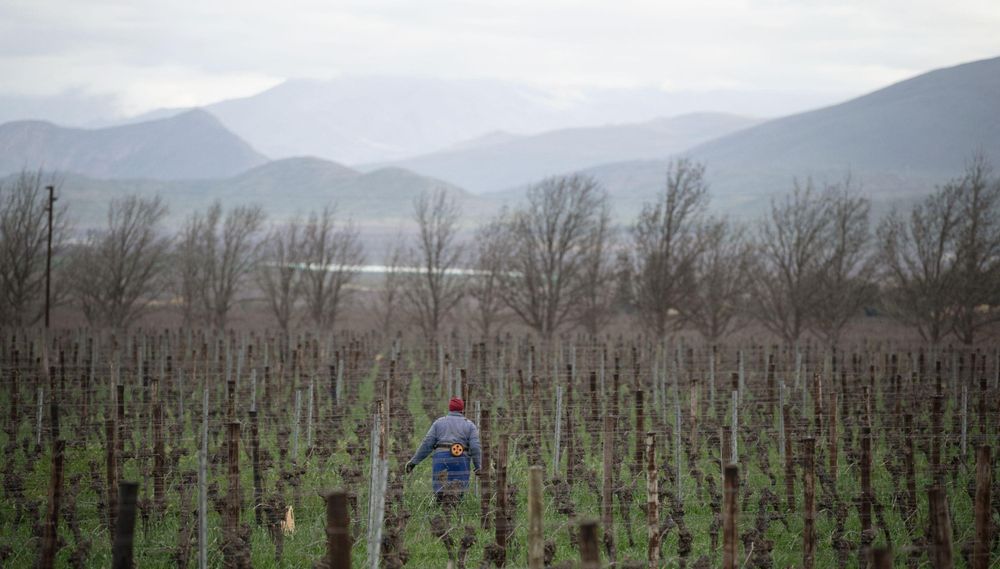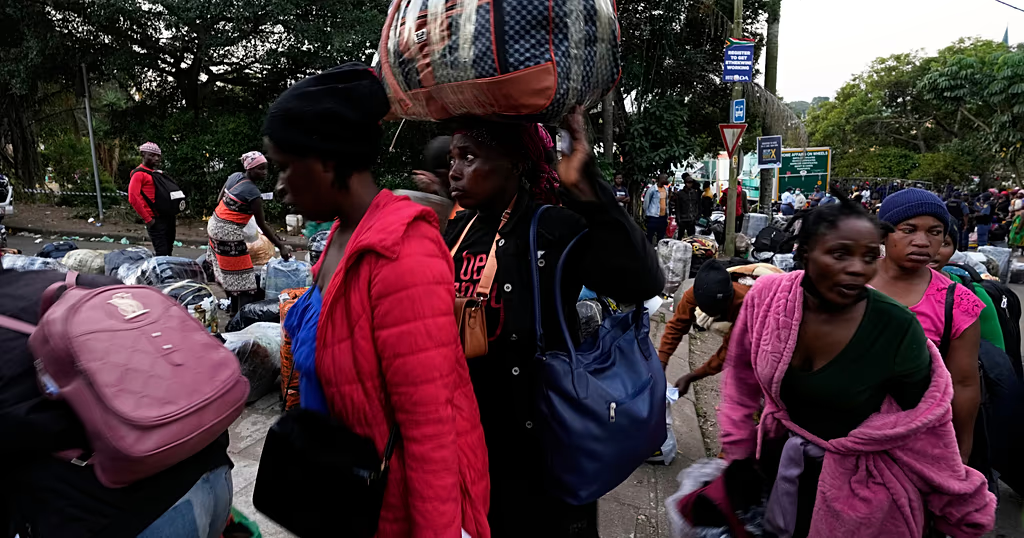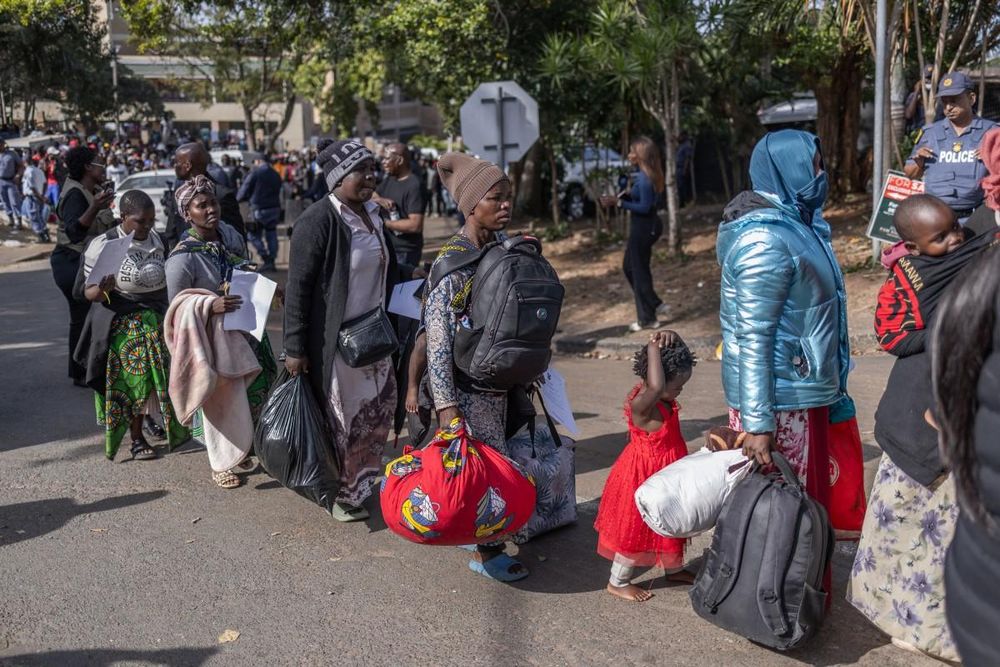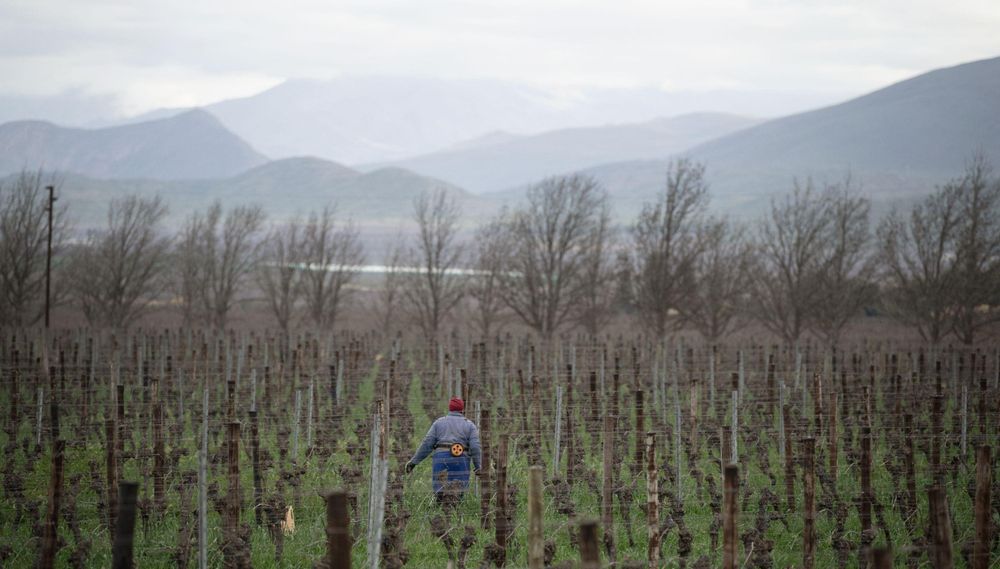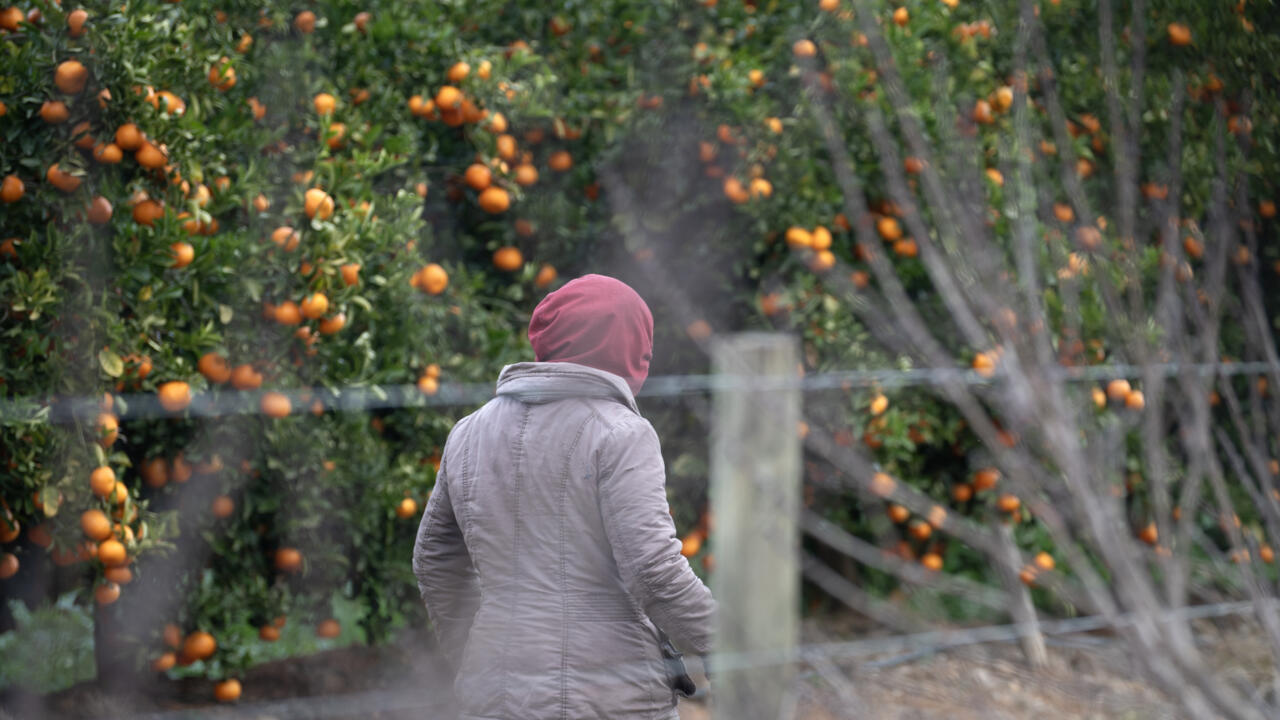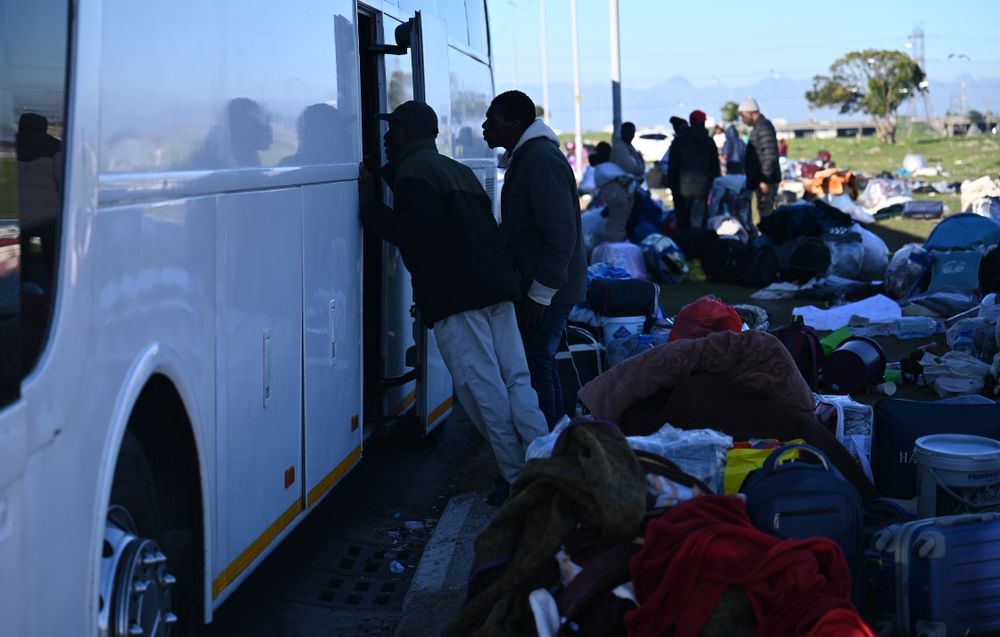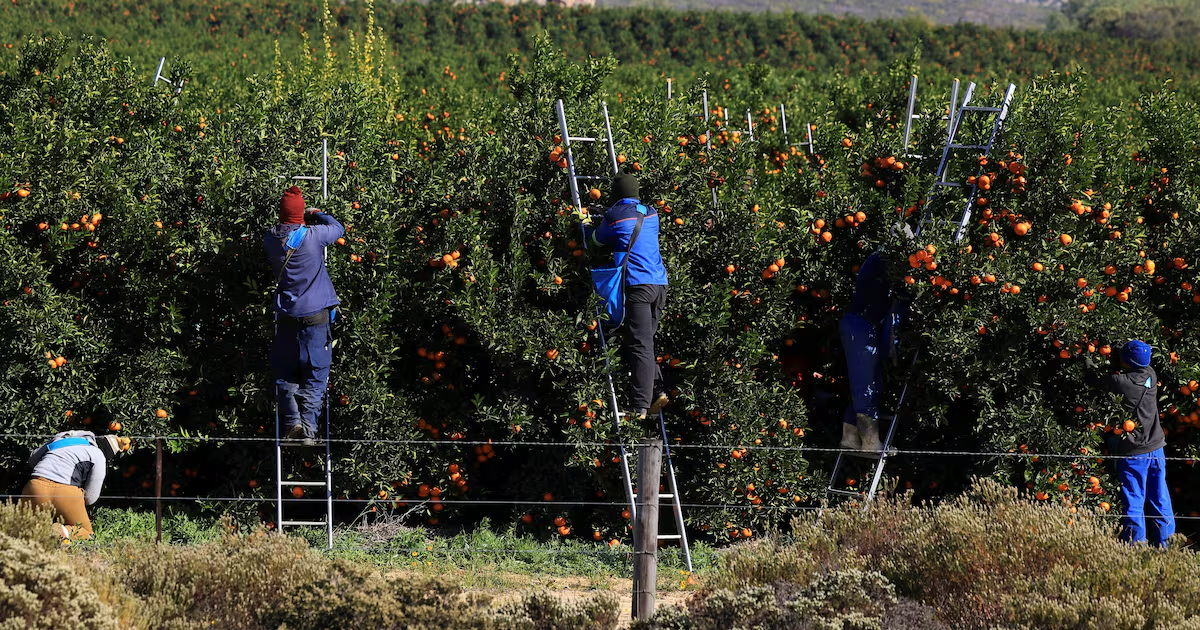
In a television news report shortly before the June 30 “deadline” given to foreign migrants in South Africa, a young African man outside the Malawian consular office in Woodmead, Johannesburg, told the reporter that he had driven in from Patensie. Patensie? If you have never heard of the place I do not blame you. It is a very small town in the Sarah Baartman district of the Eastern Cape that is known more for its citrus exports than any insurrectionary impulses. Between April and October every year the citrus season brings together a series of interlinked economic activities and an influx of seasonal workers. The nearby valleys have seen periodic flare-ups of tension between local and foreign workers over the past decade, though calling this “xenophobic” obscures obvious inter-group economic competition, and the resulting expectations placed at the door of employers and the state. Protests in nearby Kirkwood in 2022 saw worker groups and community organisations accusing networks of commercial farmers of stoking divisions by paying foreign workers to pick and pack citrus at wages below the prevailing national minimum wage of a little more than R23 an hour. Four years earlier, in 2018, local worker groups, supported by the South African National Civic Organisation, had gone on strike against deductions for lodging and transport eroding the already meagre wages of foreign workers primarily from Malawi, Zimbabwe and Lesotho. As we near the end of July, nearly a month since the March and March “deadline” for illegal immigrants to leave the country, the effect of the exodus of foreign workers is being felt in agriculture beyond citrus. A media report a few days ago lamented an “unexpected labour shortage” in the sugar cane sector, in the middle of the harvest season. Canegrowers servicing Tongaat’s Maidstone mill were battling “to find enough people to harvest cane”, the report said, quoting farmer Pratish Sharma. This episode reveals often-overlooked features of the wave of anti-immigrant sentiment, the first being the contradictions inherent in free trade as a universal idea. Put differently, the contradiction between the free mobility of capital, technology, information and goods that is implied without the mobility of labour. Many nations restrict labour market participation by foreigners. Egypt mandates the employment of nine local citizens for every foreign national; Nigeria exercises an expatriate quota; Mozambique enforces a strict foreign labour quota and Gabon limits the hiring of non-specialist operational staff to 2%. What may erroneously be referred to as xenophobia is often a pernicious form of inter-group economic competition arising from the revealed preference of employers in places like Patensie and Kirkwood for precarious and inadequately documented workers. Such contests are not unique to South Africa, with conflicts between low-wage workers for scarce, unskilled jobs being one of the five issues identified by Indian economist Pranab Bardhan. Drawing on experiences from a diverse set of places, from Trinidad to Ivory Coast to Western Europe, Bardhan observes that these conflicts involve claims for a mandated reservation of economic opportunities. This agitation for reservation, which is broadly accepted in the South African white paper on labour migration, coincides with the deepening casualisation of day work or piece jobs as a defining feature of work in agriculture.These examples indicate that migration is a global collective action problem worthy of resolution by advancing beyond the narrow limits of the periodic eruption of crisis. The man interviewed in the news crossing was one of more than 42,000 Malawians who were processed for deportation and repatriation by July 11. One of the dramatis personae in a story that extends from the kitchens of our homes to little-known places like Patensie. One of many lives sandwiched between the pursuit of profit and frustration over the elusive promise of change. • Cawe is chief commissioner at the International Trade Administration Commission. He writes in his personal capacity.
AYABONGA CAWE | Farmers struggle to fill jobs after migrant ‘deadline’
Minimum wage disputes and deductions deepen rural agricultural tensions
638 words~3 min read