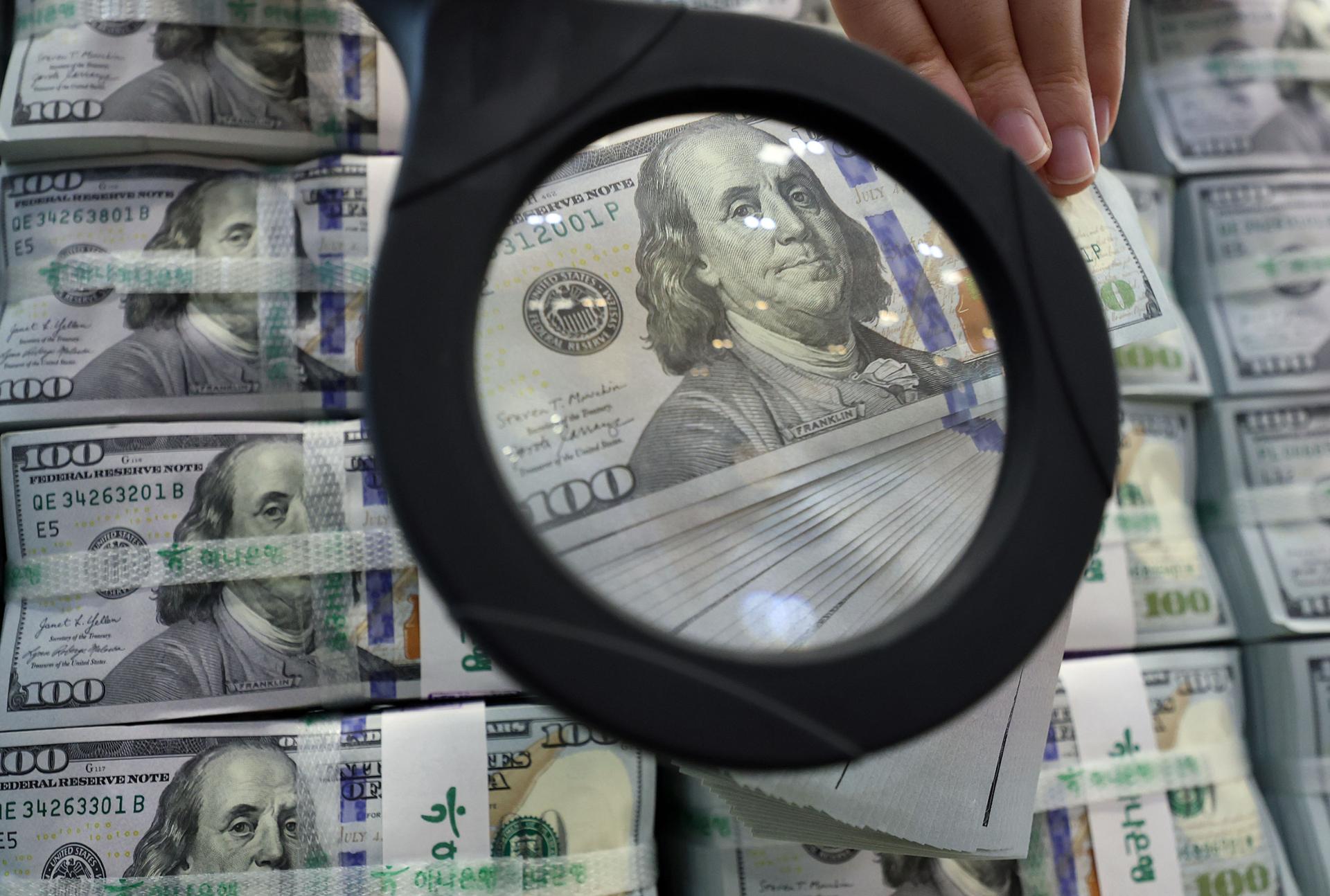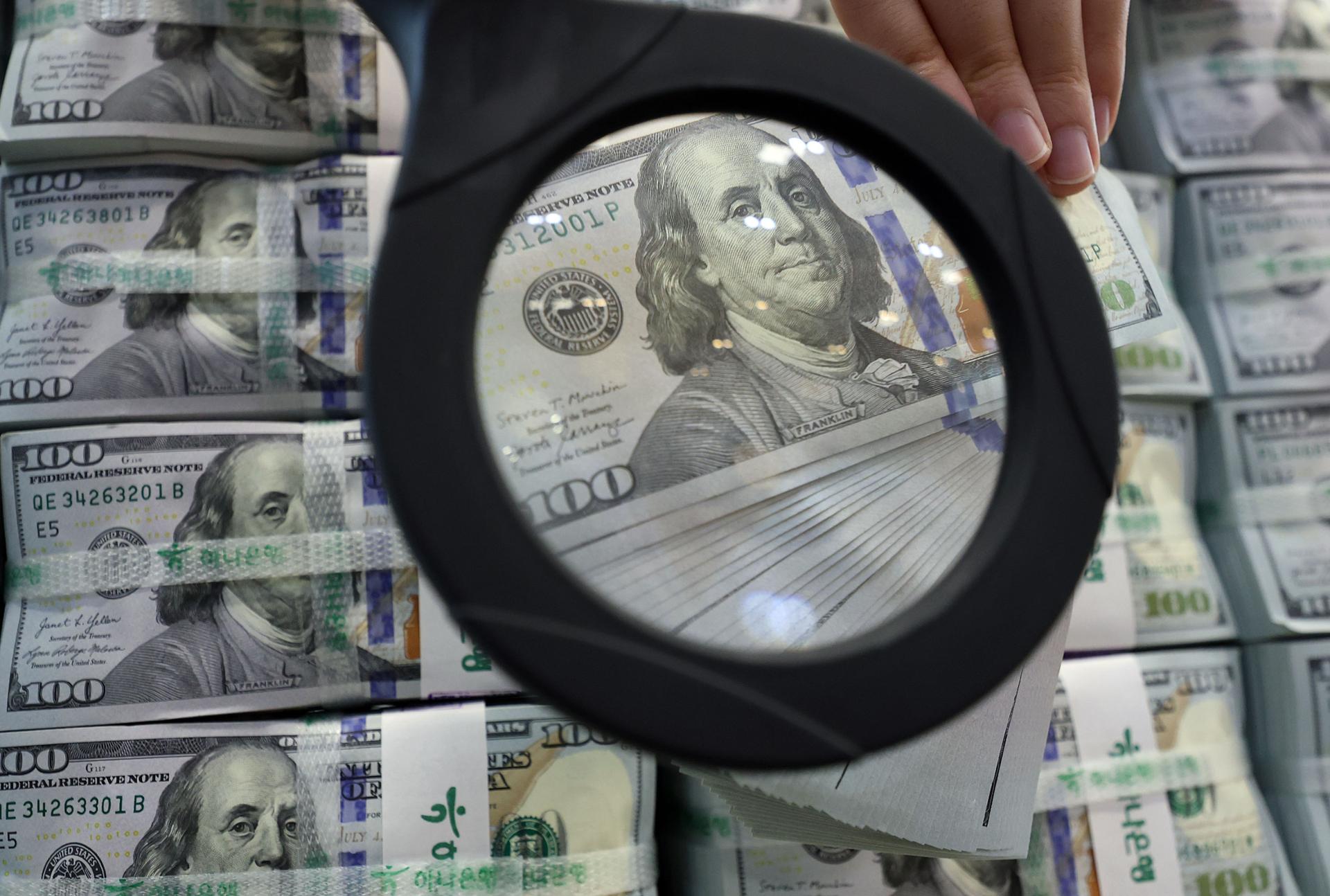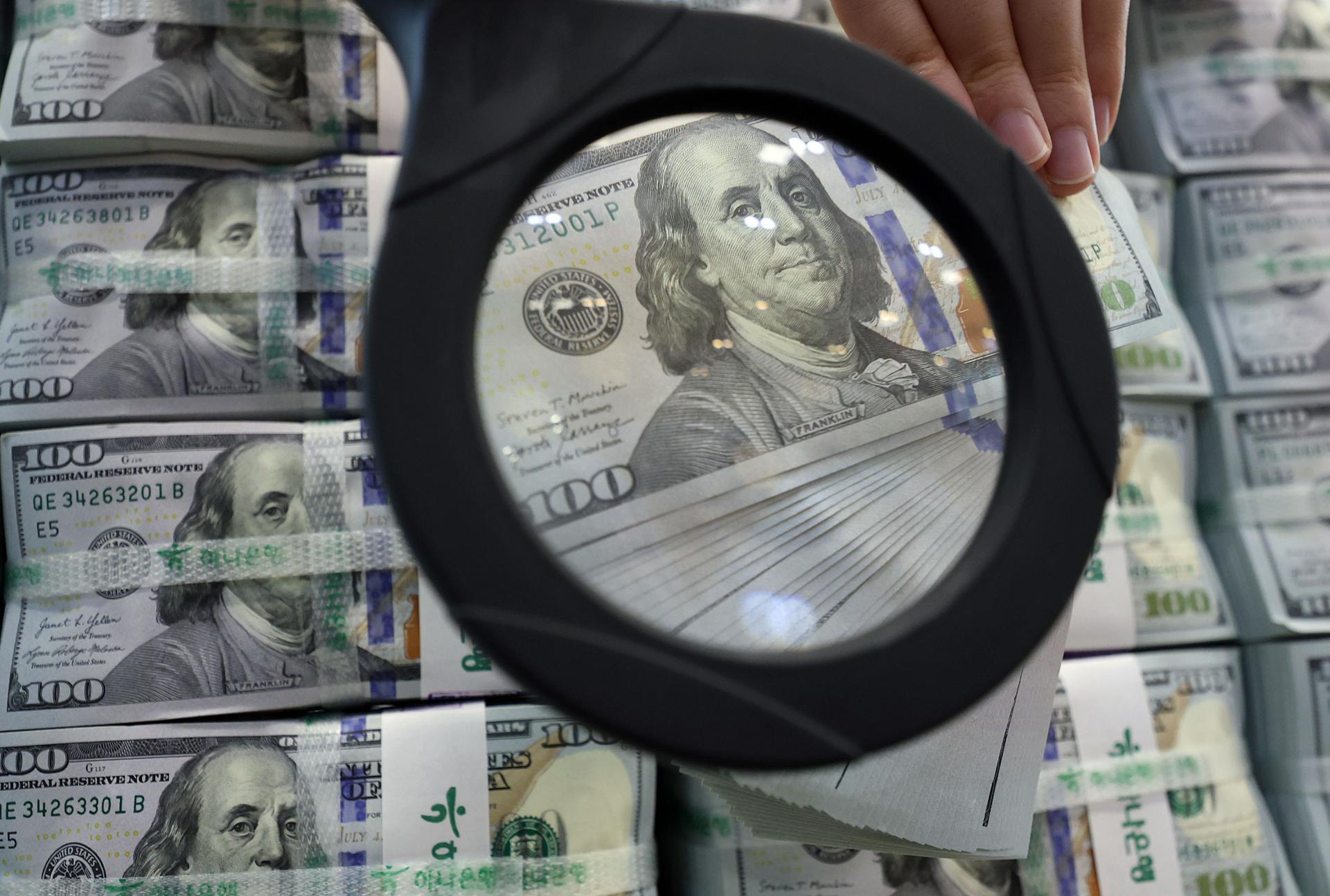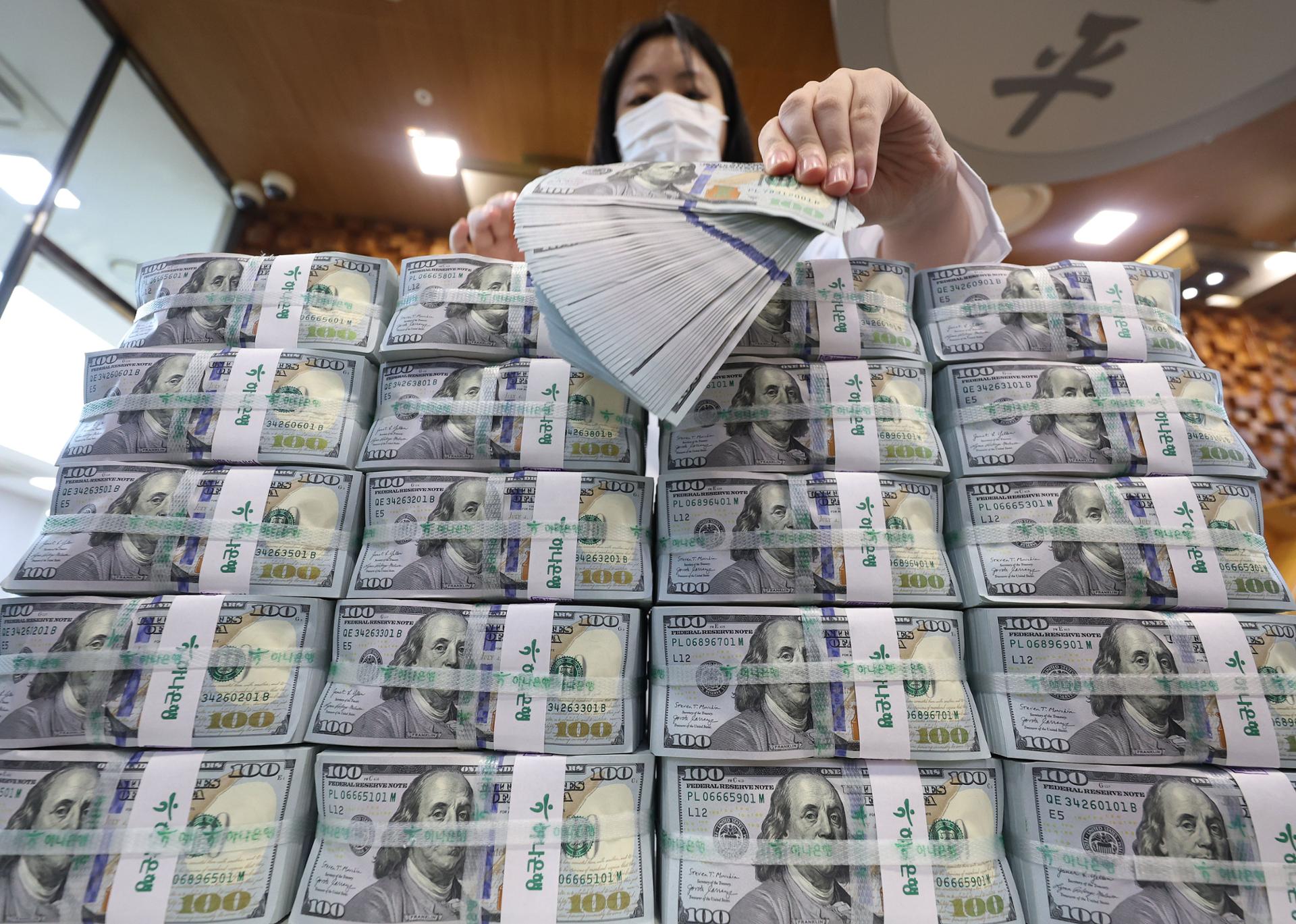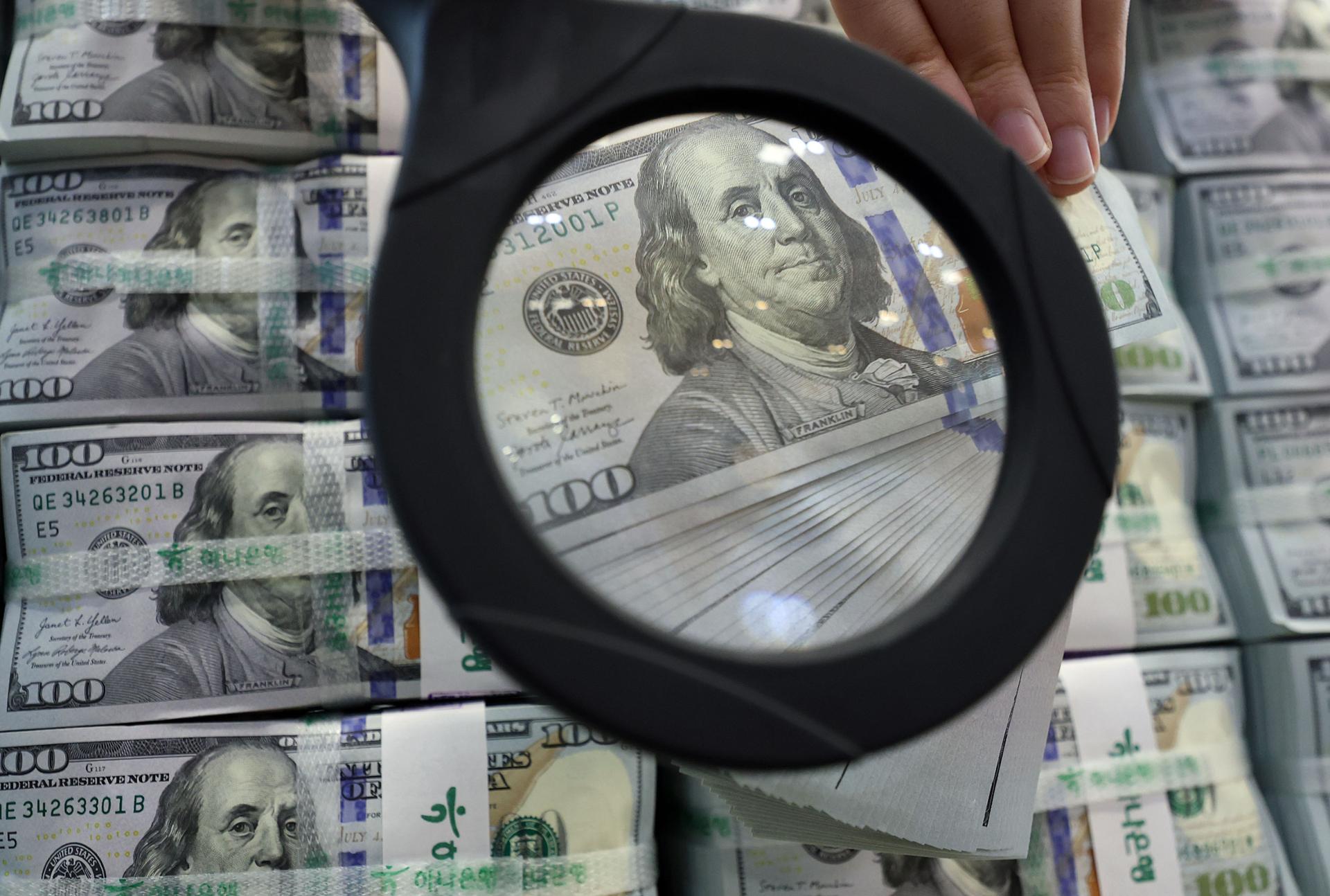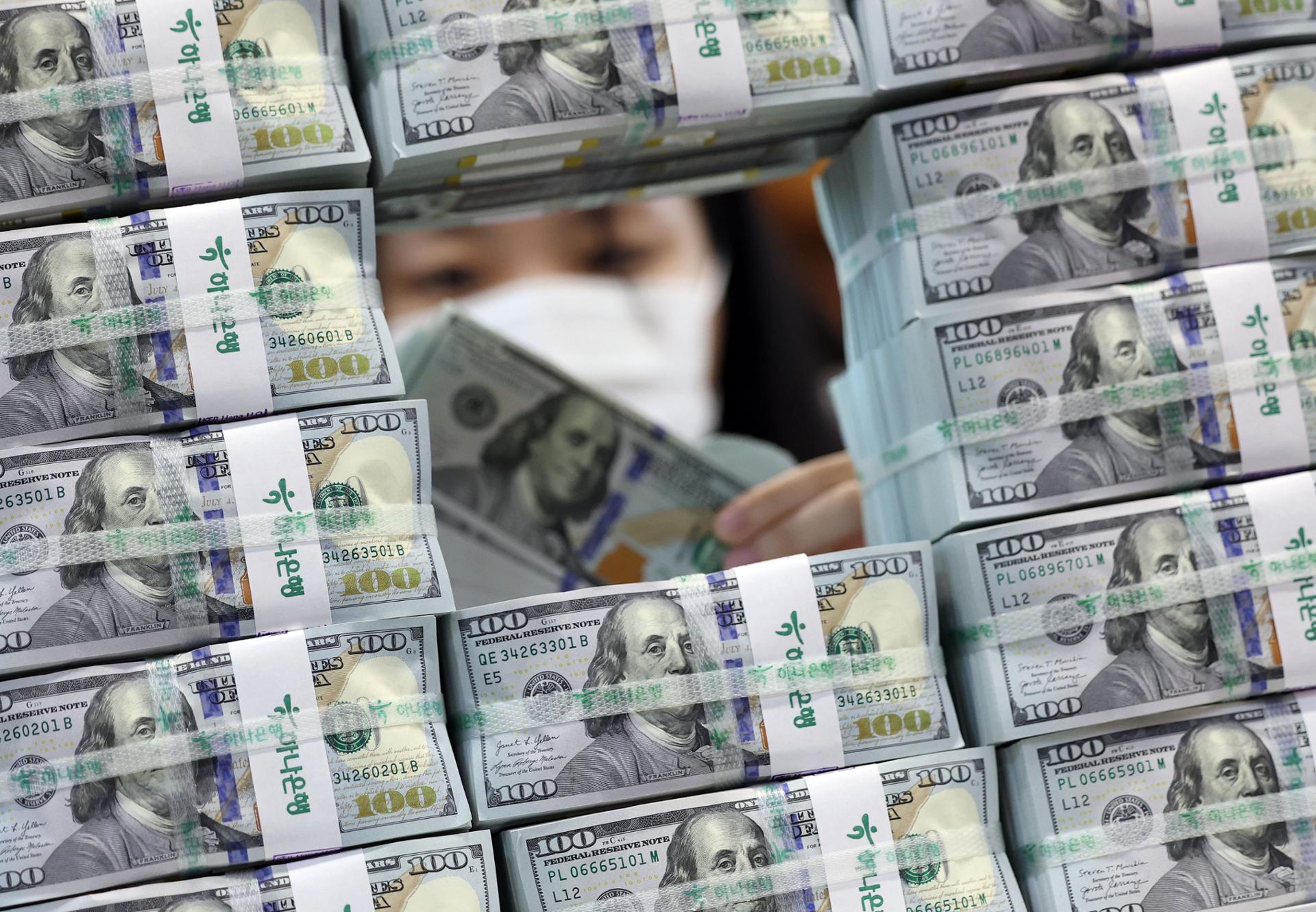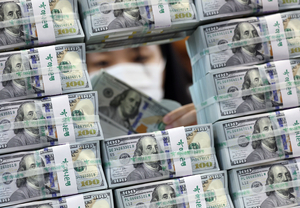
A staff member holds dollar bills at Hana Bank's anti-counterfeiting center in Jung-gu, Seoul, on July 3. (Yonhap) The US Treasury kept South Korea on its currency monitoring list, noting that the won remained under sustained depreciation pressure despite the country's large current account surplus and strong economic fundamentals.In its semiannual foreign exchange report released Thursday, the Treasury retained Korea alongside China, Japan, Taiwan, Singapore, Vietnam, Germany, Ireland, Switzerland and Thailand. The list was unchanged from its January report.Korea met two of the three criteria for inclusion: a trade surplus with the US of at least $15 billion and a current account surplus exceeding 3 percent of gross domestic product.Korea recorded a $45 billion goods and services surplus with the US, while its current account surplus stood at 6.6 percent of gross domestic product. It did not meet the third criterion for persistent, one-sided currency intervention, having sold dollars equivalent to 1.5 percent of GDP.This marked Korea's fourth consecutive appearance on the monitoring list since the report covering the second half of 2024.The Treasury said Korea's current account surplus widened substantially last year, led by exports of semiconductors and other technology products. "Notwithstanding these large external surpluses, the Korean won has come under sustained depreciation pressure," it said, reiterating that the currency's weakness was not in line with Korea's strong economic fundamentals.Overseas equity investment by Korean households and financial institutions added to the pressure last year, while the National Pension Service's largely unhedged foreign investments also contributed to the won's weakness.The Treasury also noted Korea's progress in easing foreign exchange market restrictions, saying, "The authorities are making progress in reducing restrictions on foreign investor participation in onshore foreign exchange markets, which should help liquidity and price discovery in local markets over the medium term."
US keeps Korea on FX watchlist despite strong fundamentals
The US Treasury kept South Korea on its currency monitoring list, noting that the won remained under sustained depreciation pressure despite the country's large
295 words~1 min read