This content was published on
July 24, 2026 - 01:20
5 minutes
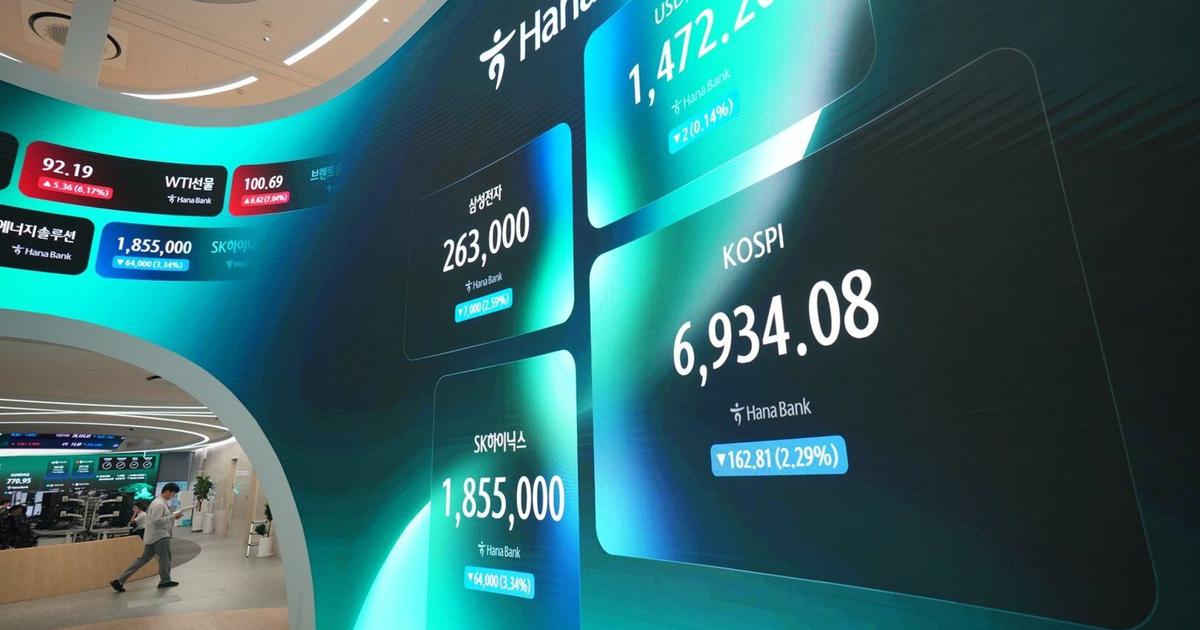
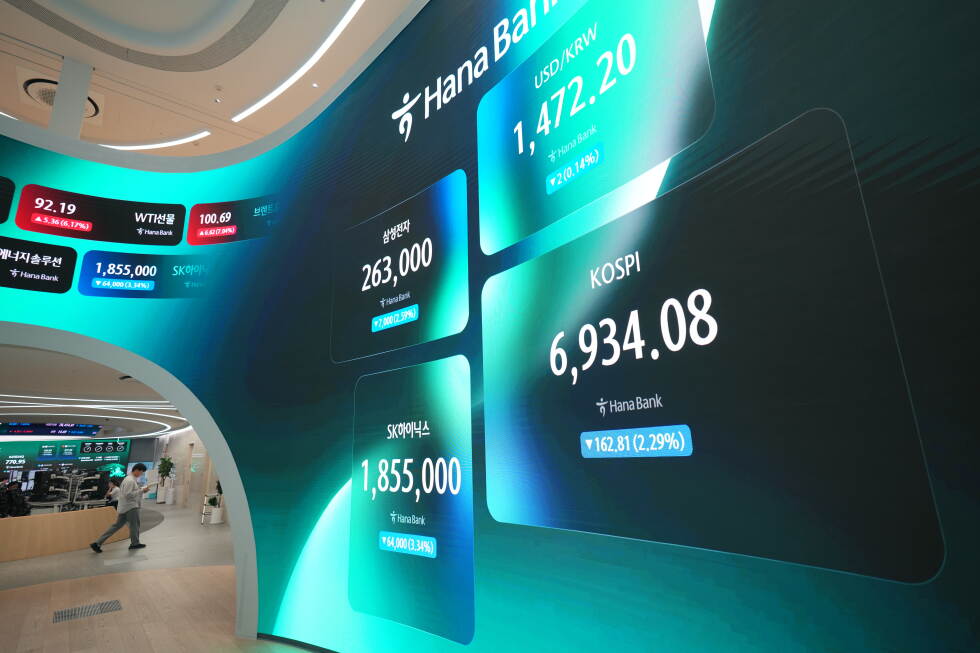
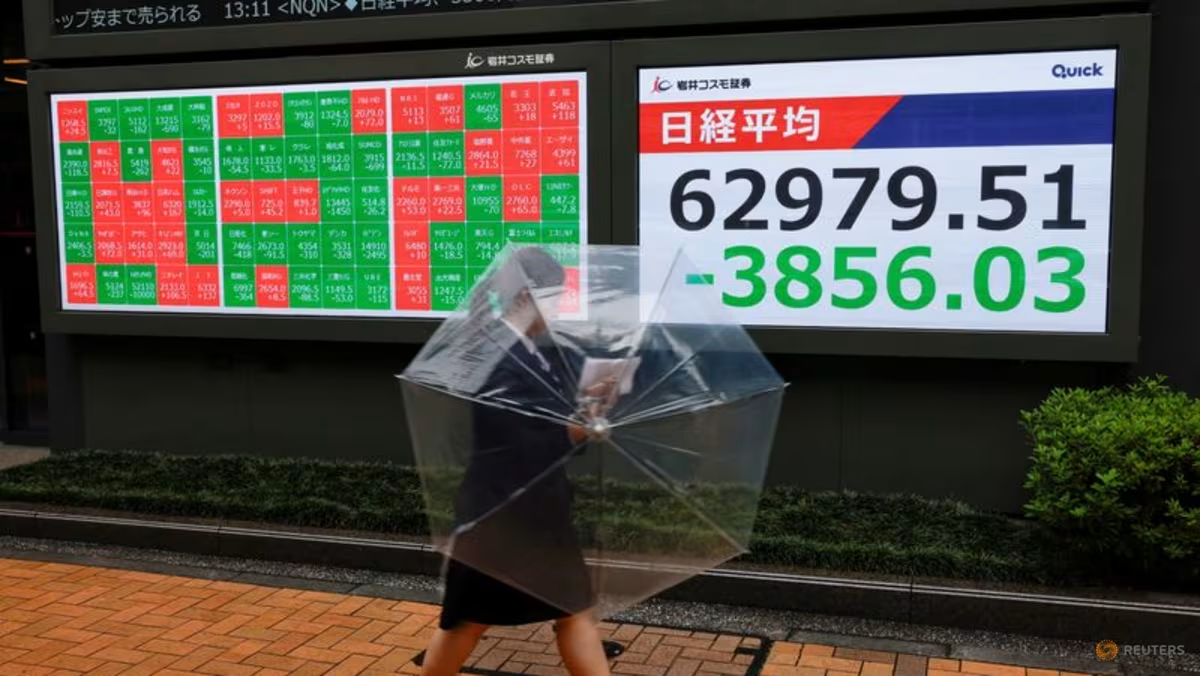
(Bloomberg) — Stocks in Asia were poised to fall after a sharp tech-led selloff on Wall Street, while Brent surged above $100 a barrel for the first time in two months as the escalating Middle East conflict rekindled inflation concerns.Equity-index futures pointed to losses in Japan, South Korea and Australia after the S&P 500 fell 1.2%, its biggest one-day drop in a month, and the tech-heavy Nasdaq 100 lost 1.9%. A gauge of megacap stocks suffered its worst session since the tariff-driven market rout in April 2025, underscoring investors’ retreat from risk assets.Nasdaq 100 futures rose 0.3%, helping steady sentiment, while Intel Corp. advanced 3.5% in extended trading after its forecast beat Wall Street estimates.West Texas Intermediate crude extended gains in early Asian trading after global benchmark Brent closed at $100.69 a barrel Thursday, pushing Treasuries lower and the dollar higher. The moves came as US President Donald Trump threatened to intensify the conflict with Iran after Houthi militants attacked two Saudi Arabian oil tankers in the Red Sea, fueling concerns over potential disruptions to global energy supplies.The surge in energy prices has revived concerns that inflation may prove more persistent, complicating the Federal Reserve’s policy path ahead of next week’s meeting. Money markets now fully price in a Fed interest-rate increase by September, with investors watching whether higher oil prices feed through to broader inflation and corporate earnings.“Escalating Middle East tensions have pushed crude prices higher, raising concerns that inflation could re-accelerate and delay interest-rate relief, maybe even cause the Fed to hike,” said Sameer Samana at Wells Fargo Investment Institute. “We think oil prices eventually normalize, but appreciate that things may get worse before they get better.”The latest escalation has increased strains on global energy supply chains. Fighting around Iran has already disrupted shipping through the Strait of Hormuz, the gateway to the Persian Gulf, while attacks in the Red Sea threaten the alternative route Saudi Arabia has relied on to keep crude flowing.The market is also contending with a spate of attacks at the Caspian Pipeline Consortium terminal on Russia’s Black Sea coast, which exports most of Kazakhstan’s crude. Inventories across the globe are depleted by months of conflict, raising the risk of a supply squeeze that threatens to weigh on the global economy if prices continue to climb.“Round 2 of the military conflict is going to be broader than Round 1,” Bob McNally, president of Rapidan Energy Group and a former White House official, said in a Bloomberg Television interview, referring to the Iran war. “The risks are great, not only to shipping, but also to energy infrastructure.”Elsewhere, European Central Bank President Christine Lagarde laid the groundwork for a possible interest-rate increase in September after policymakers unanimously left the deposit rate at 2.25%.In other corners of the market, gold fell almost 2% to about $4,050 an ounce Thursday as bets on rate hikes reduced the appeal for the non-interest-bearing metal. Australian and New Zealand bonds declined in early Friday trading.The geopolitical backdrop is adding to investor scrutiny of the AI trade, with markets increasingly demanding evidence that massive spending on artificial intelligence will generate commensurate earnings growth. Alphabet Inc. fell 7.1% after raising its capital-expenditure forecast, while Tesla Inc. tumbled 15% as profits disappointed despite strong electric-vehicle deliveries.Alongside Alphabet, Meta Platforms Inc., Microsoft Corp. and Amazon.com Inc. telegraphed in April they’d be spending as much as $725 billion this year on AI ambitions.“It’s still early, and we’ll see more earnings from the hyperscalers next week,” said Matt Maley, chief market strategist at Miller Tabak. “So, we cannot declare that they are seeing the same kind of negative reaction to their earnings reports as the chip stocks, but this action does raise more concerns about this ‘sell the news’ issue.”Corporate Highlights:Intel Corp. delivered a surprisingly strong revenue forecast for the current period, indicating that a surge in data center spending is helping fuel the chipmaker’s turnaround. Advanced Micro Devices Inc. announced a raft of new products for data centers that it said will outperform those from rival Nvidia Corp., aiming to make gains in a booming market for AI computing. Some of the main moves in markets:StocksS&P 500 futures were little changed as of 8:15 a.m. Tokyo time Hang Seng futures fell 1.3% S&P/ASX 200 futures fell 0.6% CurrenciesThe Bloomberg Dollar Spot Index was little changed The euro was little changed at $1.1379 The Japanese yen was little changed at 163.83 per dollar The offshore yuan was little changed at 6.7772 per dollar The Australian dollar was little changed at $0.6968 CryptocurrenciesBitcoin was little changed at $65,143.46 Ether fell 0.2% to $1,882.03 BondsAustralia’s 10-year yield advanced seven basis points to 5.06% CommoditiesWest Texas Intermediate crude was little changed Spot gold was little changed This story was produced with the assistance of Bloomberg Automation.©2026 Bloomberg L.P.