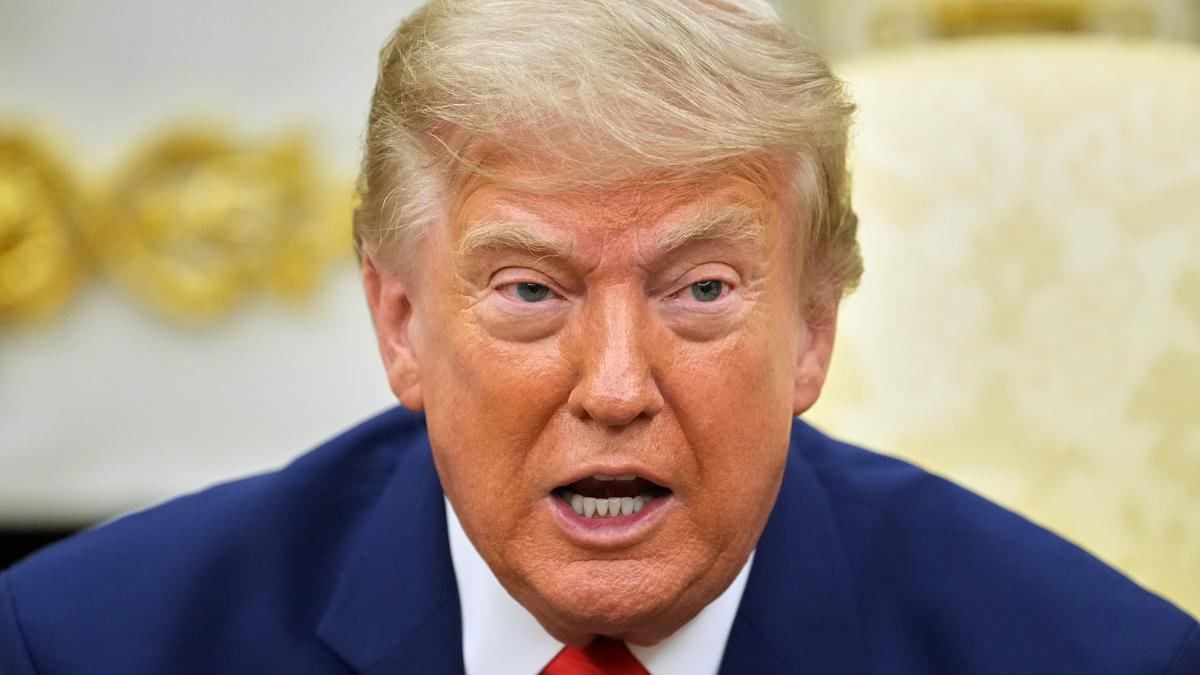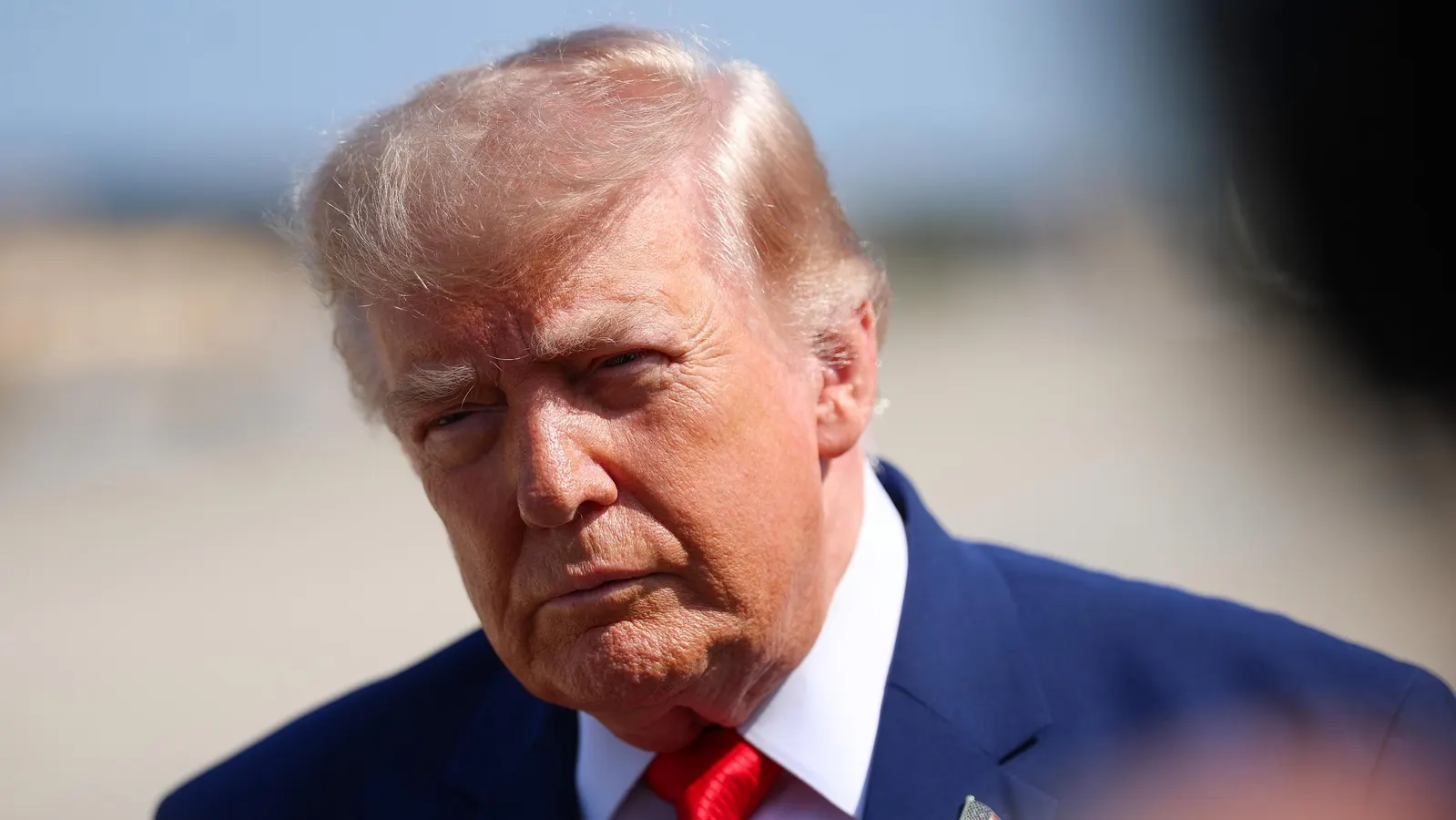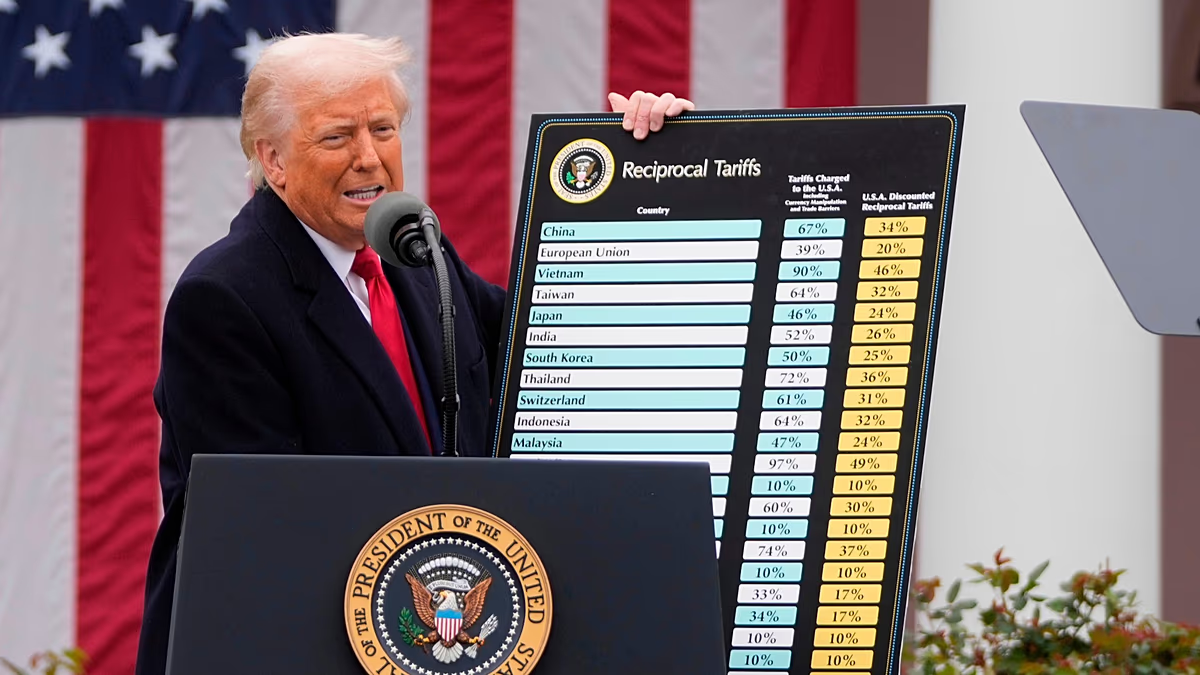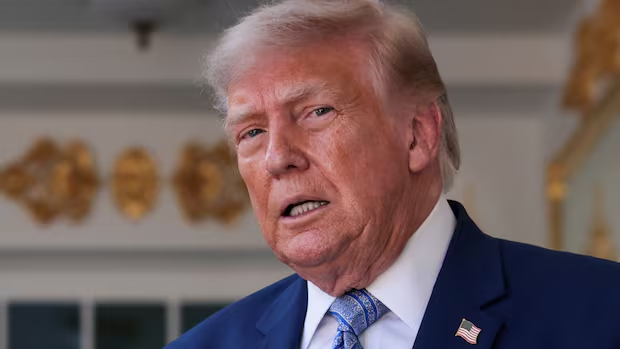
WorldThe Trump administration is imposing a new global tariff regime designed to take the place of a temporary 10 per cent tariff that expires Friday.Canada, European Union, nearly 60 other countries face tariff over U.S. claims of 'forced labour'Mike Crawley · CBC News · Posted: Jul 23, 2026 5:16 PM EDT | Last Updated: 18 minutes agoListen to this articleEstimated 4 minutesThe audio version of this article is generated by AI-based technology. Mispronunciations can occur. We are working with our partners to continually review and improve the results.U.S. President Donald Trump, seen at the White on Thursday, has directed his administration to impose a new global tariff regime designed to take the place of a temporary 10 per cent tariff that expires Friday. (Evelyn Hockstein/Reuters)The Trump administration is imposing a new global tariff regime designed to take the place of a temporary 10 per cent tariff that expires Friday. The replacement tariffs will apply to goods from Canada, the European Union and nearly 60 other countries. However, Canadian exports that comply with the rules of origin in the Canada-U.S.-Mexico Agreement will be exempt. That means no change to either the rate or the scope of U.S. President Donald Trump's existing tariffs on Canadian products. The U.S. justification for the new tariff is that the countries have failed to do enough to keep products made by forced labour out of their supply chains. This follows a U.S. trade representative investigation this spring into whether 59 countries plus the European Union are effectively banning the importation of goods produced with forced labour. The investigation declared that every U.S. trading partner failed to meet the bar. 'We're not in favour of sweatshops'"We're not in favour of sweatshops, and we don't want anyone else to be in favour of it either," U.S. Trade Representative Jamieson Greer told CNN late Thursday afternoon, shortly after announcing the tariffs. Forced labour is just the latest of the Trump administration's shifting justifications for its tariff regimes. The changes have been forced upon them largely by the legal system, because of limits to the president's powers to impose tariffs. Canada says there's no basis for Trump's forced labour tariffsTrump to hit more than 60 countries, including Canada, with new tariffs over 'forced labour'The new tariffs take the place of a temporary 10 per cent levy that Trump imposed in February, immediately after the U.S. Supreme Court struck down his original global tariff regime. That replacement tariff was time-limited to five months, so its July 24 expiration date was long-expected. U.S. Trade Representative Jamieson Greer, right, tours a solar panel factory in Walbridge, Ohio, in April. Greer announced the Trump administration's latest global tariff regime on Thursday. (Mike Crawley/CBC)The Trump administration has been searching for new, legal ways to impose broad-based tariffs since that Supreme Court loss nixed what was its "Plan A" for global tariffs. Plan A included the so-called Liberation Day tariffs placed on dozens of countries in early 2025, as well as duties of 35 per cent on Canadian products, based on Trump's declaration that fentanyl trafficking across the northern border constituted a national emergency. The court ruled the International Emergency Economic Powers Act did not give Trump the authority to levy those tariffsPlan B was a tariff of 10 per cent, imposed under Section 122 of the U.S. Trade Act, which says the president can impose a temporary tariff to address what it describes “large and serious United States balance-of-payments deficits." That tariff is limited to a duration of 150 days without congressional approval. Plan C involves the new forced labour tariffs, imposed under Section 301 of the U.S. Trade Act, which gives the president the power to impose tariffs as relief against unfair trade practices of other countries. The tariff rate is 10 per cent for goods from Canada and 15 other U.S. trading partners, including the European Union, the U.K., Argentina, El Salvador, Bangladesh and Pakistan.Another 44 countries — including Japan, Singapore, India, South Korea and Vietnam — face a tariff of 12.5 per cent. What Canadian goods is Trump targeting with his latest tariff move?Trump's new tariffs on Canada could face a court challenge. But this time, he might winThe broad-based tariffs use a different section of U.S. law from the ones that give the president the power to impose tariffs on specific industrial sectors — such as steel, aluminum and autos — on the basis of U.S. national security. They also differ from the 50 per cent tariffs that Trump is threatening to impose on billions of dollars worth of Canadian goods, under a never-before-used section of the U.S. Tariff Act of 1930. Those tariffs, slated to take effect on Aug. 19, are based on the administration's claims that Canada is discriminating against U.S. commerce in the alcohol, dairy and auto sectors. ABOUT THE AUTHORMike Crawley is a correspondent for CBC News, based in Washington. He began his career as a newspaper reporter in B.C., spent six years as a freelance journalist in various parts of Africa, then joined the CBC in 2005. Mike reported on Ontario politics for 15 years. He was born and raised in Saint John, N.B.Follow Mike Crawley on X
U.S. launches new tariff, replacing what Supreme Court struck down | CBC News
The Trump administration is imposing a new global tariff regime designed to take the place of a temporary 10 per cent tariff that expires Friday.
862 words~4 min read