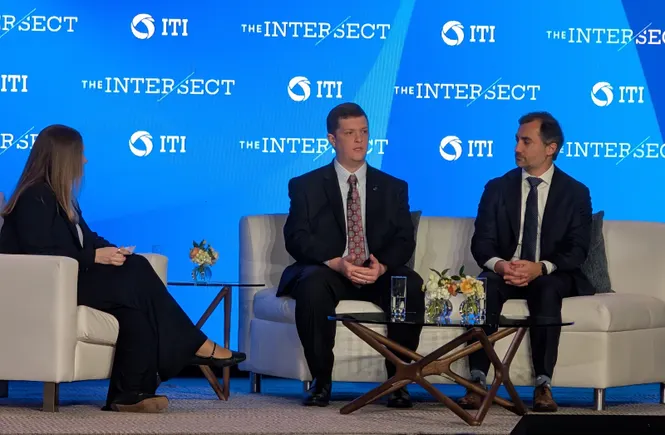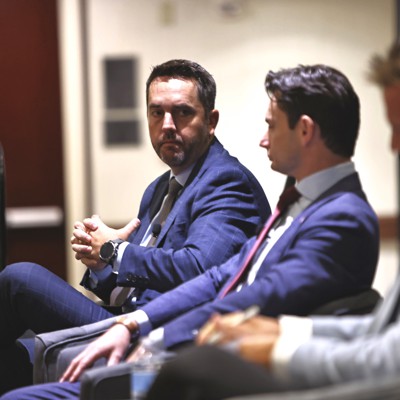
Agencies are keeping missions moving while technology, security requirements, data demands, and public expectations all continue to shift at once. That’s why this year’s Red Hat Government Symposium couldn’t have come at a better time. Bringing together leaders from federal, state, and local government agencies and higher education, panelists focused on how their organizations are managing disruption without losing momentum. Across sessions, speakers shared practical examples of how agencies are making thoughtful technology decisions to strengthen security, improve service delivery, and support mission outcomes in a fast-moving environment.Here’s a look at the key takeaways:From raw data to better decisionsData only matters if it helps agencies act with greater speed, clarity, and confidence. Good data stewardship is less about collecting more information and more about creating the conditions for better decisions—ones that are measurable, repeatable, and grounded in mission needs.I sat down with Hailaeos “Holly” Troy, senior DevOps automation architect for the City and County of Denver, to discuss how a data-driven approach to automation is delivering measurable results. By identifying high-value use cases, tracking outcomes, and embedding safeguards for sensitive information, Denver is building a scalable model for responsible automation.The session reinforced another recurring theme: impact comes from applying data with purpose. The strongest agencies are not those with the most tools, but those that can turn insight into action while maintaining accountability.Connecting the edge to the enterpriseAs missions grow more distributed, agencies are rethinking how their technology environments are structured. Rather than treating edge and enterprise systems as separate domains, many are working toward a unified, policy-driven architecture.During a session moderated by Travis Steele, chief architect for the air force and space force at Red Hat, panelists from U.S. Customs and Border Protection and Voyager Technologies discussed how agencies are connecting remote sensors, mobile platforms, and cloud environments into a cohesive ecosystem at the edge. This approach enables data to move more efficiently and in a more secure manner, enabling faster insights and more coordinated operations.Equally important, it supports long-term sustainability, helping agencies reduce redundancy, optimize infrastructure, and scale capabilities as needs evolve.Building resilience through trust and interoperabilityChristopher Yates and Sam Richman, chief principal architects for defense at Red Hat, led a compelling discussion with Karl Magnus Bergh, senior integration architect at IBM, focused on lessons from NATO’s Heimdall exercise. The exercise brought together military organizations, industry partners, and technologists to test how data, AI, and distributed systems perform in austere, communications-challenged environments. The conversation underscored that resilience is not only about whether the technology works, but whether organizations can build trusted, interoperable frameworks that continue to function when conditions are unpredictable. Panelists emphasized the importance of consistent cloud-to-core-to-edge architectures, rapid iteration, and manageable software-defined operations that help teams adapt quickly while maintaining continuity across environments.How trust and transparency scale AIAt this year’s event, speakers emphasized operationalizing AI in ways that are trustworthy, transparent, and aligned with mission needs.Ben Cushing, chief principal architect for health and life sciences at Red Hat, led a discussion with Dr. Susan Gregurick, associate director for data science and director of the Office of Data Science Strategy at the National Institutes of Health. They explored how modular AI architectures, combined with validation layers and policy controls, can help agencies scale AI responsibly.The takeaway: as AI adoption grows, so does the need for governance. Agencies are prioritizing approaches that make AI systems more explainable, controllable, and accountable from the start.Reducing friction between technology and mission needsA separate conversation highlighted a challenge familiar to many agencies: the disconnect that can emerge between technical teams and the program staff they support. Damien Eversmann, chief architect for education at Red Hat sat down with Anil “Neil” Chaudhury from the U.S. Department of Transportation’s Highly Automated Systems Safety Center of Excellence. They emphasized that the most effective architectures are not just technically sound, but designed around uptime, reliability, usability, and trust. The session explored how developers can better partner with program leaders by focusing on simple, seamless, and security-enhanced experiences, while also applying the right levels of governance, data protection, and analytics to the right use cases. The broader takeaway was that innovation works best when it reduces friction for users and helps agencies translate technical capability into operational value.Acting now on emerging cybersecurity challengesCybersecurity conversations focused not just on today’s threats, but on what’s coming next. With advancements in areas like generative AI and quantum computing, agencies are preparing for a rapidly evolving risk landscape.In a session led by Mike Epley, chief architect and security strategist for public sector at Red Hat, leaders from NIST, Intel, and The U.S. Department of State shared practical steps agencies can take now. The conversation covered a range of topics, including the need to adopt zero trust principles, the implications of confidential computing, and how to prepare for post-quantum cryptography.Panelists emphasized that proactive planning is essential. By embedding security into every layer of their environments today, agencies can better position themselves for the challenges ahead.Successfully keeping the mission in motionThe ultimate takeaway from this year’s Government Symposium is that change is no longer a temporary disruption to manage. It is the permanent operational landscape. Navigating this reality requires moving past mere adaptation and true resilience belongs to agencies that can cultivate continuous innovation as a core capability. This approach uses technology as an accelerator for the mission rather than a hurdle.As we look at the road ahead, successful public sector modernization will rely on three critical pillars:Intentional Innovation: Aligning open, modular technology choices directly with measurable mission outcomes.Uncompromising Trust: Embedding robust security practices, strict data governance, and interoperability from the enterprise core to the tactical edge.Frictionless Collaboration: Bridging the gap between technical teams and program leaders to deliver simple, secure, and reliable user experiences.At Red Hat, we are proud to partner with public sector leaders across federal, state, and local levels to build the flexible, open-source foundations necessary for this journey. The future of government technology isn’t just about keeping pace with change—it’s about defining it.Explore session highlights and stream the event on demand anytime: Red Hat Government Symposium. and save the date to join us on October 28, 2026, in Washington, D.C.
Red Hat Government Symposium: Keeping the mission in motion by leading through change and delivering with impact
Agencies are keeping missions moving while technology, security requirements, data demands, and public expectations all continue to shift at once. That’s why this year’s Red Hat Government Symposium couldn’t have come at a better time.
1,021 words~5 min read