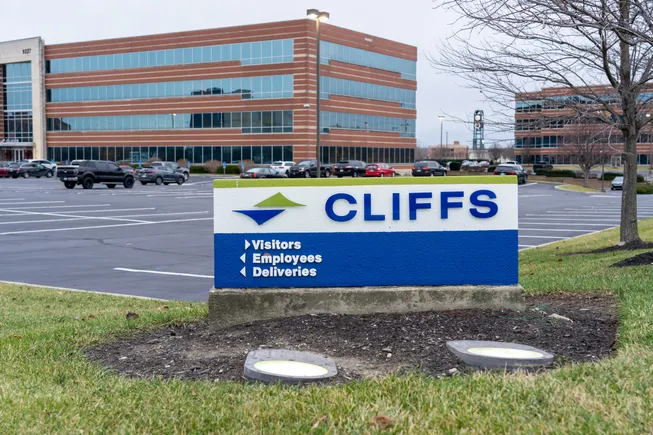
The company returned to positive free cash flow in the second quarter, with adjusted EBITDA rising to $286 million, nearly 3x higher than the first quarter. Cleveland-Cliffs expects further improvement in the third quarter, with adjusted EBITDA projected at approximately $575 million. Adjusted EPS stood at 20 cents, in line with analyst expectations. Revenue came in at $5.23 billion, slightly above the $5.19 billion consensus estimate.The company benefited from stronger automotive demand, the end of an uneconomic slab supply agreement, and footprint optimization efforts focused on improving pricing and reducing costs. Management highlighted the positive impact of U.S. trade policies, including Section 232, on domestic steel utilization and manufacturing reshoring.CEO Lourenco Goncalves expects continued earnings improvement in the second half of the year, supported by higher pricing, stronger volumes, and lower costs. The company expects its strongest second-half performance since 2021, with fourth quarter EBITDA projected to exceed third quarter levels.CLF Technical Analysis: Momentum And Key Support LevelsCleveland-Cliffs is currently trading at $11.37, which is 17.6% above its 20-day simple moving average (SMA) of $9.68, and just slightly above its 50-day SMA of $11.25. The stock is also 1.1% below its 200-day SMA of $11.52, indicating a mixed technical picture.The moving average convergence divergence (MACD) is above its signal line, suggesting that downside pressure is easing, which aligns with the recent price surge. This improvement in momentum indicates that the stock may be gaining traction after a previous downswing.
Cleveland-Cliffs Targets Best Second Half Since 2021 After Q2 Rebound - Cleveland-Cliffs (NYSE:CLF)
Cleveland-Cliffs shares jump over 20% after Q2 earnings, positive free cash flow return, and a leadership upgrade.
TL;DRAI
Cleveland-Cliffs: adjusted EBITDA $286M (Q2, 3x vs Q1), $575M forecast Q3. U.S. steel reshoring accelerates under tariff policies. For infra capex: Section 232 signals domestic steel cost reset, reshaping sourcing and supply-chain resilience decisions.
521 words~2 min read