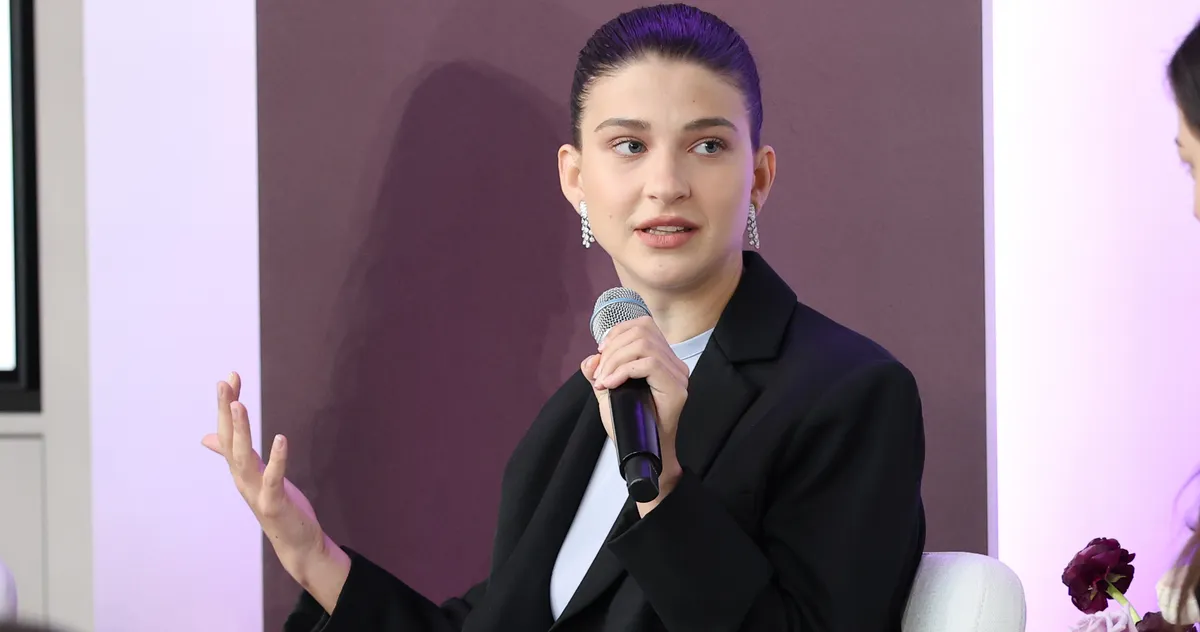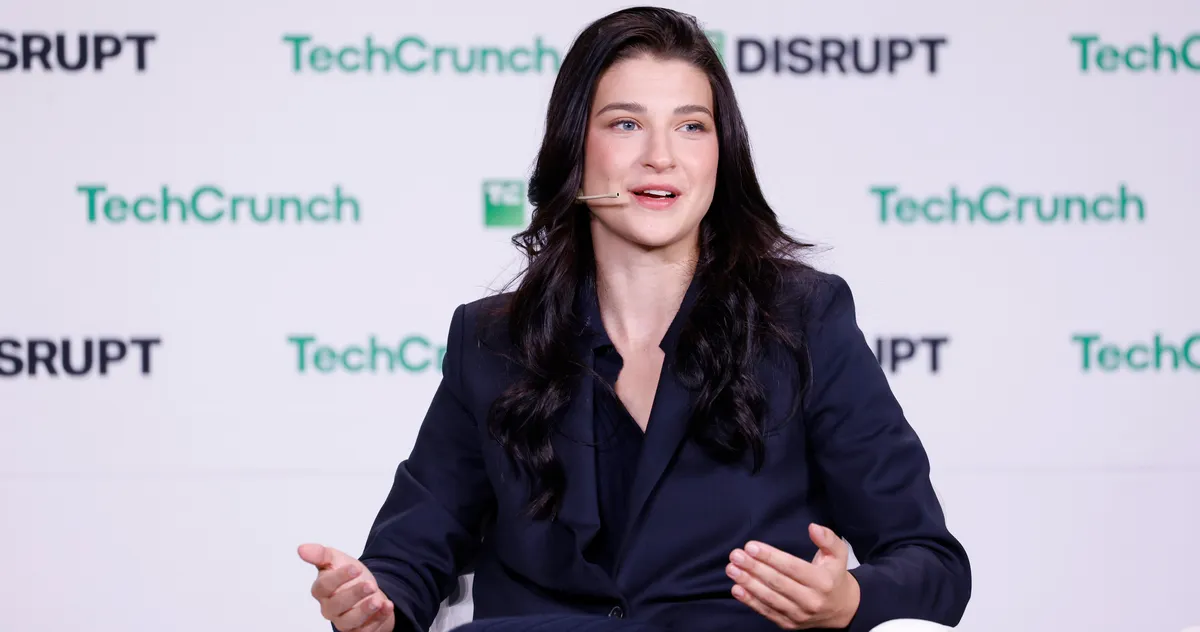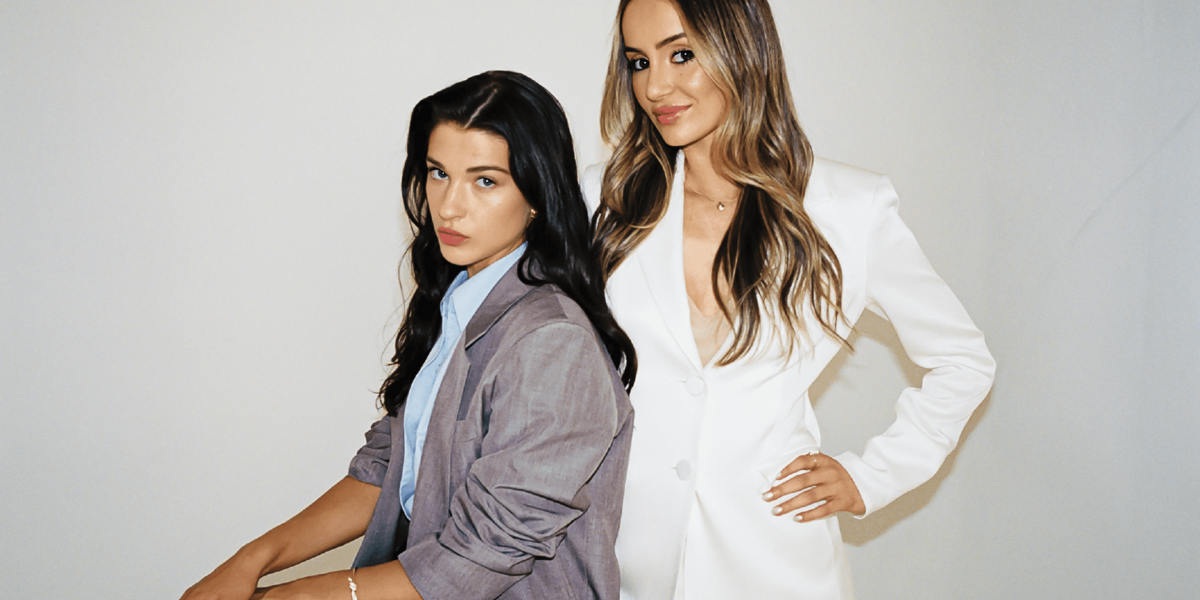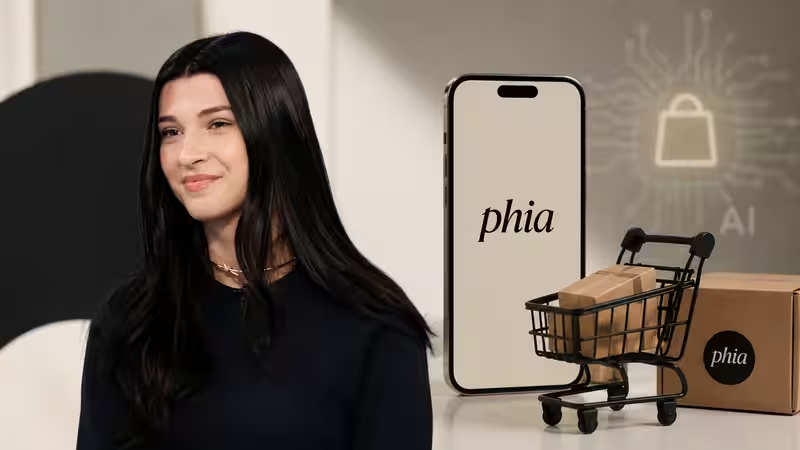
Alana Pallister, founder and CEO of I.Am.Gia, Photo Credit: Ghadir RajabPhoto Credit: Ghadir RajabEvery founder dreams of creating a hit product. The harder question: What happens next?For Alana Pallister, founder and CEO of I.Am.Gia, the answer was to double down. She transformed one runaway bestseller into an expanding franchise, built an entire universe around it — and even bet her own house on its success.Today, roughly 80% of I.Am.Gia’s revenue comes from one franchise: the Blare. Since launching in 2024, the two-piece tracksuit has sold more than 1 million units, expanded into more than 150 SKUs and become the foundation of the business.The universe now extends far beyond the original matching set of hoodie and trackpants to include dresses, skirts, shorts, accessories, and even matching pet apparel.But Pallister no longer sees the Blare as a hero product; she sees it as intellectual property."There was a moment I stopped looking at the Blare as a product and started seeing it as its very own world within the Gia line," Pallister tells me over Zoom. “Viral products come and go, and over the years I've formed an elixir for creating them, but the Blare really did take off on a far larger scale than anything I'd seen in the business before.”The shift reflects a broader change taking place across consumer brands. Entertainment companies have long understood that audiences return to worlds, not individual stories. Increasingly, fashion brands are beginning to adopt a similar mindset — not simply launching products, but creating identities customers want to keep participating in.MORE FOR YOUFor Pallister, that realization began on TikTok."It was the first time I really watched our customer become our own content creators and our cheerleaders, from inside their homes," she says. "The Blare unboxing became a viral trend on TikTok, and that was certainly the moment I had the idea to franchise it."That shift reshaped its product strategy."We see something resonate and we layer it onto Blare while it still matters — a new color, a print, a collaboration — without ever touching the fit and the feel our customer counts on," she continues.Fashion has traditionally treated hero products as stepping stones, with brands quickly pivoting to the next launch. Pallister noticed something different."The customer buying the Blare is quite literally collecting it," she says. "Most of them already have five or more hanging in their wardrobe waiting on the next drop."In many ways, it recalls the rise of the Juicy Couture tracksuit in the early 2000s – not because the products are similar, but because both became instantly recognizable symbols of a particular lifestyle and identity.And then, it was accelerated by creator commerce.According to creator platform Traackr, approximately 17% of I.Am.Gia’s sales now come through TikTok Shop, where more than 19,000 active affiliates create content featuring the brand. Sales through the platform have grown 46% year over year, while Traackr recorded a 183% increase in activated creators, a 222% increase in video views, and a 902% increase in TikTok posts mentioning the brand.While TikTok helped scale the Blare, Pallister never wanted her relationship with customers to exist exclusively on a screen."A digital-first business is not a digital-only business," she says. "Online I can reach her, but in a room I can change how she feels."That thinking has shaped I.Am.Gia’s growing series of experiential activations, including this summer's Gia & Friends pop-up. Rather than designing another retail space, Pallister imagined customers stepping inside the world they'd been following online.Inspired by early-2000s nostalgia and collectible culture, the activation introduced new Gia characters each with her own personality, aesthetic and point of view. The immersive installation transformed Los Angeles’ Terminal 27 into a series of environments that blurred the line between retail, storytelling and entertainment, while collectible dolls hinted at an ambition extending well beyond apparel.Pallister’s number one goal? Building Gia’s world: “a place for her to meet her friends in real time.”It's about giving customers more ways to participate in the same universe.Ryan Glick, founder and CEO of experiential agency Coffee 'n Clothes, believes that's where many of today's strongest consumer brands are headed."The best pop-ups don't sell you a product," he says. "They invite you into a world where the product is the souvenir." In an era where products can be purchased with a tap, he argues, physical experiences have become less about retail and more about belonging. "Give someone a sense of belonging and they don't just buy from you. They market for you."Pierre-Loïc Assayag, CEO of Traackr, sees a similar pattern online. Rather than forcing traditional fashion marketing onto TikTok, he says I.Am.Gia succeeded by adapting to the platform's native behavior."TikTok was the right channel for this brand because the audience was already organically engaged there, and the paid strategy simply amplified that existing momentum," he says. For Pallister, however, the strategy was tested long before it was validated.Pallister stepped back as CEO for a year and returned last year to drive the business as a founder-led business. She rebuilt the leadership team around trusted long-time employees and recommitted to the principles she believed had fueled the brand's growth."The point was never to step back again," she says. "I wanted a team that could move as fast as I think."The turnaround required more than organizational change, it required conviction.Pallister has never raised outside capital. So when demand for the Blare exceeded what the company could produce, she turned to her biggest asset."I have never taken outside money. No investors. No board. No safety net," she says. "Everything this company is, was built by reinvesting our own cash."Pallister sold her house and reinvested the proceeds into I.Am.Gia to fund additional Blare inventory."Everything comes from a feeling first," she says. "My instinct sets the direction. The data tells me how fast and how big."While intuition may be difficult to replicate or teach, Pallister will share the playbook behind I.Am.Gia's growth this fall as a guest speaker at Harvard Business School.Looking back, Pallister doesn’t credit I.Am.Gia’s growth to a single viral product, platform or campaign. Instead, she sees it as the result of repeatedly trusting her instincts — even when the decisions looked irrational at the time — from building a world around one hero product to selling her house and ultimately returning to lead the business herself."Today fearlessness is not the absence of fear," she says. “It's grief and risk and exhaustion all sitting in the same room, and choosing to move forward anyway, because you believe in the vision more than you believe in the fear.”
Inside I.Am.Gia’s Playbook For Turning Products Into A World
I.Am.Gia founder Alana Pallister transformed the viral Blare tracksuit into a playbook for brand and world building—and even sold her house to keep it growing.
1,083 words~5 min read