A perfect result at a top mathematics contest used to be the preserve of a handful of bright young minds each year, but for the first time, artificial intelligence (AI) has also scored full marks.Two Chinese tech companies, Huawei and Xiaohongshu, said that their AI models each achieved 100 percent on the questions given to human hopefuls at this month’s International Mathematical Olympiad (IMO).They were the first AI labs to announce their scores, but others from around the world might follow suit in the next few days.
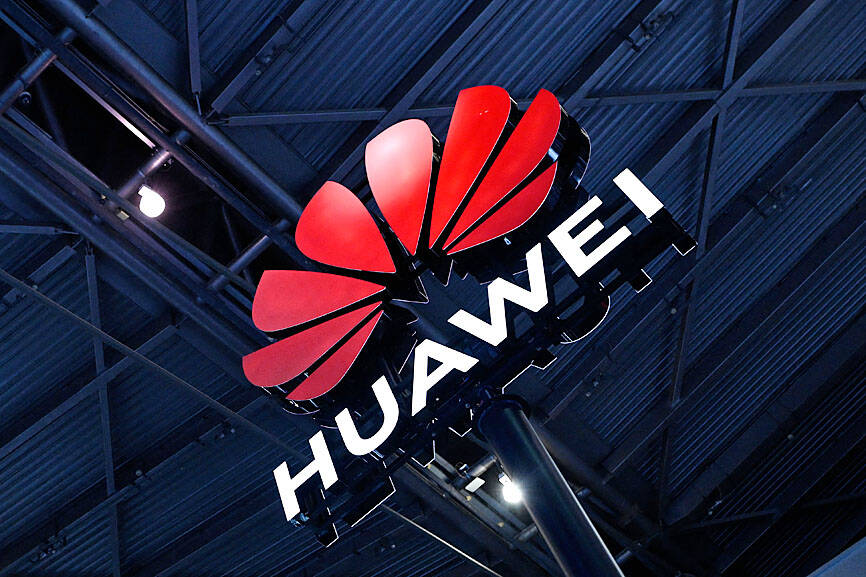
The Huawei logo is pictured at the World Artificial Intelligence Conference in Shanghai on July 6, 2023.
“We are delighted with this result, because achieving a perfect score at the IMO is extremely challenging,” Xiaohongshu said in a statement this week.“Previously, no large language model had ever achieved a perfect score under the IMO’s official judging process,” the firm added, referring to the tech that underpins AI tools.
Last year, models made by the likes of Google and OpenAI reached gold-level scores for the first time, but could not match the abilities of five human contestants who got 100 percent.This year, 666 contestants from different countries took part in Shanghai.Just seven of them achieved full marks, according to the official IMO scoreboard.Participants at the IMO, held in different locations each year, must be aged under 20.Huawei on Wednesday said that its AI system Celia had shown “comprehensive problem-solving capabilities” across several mathematical fields.Xiaohongshu, known as RedNote in English, said its model dots-note-3.0 had entered the IMO for the first time this year.Tech firms were only provided with the IMO problems after human contestants had taken the exam, with their submissions required within a specified time limit.“During testing, any form of human intervention was strictly prohibited,” and the AI solutions were submitted to IMO organizers for grading, Xiaohongshu said.AI’s progress has been fast: At the 2024 IMO, Google achieved a silver-medal score, solving four of the six problems over two to three days.Deedy Das, a partner at the US-based investment firm Menlo Ventures, said he had given this year’s IMO questions himself to four cutting-edge AI models.All four — from leading US labs OpenAI and Anthropic, the start-up Axiom Math and Kimi K3 from China’s Moonshot AI — scored 42 points out of 42, he said on LinkedIn.“The frontier of AI has officially moved well past IMO math,” Das wrote.