The Department also stated that 20.2 crore ration cards (representing the number of households) have been completely digitised.
| Photo Credit:
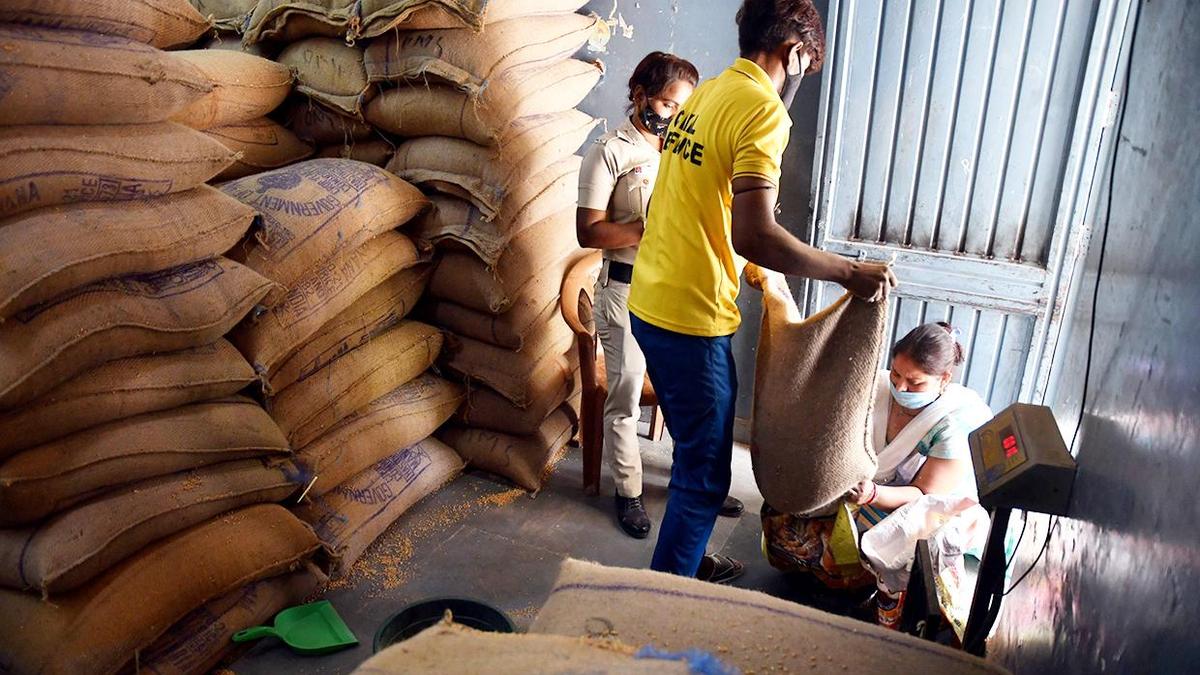
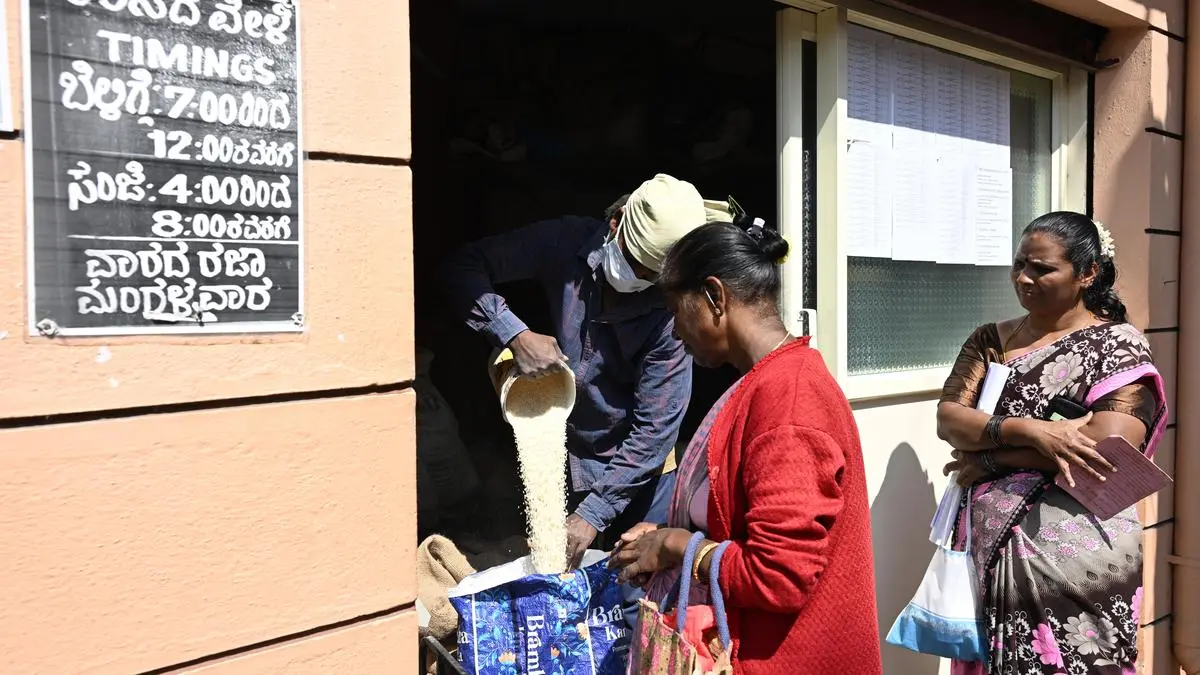
The Centre has identified 2.91 crore suspect beneficiaries under various red-flag categories, including 560,775 beneficiaries over the age of 100, according to a report by the Parliamentary Standing Committee on Consumer Affairs, Food, and Public Distribution.“The Committee is happy to note that the Department has initiated data analytics for rightful targeting and has identified 2.91 crore suspect beneficiaries under various red-flag categories, including 5,60,775 beneficiaries above 100 years of age, 2,11,682 single-member ration cards with beneficiaries below 18 years, 2,20,00,768 silent ration cards, 30,06,911 duplicate beneficiaries, and 34,12,532 deceased beneficiaries as per Aadhaar status,” the report said.The Committee further notes that an institutional framework has been envisaged under SMART-PDS through NIC, State Project Implementation Teams, an Empowered Committee, State Apex Committees, and third-party evaluation. In this regard, the Committee recommends that the verification of red-flag beneficiaries should be completed in a time-bound mission mode with mandatory field investigation. At the same time, utmost care must be taken to prevent the wrongful exclusion of eligible beneficiaries through robust safeguards and grievance redressal mechanisms.In its reply to the panel, the Department of Food and Public Distribution stated that it has initiated an analysis of the PDS beneficiaries’ data based on different parameters, such as beneficiaries with single-member AAY ration cards, members who are more than 100 years old, single-member ration cards issued to beneficiaries below 18 years old, duplicate beneficiaries, and beneficiaries with silent ration cards, to ensure that rightful beneficiaries are included.The Department also stated that 20.2 crore ration cards (representing the number of households) have been completely digitised. “Under these households, we have an average of around four members per ration card, resulting in 80.5 crore beneficiaries. This entire distribution is being managed through a network of 5.43 lakh ration shops. The monthly allocation amounts to 44 lakh tonnes, and annually, it totals 608 lakh tonnes,” the government said.The National Food Security Act, 2013 (NFSA) provides for coverage of up to 75 per cent of the rural population and 50 per cent of the urban population at the all-India level for receiving food grains free of cost (after the COVID-19 pandemic) at a rate of 5 kg per month for each beneficiary. Section 9 of the NFSA states that the percentage coverage under the Targeted Public Distribution System in rural and urban areas for each state shall be determined by the Central Government, and the total number of persons to be covered in the state shall be calculated based on the population estimates according to the census, for which the relevant figures have been published.Under the NFSA, the ceiling for coverage remains at 81.35 crore beneficiaries as per the 2011 Census, so approximately 79 lakh more beneficiaries could still be added.The Committee understands that the responsibility for the identification of beneficiaries and the issuance of ration cards rests with the States, and that the deletion of ineligible beneficiaries and the addition of eligible beneficiaries is a continuous process. The Committee, therefore, recommends that the Department impress upon all States the importance of undertaking sustained verification drives and promptly including left-out eligible households within the available ceiling, especially among vulnerable groups, so that the existing statutory coverage is fully utilised in favour of genuine beneficiaries.”On being asked about the digital accessibility of PDS services and the measures to ensure that marginalized communities without digital literacy or resources can access their entitlements, the Department, said: “Under the technology driven PDS reforms, foodgrain distribution is operationalized through 5.50 lakh e-PoS devices, covering nearly all Fair Price Shops in the country. The process of distributing foodgrains through ePoS devices is very simple and does not require any special digital literacy among beneficiaries to lift their entitled foodgrains through electronic transactions.“Further, States have been advised to ensure that ePoS printed transaction receipts are provided to all beneficiaries in local language, besides SMS are sent on their registered mobile numbers to ensure complete transparency in distribution process.”The government also stated that, to address the challenge of limited availability of technical infrastructure, such as networks and servers in remote and hilly areas, the ePoS system includes a provision for offline distribution, allowing transactions to be carried out even in areas with poor or no network connectivity. The ePoS devices must periodically come into network areas to sync the offline ePoS data with the PDS online system. Additionally, states should identify and report Fair Price Shops (FPS) located in such difficult terrains so that BSNL can be asked to install network infrastructure to improve connectivity.The Department also said that it has issued guidelines that no genuine beneficiary/household is to be denied subsidised foodgrains due to biometric/Aadhaar authentication failure caused by Network/connectivity issues, technical glitches or Poor biometrics.Published on July 23, 2026