Open Design ships without a model of its own and without a canvas of its own. The desktop app, from nexu-io/open-design, hands the design work to whatever coding agent already runs on your laptop, and every result lands as a real file: HTML, PDF, PPTX, or MP4, openable long after you close the app.
That inversion is the whole idea. Anthropic's Claude Design runs a closed loop: discover the brief, lock the direction, stream the artifact, critique, deliver. Open Design keeps the same loop but swaps the closed parts for a filesystem. Skills, design systems, and plugins become files that Claude Code, Codex, Cursor, OpenCode, Gemini, Kimi, and roughly twenty other CLIs can read, write, and remix. The README puts it plainly: your CLI becomes the design engine, your laptop becomes the studio.
What it actually produces
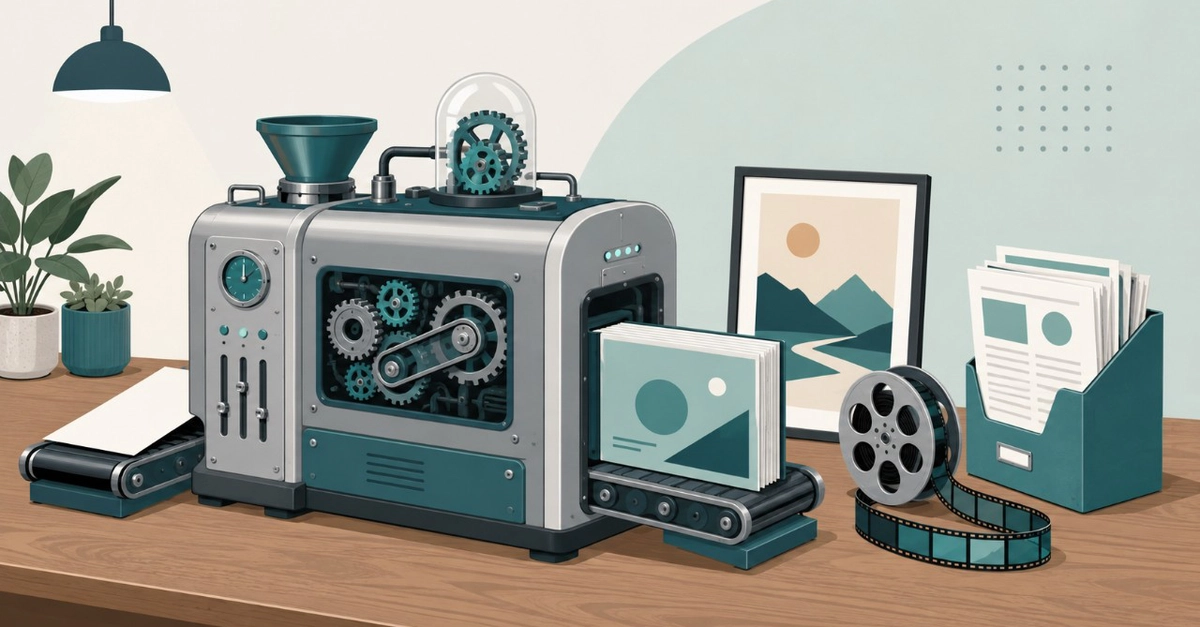
The app calls its outputs artifacts, and it lists four kinds. Prototypes are single-page HTML that render in a sandboxed iframe and download as source. HyperFrames are programmatic motion graphics rendered to a real MP4, with the README citing 1920x1080 at 30fps. Decks page through by keyboard and export to PPTX or PDF. Images generate at high resolution. There is no proprietary format in that list. A prototype is CSS, real fonts, and real components; a deck is a PPTX you can hand to someone who has never heard of Open Design.