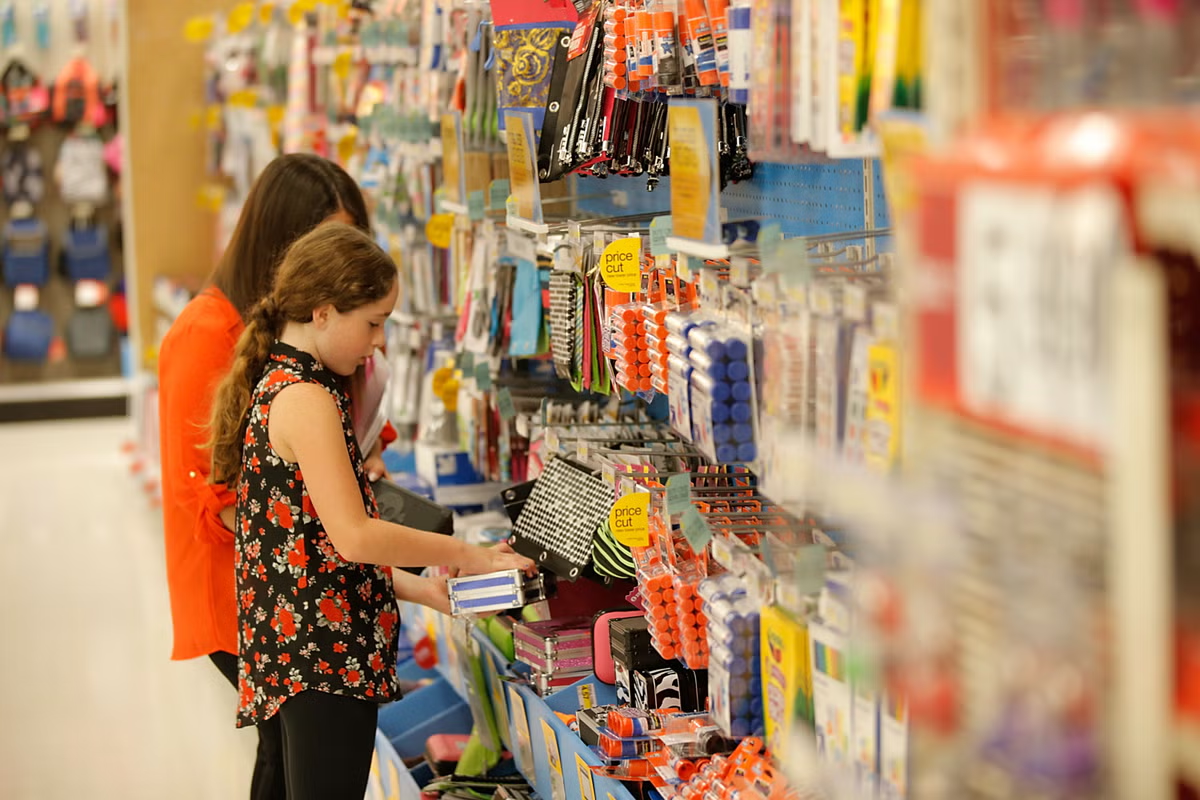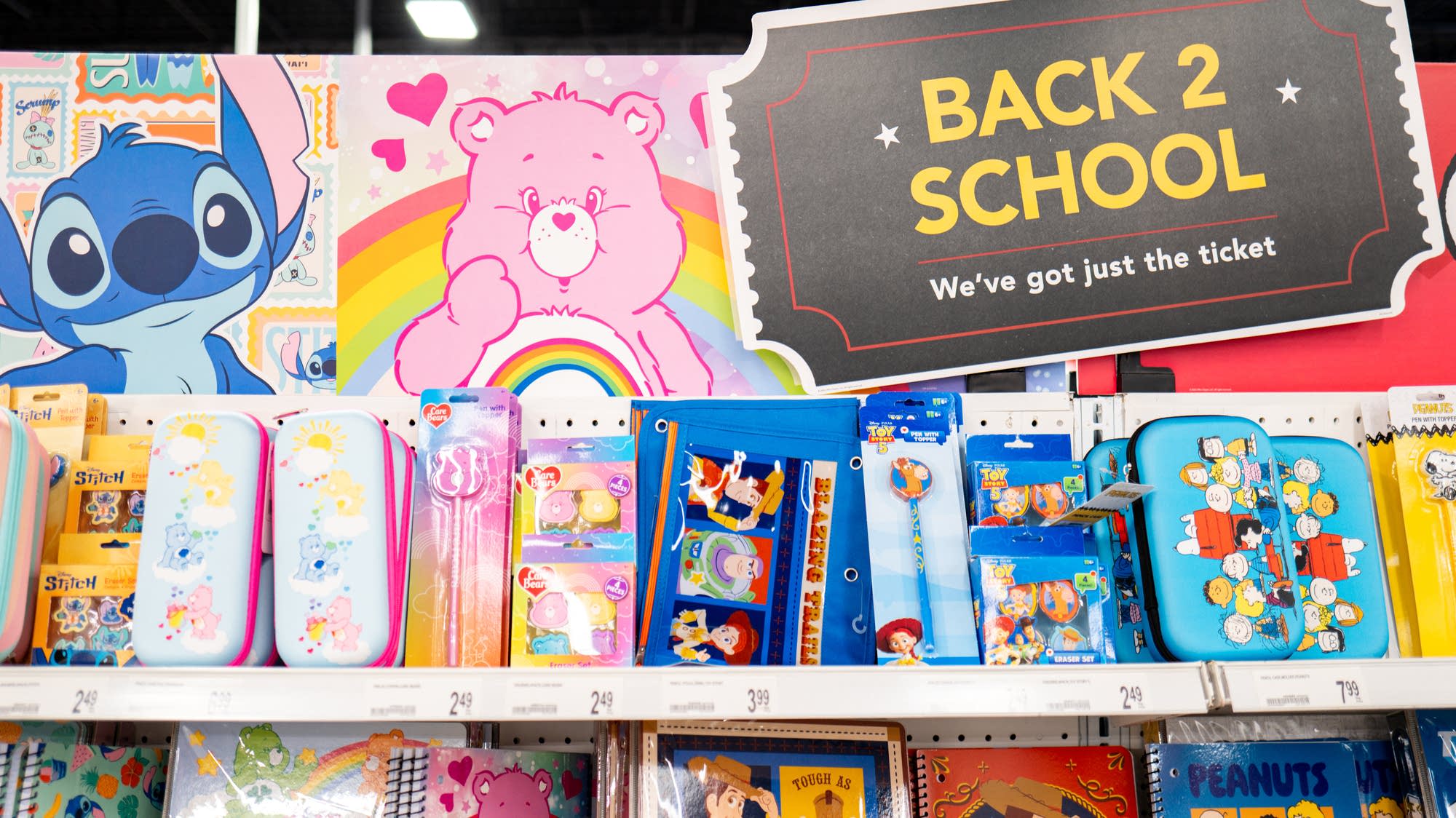
Parents are expected to spend a record $43.3 billion on back-to-school supplies for K-12 students, and a record $103.5 billion for college students, according to the National Retail Federation.gettyThe back-to-school forecast for this year sounds a bit like a tricky math problem that doesn’t quite add up. More parents are saying they are worried about the economy and their finances this year, but U.S. parents also are expected to spend more than ever on clothing and supplies for their K-12 and college students.How does that happen? The answer is parents feel getting their kids ready for school may be the most important spending they do all year, and that they have to buy essential school items, along with sought-after fashions and accessories, even if it means sacrificing in other areas. “We have a consumer that is motivated to spend on their loved ones when it comes to getting them back to school,” Mark Mathews, Chief Economist of the National Retail Federation (NRF) said in a webinar about the outlook for back-to-school spending.“Consumers are telling us that they’re not willing to compromise on spending for school needs for their families,” Mathews said. A survey conducted for PayPal found that 53% of parents say back-to-school shopping feels more stressful than last year, and 57% said it now feels as stressful as holiday shopping. Sixty percent of parents say they feel pressure to buy items their children want, in addition to the essentials they need,More than $43 billion in K-12 back-to-school spendingThe NRF, in its annual back-to-school forecast, is predicting that U.S. families will spend a record $43.3 billion to get K-12 students ready for school, up from $39.4 billion in 2025.MORE FOR YOUSpending on items for college students is expected to top $100 billion for the first time, at $103.5 billion, up from $88.8 billion in 2025.This surge in spending comes as multiple surveys are reporting that parents are significantly more worriend about finances as they prepare for the beginning of school.Deloitte’s annual back-to-school survey found that 57% of parents of school-age children expect the economy to worsen within the next six months, the highest level to express that concern since 2020. Close to one-quarter of the survey respondents, 24%, said they are concerned about making upcoming payments. High-income households planning fewer splurgesEven high-income parents expressed worry about the economy and their finances, according to the Deloitte survey. Of those making $100,000 to $199,000, 67% said they play to spend less on back-to-school because they are worried about the economy. Among those making $200,000 or more, 63% said they had less money to spend this year.While lower-income and lower-middle-income families said they will spend more this year due to higher prices, average back-to-school spending by upper-middle-income and high-income households is expected to decline.Households making $100,000 to $199,000 households are saying they plan to spend 9% less than last year, on average, while $200,000-plus households expect to spend 20% less, on average, according to the Deloitte survey,Brian McCarthy, retail strategy leader for Deloitte, said worries about the economy could be causing higher-income families to cutback on non-essential school items they may have splurged on last year or in recent years.“Your higher-income households may have added on some extra discretionary items - maybe that third pair of sneakers or a really cool extra lunch box,” McCarthy said, “But because of some of those concerns about the economy they may say ‘I don’t need that extra thing. I just want to make sure they’re ready for school’,” ne said. Parents are looking for deals, taking on debtBoth the NRF and Deloitte surveys showed that parents plan to take steps to stretch their back-to-school budgets by waiting for deals before buying, switching brands or buying private label to get a better price, using buy-now-pay-later financing plans and cutting back on other spending categories, such as entertainment. And some parents - 7% according the NRF survey - are planning to work overtime shifts to help pay for back-to-school expenses.Others plan to take on debt. Close the half of the parents (48%) responding to a survey for Intuit Credit Karma said they are planning to open a new credit card or increase their credit limit to cover school expenses. “Affordability is definitely top of mind across all of the consumer demographics we track,” for back-to-school, Allison Zeller, the NRF’s Vice-President of Consumer and Industry Insights, said in the NRF webinar. Another way families are stretching their back-to-school budgets is by stretching out the shopping season. They took advantage of earlier-than-usual back-to-school promotions in June, but also are delaying some purchases while they wait to find better deals. Deloitte is expecting spending to peak in late July to early August, based on its survey responses, signaling a shift back to more of a pre-pandemic, 2019 timeline, with shoppers not as worried that supplies will be sold out if they don’t stock up early.
Parents Will Spend Big For Back To School, Despite Financial Stress
Back-to-school season is expected to generate record spending, with some parents going into debt, or working overtime to cover school expenses.
814 words~4 min read