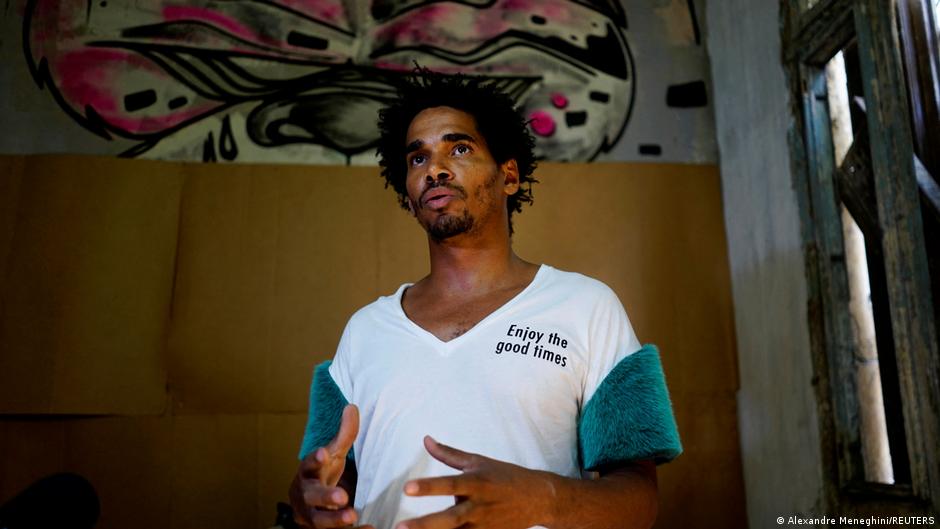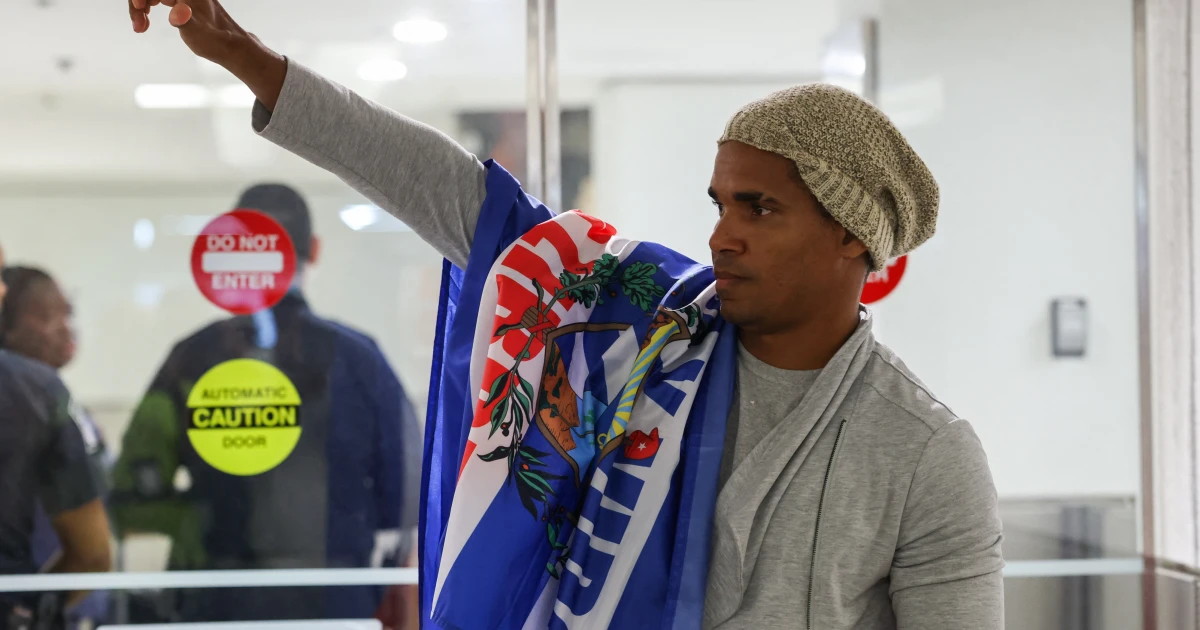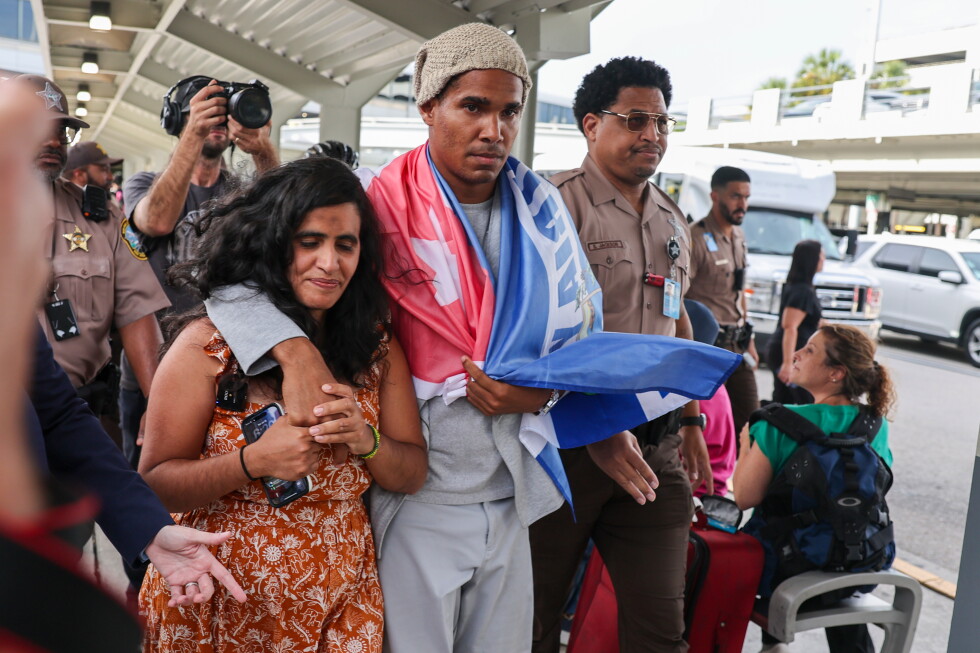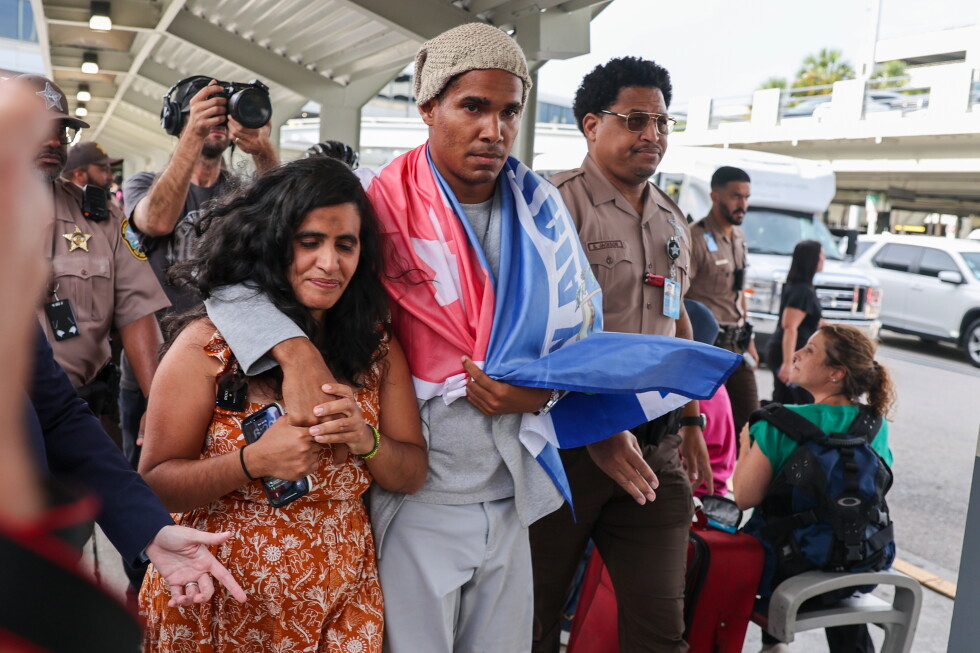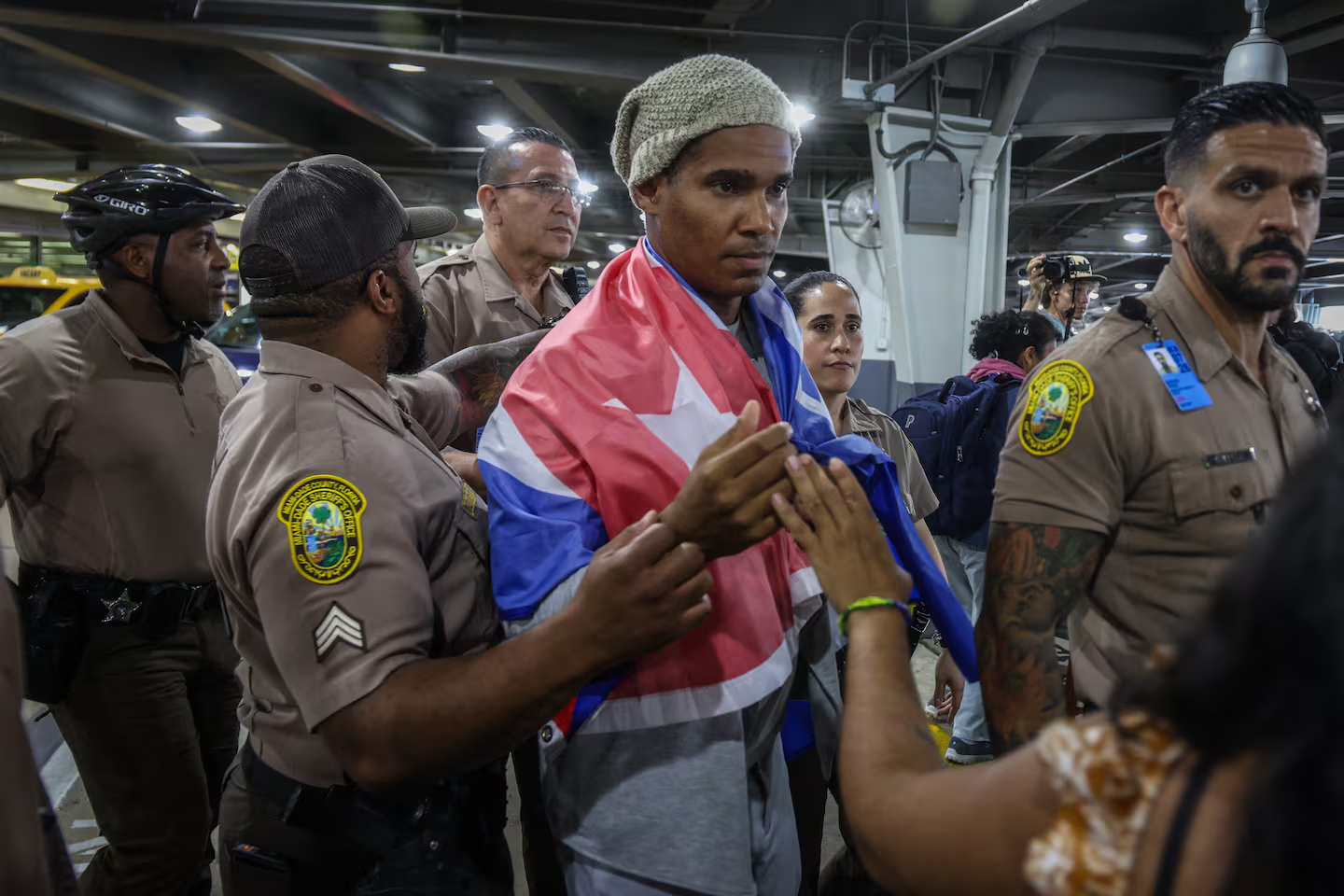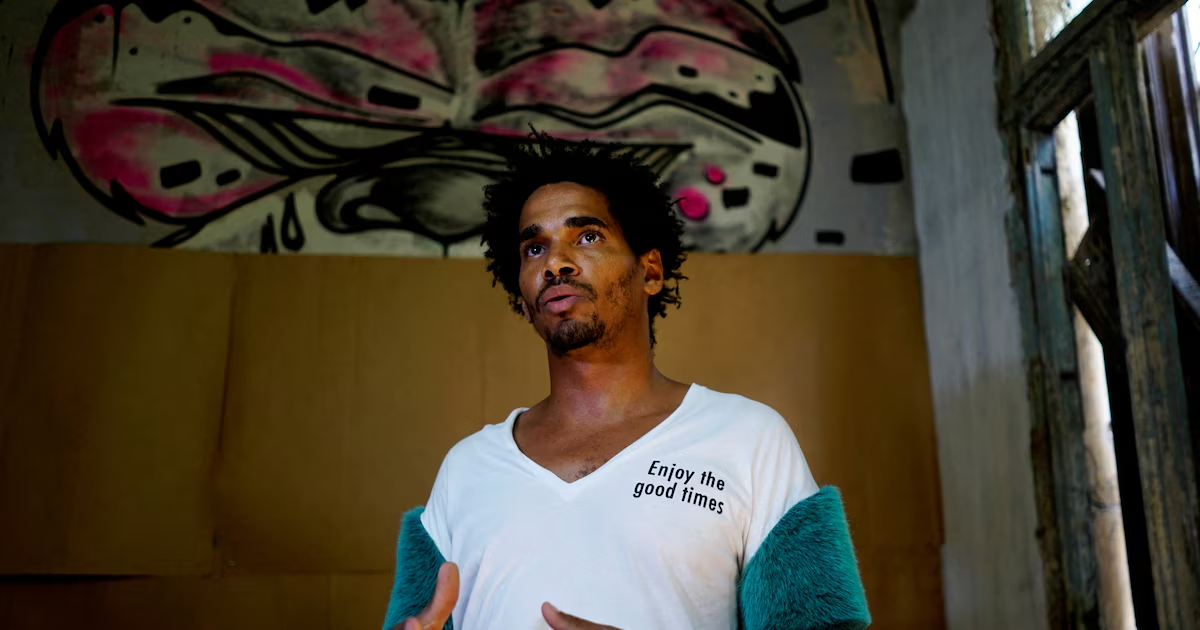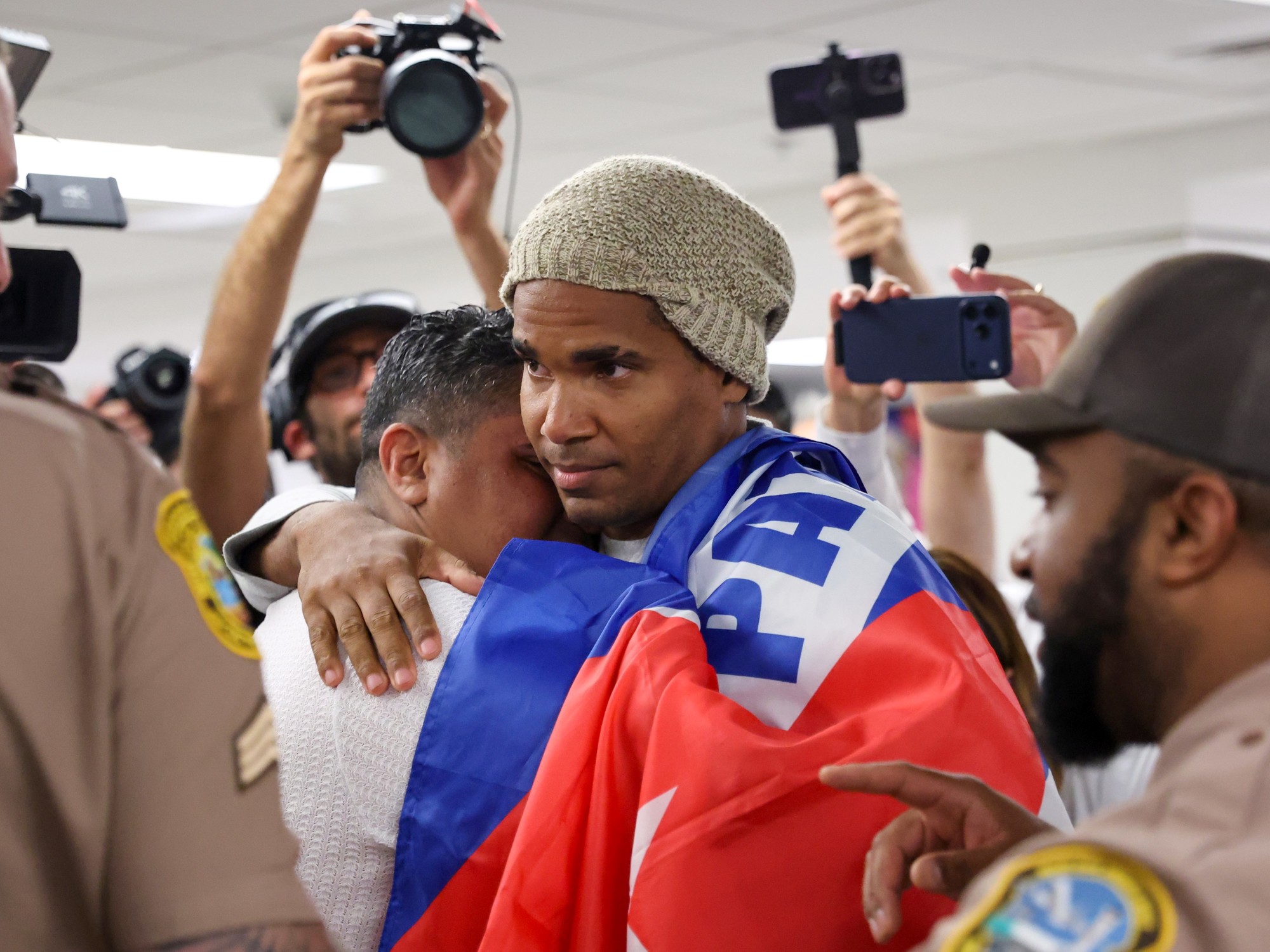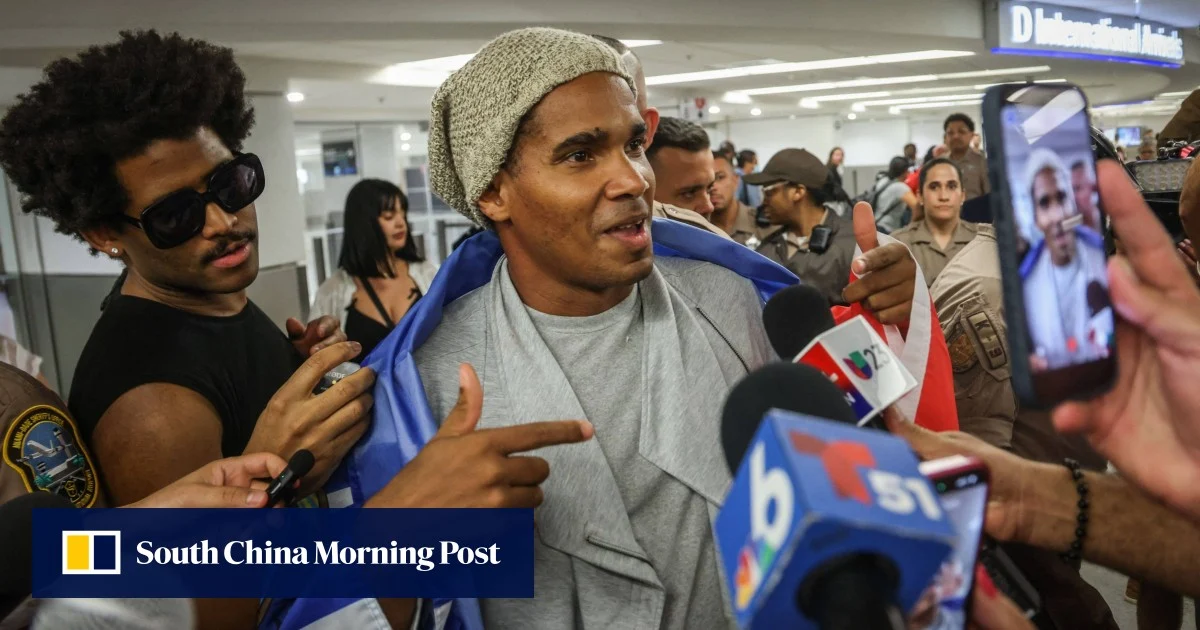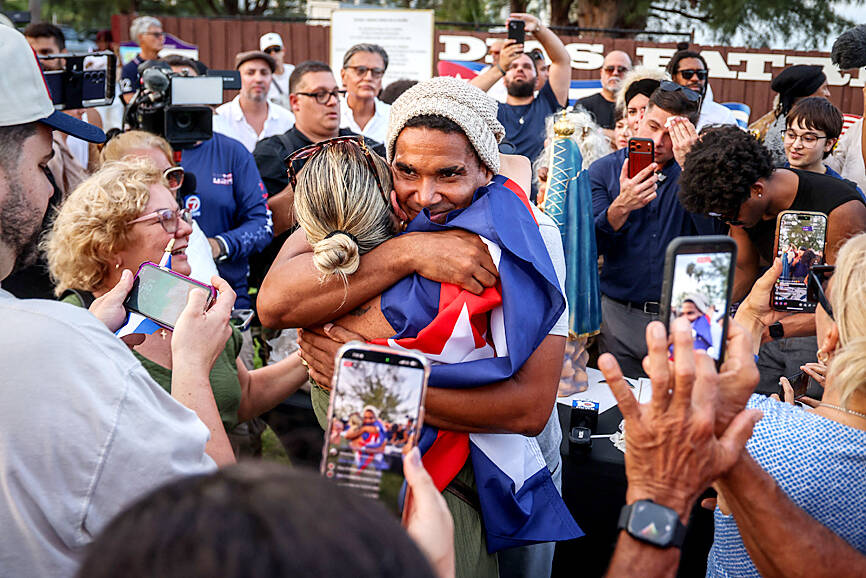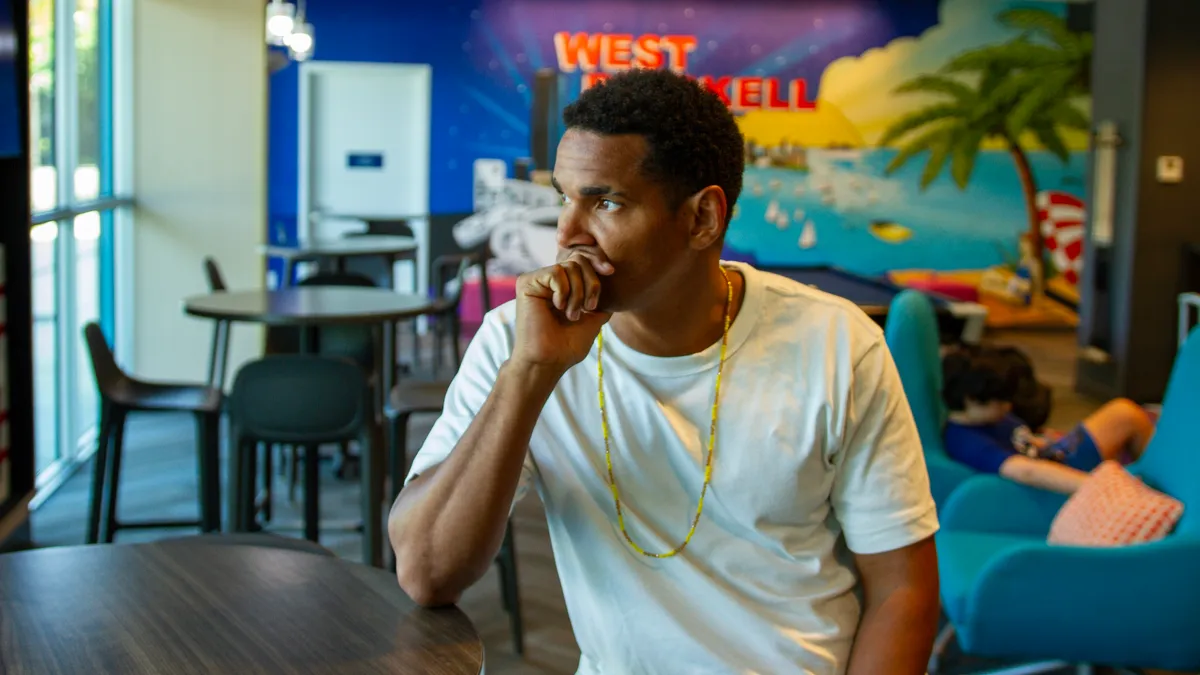
MIAMI – Luis Manuel Otero Alcántara hugged his son with the gnawing dread that it might be the last time.No one had heard from Otero for days. Not since Cuban agents whisked him to this safehouse near Playas del Este in Cuba after completing a five-year prison sentence for his role in the July 2021 protests that sparked marches in the streets – something not seen in Cuba in a generation.The last time the public had heard Otero's voice was on a secret recording from prison in Cuba to USA TODAY in May.Now security agents had brought his son to him to say goodbye. Tears welled in his eyes as he told Alejandro, 16, that he loved him. Otero, 38, was days away from a forced exile from Cuba.State security agents hovered as father and son enjoyed one last day together, splashing around the safehouse’s pool and eating dinner. They talked about whether Alejandro would go to college, about the new girl he was dating. They fell asleep in the silent country house with no electricity in the thick July heat. Political prisoner in Cuba granted parole by U.S. governmentCuban artist and activist Luis Manuel Otero Alcántara was sentenced to five years in prison for participating in a public protestSoon, Otero was on a plane to Miami, leaving behind his son, family, friends, history and home.He sat down with USA TODAY for an exclusive interview from the pool deck of a hotel in Miami on July 21.People in Cuba think exile is the solution, "but there’s a new kind of rift here, a new type of state-sponsored violence: people going 30 years without seeing their moms or kids – their mothers die, and they aren't allowed to come back," Otero said."You can’t say goodbye.… You can’t give them a kiss.… And now my son..." Otero dropped his face into his hands and wept.Otero, a prolific visual artist, and fellow political prisoner Maykel "Osorbo" Castillo Pérez, a rapper who cowrote the Latin Grammy award-winning anthem "Patria y Vida," have been at the center of high-stakes negotiations between the United States and Cuba that could reshape relations between the Cold War foes.A deal could dramatically expand business and trade and end a U.S. oil embargo that has crippled the island. If talks fail, President Donald Trump could turn his military sights on Cuba as he did with Venezuela and Iran.In a recent exclusive interview with USA TODAY, Raúl Guillermo Rodríguez Castro – former Cuban president Raúl Castro’s grandson and a key interlocutor in the talks – said Cuba was willing, under the right conditions, to release "people deemed political prisoners." More than 1,300 political prisoners remain in Cuban jails, according to human rights advocates. But the release of Otero, and the expected release of Castillo, "suggest that at least some channels between the two governments remain open," said Michael Bustamante, chair for Cuban and Cuban-American Studies at the University of Miami. "Cuba may be budging on high-profile releases that the U.S. government demanded months ago," Bustamante said.Celebrity from a prison cellMeanwhile, Otero has been embraced as a celebrity du jour by Miami’s Cuban exile community.As he recently strolled down Calle Ocho, Miami's exile epicenter, shouts of "Alcántara!" rang out from cafes and Southwest Eighth Street's iconic Domino Park. People stopped Otero to shake his hand or snap a selfie. Otero took his own selfie: In front of a mural of himself on the street. At the live music venue Ball & Chain, the upright bass player and lead singer of a three-piece band paused mid-song to greet Otero through the mic as he walked nearby. "Welcome!" he said in Spanish. "Cuba libre!"Ricardo Nuñez, 55, was getting into his car when he recognized Otero. He rushed over and welcomed him to Miami. The two hugged."He’s a young man who defends his ideas," Nuñez said. "That’s incredibly valuable in today’s world."Otero’s celebrity was hard won in a crowded Cuban prison cell, and exile comes with a price.Chiseling pencil artOtero grew up the oldest of four in the Old Havana neighborhood of El Cerro, in a house crammed with 15 other cousins, aunts and uncles. His father was a welder and his mother a mid-level worker for a real estate group.If his mom scored a piece of candy at work, she would cut it into four slivers for her children, Otero recalled.From an early age, two things were true for him: He loved art, and he hated bullies.His father would bring him slabs of wood from the shop and, using a box cutter, Otero would chisel them into sculptures. He whittled pencils into faces or women’s bodies.In his neighborhood, he stepped in when other kids were getting picked on."I remember being a child, without even knowing anything about politics or having a political stance, and simply not accepting abuse or things like that," he said.He was a competitive track-and-field athlete and yearned to study art but couldn’t get into art college. Instead, he delved into his art at home, creating pieces that pushed the limits of Cuban conformity.He wanted to make art that challenged the norms, the way Picasso and Basquiat had, Otero said.One of the exhibitions he coproduced, named "Museum of Dissidence in Cuba," showcased dissidents throughout Cuba’s history, from the rebel Taíno chief Hatuey to Fidel Castro. It won him acclaim – and the attention of Cuba's state security apparatus.'Patria y Vida'Through his research for that project, Otero discovered activists and opposition artists like him were either jailed or exiled from Cuba."The Cuban regime – the Cuban dictatorship – specializes in erasing memory," he said. "Every 10 years or so, whenever a form of civil society begins to take shape, they force almost all the activists to leave Cuba. They try to wipe it all from the collective memory so that people are forced to start over again. They have to begin almost from scratch."In 2018, he helped start the San Isidro Movement, named for the Old Havana neighborhood where artists congregated to protest Cuba’s crackdown on creatives – specifically Decree 349, a law requiring that artistic activity be authorized in advance by the Cuban culture ministry.He was also drawing the attention of state security. From 2018 to 2021, Otero said he was detained more than 90 times and went on at least one hunger strike in protest, after, he said, authorities entered his home and destroyed some of his paintings.Around that time, he and Castillo collaborated with artists and musicians in Cuba and the United States to create a song that defined the heart of their movement: "Patria y Vida," the phrase shouted in the streets of Havana and Miami, turned around a Castro-era dirge of liberty or death with a call for liberty and life.The song's video has been viewed more than 17 million times on YouTube and became the anthem of widespread street protests. It won two Latin Grammys: Song of the Year and Best Urban Song.As the song gained popularity, state police confined Castillo to his house. He was arrested on May 18, 2021, charged with "contempt of authority" and "defamation of state institutions" and summarily sentenced to nine years in prison.Otero continued working with activists. In July 2021, he was arrested as he made his way to a rally in Havana’s San Antonio neighborhood. He was convicted of "desecration of national symbols, public disorder and contempt" and sentenced to five years in a maximum-security prison in Guanajay, southwest of Havana. He served every day of it.Battered, worn, fractured faces Otero spent his first two months in prison in solitary confinement, he said. Later, he shared a cell with three others. They could watch a single TV and were allowed into the yard for an hour a day.As he watched other prisoners lose their grip on reality or use drugs smuggled in to numb their days, Otero said he made a conscious choice to keep his mind and body sharp. He exercised when he was outside and used paints and construction paper brought by visitors to create.He painted the expressions of his fellow inmates and their tattoos. He painted plants, flowers, and his sexual fantasies. He painted his dreams. When the paper ran out, he taped cigarette cartons together and painted on them. He said he hoped his paintings would one day show the world what life was like inside a Cuban prison.Otero produced more than 4,000 works during his five years of confinement, he said. Cuban authorities allowed him to keep most of them when he left."You see the faces of these human beings: battered, worn, seemingly fractured. Those faces speak volumes," he said. "I tried to capture all of that."From rice and beans to watery pasta Otero said he could sense Cuba's deteriorating condition outside by the diminishing quality of his prison food. When he first arrived five years ago, he would get a few eggs and a small chunk of bread, along with rice, beans and the occasional piece of chicken. By the end of his sentence, the rice became a mealy slush. Bread and eggs vanished. Chicken was replaced by insipid bloated pasta.State security agents harangued him throughout his prison term, he said, dangling an offer: Go into exile or remain behind bars."They made it clear: I’ll never walk on Cuban streets again as a free man," he said.Otero resisted the offer for a year-and-a-half. As he entered his second year, he broke down and agreed to the deal, feeling he could be more effective in exile than in prison. Still, he remained locked up, day after day, month after month.As negotiations between U.S. and Cuban officials restarted earlier this year, the names of Otero and Castillo resurfaced. The release of political prisoners remains central to negotiations aimed at achieving a wider, historic detente, people with understanding of the talks have told USA TODAY. Shortly after an April 10 secret meeting in Havana between Rodríguez Castro and a State Department official, Cuban security agents again visited Otero's cell. They repeated their offer: exile or languish in prison.He first revealed this in a secret tape he recorded and smuggled out of prison to USA TODAY in May.Otero again agreed to go, adding one final plea: to be able to see his son and a Cuban beach one last time.Late last month, he was told he was getting out. And one night, armed plainclothes agents hustled him out of his cell and drove him to a safehouse near Playas del Este, a beach town about 10 miles east of central Havana. Since he had become infamous inside Cuba, he was told he would be sequestered to avoid journalists and unwanted publicity until it came time to fly out. There he waited until the United States granted his immigration parole. Three security agents stayed at the house around the clock. They brought family members so Otero could say his final goodbyes and a cook made meals in the kitchen.Otero said he got to his know his captors, who guarded him on a secluded beach. He came to see them as ordinary people – fathers and sons, cogs in a macabre machine, perhaps, but not inherently bad, he said.One night, he shared his vision of Cuba with them: "I told them that one of my dreams is for security not to be State security but rather security for the people," Otero said. "It should be about protecting me from the State, not the other way around."'How do I do this?'Days stretched into weeks. Friends and relatives, not knowing his location, worried about him. Supporters filed a motion in a Cuban court demanding to know his whereabouts.Eventually, agents brought his son, Alejandro, to spend a final day and night with him. Otero marveled at how the 11-year-old boy who first visited him in prison was almost a man, talking about his girlfriend and thinking about going to college.Otero worried about him having to serve a compulsory year in the Cuban military. Alejandro worried about being the man of the house."How do I do this?" Alejandro asked his dad. Otero assured him he'd do great.They hugged a final goodbye.ExileOn July 17, Otero boarded an American Airlines flight at José Martí International Airport in Havana and left Cuba, accompanied by an official from the U.S. embassy in Cuba. His only possessions were the shorts and T-shirt he wore and his prison paintings.Cheering supporters and scrambling reporters met Otero as he emerged from customs at Miami International Airport. Ramos ran to him, swung her arms around his neck and pulled him into a tight, lingering hug. All of it was caught in countless Instagram videos.Otero covered his face and cried, a rush of emotions spilling free."That hug just broke my heart wide open," he said. "It was like a spell had been cast on me and then released, and I was rebuilt anew. … It was overwhelming."Otero, Ramos and a few other friends drove from the airport straight to the National Shrine of Our Lady Charity, a Miami religious landmark known simply as "La Ermita," where clergy members and more supporters greeted them.There, Otero pieced together a broken statuette of La Virgen de la Caridad del Cobre – Cuba’s beloved patron saint – symbolizing mending relations on both sides of the Florida Straits.Otero said he plans to pursue art that promotes greater freedoms in Cuba. For starters, he’d like to exhibit his prison paintings."I come to this country to continue working for the freedom of Cuba. One minute that is lost is one more minute that the dictatorship will continue being a dictatorship," he said. "Even though I'm tired, even though my voice is hoarse, I'm going to continue working. I'm going to continue working until [Cuba] becomes a real, democratic country."After La Ermita, his friends drove Otero to South Beach. They shared a Stella Artois, toasted his arrival, then strolled along the beach.Otero looked at the waves foaming on the shore and the stretch of blue-green sea. Just beyond, is a home he may not see again.Rick Jervis is a national correspondent for USA TODAY's Investigations team. Follow him on X: @MrRJervis.
Freed Cuban artist at center of US-Cuba talks brings his cause to Miami
Cuban political prisoner Luis Manuel Otero Alcántara spoke exclusively to USA TODAY days after being freed from a Cuban jail where he spent 5 years.
2,353 words~11 min read