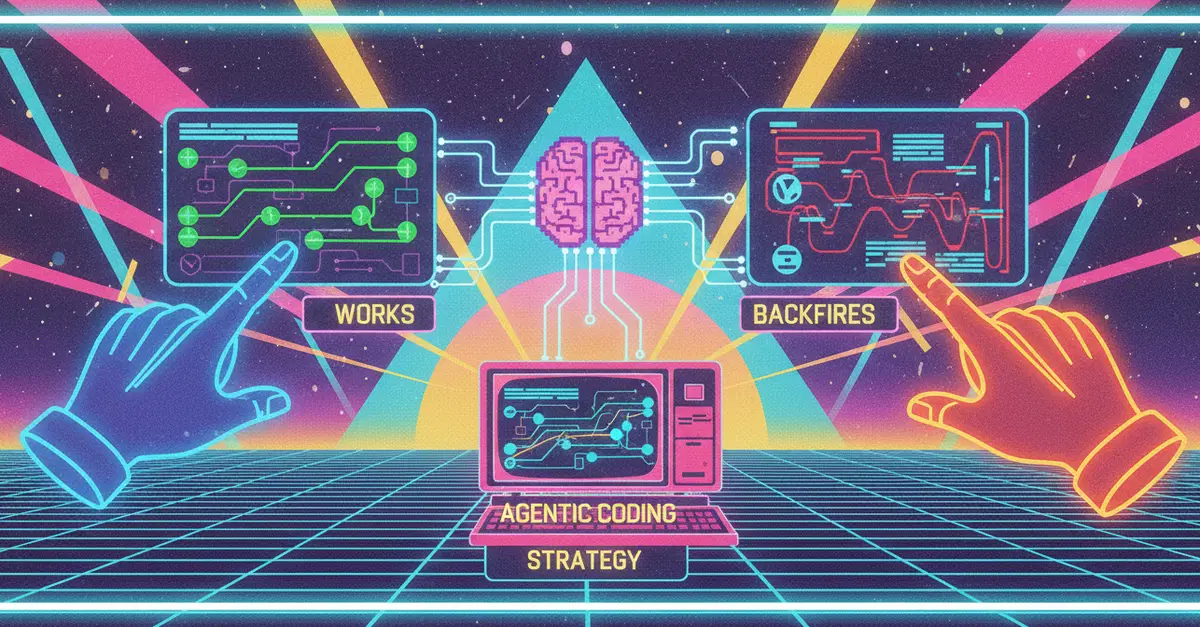
Most agentic coding patterns work on the first module. You pick up a workflow — a skills framework, a multi-worktree setup, an orchestrated runner — and it ships something real in an afternoon. That's not the hard part. The question people hit several months later, when the codebase has grown and the tasks have gotten complicated, is whether the pattern still works then. The honest answer for most of them is: not quite.
This isn't a knock on the tooling. It's a property of the problem. Building a feature in isolation and maintaining a system across dozens of parallel sessions are different activities. The patterns that win on the first one don't automatically win on the second.
Here is a plain look at the common patterns, what they're good for, and where each one starts to bend.
what "scales" means here
By "scales" I mean four things that tend to surface together as a project matures: