The Detroit Red Wings’ search for a new general manager is underway. And beyond the obvious question of who they will hire is another that will loom over the process: what exactly is the new head of hockey operations walking into?Detroit is a storied NHL market, an Original Six franchise with a long history of winning and a passionate fan base. It’s also home to the league’s longest active playoff drought, and recently, some internal turmoil — which, added together, proved to be too much to solve for even one of the franchise’s most iconic figures.That all means the new GM is going to take over the franchise at a critical and fascinating moment.But even for all the angst and struggles of recent seasons, this does not look like the same level of ground-up rebuild Steve Yzerman inherited back in 2019. There’s more talent in the system this time, and that gives the potential for a quicker timeline back to contention — with potential being the key word.Is Zach Werenski really committed to the Blue Jackets?Aaron Portzline and Sean McIndoeWhat’s in placePutting aside, for a second, the Dylan Larkin trade request and whatever comes of it, the Red Wings have an appealing foundation in Moritz Seider.A top-five finisher for the Norris Trophy last season, Seider is just entering the prime of his career as a do-it-all defenseman — something every team covets. That’s a great place to start, especially when paired with another big, mobile pillar in Simon Edvinsson, who is already logging huge minutes and has even more runway ahead of him at age 23.Add in another young first-rounder in puck-mover Axel Sandin-Pellikka (21), the steady Albert Johansson and intriguing big right-shot prospect Anton Johansson and the Red Wings’ blue line has a strong young core to build upon.Up front is a little murkier, owing to both the Larkin uncertainty and the future of Alex DeBrincat, who has one year left on his contract. Last season, DeBrincat was Detroit’s best and most consistent forward, scoring 41 goals and 85 points and playing all 82 games.At age 28, DeBrincat still has many productive years in front of him, and if the Red Wings can extend him, the combination of him and Raymond gives Detroit a strong duo of wingers atop the lineup. Both were among the top 20 NHL wings in points last season, and Raymond still has a higher gear in him than his 76 points a year ago (down from 80 a year prior). At 24, he is just entering his prime, and there is 90-point upside in his game.If they can’t extend DeBrincat, it gets much more complicated. Detroit has some notable scoring prospects on the wing — Michael Brandsegg-Nygård, Carter Bear, Max Plante and J.P. Hurlbert — but 40-goal scorers such as DeBrincat are rare and hard to replace. That makes his future a key domino for the Red Wings’ direction.The biggest questions, though, are still down the middle. If Larkin doesn’t walk back his trade request, Detroit will have a major need there in both the short- and long-term. Certainly the Red Wings would love to get a young top-six center back in a potential Larkin deal. But typically, there’s only one real way to land those players: by drafting them, usually early.The Red Wings have a pair of young recent top-10 picks down the middle in Marco Kasper and Nate Danielson, plus veterans Andrew Copp and J.T. Compher in the short-term. And Kasper in particular has a lot of winning elements, making him an important piece going forward for Detroit. He’s an up-tempo, hard-edged player who can score at the net and do a lot of dirty work. But the offensive ceiling for both him and Danielson is a question, and likely will prevent either from being a first-line center on a contender.That reinforces the need to draft a center with major offensive potential in the next year or two. Still, the Red Wings have quite a bit to work with on defense, a couple of stars on the wing (if they can keep DeBrincat) and a deep system of good complementary players. If they can add a top young center (or two), their future outlook could improve in a hurry.Alex DeBrincat has one year left on his contract. (James Guillory / Imagn Images)Competitive timeline(s)Even with a solid foundation of talented players, so much of the Red Wings’ competitive timeline still revolves around the Larkin situation.If a new GM were to smooth things over with Larkin, it would make this next season a continuation of where this team left off: in the playoff race, with work to do around the fringes to level up in a competitive Atlantic Division.The problem is, whether due to the Larkin situation, Yzerman’s more patient (or passive) approach, or a combination of the two, Detroit was stuck in limbo during the busiest part of the offseason. So that puts more pressure on the Red Wings to 1) get creative in the later stages of the offseason, and 2) bet on a lot of internal growth.
What is the next Red Wings general manager inheriting?
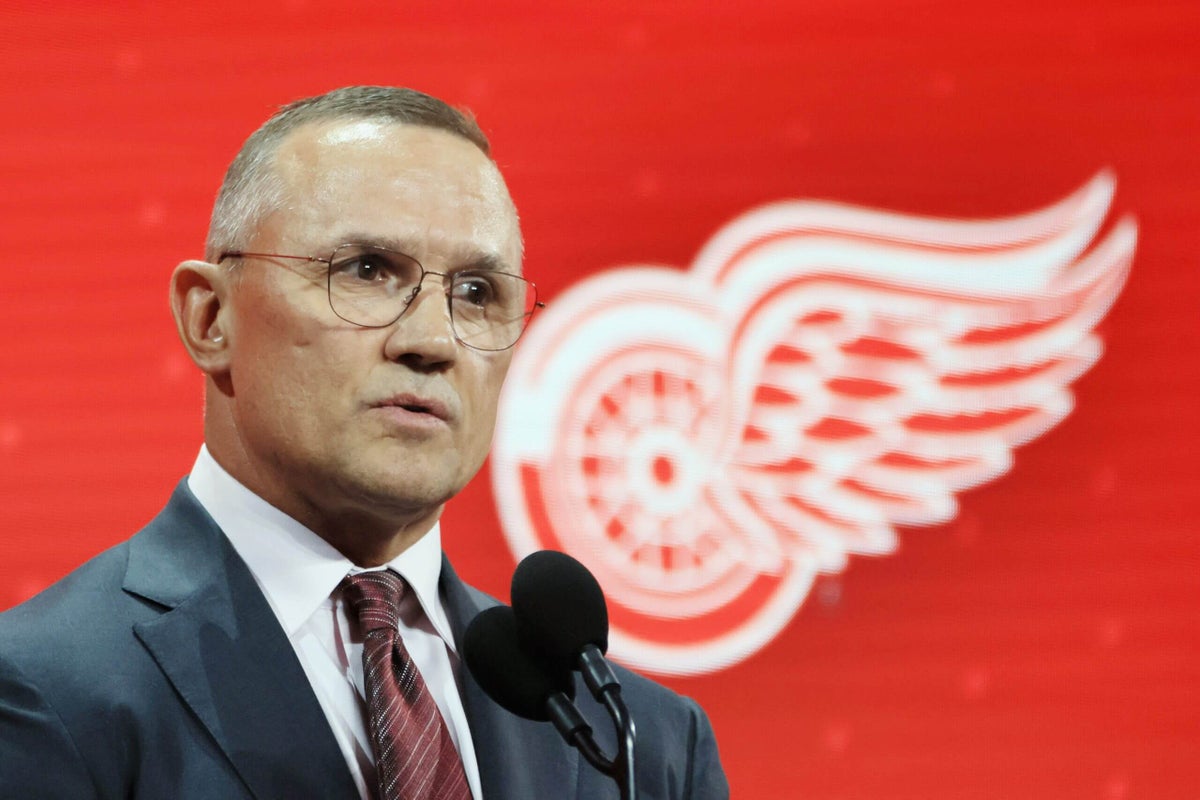
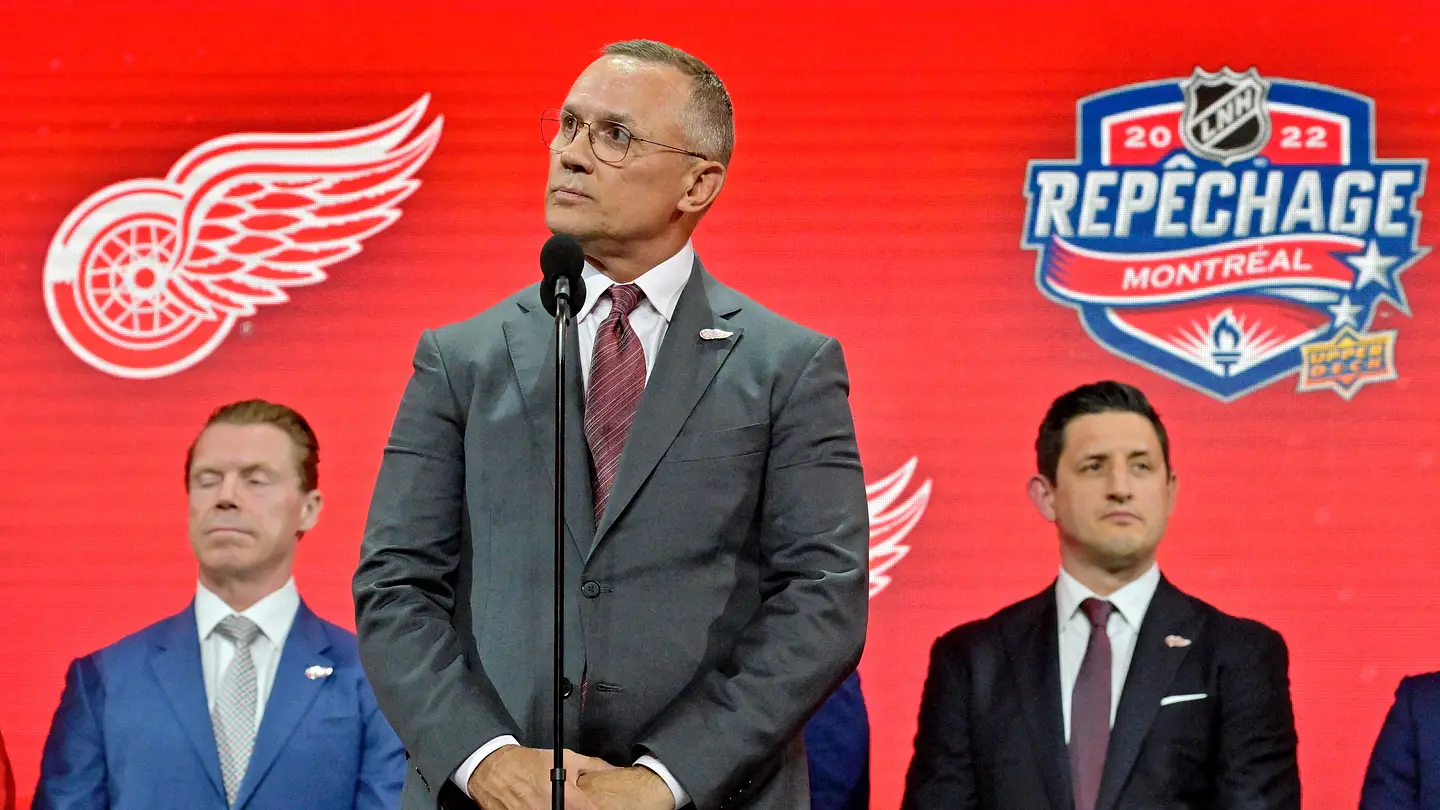
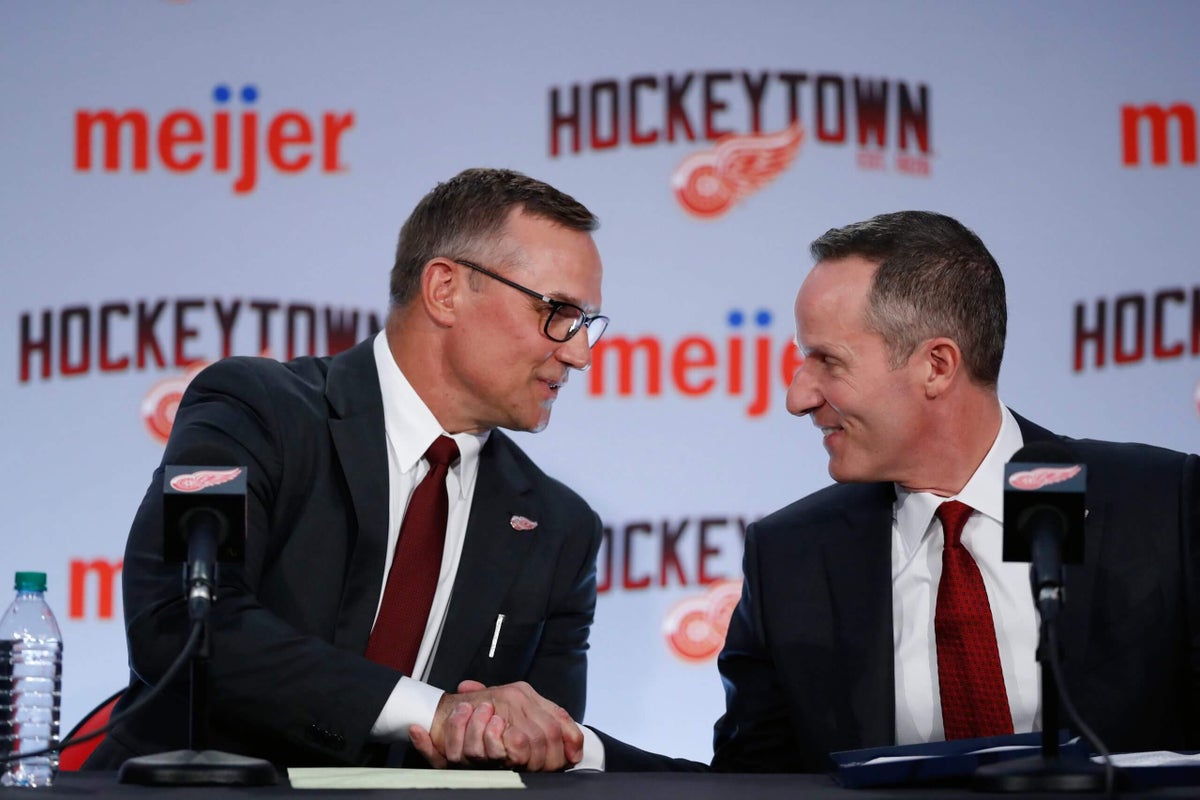
The Red Wings are looking for a new GM after moving on from Steve Yzerman. What kind of situation will his successor inherit?
2,191 words~10 min read