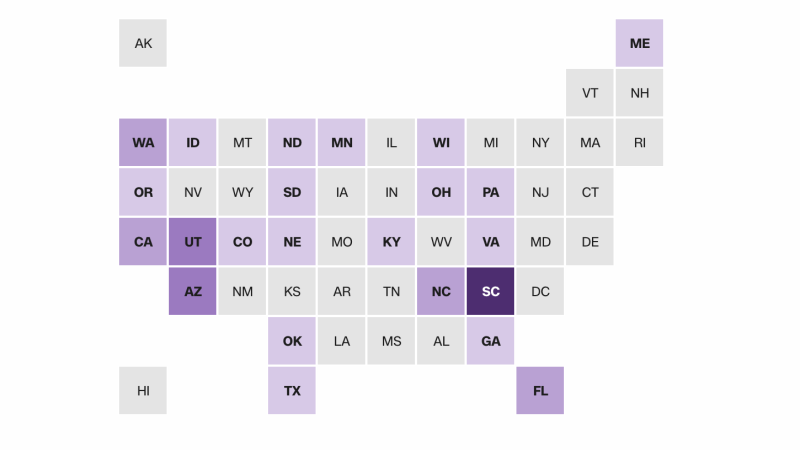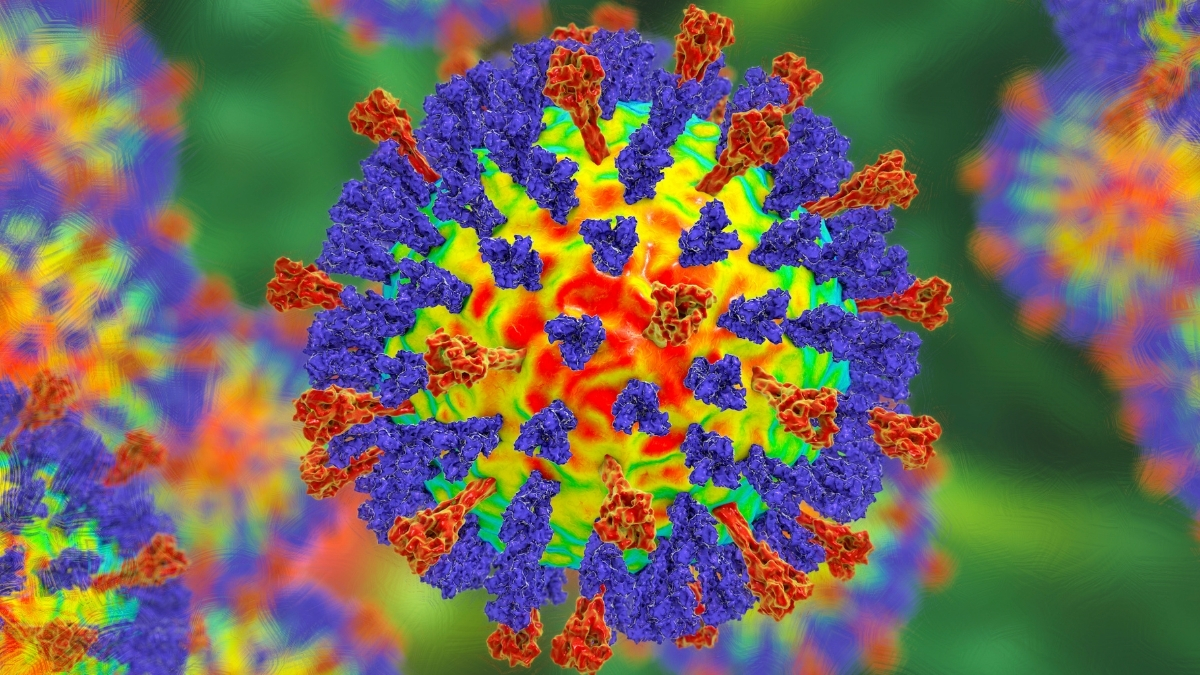
Measles cases in the United States have reached levels not seen in over three decades, raising concerns that the country could soon lose its measles elimination status. At the start of the century, the country had the virus well under control, even managing to reach what is known as elimination status."We eliminated measles in 2000 after decades of hard-won public health work… It was a huge win for public health," public health expert Jessica Steier, founder of Unbiased Science, told ScienceAlert."Now we're watching that progress erode."This status was recertified in 2011, but since then, it has not been reviewed.When it comes to measles, elimination status doesn't mean the virus is totally eradicated from a country's borders. "It means the virus is not spreading freely," Steier explained. "Cases will still happen as measles is always a plane flight away, but we shut them down fast."
Measles elimination is defined as the absence of endemic (consistently locally acquired) virus transmission within a defined geographic area, for more than 12 months, where a reliable surveillance system is in place.Experts say that is no longer the landscape of the measles virus in the US.As the measles tracking team at Johns Hopkins University (JHU) Bloomberg School of Public Health reports, the majority of the 2,295 cases reported so far this year have been acquired locally (within the state where the case was reported), with few coming in from outside of either the state or the country.