
You've written some version of this:
const intersection = new Set([...setA].filter(x => setB.has(x)));
const difference = new Set([...setA].filter(x => !setB.has(x)));
const union = new Set([...setA, ...setB]);
Enter fullscreen mode
You've written some version of this: const intersection = new Set([...setA].filter(x =>...
You've written some version of this:
const intersection = new Set([...setA].filter(x => setB.has(x)));
const difference = new Set([...setA].filter(x => !setB.has(x)));
const union = new Set([...setA, ...setB]);
Enter fullscreen mode
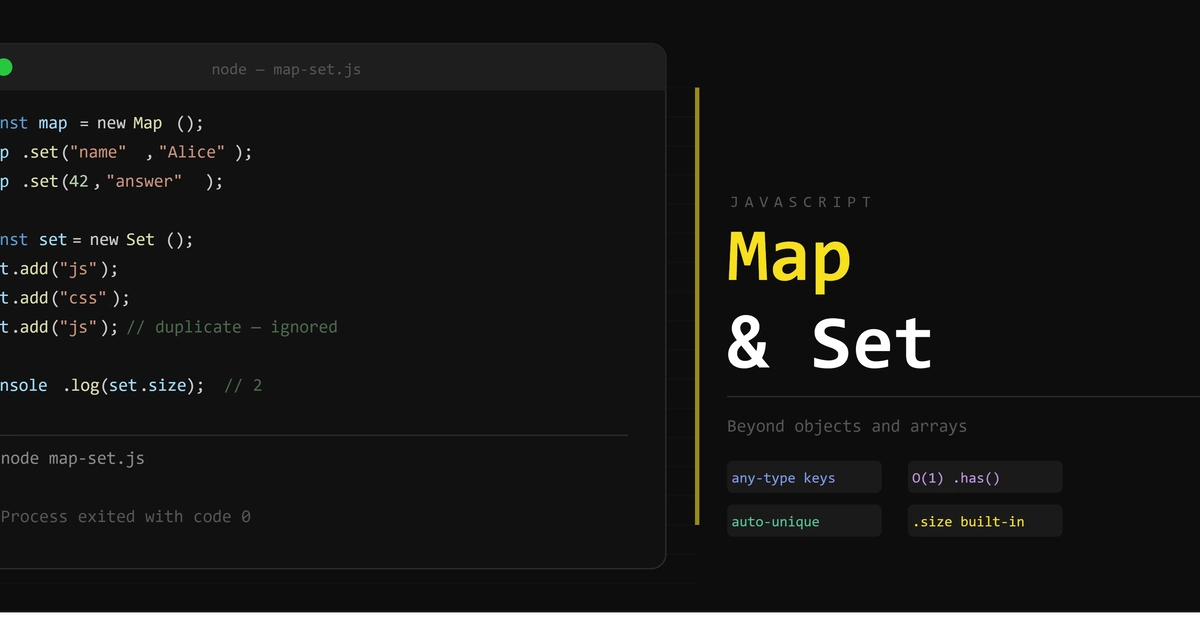
"Objects and arrays are JavaScript's workhorses. Map and Set are their smarter siblings — built for...
Learn how TypeScript discriminated unions model state so invalid combinations simply won't compile. Master the discriminant…
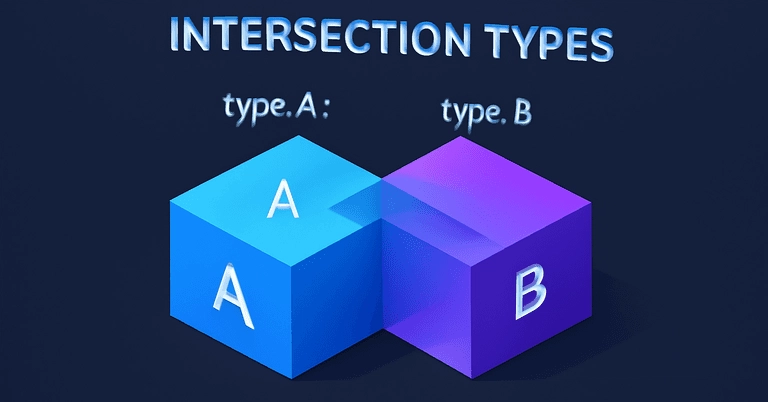
TypeScript Intersection Types Done Right: When They Compose Cleanly and When They Silently...

Tag your union, switch on the discriminant, and let assertNever turn a forgotten variant into a compile error instead of a 2am…
When working with JavaScript, it is common to deal with lists of data: user IDs, email addresses,...
JavaScript is full of small features that can make your code cleaner, shorter, and easier to...