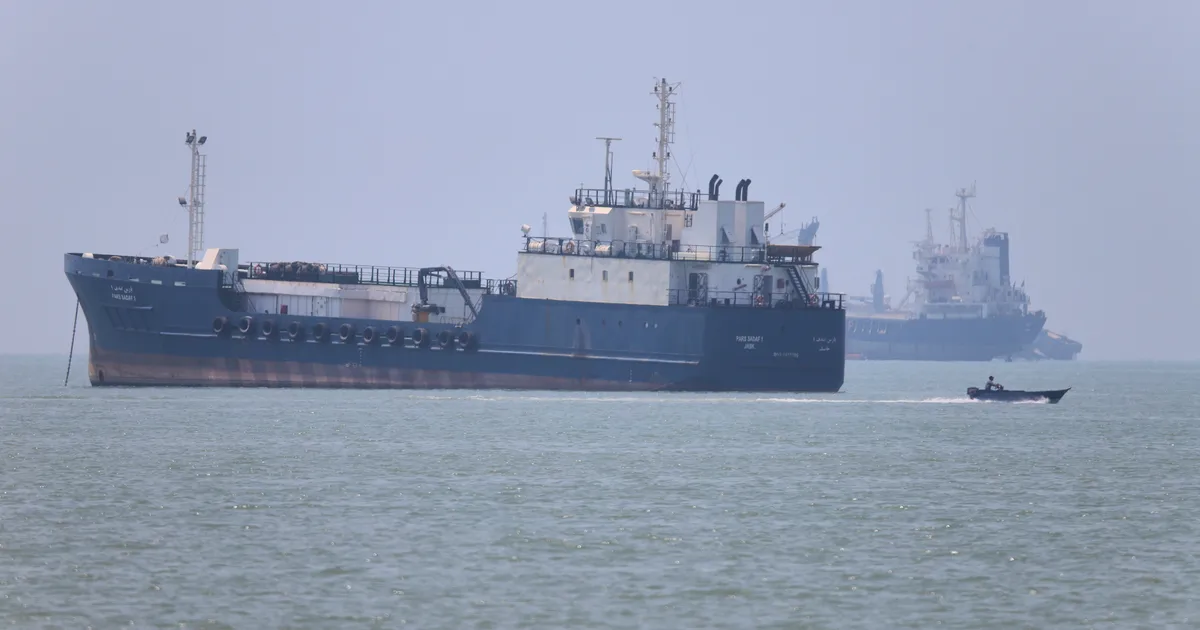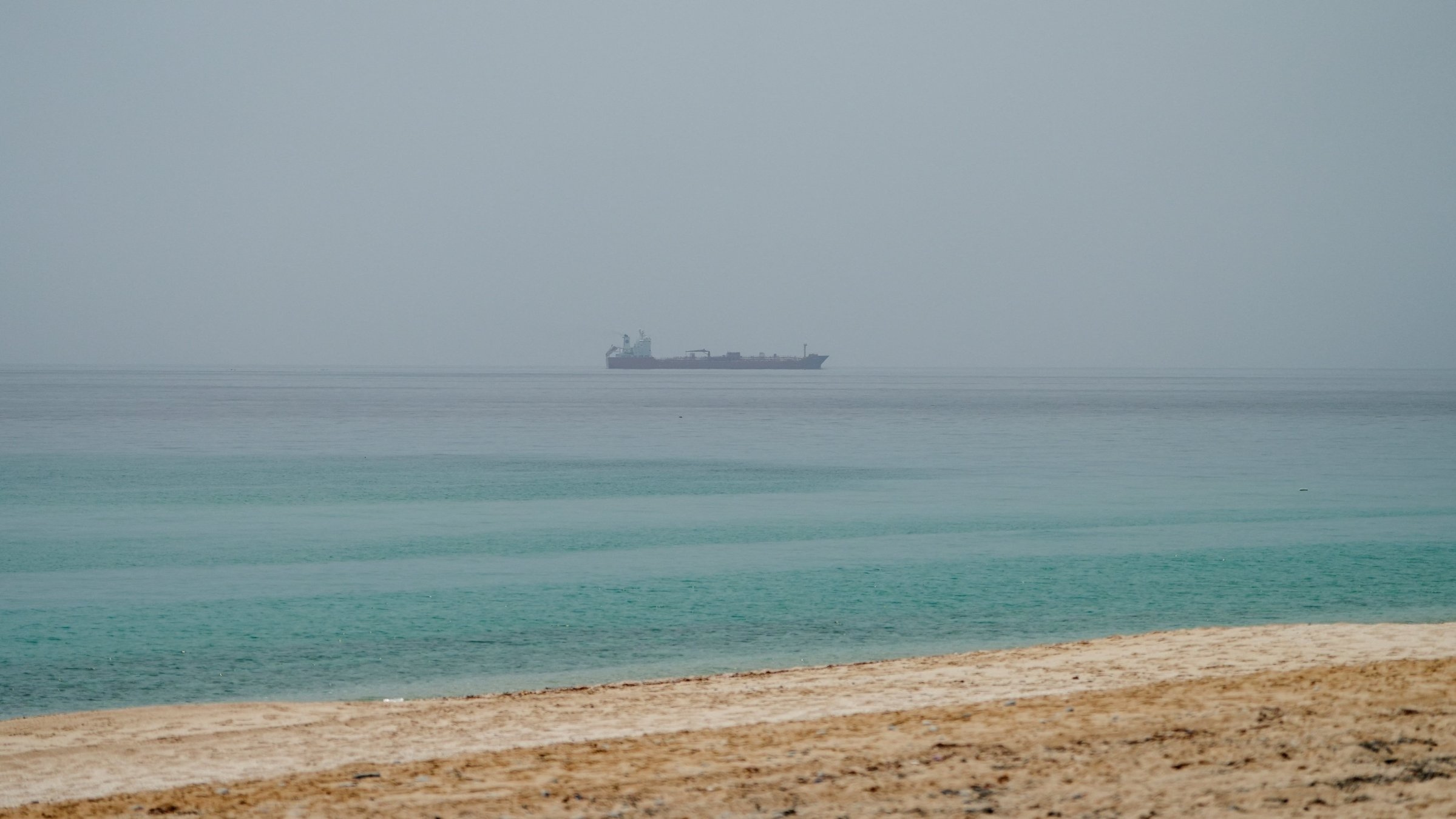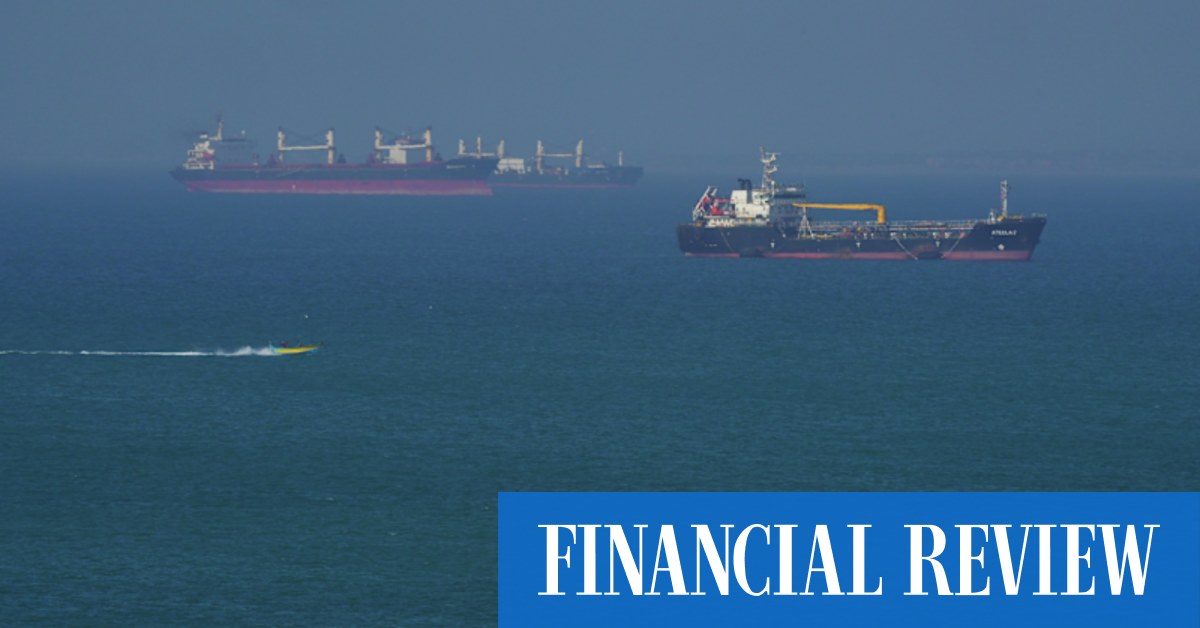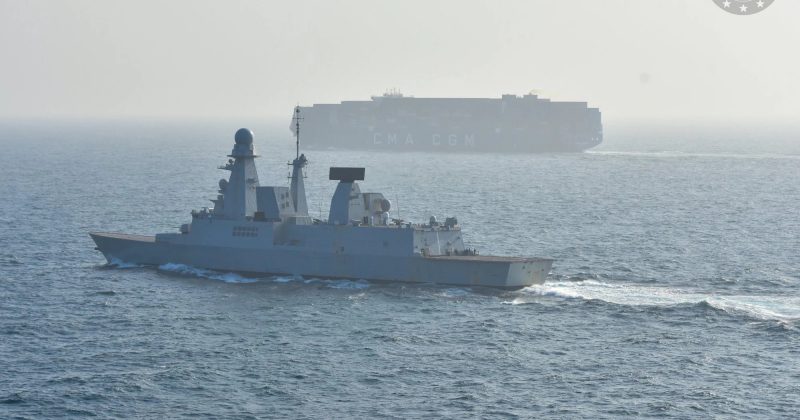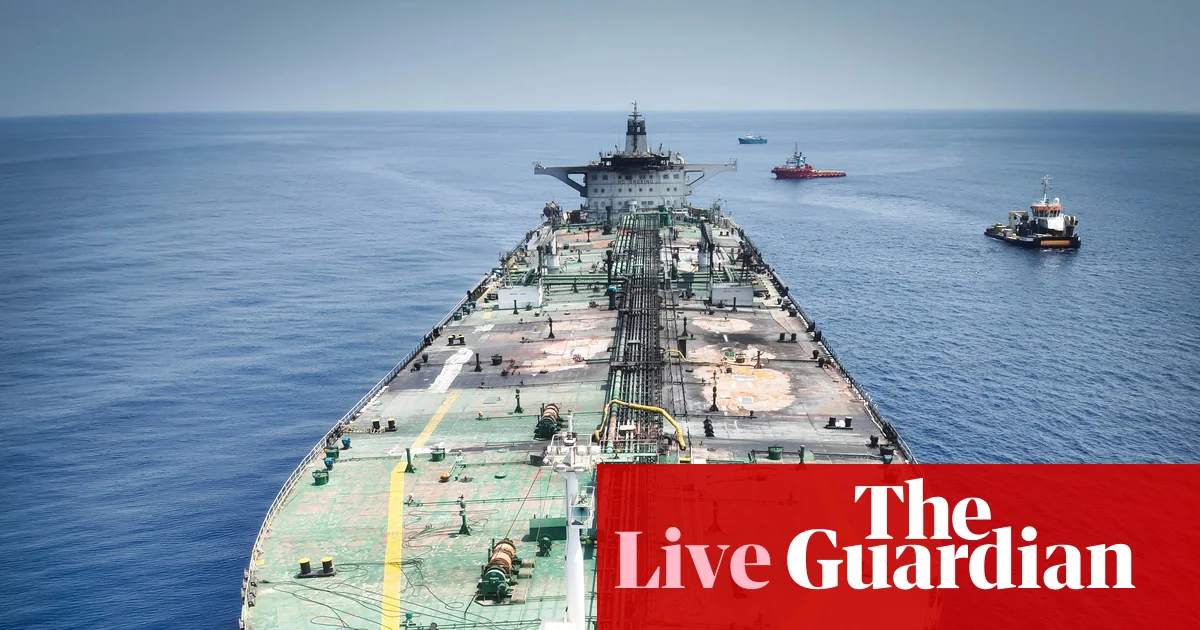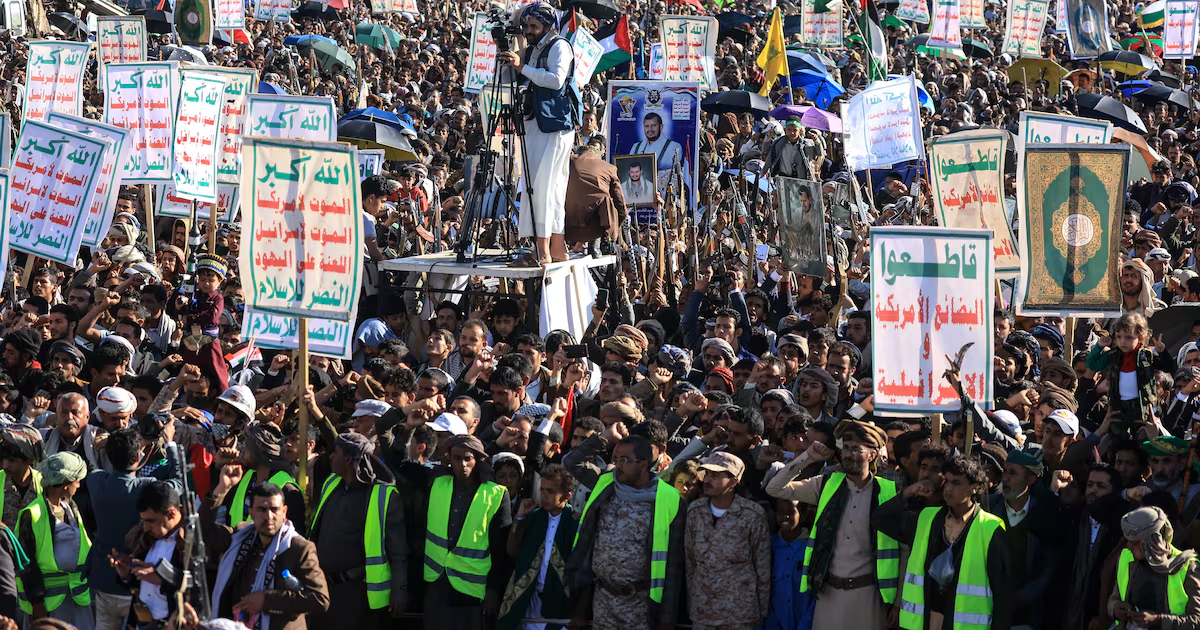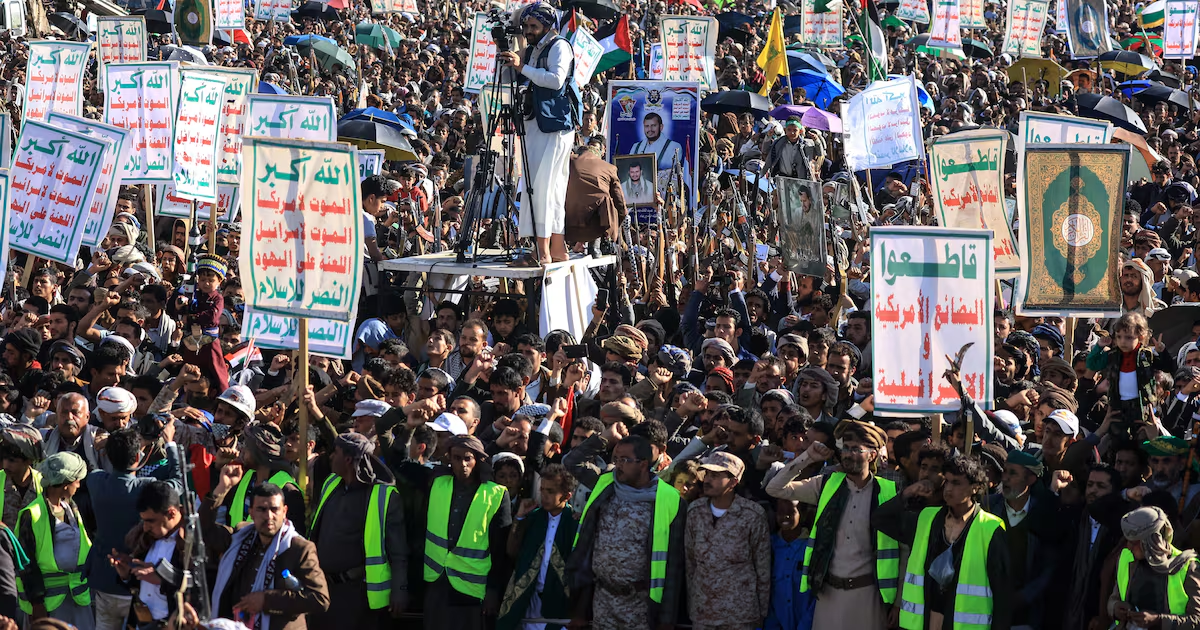
Oil prices continued the march towards the $100 per barrel mark on Thursday after Yemen’s Houthi rebels struck Saudi oil tankers in the Red Sea, widening the regional conflict that threatens global trade and energy supply across markets.Brent, the benchmark for more than two-thirds of global oil, rallied 2.34 per cent, advancing from its six-week high on Wednesday to hit $96.27 a barrel at 7.41pm UAE time. The US gauge, West Texas Intermediate, advanced 1.19 per cent, to $88.59 a barrel.Houthi rebels on Thursday said they had targeted two oil tankers – Encelia and Layla – with missiles and drones for violating their blockade of Saudi ports and shipping. Saudi news agency later confirmed Encelia was targeted while sailing in the Red Sea. Citing an official source at the General Transport Authority, the Saudi Press Agency said the attack caused a fire at the bow of the ship, but that all crew members were safe.“These attacks constitute a violation of international laws and conventions that guarantee the safety of commercial vessels and their crews,” SPA added, without confirming whether the second tanker was also hit.New frontThe United Kingdom Maritime Trade Operations also said it received a report of an incident 70 nautical miles south-west of Saudi Arabia involving a tanker being struck by an unknown projectile, causing a fire on board. A satellite image of Bab Al Mandeb strait, a key shipping waterway and gateway to the Red Sea. ReutersInfoEarlier this week, Houthis threatened to hit Saudi ships and warned global shipping operators not to load or discharge cargo at Saudi ports.Five tankers loaded with Saudi oil turned round in the Red Sea on Tuesday, a day after the Houthi rebels announced a “maritime embargo” against Saudi Arabia. Four of the tankers, which were carrying millions of barrels of oil to markets including China and India, had been heading for the Bab Al Mandeb strait, but changed course towards the Suez Canal. A fifth turned back in the Gulf of Aden.The attacks in the Red Sea open a new front in the regional conflict that has embroiled the Gulf nations and the wider Arab world. The blockade of the Bab Al Mandeb waterway adds to the strain on energy supplies from the Middle East, especially from Saudi Arabia, which is Opec’s biggest oil producer. The Red Sea attack is “a serious escalation” of the conflict, Bloomberg cited Daniel Hynes, senior commodities strategist at ANZ Group Holdings, as saying. “If this route is disrupted, the tightness in the oil market is only going to worsen.”US-Iran strikes Both benchmarks have advanced sharply this week, as the US has completed its 12th straight night of military strikes on targets in Iran. Tehran has retaliated with missile and drone attacks on US interests in the region. Play00:26Trump says Iran is 'not ready' to make nuclear dealUS Central Command on Thursday said it struck “military targets including maritime capabilities, missile and drone storage facilities, coastal surveillance sites, and air defence assets” in Iran to degrade its ability to attack ships in the Strait of Hormuz.US President Donald Trump earlier said Iran is seeking an agreement with the US, but is “not ready” to make a deal yet. “They're getting hit so hard, and they want to make a deal – but I say they're not ready to make a deal because every time they make a deal, they want to change it and everything. They're not ready,” he said in an address at a rally in Georgia.A day earlier, Mr Trump threatened to attack Iranian nuclear facilities, and hit bridges and power plants in the country if Iran did not stop attacking ships in the Strait of Hormuz. Iran has warned it will hit US interests, as well as regional infrastructure and energy sector installations if the US attacks Iran's infrastructure.Oil prices gave up all the war premium this month and traded below their prewar level of about $72 a barrel as the US and Iran worked on a permanent peace deal after agreeing to a 60-day ceasefire last month.Play02:29Iran conflict risks new Red Sea crisis as oil supplies tightenHowever, the latest flare-up in the conflict is pushing prices rapidly towards the $100 per barrel mark. Brent has rallied more than 30 per cent in July, and analysts say prices would hit triple digits if the conflict continues.Goldman Sachs sees Brent rallying to more than $120 a barrel by the fourth quarter of this year if supply disruptions continue.“Given the dangerous escalation currently unfolding, we remain of the view that oil prices could potentially take out the Russia-Ukraine oil price highs of $128 per barrel in 2022 or even the 2008 peak of $146 per barrel, especially in the worst-case scenario of a full regional war,” Helima Croft, head of global commodity strategy and Mena research at RBC Capital Markets, said.
Oil rises above $96 per barrel after Houthi attacks on Saudi ships in Red Sea | The National
US attacks on Iranian targets continued for 12th straight night with no sign of let up in the conflict
806 words~4 min read