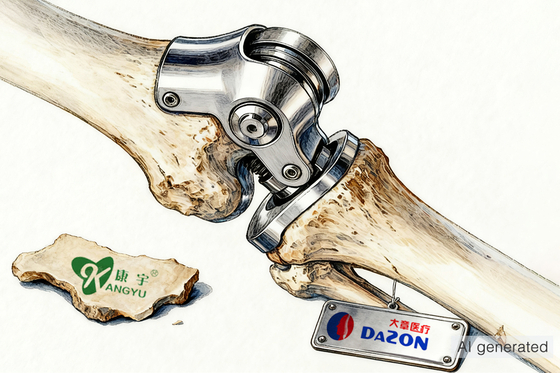
Two Chinese medical device firms, Changzhou Dzhang Medical Device Co. and Changzhou Kangyu Medical Device Co., have declared bankruptcy after winning bids in a government-led bulk-buying program. This marks the first time companies have gone bankrupt as a result of this initiative, highlighting the severe financial strain the state’s cost-cutting measures are imposing on the medical device sector. The Tianjin Medical Procurement Center announced that both companies, once selected in an inter-provincial alliance for orthopedic trauma product supply, are no longer able to fulfill their contracts due to bankruptcy. [para. 1][para. 2]Both companies were small-scale enterprises: Dzhang, founded in 2015 with registered capital of 13.74 million yuan ($1.9 million), made orthopedic surgical instruments and injection devices, while Kangyu, established in 2003 with 10 million yuan ($1.38 million) capital, was licensed to handle a wide range of devices. The Wujin District People's Court in Changzhou accepted bankruptcy proceedings for Kangyu in October 2023 and for Dzhang in June 2024. Kangyu had 25 creditors with claims totaling 6.656 million yuan ($918,000), while its assets were only 311,000 yuan ($43,000); Dzhang’s assets were also insufficient to cover debts. Both companies faced multiple labor and contract disputes. [para. 3][para. 4]While the specific causes for their bankruptcies remain unclear, industry observers widely view them as collateral damage from the government's volume-based procurement (VBP) program that began disrupting the orthopedics sector in September 2021. This program's rounds for artificial joints, spinal products, and sports medicine supplies have resulted in average price cuts of 82%, 84%, and 74% respectively, putting immense pressure on suppliers. [para. 5][para. 6]Leading domestic producers such as Wego Orthopaedic Device Co., Ltd. saw their revenue and net profit fall 37.63% and 81.3% in 2023, respectively. Double Medical Technology Inc. reported 2022 revenue and net profit declines of 28.09% and 84.2%, while Shanghai Sanyou Medical Co., Ltd.'s revenue dropped 1.68% and profit plummeted 88.18%. The companies attributed these losses to heightened shipment volume but drastically lower prices after key products became subject to VBP. Some companies like Chunlizhengda Medical Instruments Co. and Sanyou Medical have started seeing profit growth only in early 2024. [para. 7][para. 8]Dzhang and Kangyu won contracts in a September 2023 VBP tender for orthopedic trauma supplies across 28 Chinese provinces and regions, offering prices of 1,340-1,695 yuan ($185-$234) per product set. Many small companies, unlike large brands with established hospital clientele, were forced to bid very low to secure contracts and avoid sunk costs. For small enterprises with few products, not winning a bid could mean bankruptcy. In the locking compression plate and intramedullary nail categories, Dzhang and Kangyu’s rankings were mid-to-low among numerous bidders. [para. 9][para. 10][para. 11][para. 12]The “volume for price” logic in the program means companies often bid below cost just to survive, increasing business pressure and stirring patient concerns over product quality. A company executive reported MRI machines’ winning bids in recent tenders were sometimes below actual production and warranty costs, highlighting ongoing industry risk. [para. 13][para. 14][para. 15]With the 11th national VBP round imminent, authorities have signaled efforts to stop “vicious competition,” requiring lowest bidders to justify their prices are not below cost. The two bankruptcies have sparked concerns about long-term product supply; VBP contracts often stipulate extended warranty periods, which many small firms cannot guarantee. According to procurement rules, if a supplier defaults, institutions can pick replacements from other winning bidders, and defaulting companies risk being blacklisted for two years. [para. 16][para. 17][para. 18]AI generated, for reference only
Two Chinese Medical-Device Makers Declare Bankruptcy After Winning Bulk-Buying Bids
The cases are the first of their kind and underscore the intense financial pressure of China’s cost-cutting procurement program, which has driven some firms to make below-cost bids to survive
574 words~3 min read