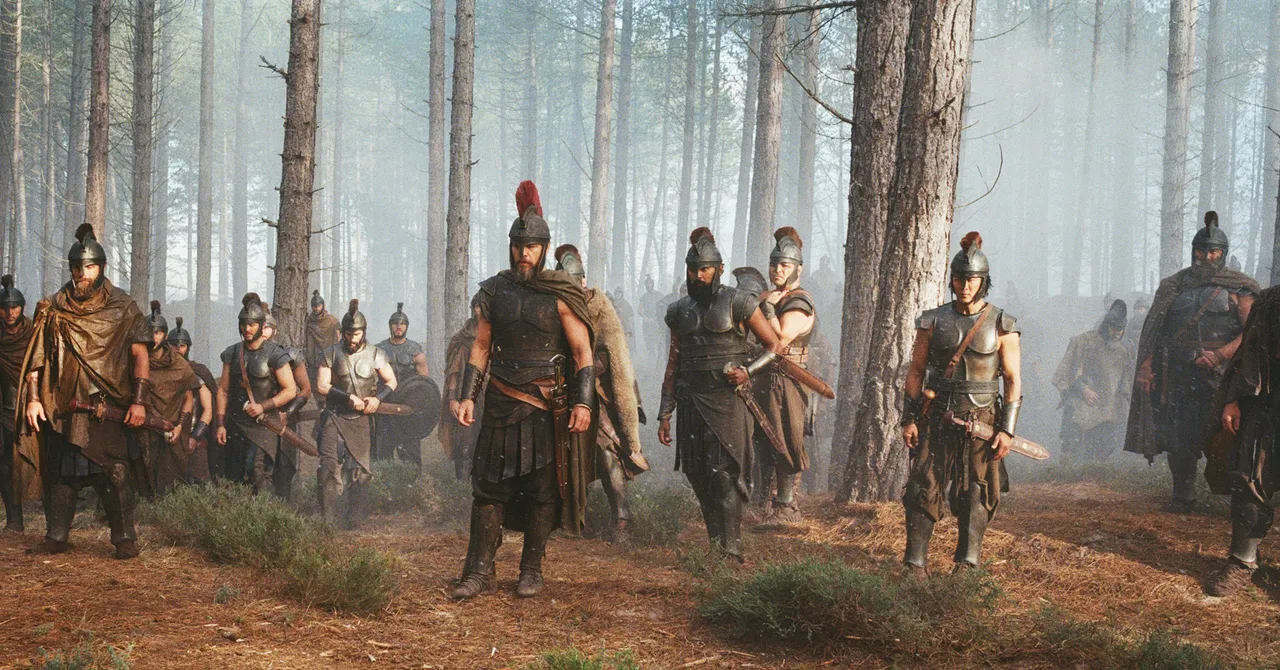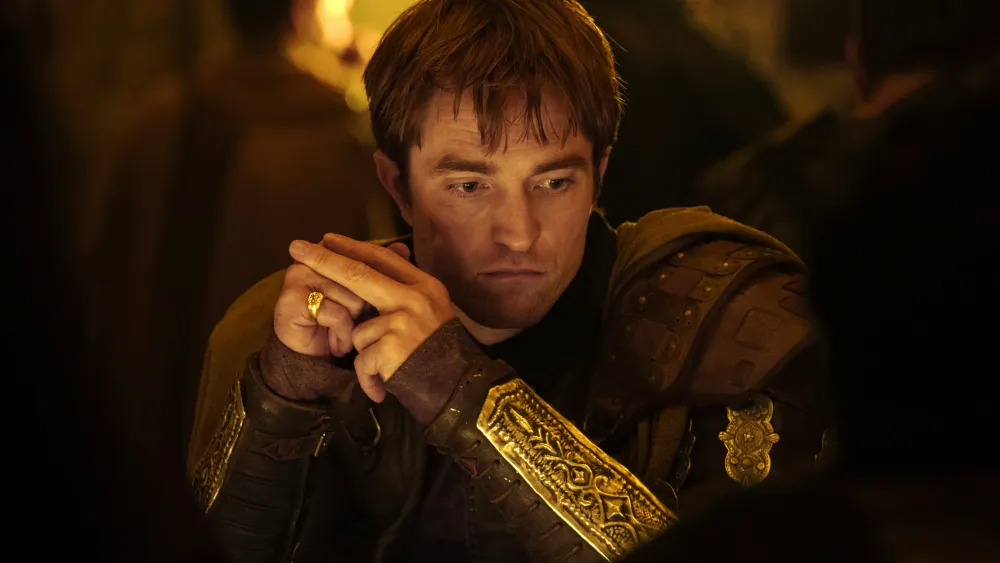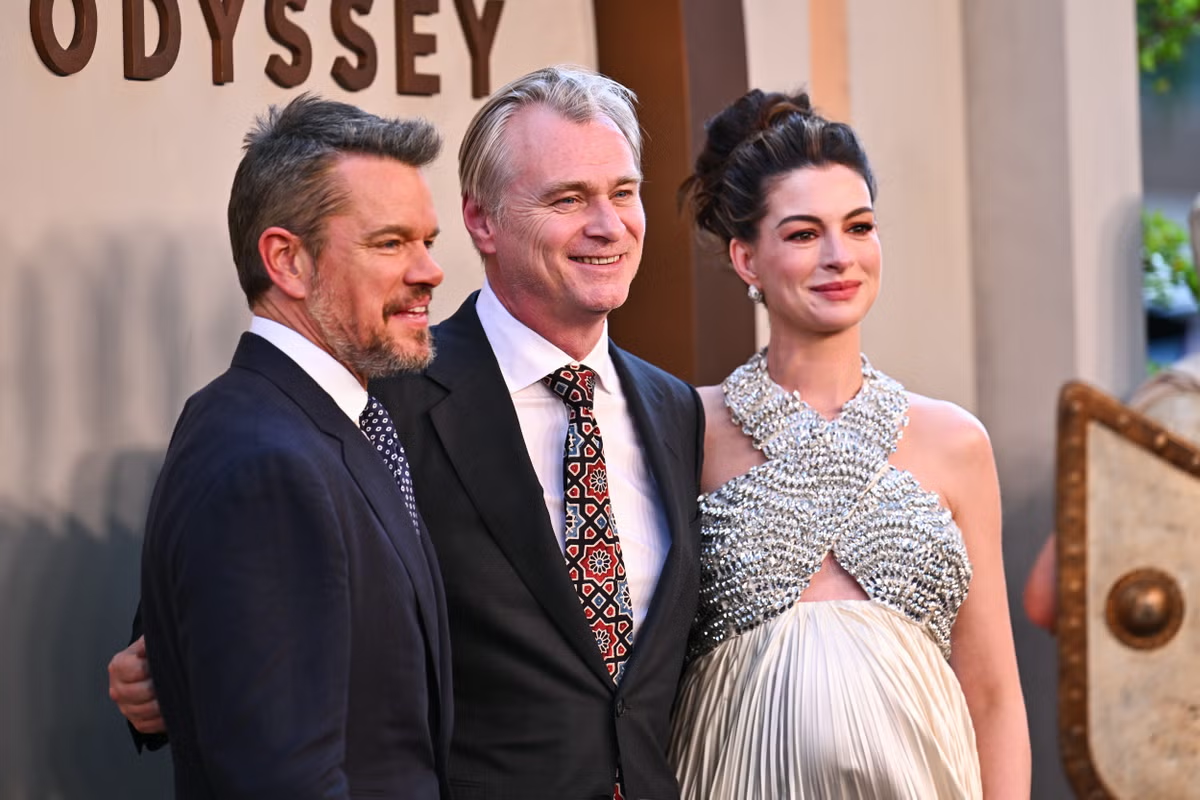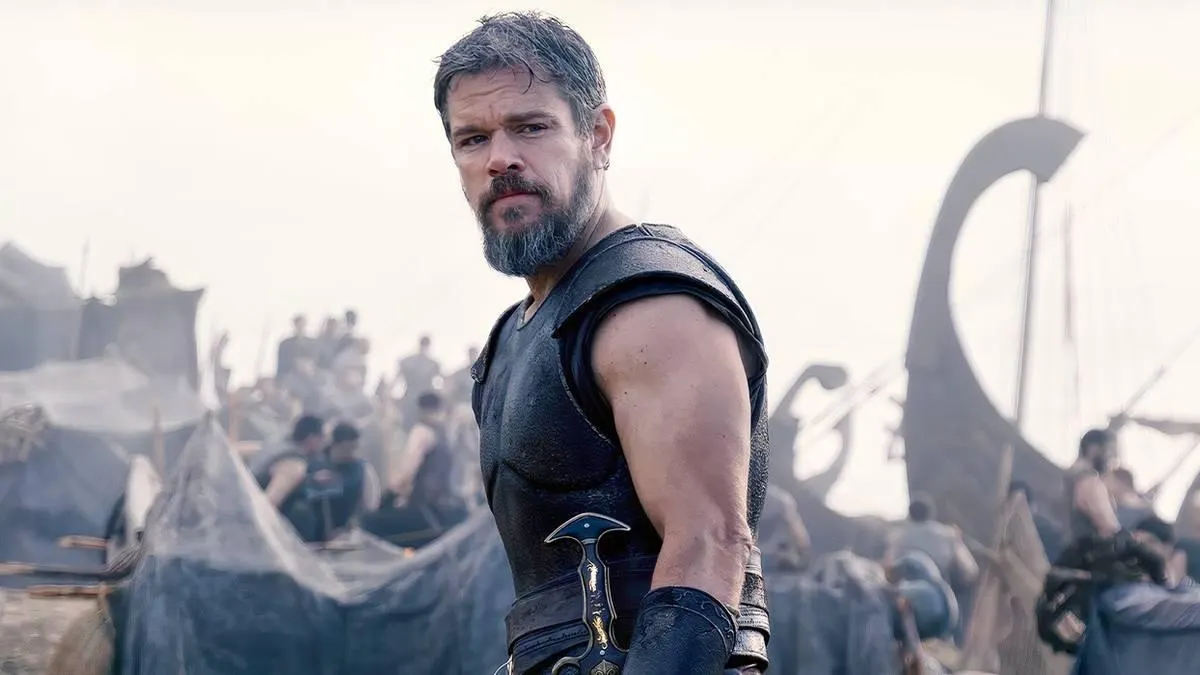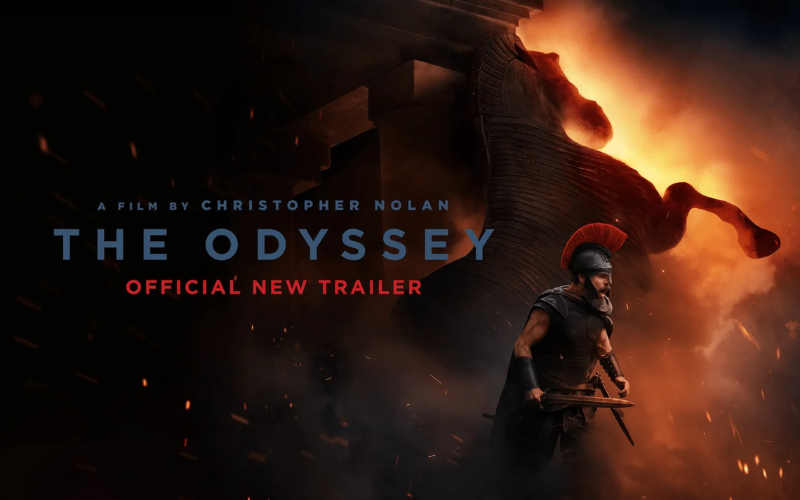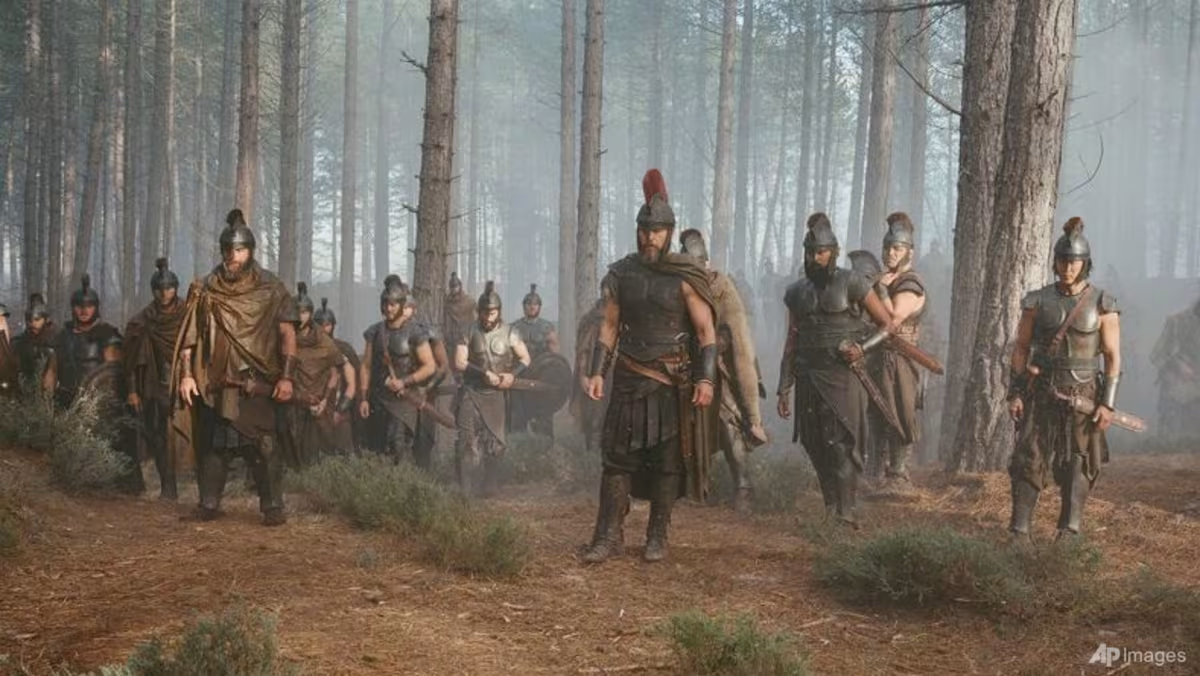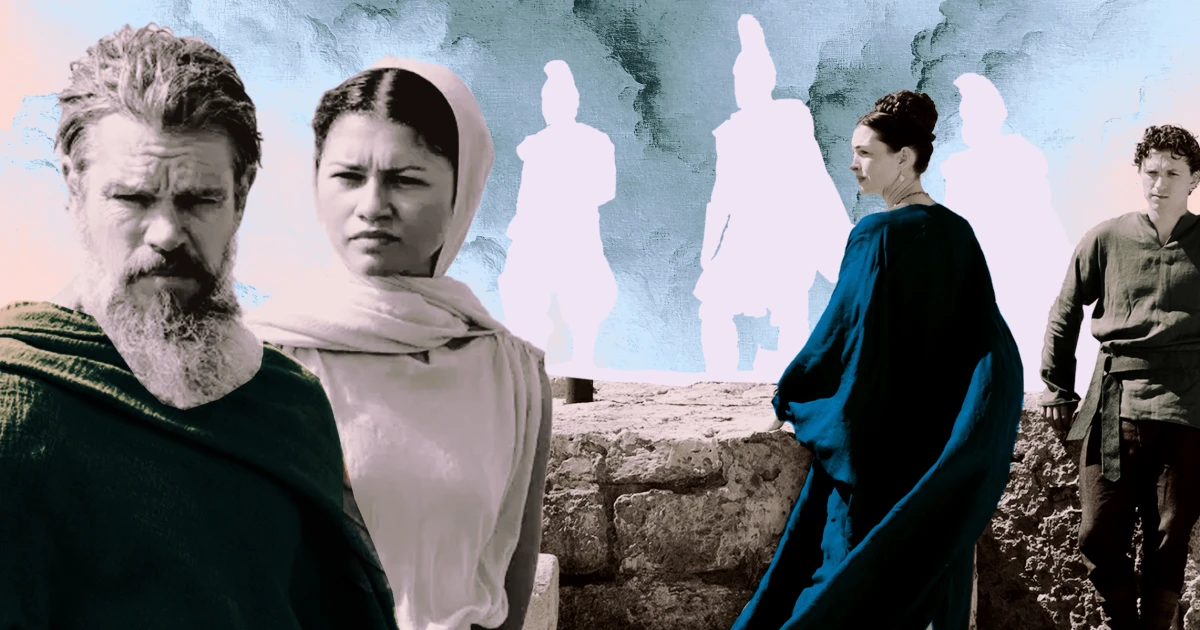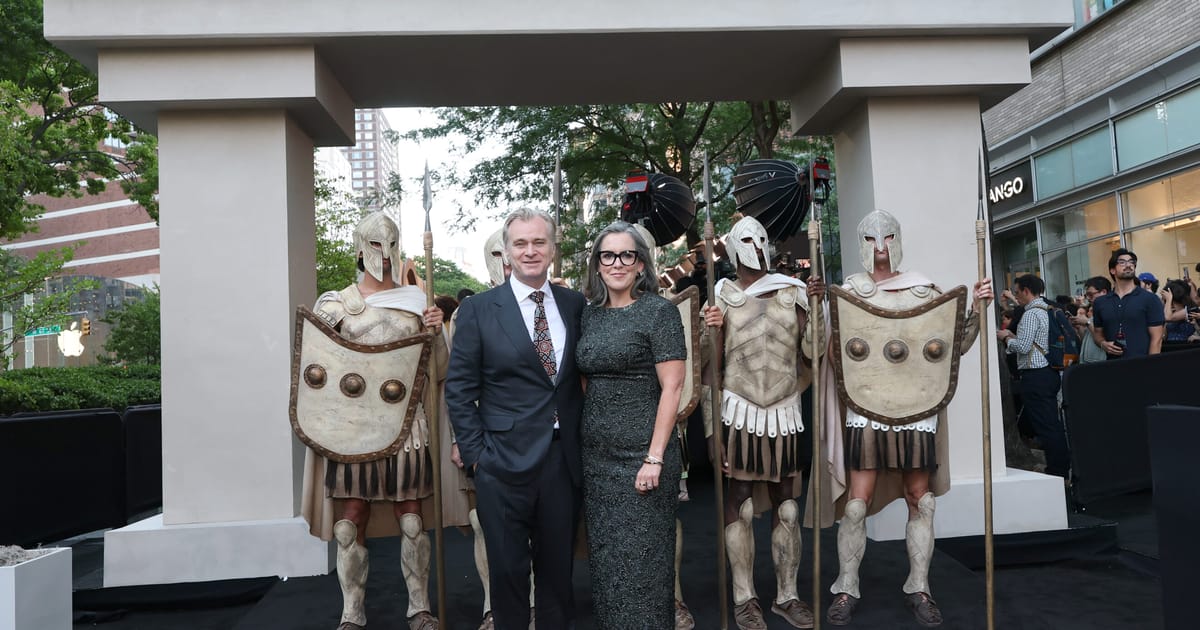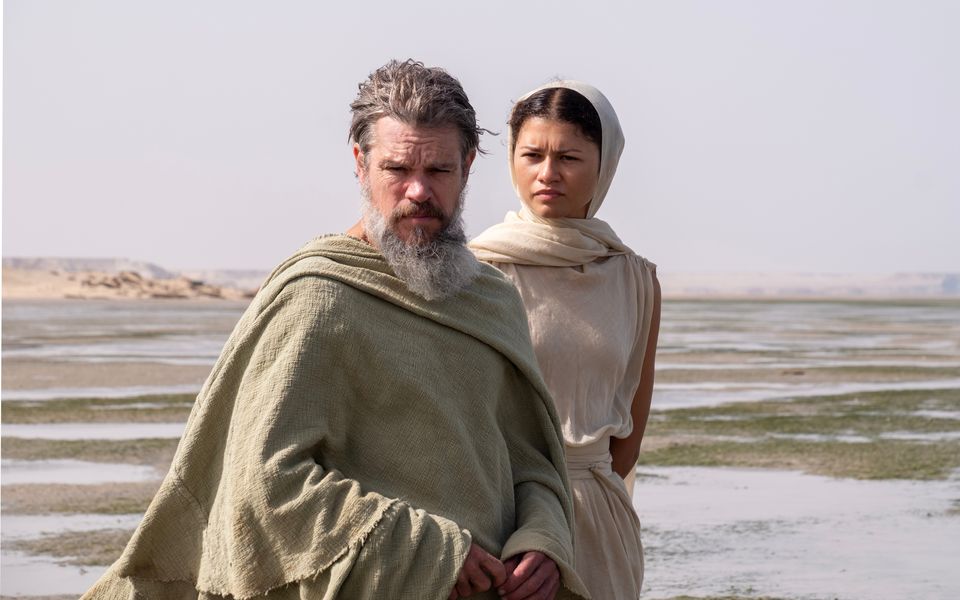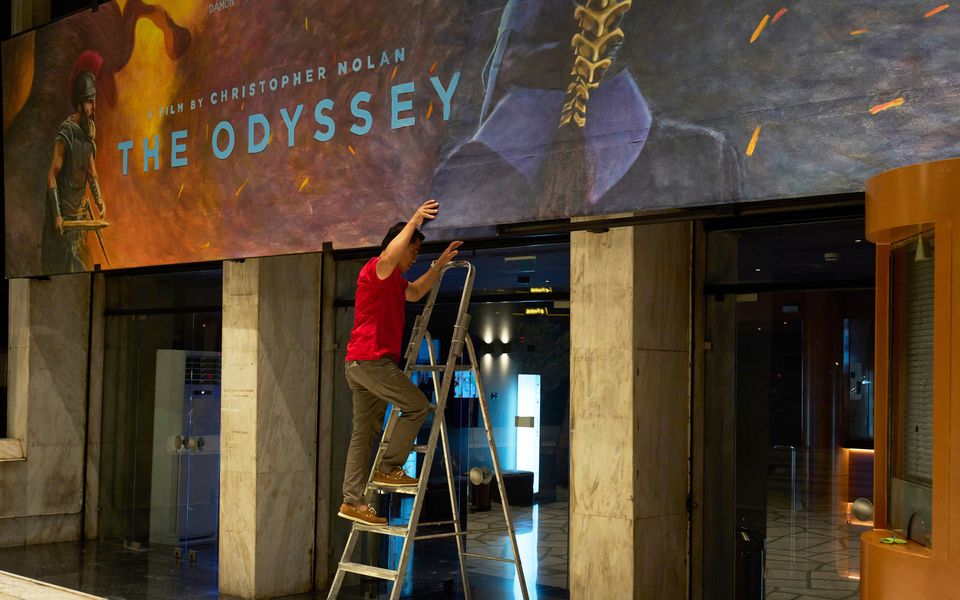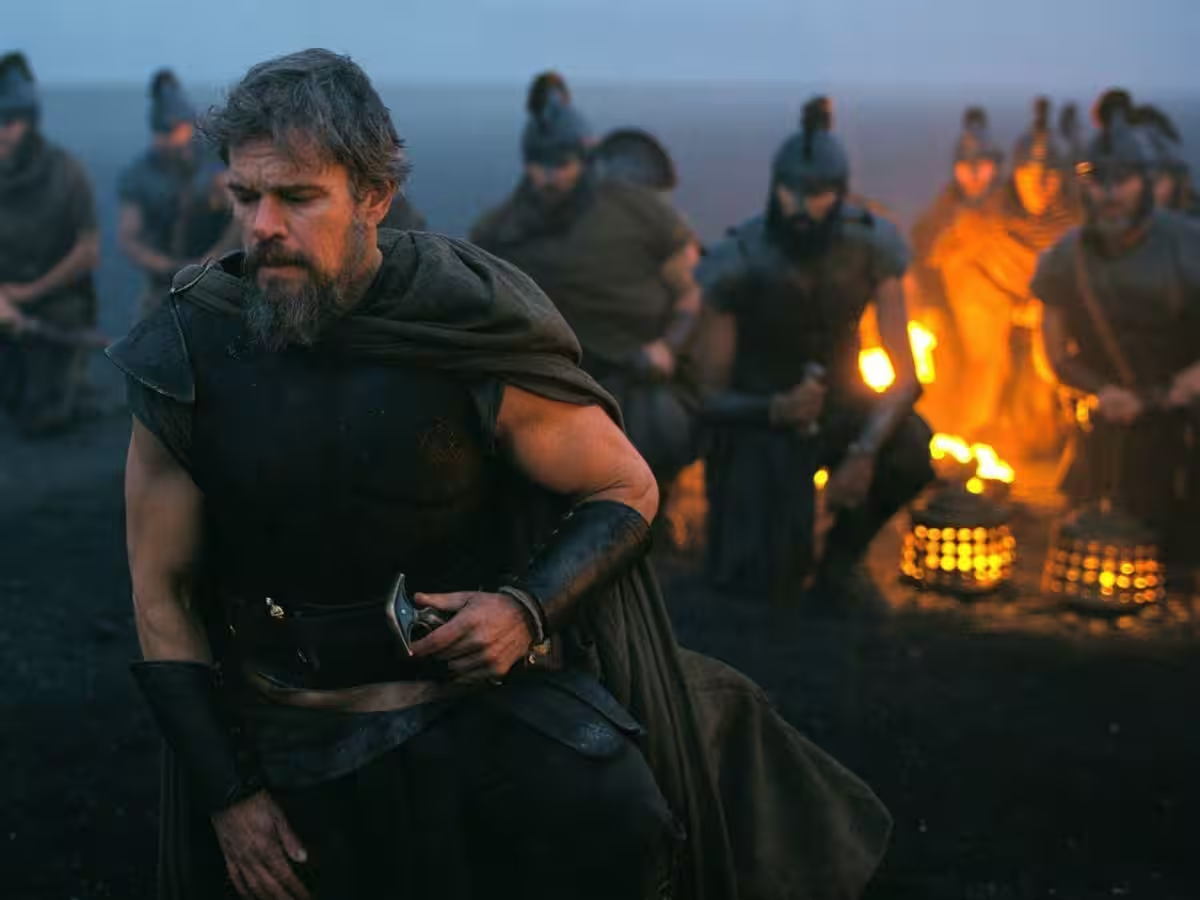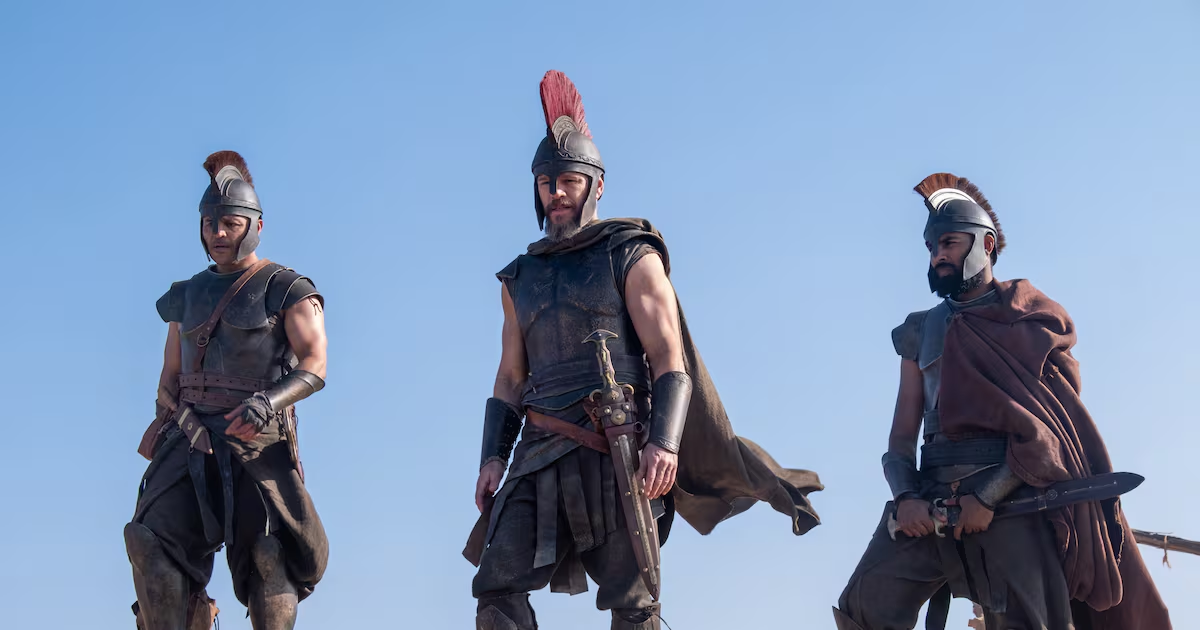
It takes four years to complete a standard degree and about the same again to do a PhD, so imagine my surprise and pride at my ability to become a scholar of ancient Greece in just one week. That’s right, I went to see Christopher Nolan’s The Odyssey (in 70mm at the Irish Film Institute, thank you very much) and since then the hysterical “woke” discourse around the three-hour epic adaptation of Homer’s poem has catapulted me into a vortex of fact and fiction. Nolan’s film is a stone-cold banger, which is a relief because the last time I went to see a big screen interpretation of Homer’s work – 2004’s Troy starring Brad Pitt and based on The Iliad, and a complete turkey – I walked out of the cinema halfway through, the only time I can ever remember doing so, and I love a historical sandal film. The Odyssey is hugely entertaining, supremely stressful and, crucially, based on a myth. I was vaguely aware of accusations of Nolan being infected by the “woke mind virus” over his casting choices in the film during production but now that it’s in cinemas the complaints about his commitment to “historical accuracy” are deeply entertaining. Firstly there’s Lupita Nyong’o, who double jobs in the film as Helen of Troy and her twin sister, Clytemnestra. Nyong’o is a black actor with Kenyan parents, who was born in Mexico and raised in Nairobi. How could she possibly portray an historically accurate Helen of Troy, screamed the purists online. After all, Helen was hatched out of an egg as the result of the union of the Greek god Zeus (who had taken the form of a swan) and either the princess Leda or the goddess Nemesis. Nyong’o’s father is categorically not a swan, nor was she hatched from an egg. Of greatest concern, though, is her skin colour and the question of how a black woman could possibly exist in ancient Greece. [ The Odyssey review: Set aside any doubts. This star-studded film is Christopher Nolan at his bestOpens in new window ]The same complainers who took issue with Nyong’o’s casting seemed to have no problem with Nolan’s inability to find a real Cyclops to play the one-eyed cave-dwelling monster in his film, which is just political correctness gone mad if you ask me. Justice for the out-of-work Cyclops actors of Hollywood!Then there’s trans actor Elliot Page, who plays the solider Sinon, a small but pivotal role. Much of the online criticism in the run up to the film’s release had centred on the incorrect assumption that Page had the gall to be playing the mighty warrior Achilles but has now somehow switched to fury that Page doesn’t play Achilles, thus “erasing” Achilles from The Odyssey. Achilles, of course, appears most prominently in Homer’s other epic poem, The Iliad. And while we’re talking historical accuracy, there’s no conclusive answer on whether Homer even existed, which itself has led to the “Homeric Question” in Greek scholarship. The aspect of casting I was most concerned about was the A-list names in the main roles: Matt Damon as Odysseus, Anne Hathaway as his wife Penelope and Tom Holland as their son Telemachus. Holland has a face that just screams “I know what an iPhone is”. I’m delighted to report he’s a great Telemachus and his 2026 face didn’t lift me out of any of the extremely historically accurate action happening on screen. What I found most distracting was Charlize Theron. Her character, Calypso, is cursed to live on a desert island and fall in love with anyone who lands there. With her beachy waves and crocheted co-ord outfit she wouldn’t have been out of place in an Instagram photo on her holidays in the Maldives. It’s a minor gripe, though. [ Odysseus is all around us, not just in Christopher Nolan’s blockbusterOpens in new window ]Nolan’s use of modern English and broadly American accents has thrown up interesting discourse on our perception of ancient history as it’s been represented in film and television over the last century or so. Historical sandal films are typically presented using some kind of ye olde English vernacular, which would be no more accurate in ancient Greek as the language in Nolan’s script. Besides, it’s not like Agamemnon and Menelaus are calling each other “bro” or “beastie”. I feel truly sorry for anyone who’s skipping The Odyssey because of any perceived “wokeness”. I hope the film’s success will pave the way for some more mythological adaptations, specifically Madeline Miller’s excellent book The Song of Achilles that homes in on the romantic and homosexual relationship between Achilles and his Iliad companion Patroclus. It’s essential reading on the road (Rhode?) to scholarship.
I feel sorry for anyone who’s skipping The Odyssey because of ‘wokeness’
Complaints about Christopher Nolan’s commitment to ‘historical accuracy’ are deeply entertaining
787 words~4 min read