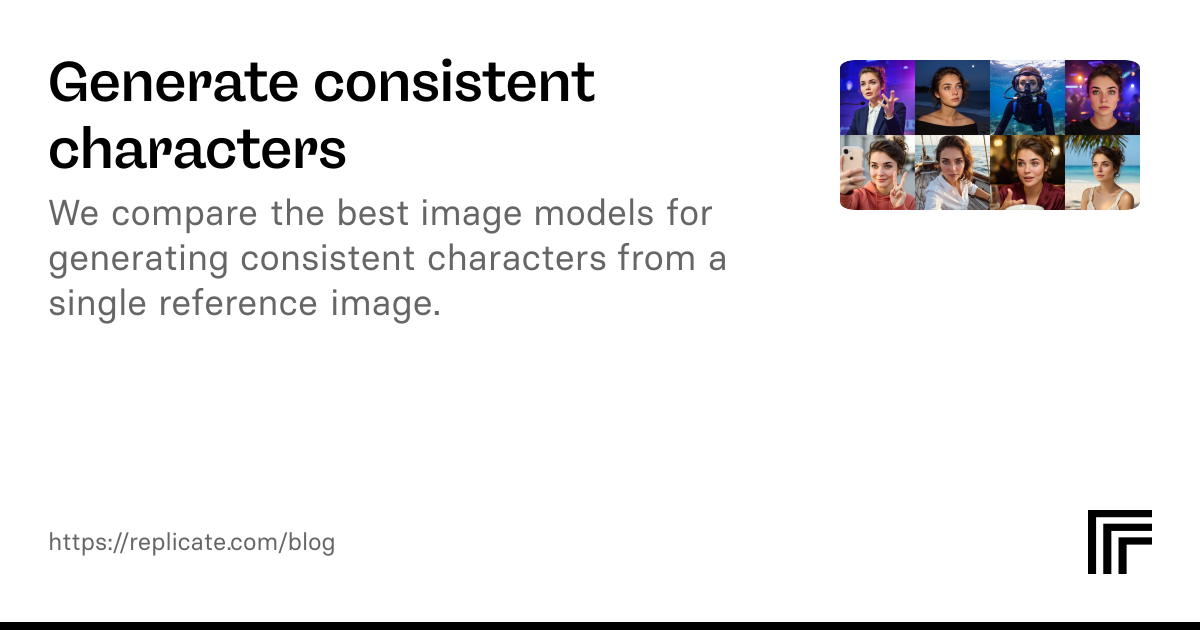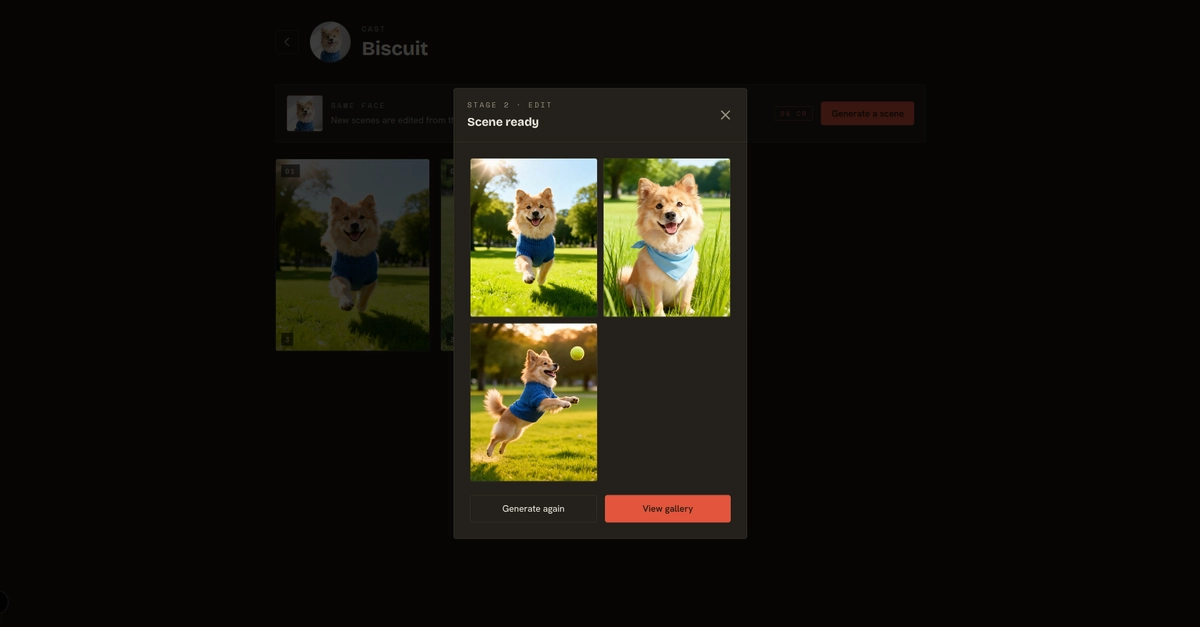
If you're building an app that generates the same character across many scenes, you've probably hit the wall already: seeds drift, LoRA training is heavy and slow, and "same character, new pose" prompting quietly changes the face. The approach that actually holds up in production is a 2-stage pipeline — generate one canonical base image, then edit from that base as the reference for every new scene. Consistency comes from the reference, not the seed.
Below: why the common approaches drift, how the 2-stage pipeline works, the async job queue that makes it deployable, and the serverless-GPU setup that keeps it affordable. There's a free, runnable slice of the whole transport layer at the end.
Why the obvious approaches drift
Seeds. A seed pins the noise, not the identity. Re-use a seed with the same prompt and you get the same image — but that's reproduction, not consistency. The moment you change the prompt ("now she's in a café"), the denoising path changes and the face re-rolls with it. Seeds give you determinism for identical inputs; they give you nothing for new scenes.
Prompt-only ("the same woman as before"). The model has no memory. Every generation is a fresh sample from the distribution your words describe. "Same face as last time" isn't in the prompt vocabulary — there is no last time.