Senate Grills CBN over Banking Reforms, Inflation, FX Policies, Demands Credit Expansion
Abiru: N4.65tn recapitalisation must boost productive sector lending•Cardoso: Reforms strengthen economy, reserves hit $52.73bn
Upper chamber moves to compel NNPCL, 41 MDAs to appear over revenue probe•Committee chair alleges widespread revenue retention•Akpabio: National Assembly’s constitutional powers to summon agencies not negotiable
Sunday Aborisade in Abuja
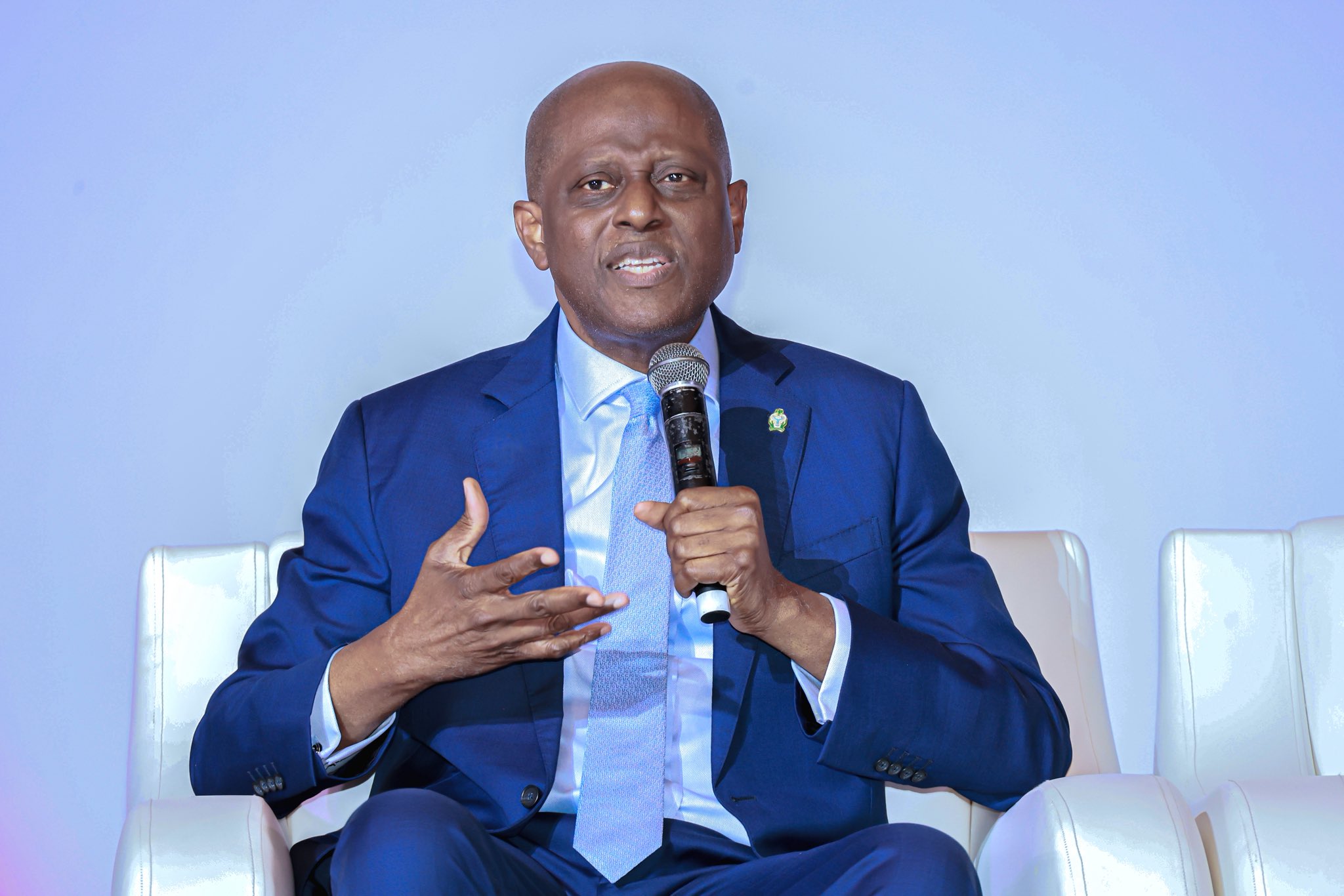
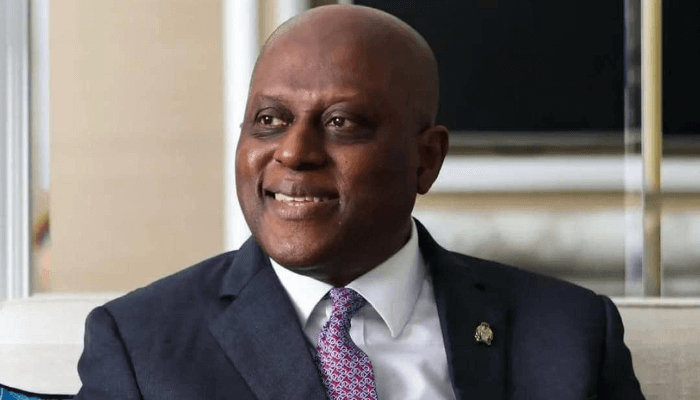
The Senate yesterday subjected the Central Bank of Nigeria (CBN) to intense scrutiny over its monetary policy, banking sector recapitalisation, inflation management, foreign exchange reforms and financial operations.Also yesterday, the Senate initiated moves to compel the Nigerian National Petroleum Company Limited (NNPCL) and about 40 other Ministries, Departments and Agencies (MDAs) to appear before its Committee on Finance over alleged failure to account for public revenues and persistent disregard for legislative invitations.For the CBN, the Red Chamber insisted that the benefits of recent reforms must translate into increased credit to productive sectors of the economy rather than larger bank balance sheets.The senators made the demand at the statutory oversight session of the Senate Committee on Banking, Insurance and Other Financial Institutions.The lawmakers also demanded explanations on the status of banks yet to meet the new recapitalisation requirements, persistent complaints over excessive bank charges, failed electronic transactions, cybersecurity, circulation of quality naira notes, financial inclusion and the apex bank’s audited financial statements.The committee, chaired by Senator Mukhail Adetokunbo Abiru (Lagos East), equally questioned the sharp increase in the CBN’s liquidity sterilisation operations through Open Market Operations (OMO), rising operating expenses, monetary policy costs and the treatment of the bank’s operating surplus through the offsetting of the Federal Government’s Ways and Means advances instead of direct cash remittances.CBN Governor, Mr. Olayemi Cardoso, however, defended the bank’s policy direction, maintaining that reforms introduced over the past three years had restored macroeconomic stability.He also said the reforms had strengthened investor confidence, stabilised the foreign exchange market and positioned the economy for sustainable growth despite global economic uncertainties.The engagement, held in accordance with the provisions of the CBN Act requiring the governor to brief the National Assembly twice yearly, was the committee’s first statutory interaction with the apex bank in 2026.Cardoso appeared before the committee alongside the four Deputy Governors of the CBN— Lamido Yuguda (Financial System Stability), Philip Ikeazor (Economic Policy), Muhammad Sani Abdullahi (Corporate Services), and Emem Usoro (Operations) — as well as directors of key departments.In his opening remarks, Abiru acknowledged that the Nigerian economy had shown resilience despite a challenging global environment but stressed that recent improvements in macroeconomic indicators must begin to reflect in the real economy.He recalled that inflation had declined to 15.06 per cent in February 2026, prompting the Monetary Policy Committee to reduce the Monetary Policy Rate from 27 per cent to 26.5 per cent before geopolitical tensions in the Middle East pushed inflation to 15.93 per cent in May.Abiru commended the apex bank for stabilising the foreign exchange market, improving transparency and successfully implementing the banking recapitalisation programme.He insisted that stronger banks must channel more affordable credit to agriculture, manufacturing, infrastructure, technology and small and medium enterprises.He warned that recapitalisation should not become an end in itself.“Ultimately, the true measure of a stronger banking system lies not merely in larger balance sheets but in its capacity to mobilise savings efficiently and channel affordable credit to productive sectors of the economy,” he said.Abiru expressed concern over reports indicating that private sector credit had moderated despite banks raising unprecedented levels of fresh capital.“The expectation of businesses and indeed the Nigerian people is that stronger capital positions should naturally support increased lending to the economy rather than concentration in risk-free assets or short-term financial instruments,” he added.The committee chairman said lawmakers also expected comprehensive explanations on the few banks yet to comply with the recapitalisation requirements, the regulatory framework for financial holding companies, consumer protection issues and the conditions necessary for further monetary easing.He stressed that while the Senate supported stronger financial regulation, reforms must not impose excessive compliance costs capable of weakening the competitiveness of Nigerian financial institutions.Abiru also praised the CBN for publishing its 2025 audited financial statements promptly but sought clarification on reports that outstanding OMO bills had risen from about N24.3 trillion in 2024 to N48.7 trillion in 2025.“Our constitutional responsibility requires that we examine issues capable of affecting financial sector resilience and the broader Nigerian economy,” he said.Responding, Cardoso assured lawmakers that every issue raised would be comprehensively addressed, insisting that the economy had continued to consolidate the gains recorded in 2025.He said coordinated monetary and fiscal reforms had strengthened macroeconomic stability despite persistent global risks arising from geopolitical tensions, trade fragmentation and supply chain disruptions.The CBN Governor said, “When I last appeared before this distinguished committee in December 2025, I reported encouraging progress in inflation moderation, foreign exchange market stabilisation, external reserves accumulation, reform of market infrastructure and significant advances in the banking sector recapitalisation programme.“I am pleased to report that the first half of 2026 witnessed the consolidation of many of those gains,” Cardoso said.According to him, inflation resumed its downward trajectory after a temporary increase triggered by the Middle East conflict, declining from 15.93 per cent in May to 15.91 per cent in June.He said, “This outcome demonstrates the effectiveness of our monetary policy stance in containing second-round inflationary pressures and anchoring inflation expectations.“We remain fully committed to restoring price stability and achieving single-digit inflation over the medium term,” he stated.Cardoso also said the apex bank’s foreign exchange reforms had improved transparency, enhanced market confidence and strengthened liquidity.He attributed the progress to the implementation of the fourth edition of the Foreign Exchange Manual, the Nigeria Foreign Exchange Code and the Electronic Foreign Exchange Matching System.According to him, the reforms had moderated speculative activities, stabilised the naira and improved investor confidence.He disclosed that the average exchange rate appreciated to N1,375.40 to the dollar during the first half of 2026, while diaspora remittances through official channels rose from about $200 million to over $600 million monthly, with the bank targeting $1 billion monthly by the end of the year.The CBN governor further revealed that Nigeria’s external reserves had climbed to $52.73 billion as of July 9, 2026.On the banking recapitalisation programme, Cardoso described the exercise as one of the most successful in the country’s financial history.He disclosed that banks raised N4.65 trillion in fresh capital, with 72.55 per cent contributed by domestic investors and 27.45 per cent by foreign investors.According to him, 33 banks had already met the revised minimum capital requirements, while discussions were continuing with the few institutions yet to comply in order to safeguard depositors and preserve financial system stability.“With recapitalisation now completed, our focus has shifted towards ensuring that stronger capital translates into improved governance, enhanced risk management and support for productive economic activities,” he said.Cardoso also highlighted the launch of the Payments System Vision 2028, improvements in Nigeria’s sovereign credit ratings by Fitch, Moody’s and S&P, stronger coordination between monetary and fiscal authorities and ongoing reforms aimed at strengthening financial system resilience.Following the presentations, the committee proceeded into a closed-door session with the CBN management to further interrogate the issues raised by lawmakers.