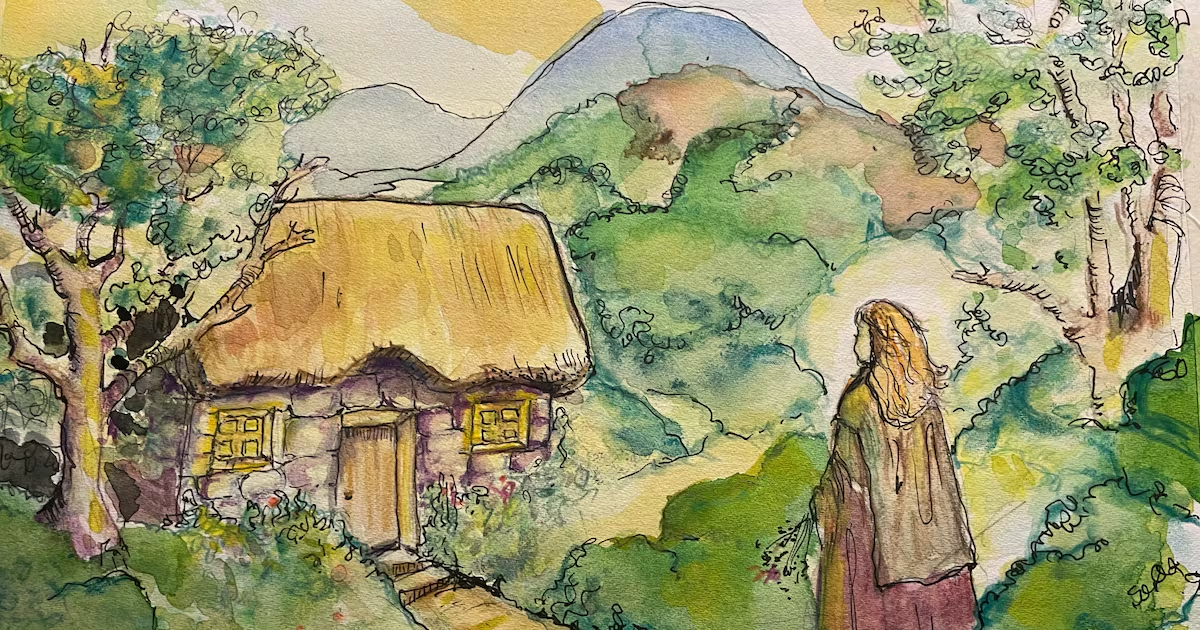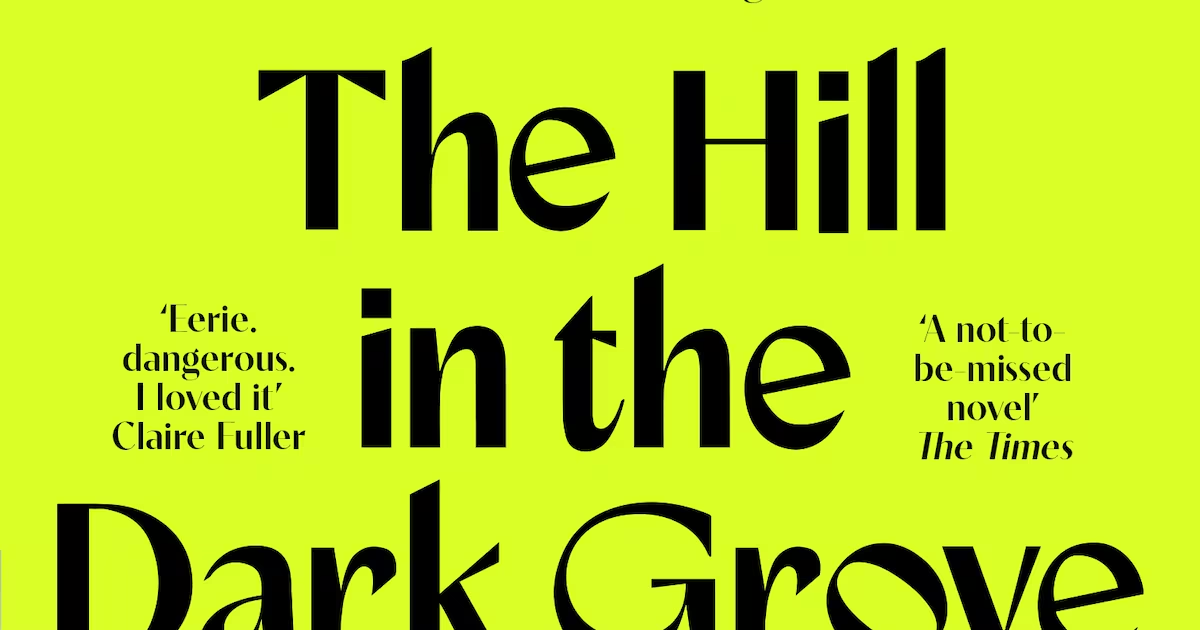
Liam Higginson’s debut novel, The Hill in the Dark Grove, is a dark folk-horror story set on an isolated sheep farm in the mountains of Eryri, North Wales.At its heart are the pressures of economic survival and social change in rural Wales. Carwyn Gwynnant and his wife, Rhian, are the last in a long line of sheep farmers. They are living through a hard year on their hillside farm, trying to keep it going as farming becomes less viable and the old community around them changes. Local families are selling their properties to wealthy second-home owners, leaving houses empty for most of the year. Carwyn watches as the world he knows slips away and Eryri becomes a tourist playground: “Like Disneyland with sheep and mountains.”Then he finds something buried on their land. The discovery of a stone head leads him to a prehistoric site and a circle of 12 standing stones surrounding an ancient burial mound. He begins excavating the site as his curiosity turns into obsession. That these people left something permanent behind thousands of years ago starts to consume him. Legacy is one of the central themes of the novel. Carwyn and Rhian have no children and no one to inherit the farm.“The stones represented something that endured, that would not rot or burn or melt away,” Higginson writes.Higginson draws heavily on Welsh history and folklore, including stories of the gwyllion, supernatural female figures said to haunt lonely mountain roads and lead travellers astray. The Mari Lwyd also makes a memorable and disturbing appearance. The old Welsh midwinter tradition involves carrying a decorated horse’s skull from house to house, and Higginson turns it into one of the novel’s most chilling sequences.The structure of the novel reinforces the connection between the present and the ancient past. Its 12 chapters correspond to the 12 standing stones Carwyn uncovers, with fragments of folklore and myth extending the story backwards through centuries of human occupation of the land.As winter approaches, Rhian finds herself living with a husband she barely recognises. The question running through the novel is whether Carwyn has disturbed something ancient or whether the real danger lies in what fear and obsession are turning him into.Their marriage is at the heart of the book. Through memories and flashbacks, Higginson shows what they have shared and survived, making Carwyn’s transformation and Rhian’s growing fear of him all the more disturbing. They begin to respond differently to the prospect of mortality and disappearance. Her life, Rhian realises, mattered to her and to the people she loved. “That was her monument. She did not need it told in myth or built in stone.”As winter approaches, Rhian finds herself living with a husband she barely recognises. The question running through the novel is whether Carwyn has disturbed something ancient or whether the real danger lies in what fear and obsession are turning him into.Higginson was born and raised in rural North Wales and grew up immersed in its history and folklore. He has no formal literary education and took an unusual route to his first novel. He has worked as an accountant, cooked at a B&B in a French watermill and worked for a large consultancy firm. He now works in the arcade management office at Llandudno Pier, Wales. His knowledge of rural North Wales gives the novel a strong sense of place and an understanding of the pressures facing its communities.The horror builds slowly as Higginson blurs the line between the psychological and the supernatural. He uses the isolation of the farm and Carwyn’s increasingly disturbing behaviour to create a steady sense of unease, while leaving open the question of what is really driving him. That ambiguity gives the novel much of its tension.Some of the most disturbing scenes, though, come from everyday farm life. A disastrous lambing season sets the tone early on, and in one especially grim moment, a sheep is so badly infested with maggots that it has to be put down. Higginson is blunt about the animal’s suffering and the practical need to deal with it. It’s hard to read. A shocking incident at a livestock market adds to this picture of farming as brutal, relentless work.He also uses smaller details to show that something is wrong. Rhian collects eggs from the farm’s chickens, but they are rotten. As Carwyn becomes more consumed by the excavation, these signs of decay add to the sense that the life they have built together is starting to come apart.The Hill in the Dark Grove works as contemporary gothic horror, but its real subject is mortality and legacy. What remains when you are gone? Is being remembered the same as having mattered? And what happens when the need to leave something behind starts to consume the life you still have?Business Day
A paean to a disappearing rural Wales
Liam Higginson’s novel, The Hill in the Dark Grove, focuses on mortality and legacy
798 words~4 min read