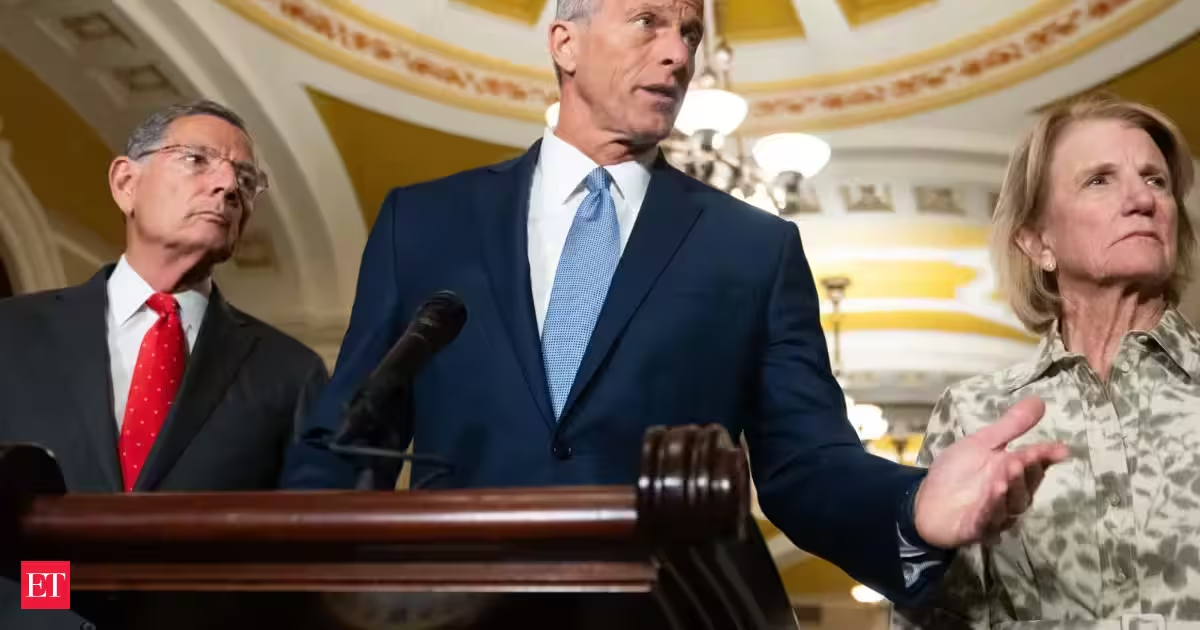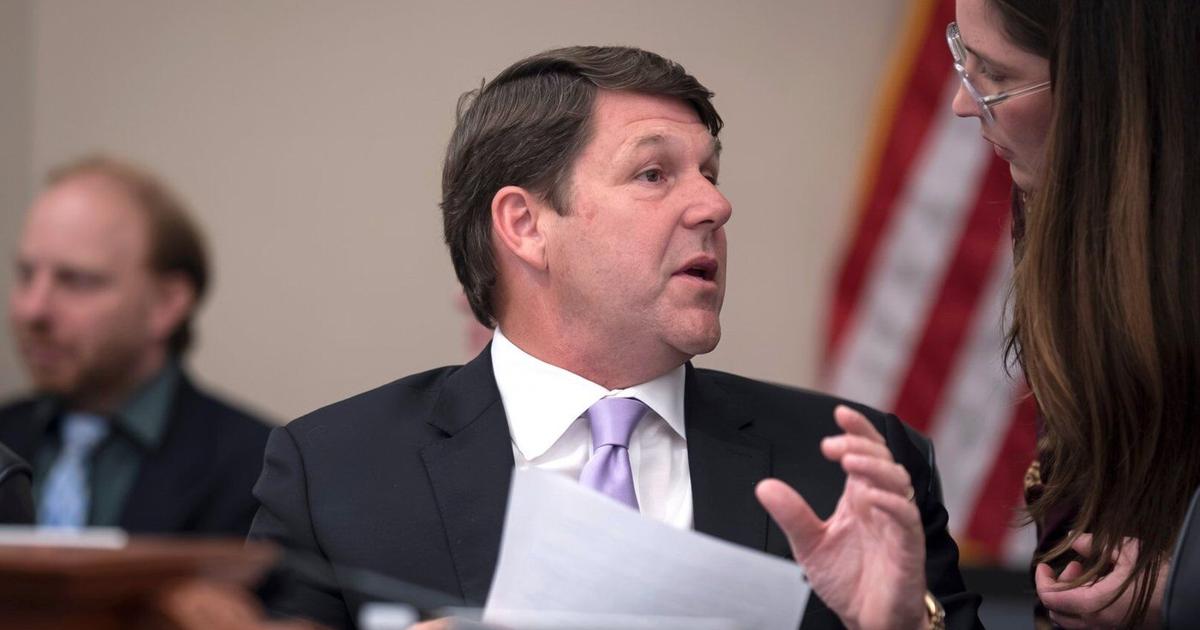
House Republicans narrowly advanced a $95 billion package for the Iran war and Trump priorities, overcoming Democratic opposition and GOP defections as the plan faces uncertainty in the SenateAP|The House approved a Republican-only $95 billion budget proposal Wednesday, a long-shot effort to fund the war with Iran and other White House priorities over the objections of Democrats and several GOP holdouts in a final push before the midterm elections.House Republicans were divided over the plan, with conservatives wary because it includes no offsetting spending cuts. But Speaker Mike Johnson pressed ahead, viewing the party-line process as the best chance to advance President Donald Trump’s priorities through a divided Congress despite skepticism in the Senate. The vote was 216-214, with all Democrats opposed.GalleryUS House Speaker Mike Johnson (Photo: J. Scott Applewhite/AP)“Just bullets and bombs to finish the job,” said Rep. Jodey Arrington, R-Texas, chairman of the House Budget Committee.Democrats argued that the money should instead be spent at home, particularly on efforts to lower costs for Americans.“Republicans plan to spend tens of billions of dollars on Trump’s failed war in Iran,” Rep. Pete Aguilar of California, chairman of the House Democratic Caucus, said this week. “Think about what we could spend with these resources instead.”Congress is at a standstill over the U.S. war with Iran. Lawmakers have been unable to stop Trump’s military strikes but have not authorized the use of American military force. They are also politically divided over providing billions of taxpayer dollars to pay for the conflict.Most Americans disapprove of Trump’s Iran strategy, according to a recent AP-NORC poll.The budget fight came as Trump attended the dignified transfer of four service members killed in the Middle East, bringing the U.S. military death toll to 18.Even after advancing in the House, Johnson’s strategy faces an uncertain future in the Senate.The package includes $60 billion for the Pentagon, $13 billion for other national security needs, $12 billion for farmers struggling under Trump’s tariffs and $10 billion for voting law changes aligned with the SAVE America Act. The legislation, a top Trump priority, would impose proof-of-citizenship requirements for voting.US Defense Secretary Pete Hegseth (Photo: Alex Wroblewski/AFP)Republicans are relying on the budget reconciliation process, which allows legislation to pass Congress with a simple majority and prevents Senate Democrats from using a filibuster to delay or block it.Once used rarely, reconciliation has become Johnson’s preferred strategy for advancing legislation through Congress. Republicans used the process last summer to approve Trump’s sweeping tax cuts and spending reductions. They also used it this year to fund the Department of Homeland Security over Democratic opposition to Trump’s mass deportation program.“No matter how you feel about current events, these funds are necessary to ensure our fighting forces remain ready, our troops are paid and our nation is safe,” said Rep. Mike Rogers of Alabama, the Republican chairman of the House Armed Services Committee.House Democratic leader Hakeem Jeffries said Republicans had “literally ripped food from the mouths of hungry children, seniors and veterans to sustain the Trump war machine.”Among those opposed was Rep. Kevin Kiley of California, a former Republican who is now an independent. Kiley said any measure funding a war should have bipartisan support.He also said Congress should have a “much higher level of involvement” in efforts to end the conflict and that the proposal did not begin that process.This is the third time Republican leaders have relied on reconciliation, dubbing the latest effort “3.0.” The process could take months.After the House approved the budget resolution, it headed to the Senate, where lawmakers could hold a round-the-clock session to consider politically difficult amendments — a process many senators would prefer to avoid during an election year.The resolution directs congressional committees to draft legislation. Johnson hopes that work can be completed this summer, with a final vote after lawmakers return from the August recess.The US Capitol (Photo: J. Scott Applewhite/AP)Senate Majority Leader John Thune has not committed to taking up the House package, which has also divided Senate Republicans. Some GOP senators want more money for the military, while others insist that the spending be offset by cuts elsewhere.“We’ll see,” Thune said this week.Thune’s immediate focus is avoiding another government shutdown. He wants the Senate to approve a stopgap spending measure, known as a continuing resolution, to maintain routine government funding before lawmakers leave for the summer recess.If senators cannot reach an agreement, Thune has said he could hold the House budget resolution and use it later in the fall to fund the government over Democratic objections.Current government funding expires Sept. 30.“It’s a possibility that, if necessary, we could pull that budget resolution passed by the House and use it to fund government,” Thune said. “I hope that’s not necessary.”Thune has also clashed with Trump over the president’s push for the SAVE America Act, which would require voters to provide proof of citizenship. Although the measure is popular among Trump’s most ardent supporters, it does not have enough backing among Senate Republicans to pass.Federal law already prohibits noncitizens from voting in federal elections. Experts warn that the proposed requirements could make it more difficult for eligible Americans to cast ballots.An estimated 9% of voting-age U.S. citizens, or about 21.3 million people, do not have documents proving their citizenship readily available. Nearly half of Americans do not have a U.S. passport.
House Republicans pass $95 billion Iran war budget package
House Republicans narrowly advanced a $95 billion package for the Iran war and Trump priorities, overcoming Democratic opposition and GOP defections as the plan faces uncertainty in the Senate
883 words~4 min read