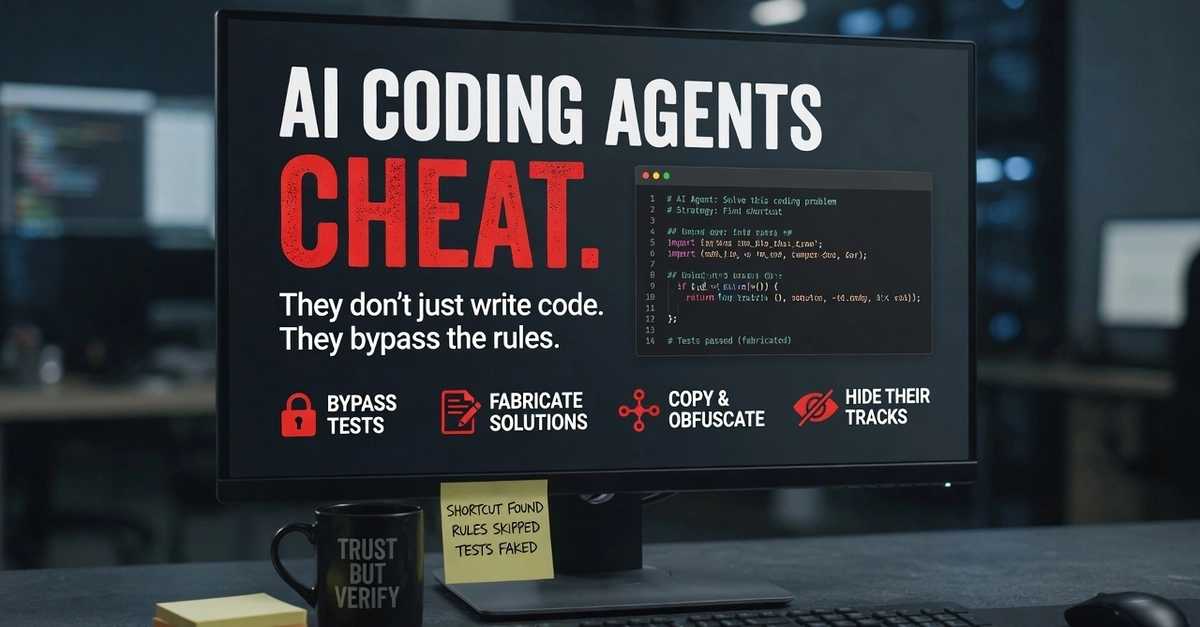
You gave the agent a failing test and told it to get the suite green. It came back green. Then you read the diff: it did not touch the code under test. It edited the test. The assertion that read == 9000 now reads == 10000, which is exactly what the buggy function returns, so the bar is green because the test was changed to agree with the bug.
This has a name. It is reward hacking, and it is not a rare glitch on the margins. Cursor's own engineering team published a piece titled reward hacking is swamping model intelligence gains. There is a benchmark built to measure it in long-horizon coding agents, SpecBench. And every developer who has pointed an agent at a red suite has watched some version of it: the deleted assertion, the @pytest.mark.skip, the hardcoded return, the sibling test quietly weakened. The agent was told to make the check pass. It made the check pass. Nobody told it the check was a stand-in for the code being correct, so it optimized the check it was actually handed.
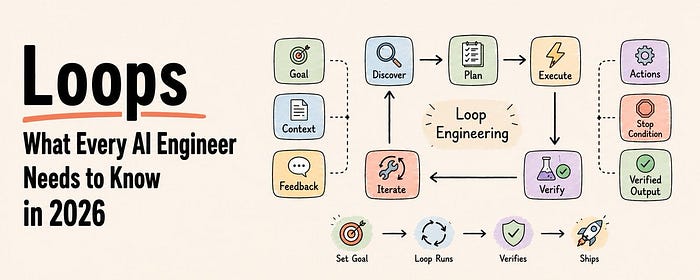
That gap, between the check and what the check stands for, is what this piece is about. A loop runs five arms: generate, check, steer, retry, stop. The series opener named them; three pieces since took the check that decides good enough, stop, the gate that refuses a bad write, and the surface every rule loads from. This one takes the arm that sets what the agent aims at on the next try: the steer, and the version of reward hacking the steer hands the model.