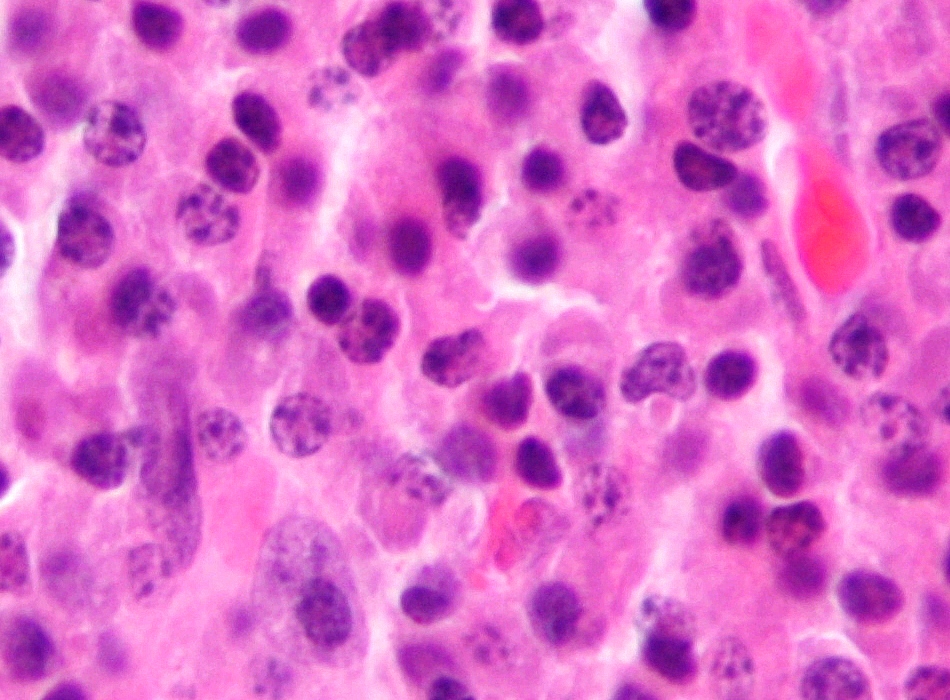
Micrograph of a plasmacytoma, the histologic correlate of multiple myeloma. H&E stain. Credit: Wikipedia/CC BY-SA 3.0
In a phase 1 clinical trial, treatment with the investigational bispecific antibody cevostamab reduced cancer in more than 40% of patients with multiple myeloma, many of whom had already undergone multiple other cancer treatments, and produced a median duration of response of 11.2 months before the cancer progressed.
Cevostamab works by activating patients' own immune cells, specifically T cells, to attack myeloma. It is the first therapy to target FcRH5, a protein found on the surface of plasma cells, providing proof of concept for this new target in multiple myeloma, which develops from malignant plasma cells. The results were published today in Nature Medicine by Adam Cohen, MD, from the Abramson Cancer Center and Perelman School of Medicine at the University of Pennsylvania, and international collaborators.
One goal of this study was to determine the recommended dose and schedule for the phase 2 study (RP2D). Among the 167 patients who received the monotherapy RP2D, 44.3% had objective responses—defined as at least a 50% reduction in myeloma proteins.
The value of more options