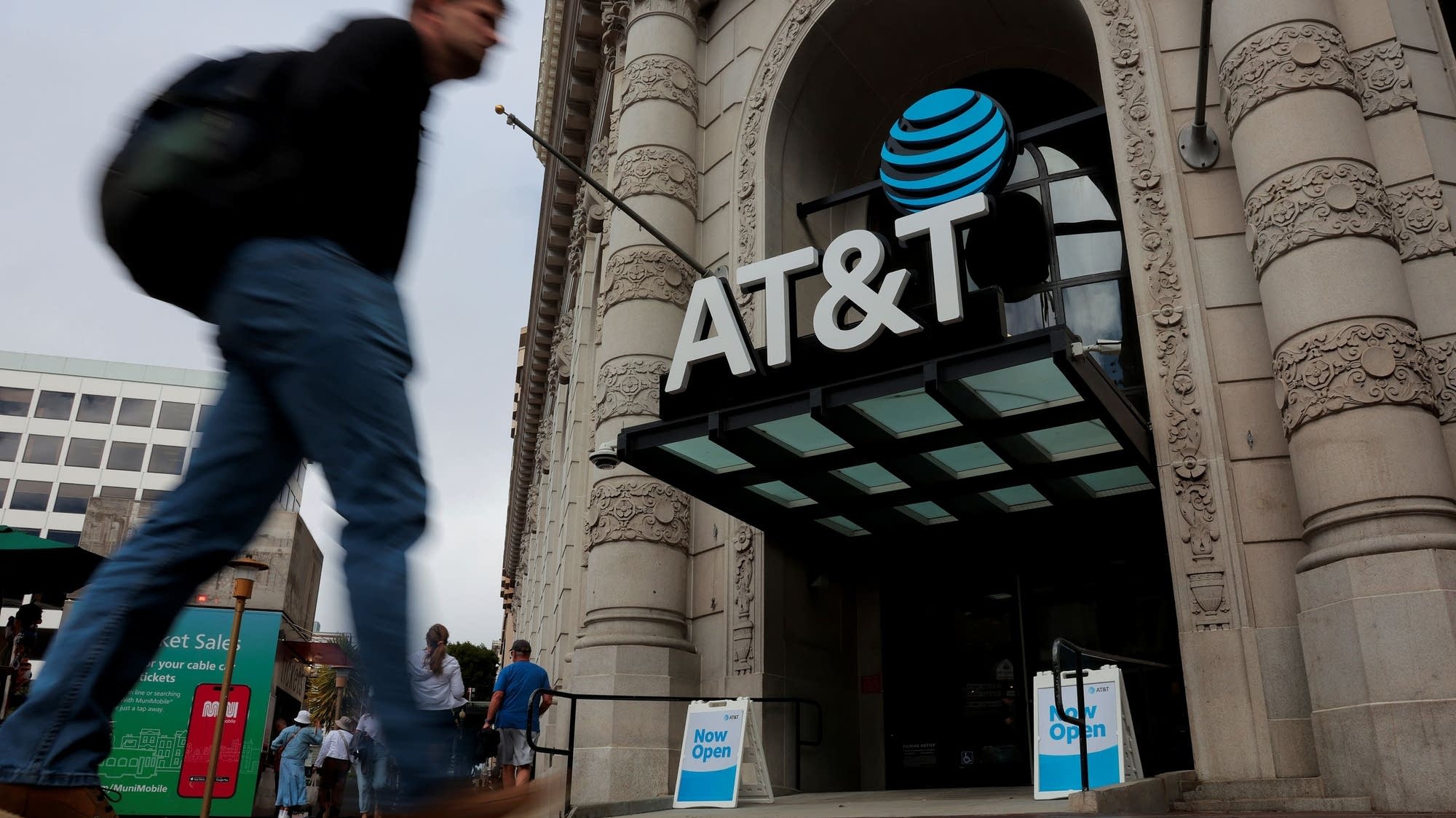
AT&T had a banner Wednesday. The phone and internet provider announced that its second quarter earnings beat expectations: Revenue went up 2.3% compared to last year, reaching $31.6 billion and the company gained nearly 100,000 more new phone subscribers than analysts predicted. Plus, it added a record 646,000 people to its internet services.The 140-year-old company has had a couple wins at once, said Kameron Chao, a senior director analyst with Gartner. The first: they’ve added lots of people. AT&T bought Lumen Technologies’ fiber internet business last year.“That integration allowed them to add immediately 1 million subscribers and over 4 million locations to their footprint,” Chao said.And Chao said the second win: they’ve had fewer people leave.“Because the churn rate is much lower than your typical telco industry,” he said.That’s thanks to a strategy called “bundling.” That’s when the company offers deals to get clients to sign up for their phone and internet services.“It's really about cross-selling within their install base,” said Dan Ives, partner and senior managing director at the banking research firm Yorkville Ives & Co. “We're seeing the consolidated landscape play out, and the bundling is one of the biggest Swiss Army knife opportunities that they have.”Because it makes life simpler for customers — and it makes it more difficult to leave.So yes, it has been a good quarter. However, according to Craig Moffett, co-founder and senior analyst at MoffettNathanson, AT&T is doing about as well as it was 15 years ago. And 30 years ago.“Over the long term, AT&T hasn't shown that it can actually invest at above the cost of capital,” Moffett said.Internet service has obviously exploded since the mid-90s. Cell phones have evolved into little supercomputers today. And yet, “the telcos really haven't enjoyed much of that economic growth,” Moffett said. “They are the network builders, and the wealth is being created by the companies that ride on the networks.”The hope, Moffett said, is that bundling will earn AT&T a bigger slice of that growth. But it can only do that in a fraction of the country right now, and adding more service areas is expensive.
AT&T's service bundles make for an earnings boon
AT&T beat earnings expectations with $31.6 billion in revenue and a record 646,000 new internet subscribers.
351 words~2 min read