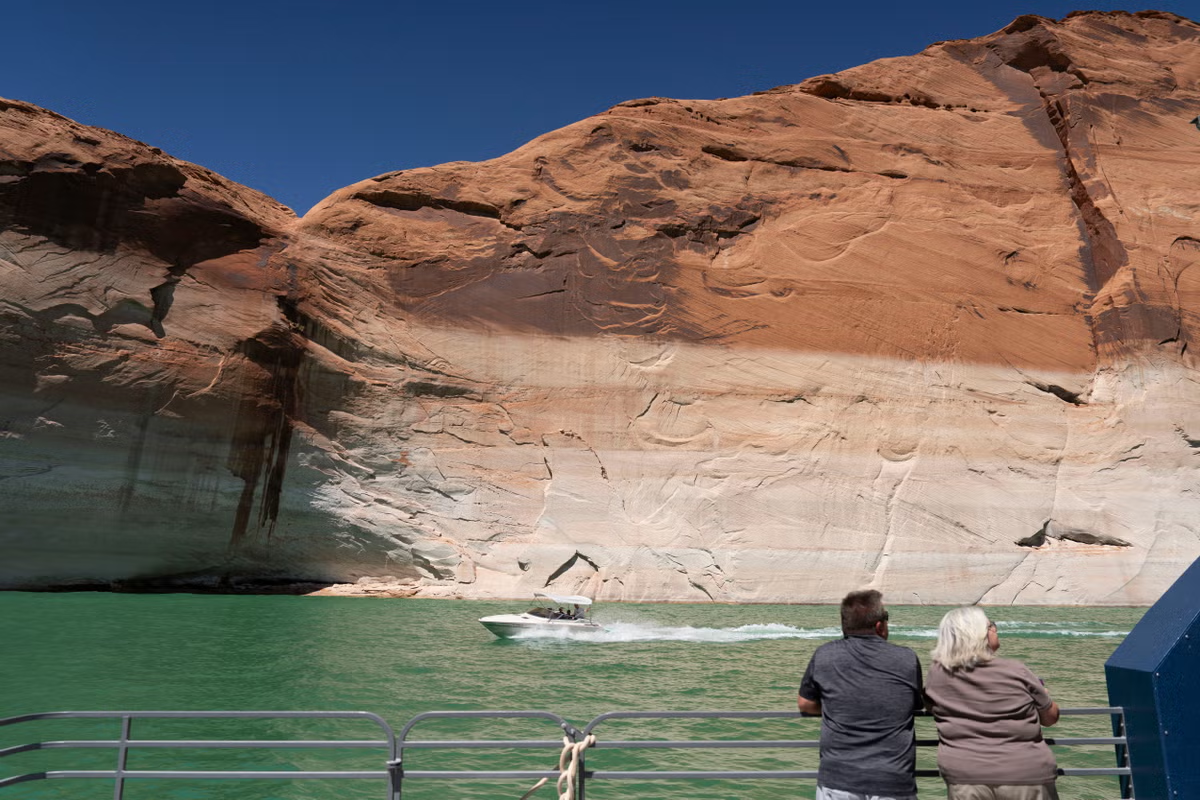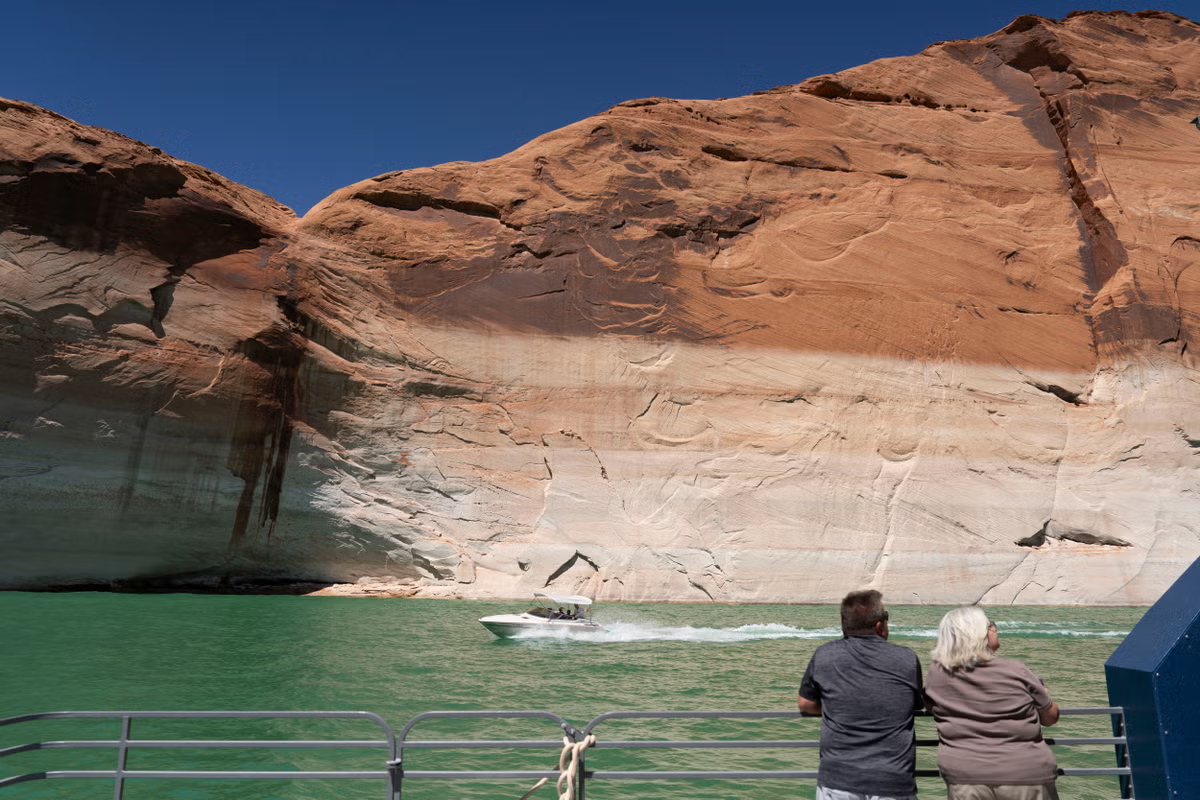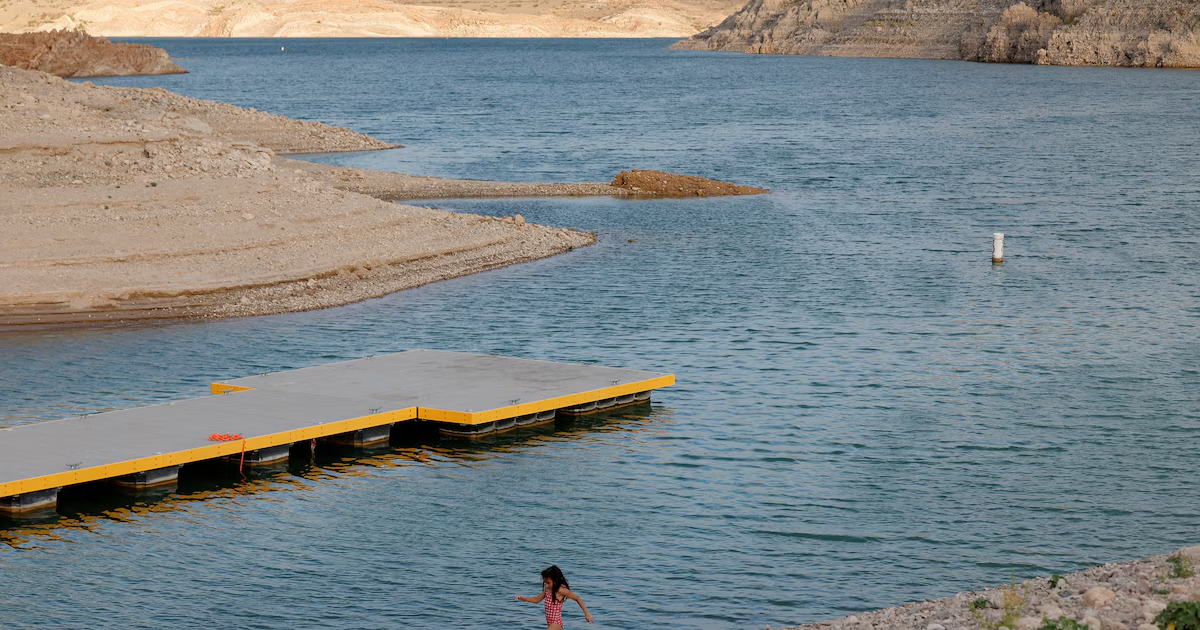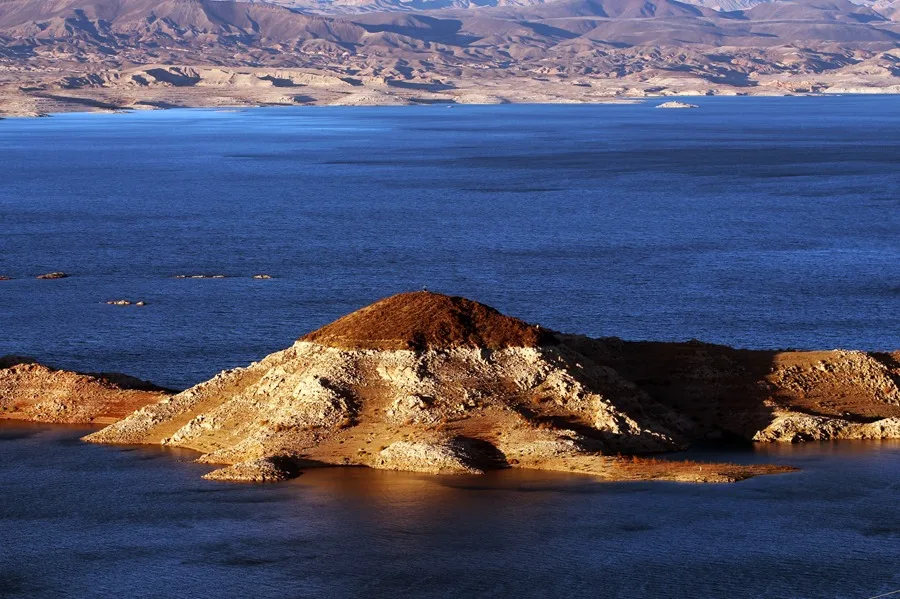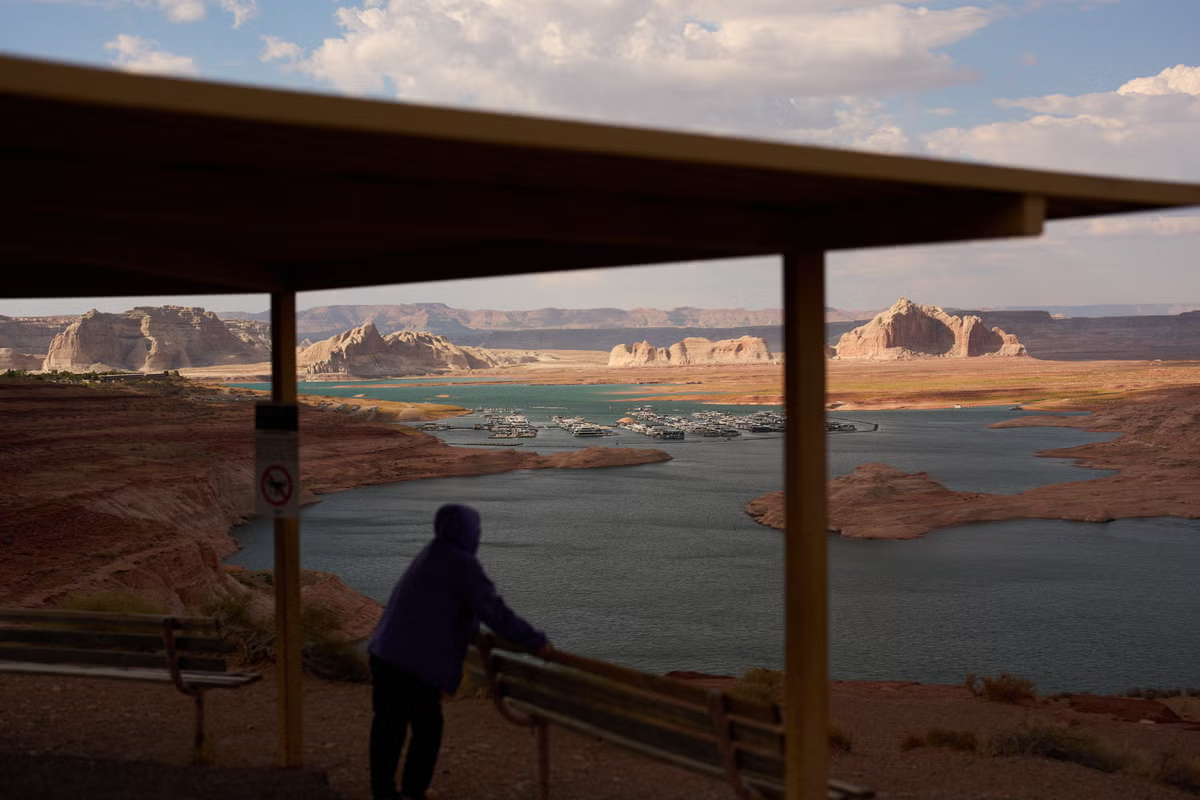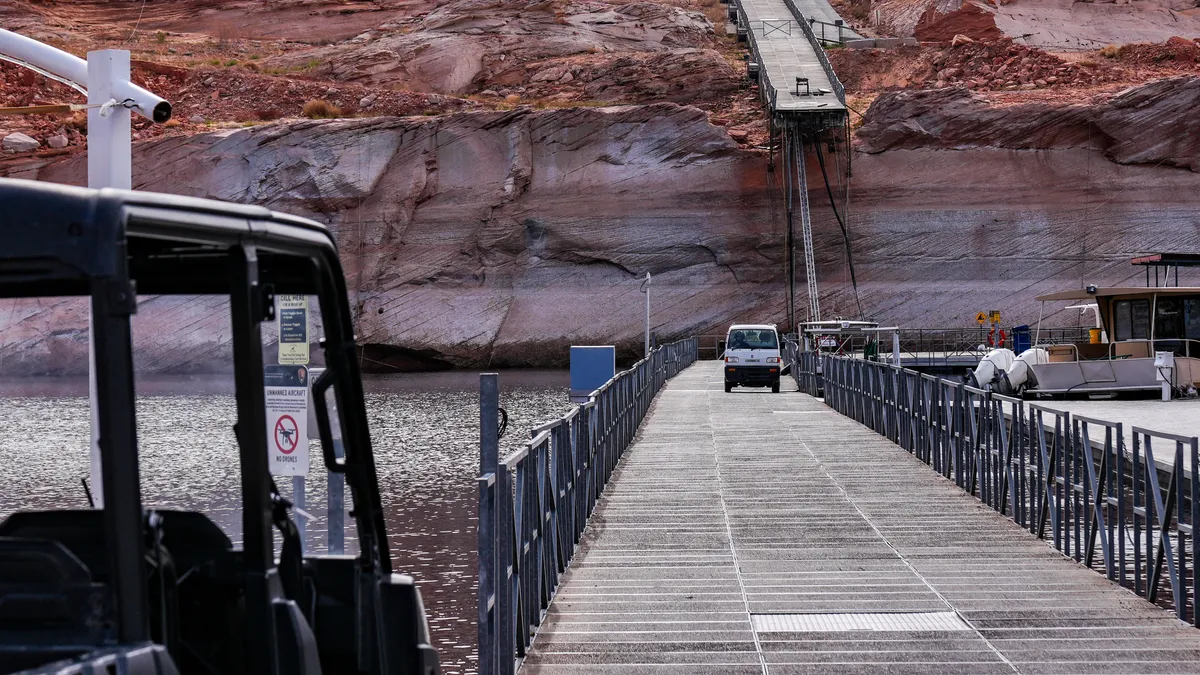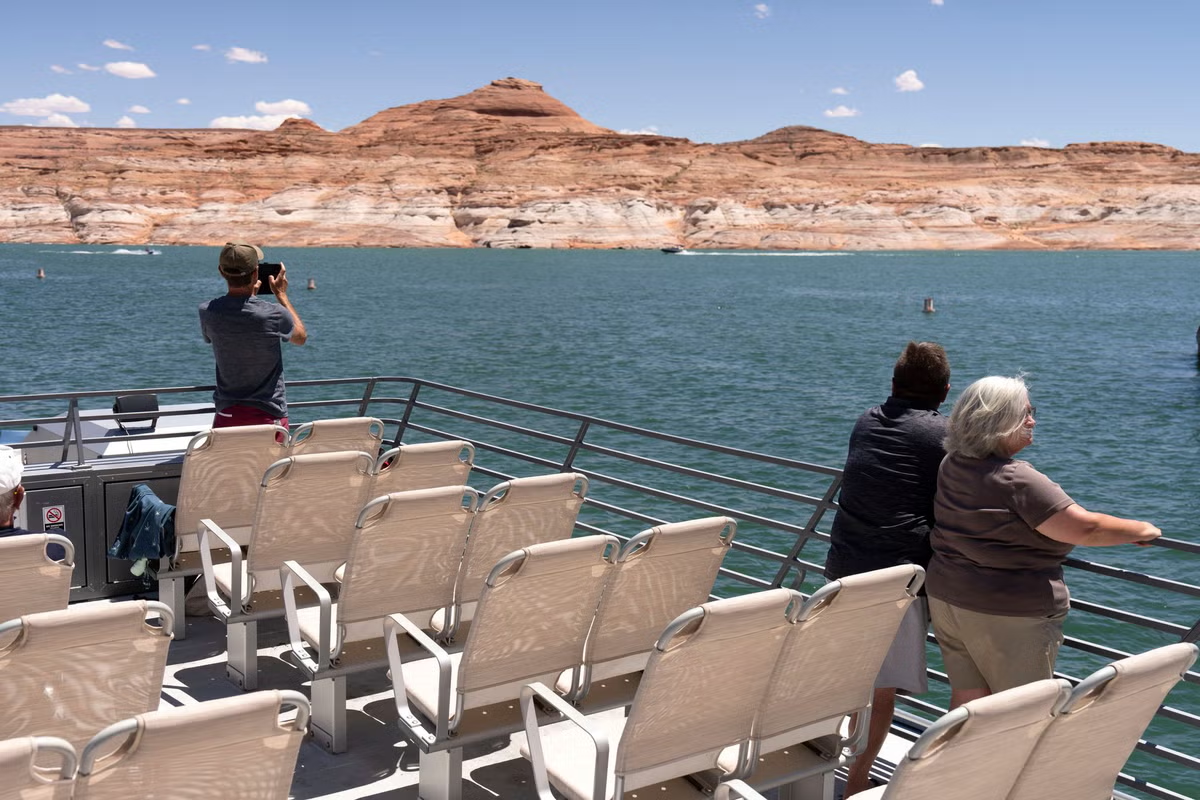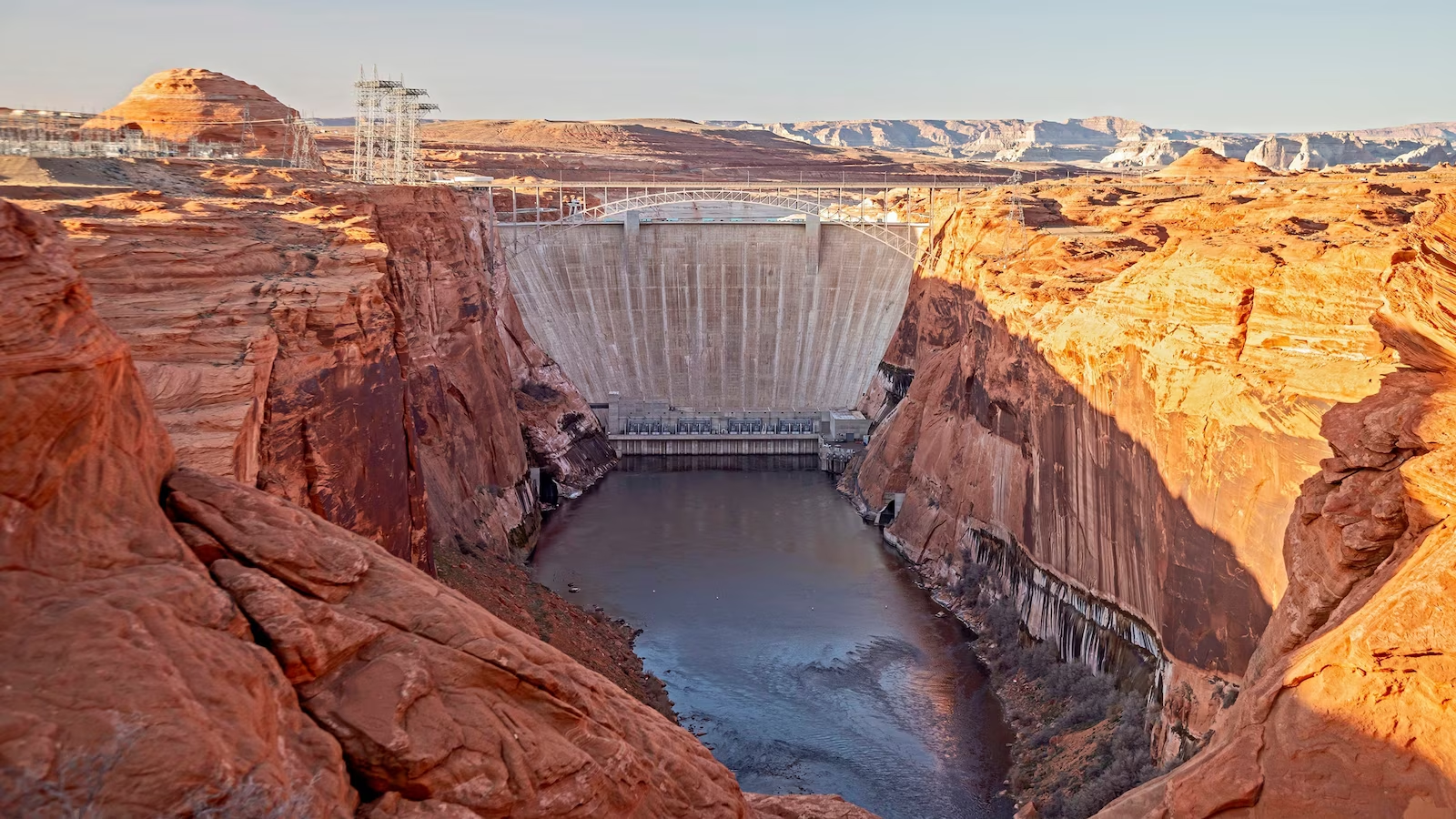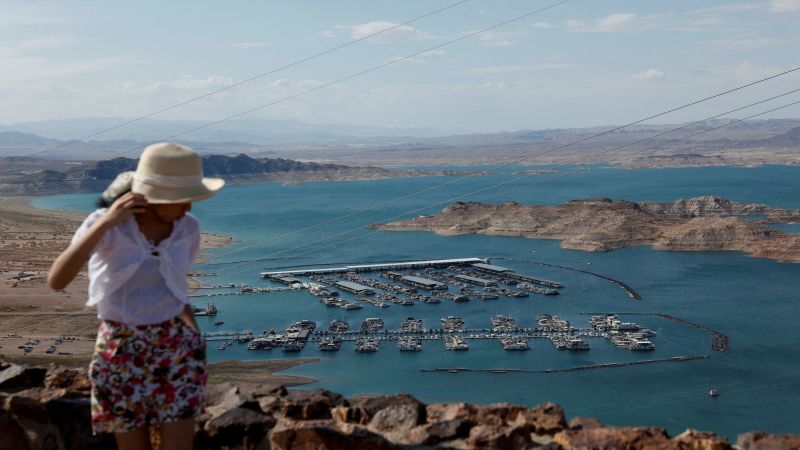
The combined water level in two of the United States’ biggest reservoirs, Lake Powell and Lake Mead, has fallen to a historic low, in what experts are calling a significant moment in the Colorado River crisis — threatening a water system that supplies tens of millions.
On July 12, Lake Powell was at 3,524 feet and Lake Mead was just under 1,043 feet, breaking a record set in March 2023, according to an analysis published by five Colorado River experts last week. Together, the two reservoirs haven’t been this low since 1957, during the construction of the Glen Canyon Dam, before Lake Powell even existed.
It’s “a milestone in the history of water storage in the Colorado River Basin,” said Jack Schmidt, director of the Center for Colorado River Studies at Utah State University and an author on the analysis. The record reveals “the seriousness of the uniquely small amount of water that is presently stored in the basin’s reservoirs,” he added.
The Colorado River is the lifeblood of the Southwest. It irrigates more than 5 million acres of farmland, generates enough electricity to power around 700,000 homes and provides water for 40 million people.
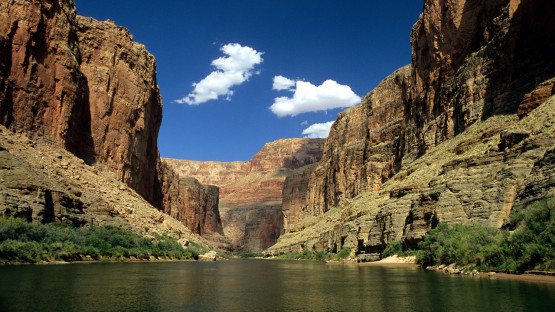
The headwaters of this 1,400-mile long artery are in the Rocky Mountains, fed by melting snowpack. The river flows across seven states, filling Lake Powell and Lake Mead as it winds toward the Gulf of California. The two lakes, which are essentially one gigantic reservoir separated by the Grand Canyon, hold just under 60% of the total water currently stored in the basin.