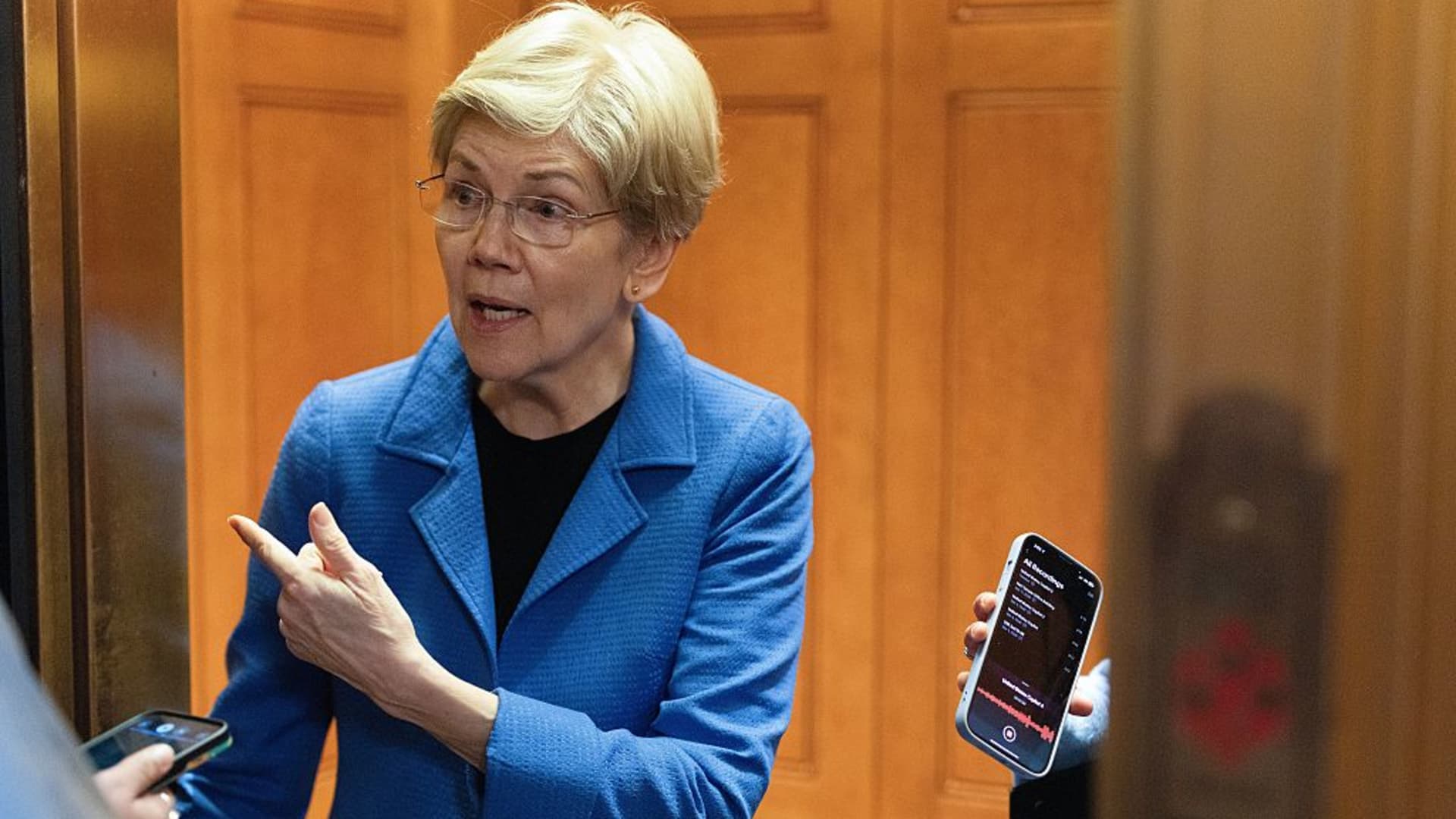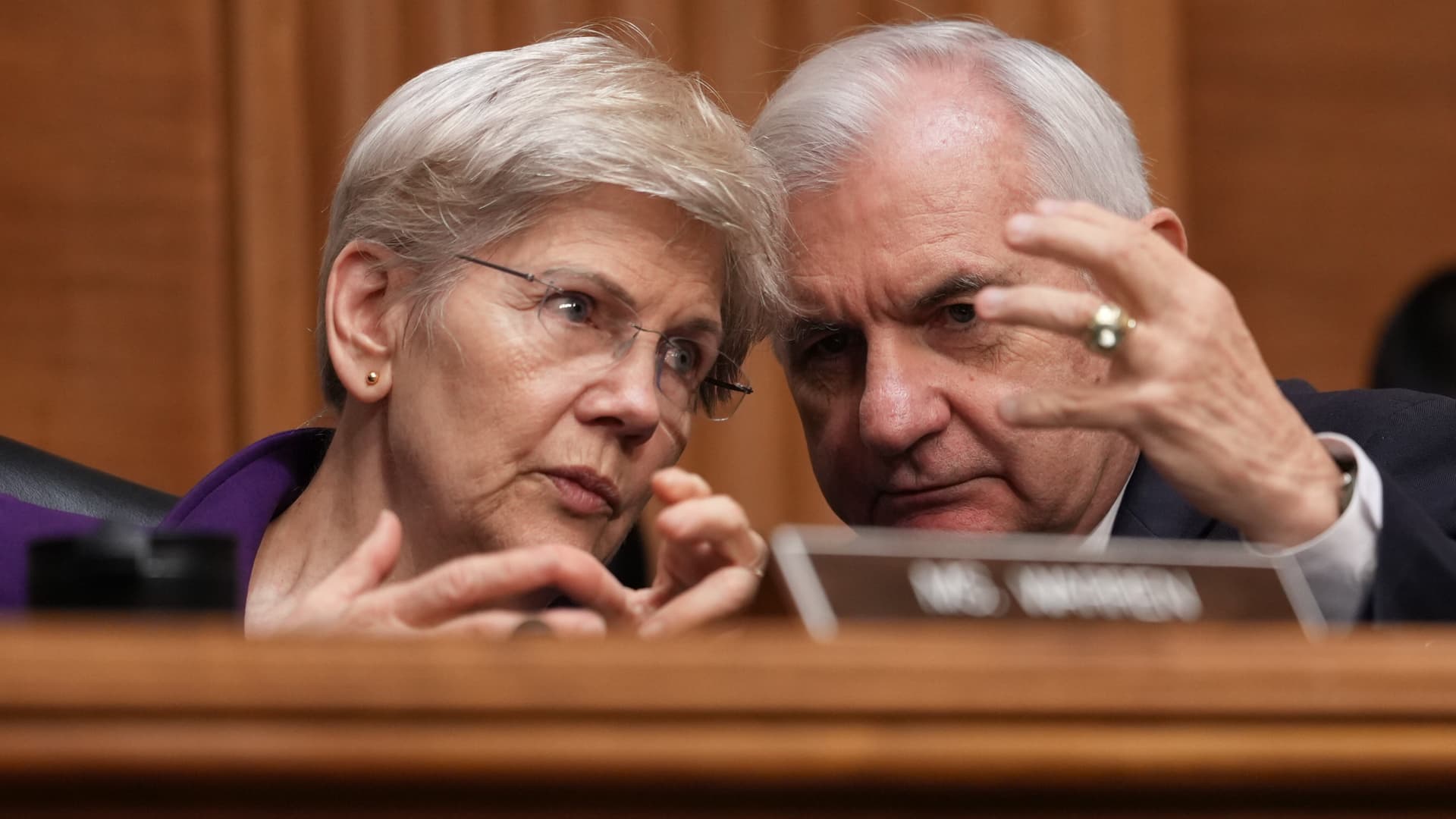
Corporate contractors have been lobbying against a provision of the annual defense spending bill, advancing in Congress this week, that would prohibit the Pentagon from contracting with companies that buy back their own stock if they fail to meet the government’s performance standards.The U.S. Chamber of Commerce, which is leading the lobbying fight against the bipartisan buyback amendment, issued a July 14 letter demanding that the Senate strike out Section 815 of the National Defense Authorization Act for fiscal 2027.Section 815, proposed by Sen. Elizabeth Warren (D-MA) with the support of Sens. Josh Hawley (R-MO) and Mike Lee (R-UT), would forbid defense contractors from repurchasing shares, paying out cash dividends to shareholders, or making “any other capital distribution” during the period of a contract unless they have the War Department’s express approval.
In the joint letter addressed to the Senate Armed Services Committee, the congressional body responsible for drafting and debating the NDAA in the upper chamber, the Chamber of Commerce claimed that Section 815 would set “a troubling precedent” that allows federal procurement policy to control corporate finance activities traditionally overseen by boards of directors.“If adopted, Section 815 would harm millions of American retirees and other investors by restricting lawful returns of capital to shareholders, establish a troubling precedent for federal interference in corporate governance and capital allocation decisions, and discourage the private sector from participating in the defense industrial base at a time when Congress should be encouraging greater private-sector participation,” the letter stated.A coalition of trade associations representing companies across the transportation, technology, and telecommunications industries cosigned the letter alongside the Business Roundtable, a lobbying group comprised of CEOs from major American corporations, including 3M, BlackRock, Alphabet, Amazon, Apple, AT&T, Verizon, Meta, Microsoft, and Oracle.BLACKROCK AND OTHER FIRMS ‘WEAPONIZED’ RETIREMENT PORTFOLIOS TO PUSH ESG, WATCHDOG SAYSSome firms fear that the buyback prohibition would apply broadly to companies providing any goods or services to the Department of War, extending beyond common military contractors such as Boeing, Lockheed Martin, and Northrop Grumman. Cloud providers, such as Microsoft, Oracle, and Google, as well as carriers, such as Verizon and AT&T, that service military bases could possibly all be affected by the buyback-and-dividend provision.Legislative proponents of Section 815 say that when companies do business with the federal government, they have a contractual obligation to maximize performance and that by choosing to buy back their stock, these firms are taking capital away from critical research, development, and manufacturing.“Giant military contractors are cheating our government out of billions in taxpayer dollars and lining their executives’ and shareholders’ pockets instead of investing in our national defense,” Warren said when the amendment was added. “It’s time to stop these contractors from putting Wall Street over our national security.”Corporations opposing the measure, meanwhile, argue that capital returned to shareholders does not simply disappear from the U.S. economy. Rather, according to the Chamber of Commerce’s letter, it is “recycled throughout the financial system and redeployed into new businesses, infrastructure, technological innovation, housing, and other productive investments.”The Chamber of Commerce has a Defense and Aerospace Council dedicated to “influence [government] investments” on legislation such as the NDAA. While the Chamber of Commerce, a privately funded entity, claims to represent millions of businesses across the country, a Public Citizen watchdog report found that it is bankrolled by a select few, deep-pocketed corporate patrons. In 2021, half of its funding came from anonymous corporate donors who each gave $1 million or more. Organized as a 501(c)(6) business league, the chamber declines to disclose the identities of its donors on its yearly tax filings.Earlier this year, the White House moved to rein in military contractors with a presidential directive aimed at curbing stock buybacks and excessive executive compensation among “underperforming” contracted companies. Section 815 would codify President Donald Trump’s executive order, titled “Prioritizing The Warfighter In Defense Contracting,” that directs the War Department secretary to identify all contractors “not investing their own capital into necessary production capacity” or whose production speed is deemed “inefficient.”