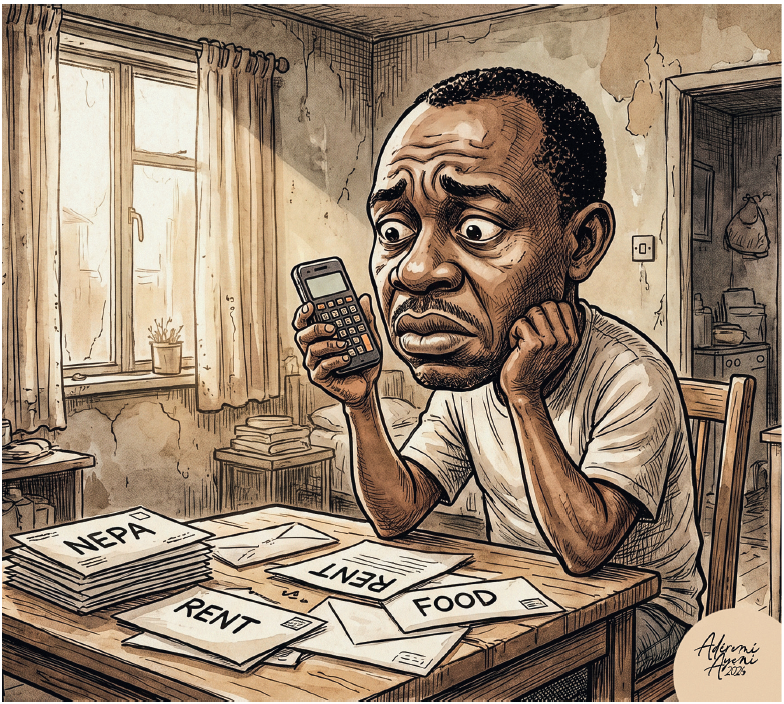
After over ten years of listening, one thing became increasingly clear: psychological distress in Nigeria rarely exists in isolation. It is deeply intertwined with economic uncertainty, caregiving responsibilities, insecurity, unemployment, family conflict and the daily pressures of survival.
Trigger Warning: This article contains discussions of mental health, emotional distress, and related experiences that some readers may find sensitive.
When Kalu lost his father to cancer, he knew the weight of his family’s demands would now rest solely on his shoulders. He fought back tears as his father was lowered into the ground, unsure whether he was mourning the love he barely received or the burdens he now had to carry as the first son.
“Look at the casket,” he thought.
He had borrowed money to give his father a somewhat decent burial; perhaps a final act of love. His ₦200,000 salary meant that almost 40 per cent of this went into commuting to and from work. Between keeping his siblings in school and paying out of pocket for his mother’s arthritis medication, another 40 per cent disappeared.