For two decades, the U.S. homeownership rate has been treated as a scoreboard of generational progress—even as the topline number has barely moved and hides a widening age-based split beneath it. New research from the Federal Reserve Bank of Minneapolis suggests the story may actually be one of reversal, not stasis—with a significant split along generational, even intra-generational lines.
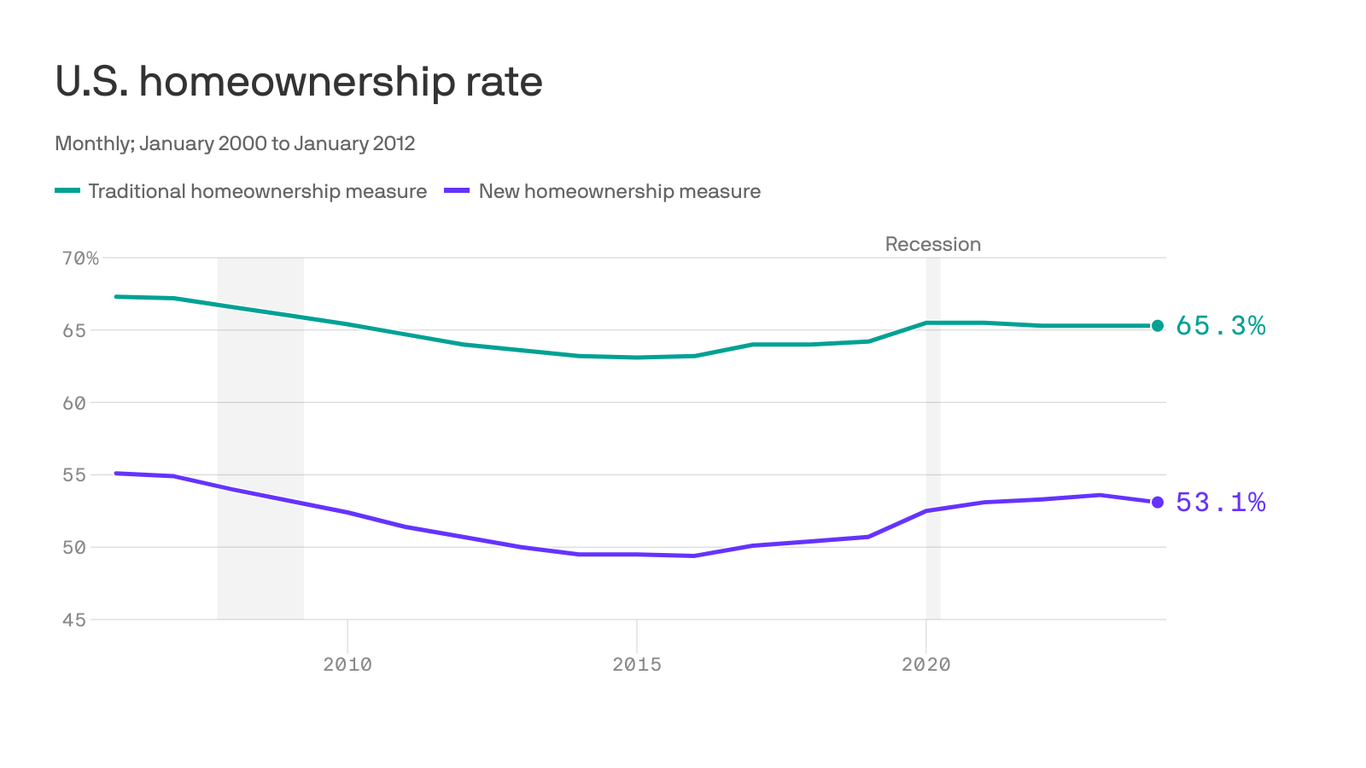
The Minneapolis Fed’s new measure, called the homeowners-to-population ratio, or HPOP, counts individual adults rather than housing units. There’s quite a difference from the traditional owner-occupancy rate: the former puts national homeownership at 65%, but HPOP finds the real figure is closer to 53%. For adults under age 35, the gap is even more severe. The standard rate says 37% of under-35 households owned their home in 2024; HPOP puts the true number at just 22%.
The traditional 37% figure only reflects household heads—”about a third” of all adults under 35, one of the researchers, Erik Hembre, told Fortune. Once every adult in that age group is counted, the rate “drops down to 22% for everyone under the age of 35,” he said. “That seems like a meaningful difference to me.”
“More than one in 10 U.S. adults live in owner-occupied homes without actually being owners themselves,” researchers Hembre, Benjamin Horowitz, and Maxine Xu found, pegging the figure at 13.9% nationally. That’s because the old measure only checks whether a housing unit’s owner lives there—it says nothing about the adult children, roommates, or aging parents who also live under that roof without owning any stake in it.