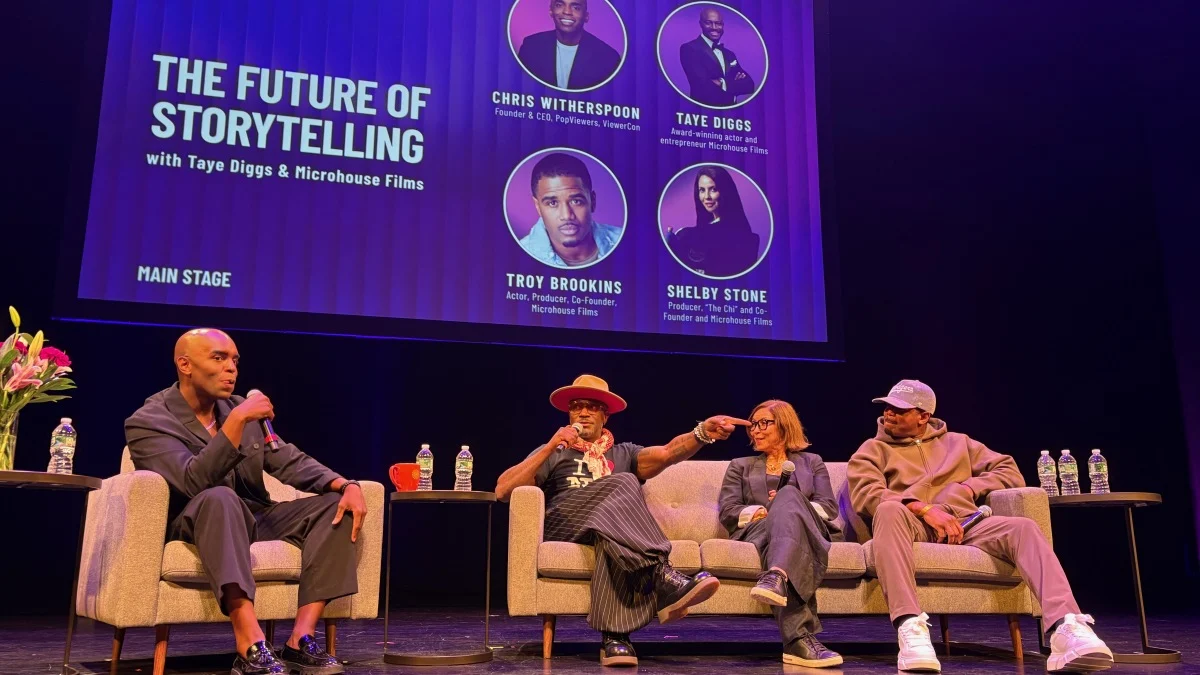
"Small space. Big stories." This is the motto for Microhouse Films, the vertical video platform that Taye Diggs launched with a mission of empowering creators two minutes at a time. The venture marks a turn away from the actor's traditional route in television and movies as he tests microdramas — vertical, short-form episodic content. On July 18, at ViewerCon in Newark, New Jersey, Diggs acknowledged that in the content creator to streaming platform pipeline, long-form, horizontal content has become popular. In his panel "The Future of Storytelling with Taye Diggs & Microhouse Films," he said that microdramas are a product that “no one has really cracked." He's hoping Microhouse Films can change that as “we're including the creators from the get."
You May Also Like
The Best Man star launched the platform with co-founders and fellow panelists Shelby Stone, who produced Starz' The Chi, and actor and producer Troy Brookins. Film producers Autumn Federici and James R. Black are also co-founders.Through their website and mobile app, Microhouse Films offers a model that favors tokens over the more traditional monthly subscription fees. Viewers purchase tokens sold in packs of 10, 30, 50, and 120 credits, priced at roughly $0.20 apiece. These tokens can then be used to watch Microhouse Films' episodes, which cost between one and three credits to unlock. Reflecting Diggs' goal of giving content creators more control, the token price per episode is set by the creator. “The creators get to stay along for the ride and benefit from how far the project goes,” Diggs explained in the panel. From there, Diggs shared a formative experience with Netflix, where he and his agents inquired about how audiences received a film, only to be told the platform was keeping metrics “under wraps.” These frustrations with gatekeepers drove him to promote transparency with creators as he steps into the emerging microdrama format. Diggs acknowledged he has been criticized for diving into vertical storytelling, with people in the industry telling him that “they’re beneath you.” But now, after producing two vertical microdrama series and launching Microhouse Films, he says vertical storytelling has “introduced me into a new way of looking at the industry.”