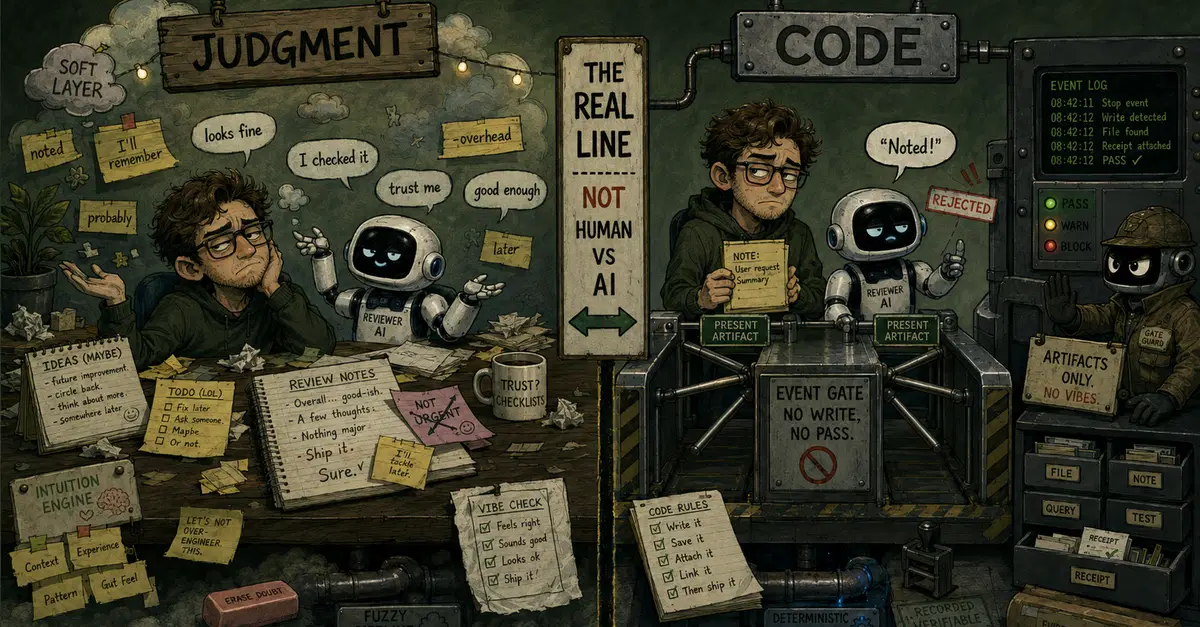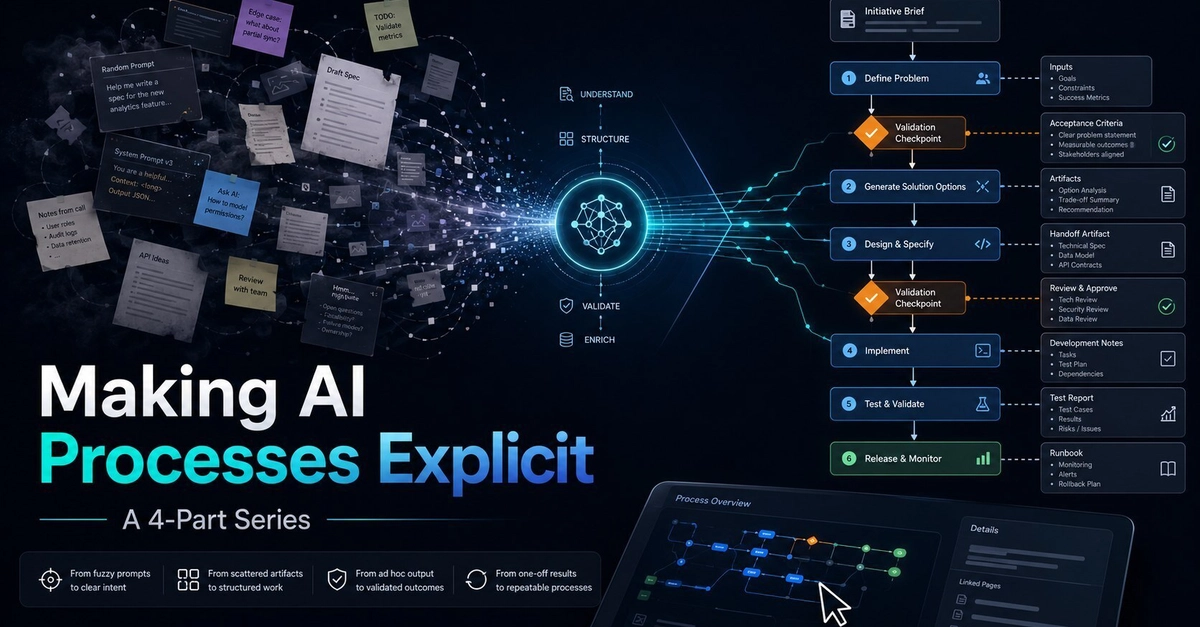
In the first part, I wrote about the point where a long instruction stops being just a prompt and starts behaving like an undocumented program. It develops state, transitions, recovery paths, dependencies between documents, and rules that are already difficult to change locally. But even if you accept that, an uncomfortable question remains: how do you know the model actually followed the process you needed? The easiest thing is to look at the result. There’s a Jira ticket, a technical description, acceptance criteria, and several test scenarios. The format is correct, the required sections are present, and the names match. During a quick review, the package looks complete — and that’s exactly where we went wrong more than once. A result that looks correct doesn’t prove that the model used the right sources, performed every required check, and avoided skipping a mandatory step. It also doesn’t prove that the next person won’t have to reconstruct part of the work on their own. The clearest way to see this is through a concrete handoff.
The Package Looked Ready
The example below is adapted from a controlled run. I changed the domain, names, fields, and values completely, but kept the failure mechanism intact. Imagine a team adding an internal event called PREFERENCE_CHANNEL_CHANGED, which should be created when profile.notificationChannel changes from email to sms. At the data level, the requirement might look roughly like this: