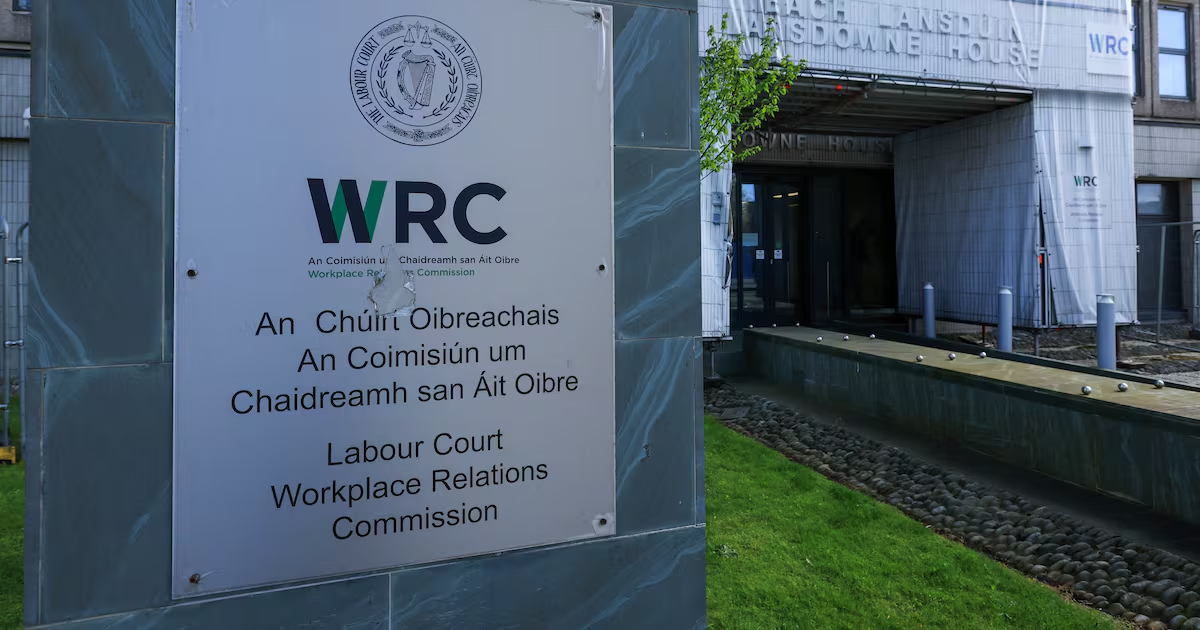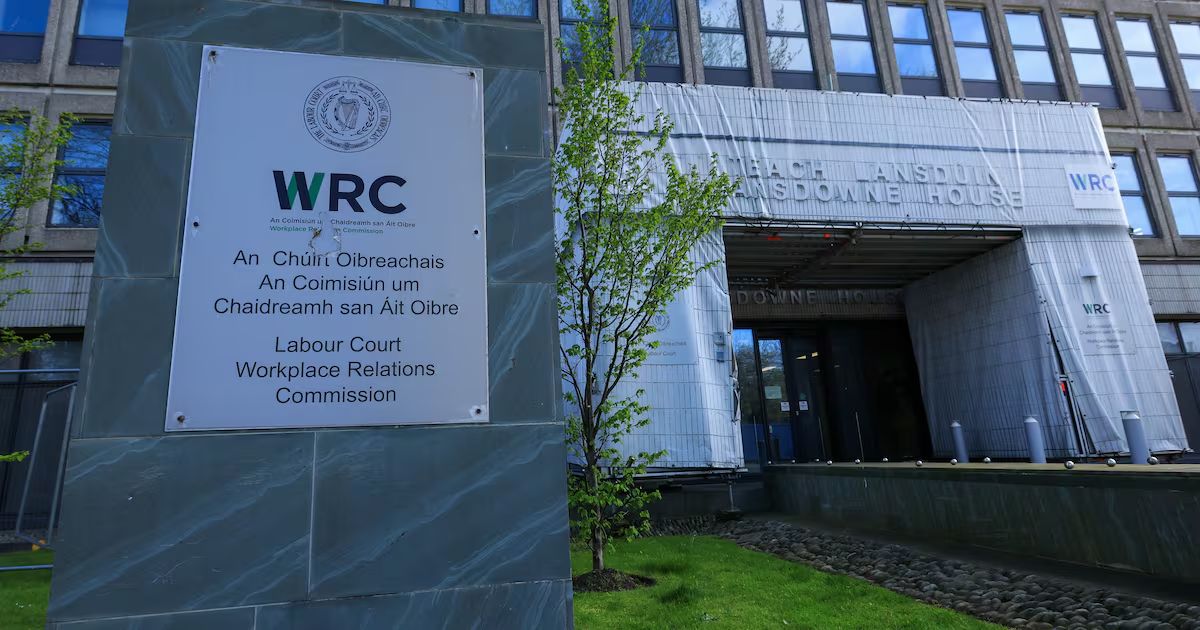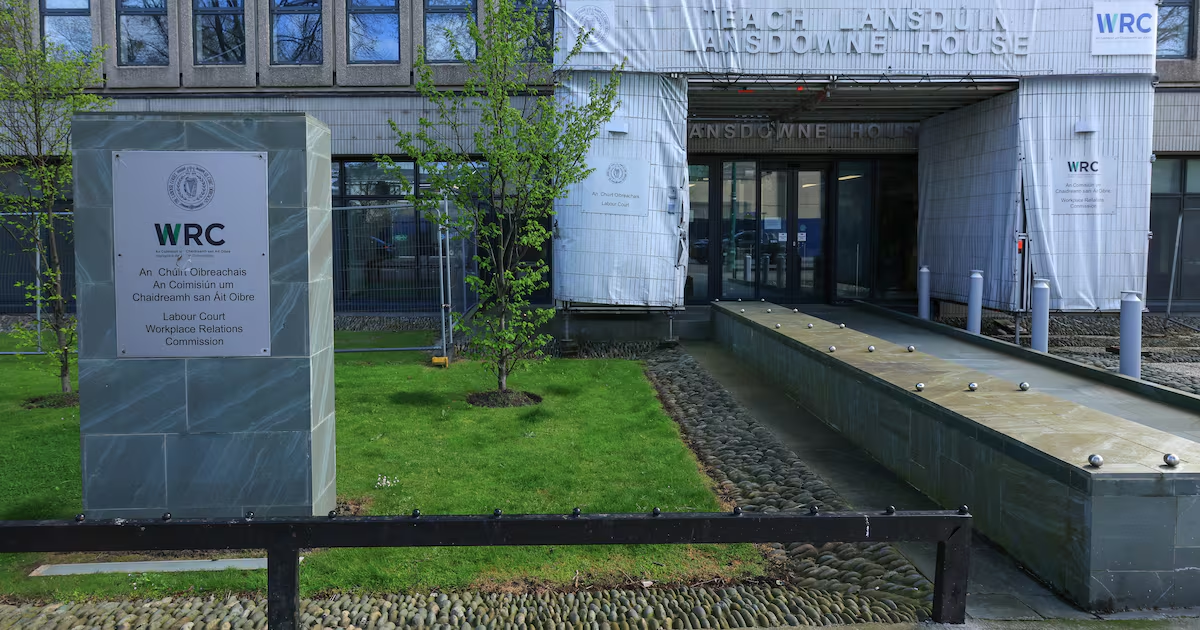
A disability charity has been ordered to pay over €320,000 in a record whistleblower penalisation award to a senior manager following an attempt to replace her and allegations of bullying against its ex-chairman.The Waterford Intellectual Disability Association (WIDA) has been ordered by the Workplace Relations Commission (WRC) to pay the compensation to Fiona O’Neill, the charity’s “de facto chief executive officer”, on foot of her complaints under the Protected Disclosures Act 2014. It’s more than triple the previous record sum awarded by the WRC in a dispute brought under the whistleblower shield law. The unidentified former chairman was alleged to have declared he would install an interim chief executive (CEO) who “hates whistleblowers”, who would run the organisation “the way the board wanted it to run” – and that the chairman would “see [Ms O’Neill] out of WIDA before he would go anywhere”. The chairman has since been replaced, the WRC recorded in a set of decisions on the dispute published on Wednesday. Shaun Boylan, for the complainant, submitted that a chairman of the board, identified only as “EC” in the decisions, had “increasingly sought to interfere” with the management of the service. Aer Lingus job cuts and Ryanair’s profits plunge - what is happening in the Irish aviation sector? Listen | 41:54This included the chairman directing O’Neill to “assist him” at the Farrelly Commission – the State investigation into the Grace case concerning alleged foster home abuse of a woman with intellectual disabilities, Boylan said. O’Neill considered this inappropriate, as she was to be a witness before the commission, it was submitted. In early 2022, she notified the board of a complaint of “bullying and harassment against the chair” and asked that this be treated as a protected disclosure, the tribunal heard. In September 2022 board engaged an external human resources consultant for an “organisational review”. “[This] investigation into bullying and harassment by one executive management team member against the chairman morphed into a root-and-branch review of the organisation without any adequate explanation,” Boylan submitted. O’Neill and her trade union, the Psychiatric Nurses’ Association (PNA) took issue with the independence and fairness of the process, which produced two reports her legal team argued went beyond their terms of reference and made “unwarranted and unjustified” recommendations. These included the creation of a CEO post at the charity – effectively demoting O’Neill, as she was the most senior manager in place at the time as director of services – its “de facto CEO” – her legal team said. As well as demoting Ms O’Neill, the report urged the charity to eliminate the jobs of its human resources (HR) manager and corporate governance officer, two other senior managers who “had come into conflict with the chair”, Boylan submitted. O’Neill then faced pressure from the chairman in late 2022 to settle a €33,000 invoice raised by the external consultant out of the charity’s funds, the tribunal heard. The chairman had told her the HSE had ordered the review, but when she inquired with the health service, she learned this was not the case, Mr Boylan submitted. Two more invoices were later raised in relation to the consultant – one for €24,995, the other for €8,071, it was submitted. Boylan said his client noticed the sum of the two later invoices added up to the outstanding sum of the first invoice. She was concerned the invoice had been split to “deliberately circumvent financial controls”, as invoices valued over €25,000 were required to go through procurement under the charity’s service level agreement with the HSE. She told the HSE she was concerned about “improperly procured services” in February 2023, and went on to make disclosures to the Charities Regulator and the National Office for Protected Disclosures later in the year, the tribunal heard. The stand-off over the invoices continued and in March 2023, the chairman emailed O’Neill directing her to pay them, according to the legal papers. “You may pay them under duress if you wish, but they must be paid, to avoid attracting much greater cost, and doing irreparable damage to the company in the courts,” he wrote in correspondence opened to the WRC. At a meeting with the HSE in April 2023, the chair called correspondence sent on behalf of claimant by the PNA “rubbish” and added he “would see [Ms O’Neill] out of WIDA before he would go anywhere”, it was submitted. In January 2024, the chairman held a “one-minute meeting” with O’Neill and told her an interim CEO would be starting the following day, it was submitted. O’Neill’s case was that the chairman informed her the new appointee “hates whistleblowers” and was being put in place to run the charity “the way the board wanted it run”. Three hearings on the case had already been conducted by the WRC at sittings in Waterford when in May 2025, a solicitor acting for WIDA, John Goff, told adjudicator Gaye Cunningham the former board had stepped down. The new board “concedes all the allegations made by the complainant [and] offers an unequivocal apology”, Goff added. Boylan, who was led by solicitor Kirsty Kavanagh on behalf of the PNA, said in a closing submission that his client was penalised “on the extreme end of the spectrum”. He argued for “compensation on the upper end”, noting that his client had to go to the High Court in relation to the dispute and that the charity “refused to give undertakings until the very last minute”. In decision documents published today, Cunningham found WIDA penalised O’Neill “in a most egregious manner throughout a long period” while being “fully aware” of her protected disclosures.She awarded €323,240 for the breaches of the Protected Disclosures Act – more than triple the previous record award at the WRC under the legislation. Cunningham further directed WIDA to quash both reports; cease the position of interim CEO and stop any moves to appoint one; acknowledge Ms O’Neill as “de facto CEO”, and offer her a “full and unequivocal apology for the mistreatment”.
Senior manager at disability charity wins record €323,000 for ‘egregious’ whistleblower penalisation
Award against Waterford Intellectual Disability Association more than triple previous record sum
998 words~5 min read