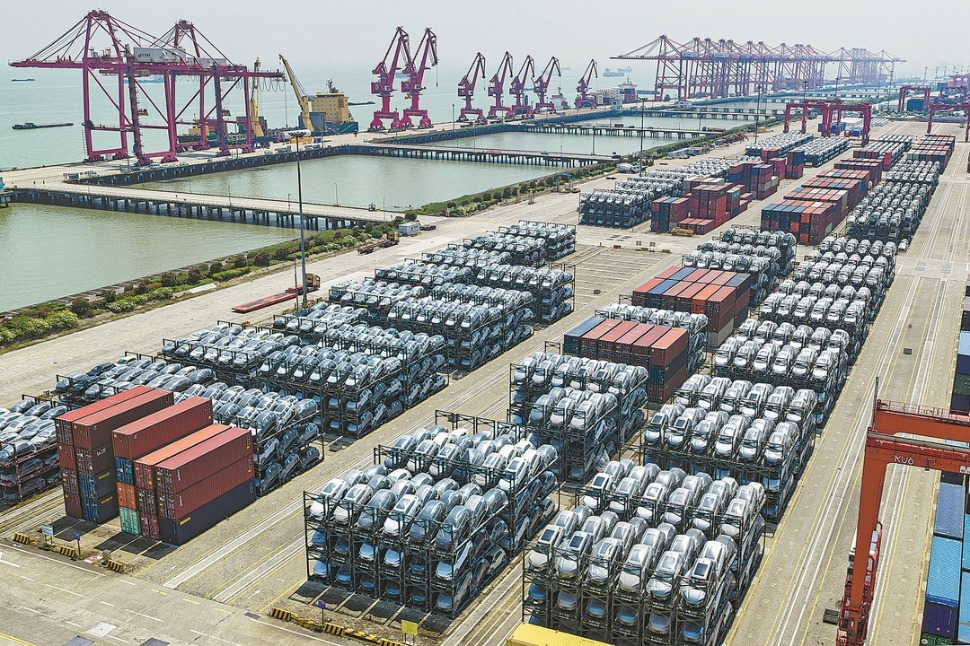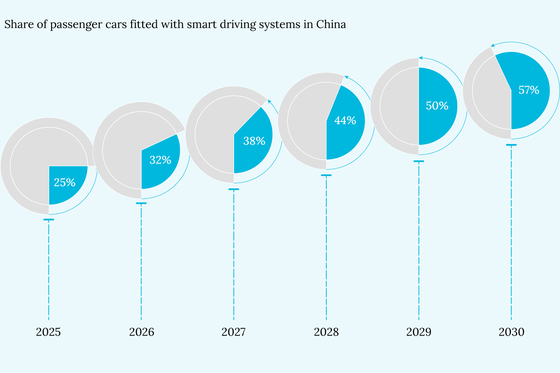
China exported a record 7.1 million cars in 2025, solidifying its status as the world’s largest auto exporter. This export surge was largely driven by increasing demand for new-energy vehicles (NEVs). As global electrification efforts accelerate, NEVs have become a significant growth engine for China’s auto industry, with many expecting the next boost to come from autonomous driving technologies, which are generating mounting interest from international consumers and could potentially revolutionize global driving habits. [para. 1][para. 2]European consumers anticipate that autonomous vehicles will comprise around 25% of total auto sales in Europe by 2035. This expectation points to strong prospects for Chinese automakers and tech firms specializing in smart cars to expand their influence abroad. Firms like XPeng and Nio are already building overseas footprints with vehicles featuring Level 2 assisted driving capabilities, and several Chinese self-driving technology companies have forged partnerships with established foreign manufacturers to navigate complex local regulations. Nonetheless, foreign governments have introduced rigorous controls covering data security, road safety, and export management, raising challenges for Chinese firms venturing overseas. Collecting and handling data for driver assistance requires compliance with varying data governance standards in foreign jurisdictions. [para. 3][para. 4][para. 5][para. 6]According to an S&P Global Mobility survey, more than half of the 8,000 respondents from eight countries expressed at least some understanding of driver assistance and autonomous vehicle technologies, and many are willing to pay extra for features that enhance safety. Regulatory authorities in the European Union have made several advanced driver assistance features mandatory for new vehicles from July 2024, emphasizing safety improvements. Meanwhile, Alphabet’s Waymo provided over 14 million paid driverless rides in the U.S. in 2025—a threefold year-on-year increase—and plans further expansion internationally. Israeli company Mobileye also secured a deal to deploy advanced chips in driver assistance systems for approximately 9 million vehicles made by a U.S. automaker. These trends underscore rising global confidence in smart driving technologies. [para. 7][para. 8][para. 9][para. 10][para. 11][para. 12][para. 13]Nearly half of Chinese cars exported are estimated to come pre-installed with assisted driving systems. Within China, over 60% of new passenger cars sold in the first nine months of 2025 featured Level 2 assisted driving systems, a share projected to reach 70% by 2026. This reflects a mature, cost-effective domestic supply chain, which provides a competitive edge abroad. Chinese manufacturers are now touting Level 2+ technology, which offers additional navigation features beyond standard driver assistance. [para. 14][para. 15][para. 16][para. 17]Collaboration with established multinational suppliers has become crucial as Chinese tech firms seek overseas expansion. Partnerships, such as the one between Bosch and WeRide, aim to combine advanced technology with global compliance expertise. Still, even as such alliances help Chinese firms address compliance challenges, in-house capability for global regulation adherence remains essential. Efforts are also underway to align Chinese smart car standards with international norms through collaborations with global organizations. [para. 18][para. 19][para. 20][para. 21][para. 22][para. 23]However, regulatory scrutiny in Western countries is tightening. The U.S. finalized rules in January 2025 prohibiting sales of smart vehicles with Chinese software (from the 2027 model year) and hardware (from 2030). Lawmakers in the U.S. have proposed broader bans on technologies deemed potential security risks. The EU, while offering the potential for lower tariffs in exchange for minimum price agreements, enforces the world’s strictest data and privacy rules. The new EU Data Act (effective September 2025) imposes rigorous requirements for data management on connected products, adding to the already robust GDPR framework. These and similar rules mean multinational automakers often favor local or well-established international suppliers over Chinese ones for markets with tough regulations. [para. 24][para. 25][para. 26][para. 27][para. 28][para. 29][para. 30]For Chinese firms, meeting diverse regional compliance obligations will require costly localization of R&D, testing, and operations—posing a significant test to their global competitiveness and operational capabilities. [para. 31][para. 32]AI generated, for reference only
In Depth: After EVs, Smart Driving Tech to Power China’s Auto Exports
Analysts expect Chinese autonomous driving systems will play a major role in keeping the boom going after China spent another year as the world’s largest car exporter
634 words~3 min read