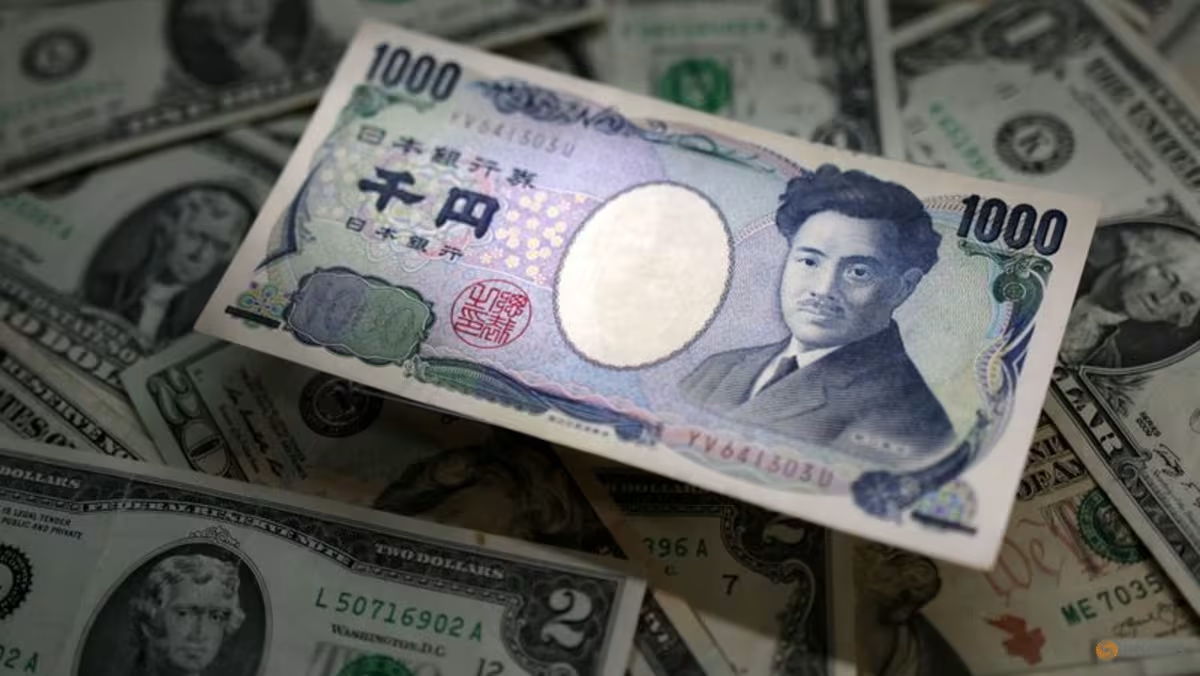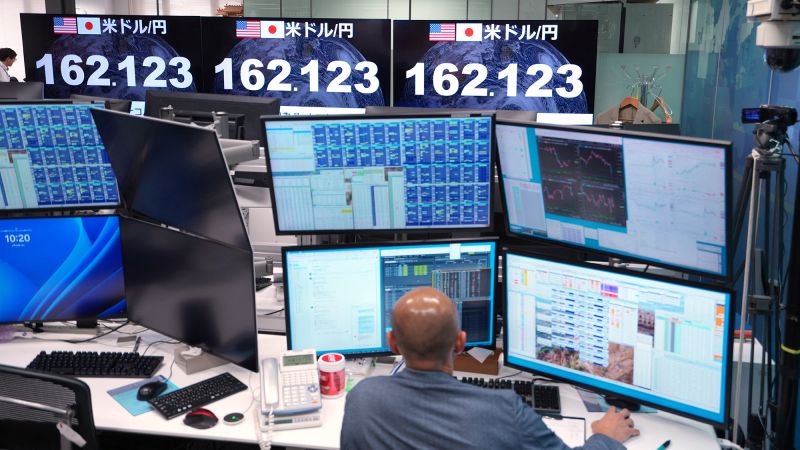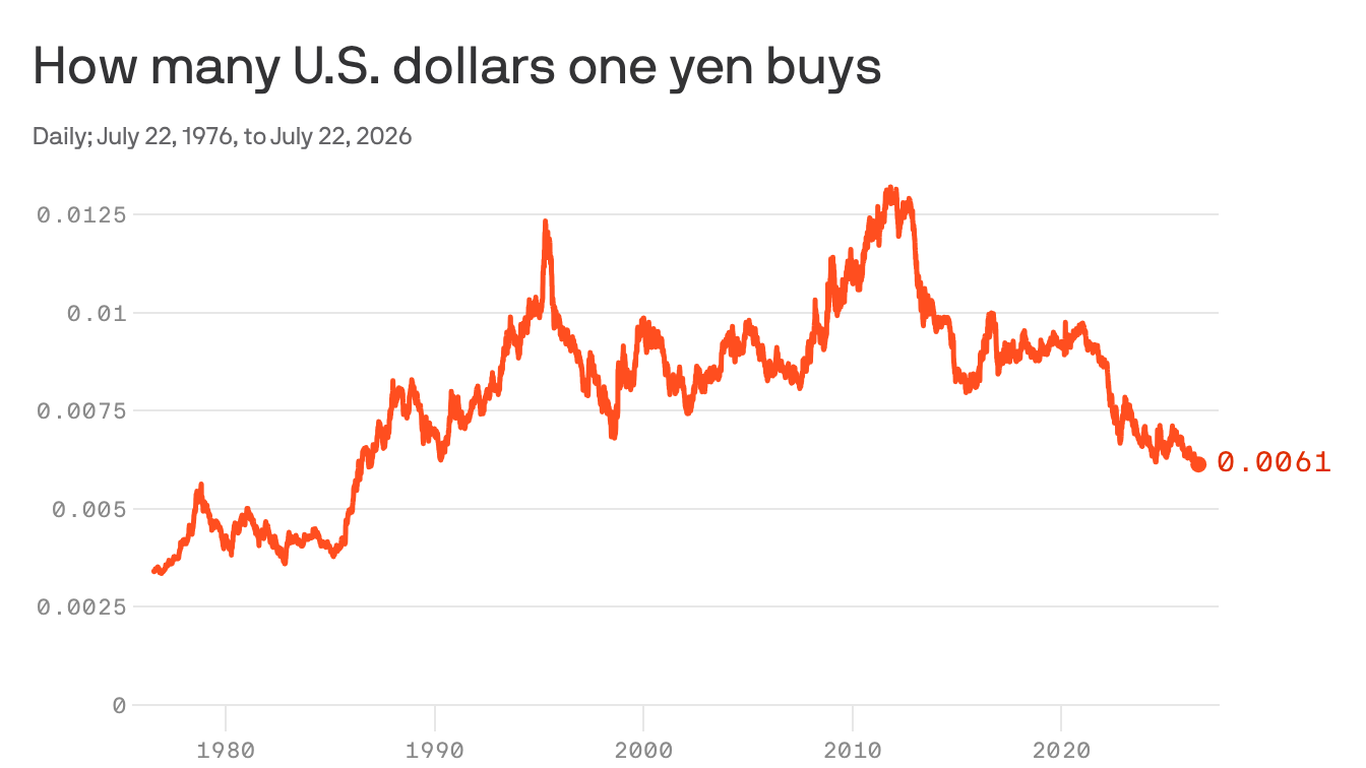
Data: FactSet; Chart: Axios VisualsLook out below: The yen is hovering near its weakest level in almost 40 years, reflecting an increasingly lopsided global economy, where capital keeps flowing to the U.S.Why it matters: The yen is being squeezed by both long-term and short-term forces.Higher interest rates in the U.S. continue to draw investors to dollar-denominated assets, while Japan remains stuck with relatively low borrowing costs. The Iran war has pushed up oil prices, a blow to an energy-importing economy like Japan that adds to the downward pressure on the currency.What they're saying: "Rising oil prices, the prospect of U.S. rate hikes and stimulatory fiscal and monetary policy conditions in Japan [are] fueling the trend — one that's unlikely to end without a material course correction from Japanese authorities," Kyle Rodda, a market analyst at Capital.com, wrote in a note Wednesday morning.The intrigue: Japanese officials have said they are prepared to support the currency, as they did earlier this year. But intervention has provided only temporary relief because it doesn't address the underlying driver: the wide gap in interest rates between Japan and the U.S.What to watch: The Bank of Japan, which will announce a policy decision next week, can't easily solve the problem.The central bank is reportedly willing to raise rates more quickly than economists expect, with the decline in the yen adding to inflationary pressures, Bloomberg reported Wednesday morning. The risk is that higher rates could choke off a still-fragile economy and increase borrowing costs for one of the world's most indebted governments.The bottom line: It has been more than 40 years since dollar-yen tensions became so politically fraught that they culminated in the Plaza Accord.Today's pressures are different, though the yen's slide is a reminder that widening global imbalances have a way of forcing policymakers' hands. There is a bonus, however: Your dollars currently go a lot further in Tokyo.
Dollar-yen tension hasn't been this fraught in 40 years
The yen's slide is a reminder that widening global imbalances have a way of forcing policymakers' hands.
313 words~1 min read