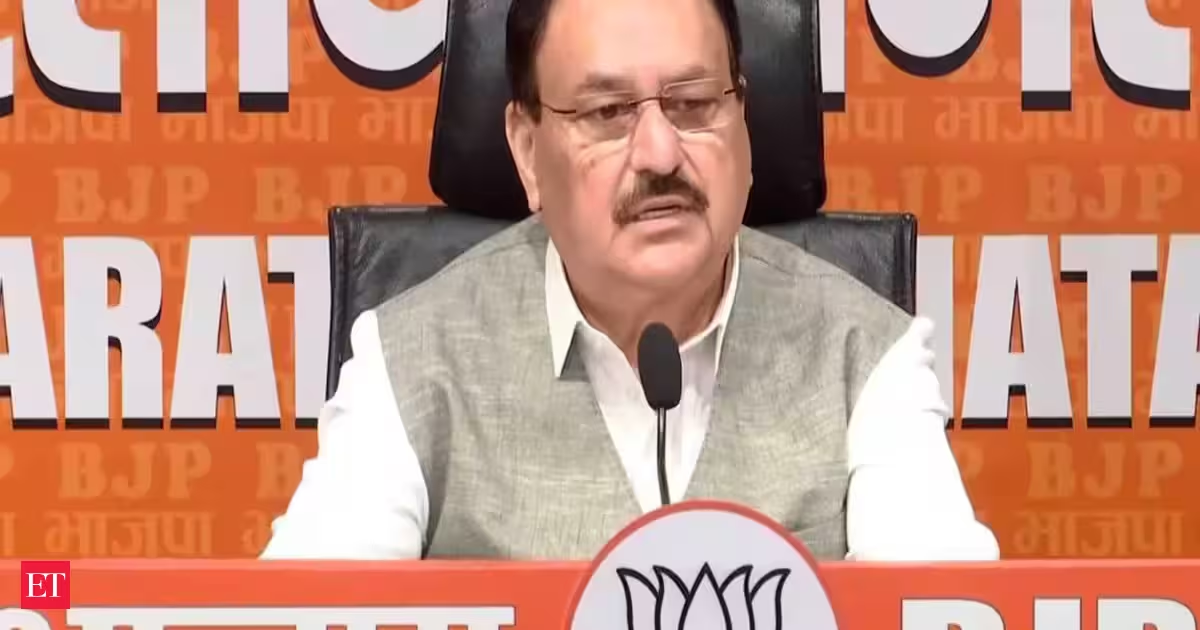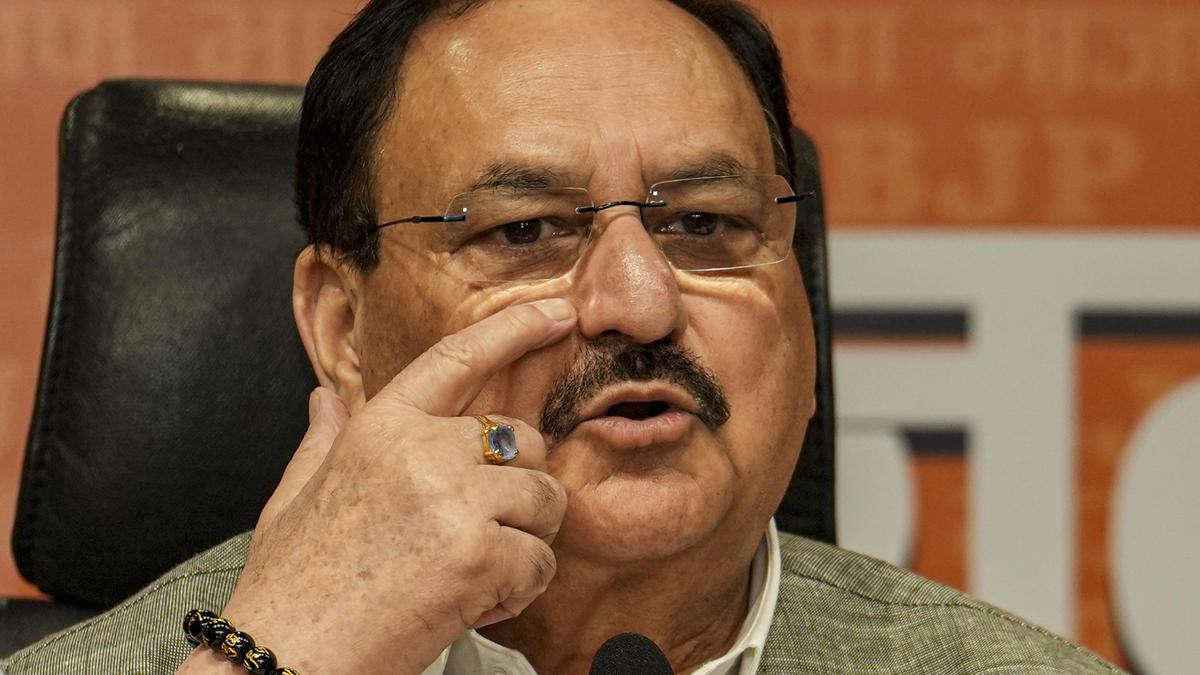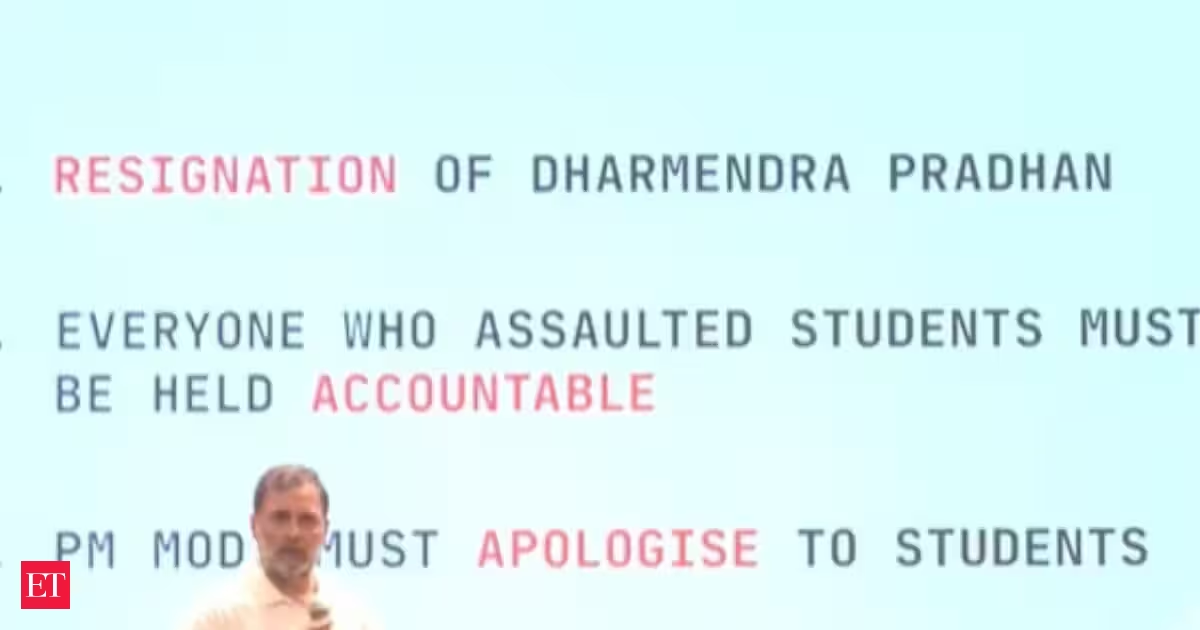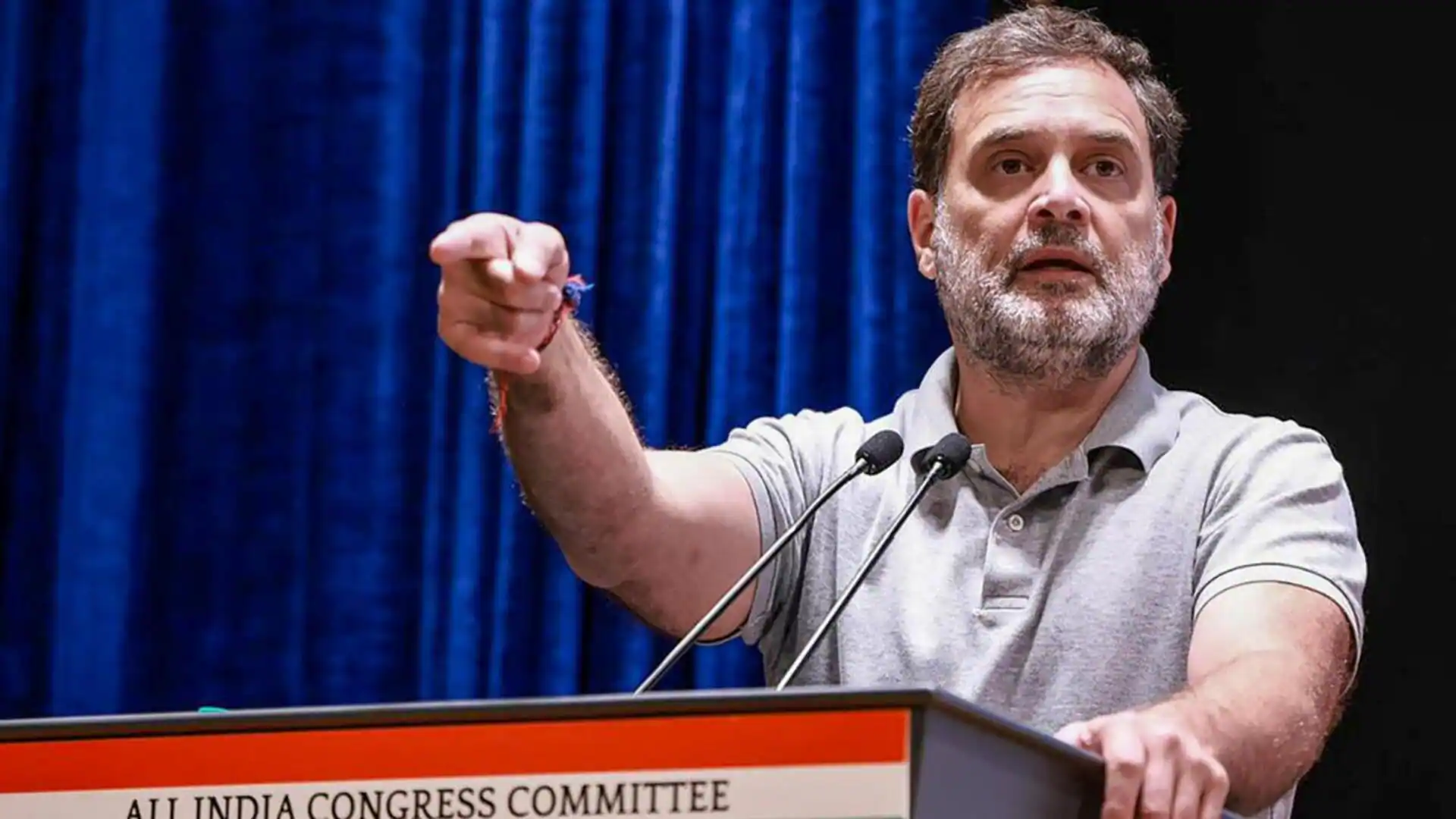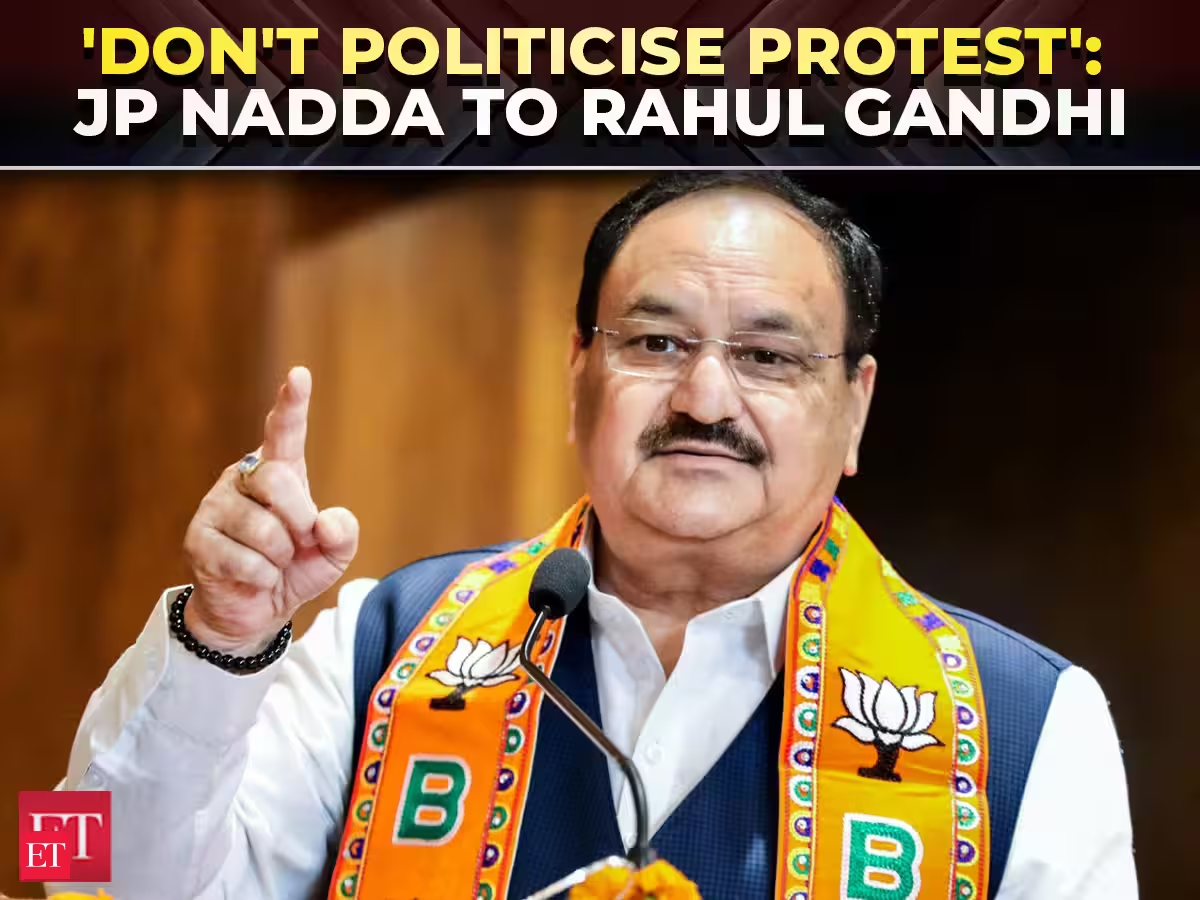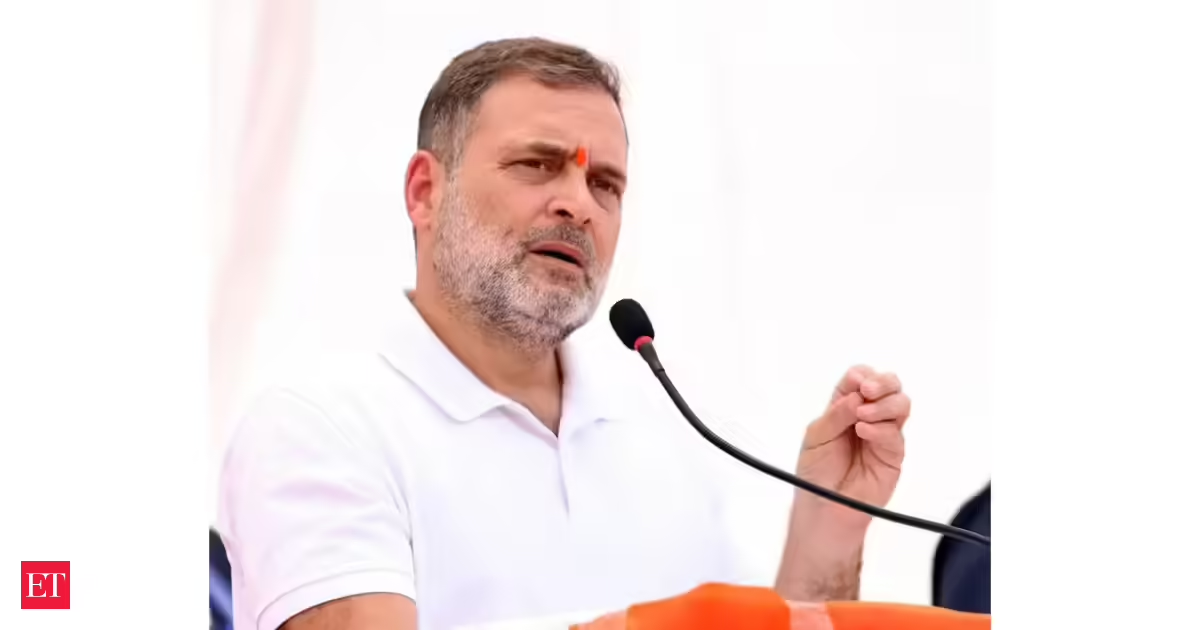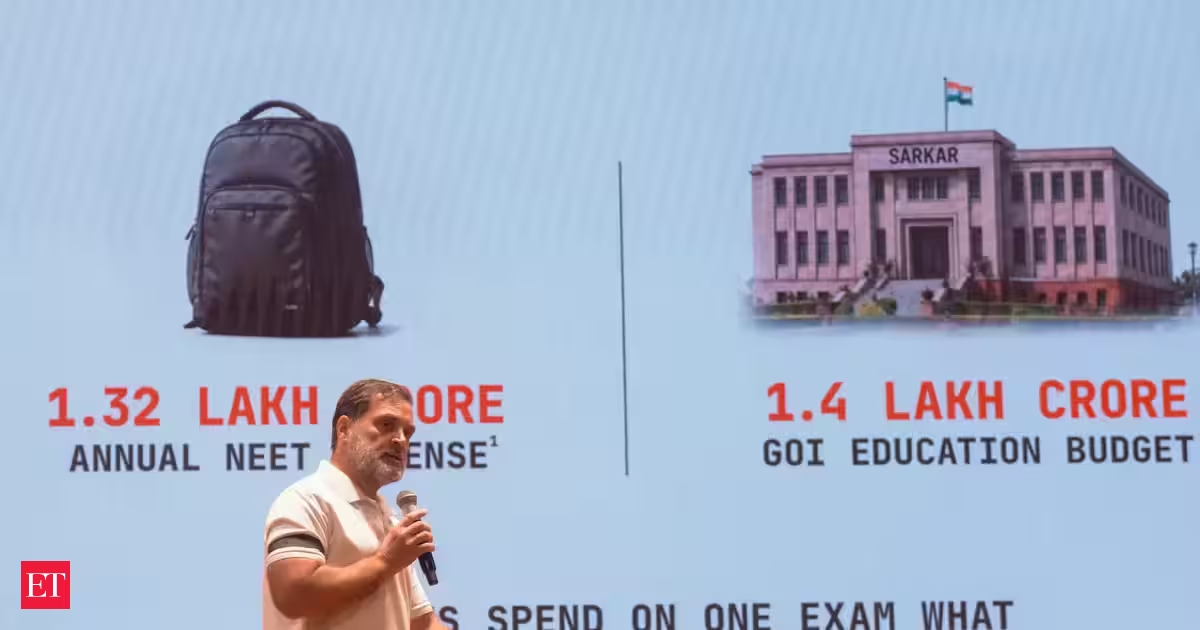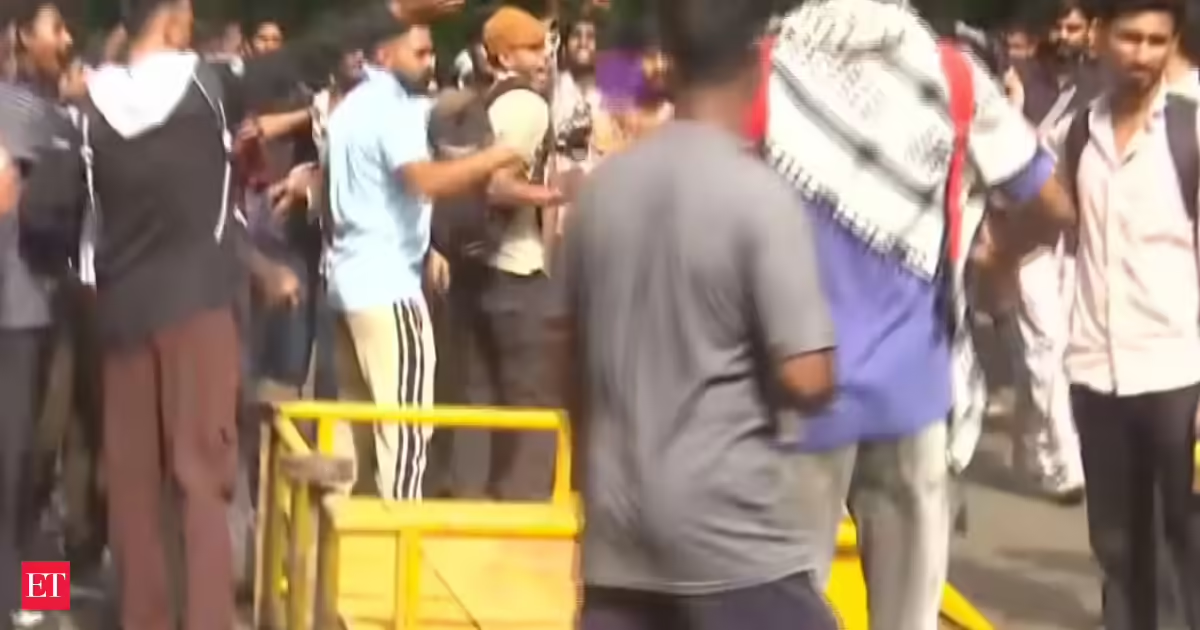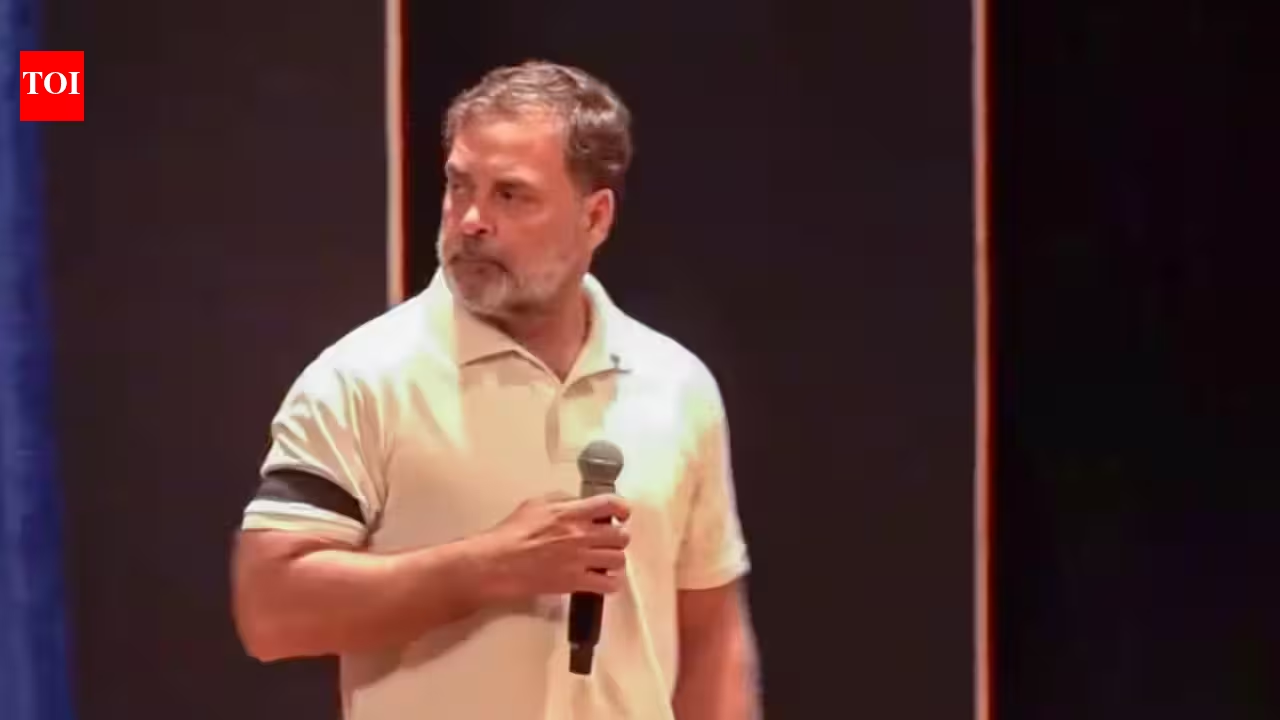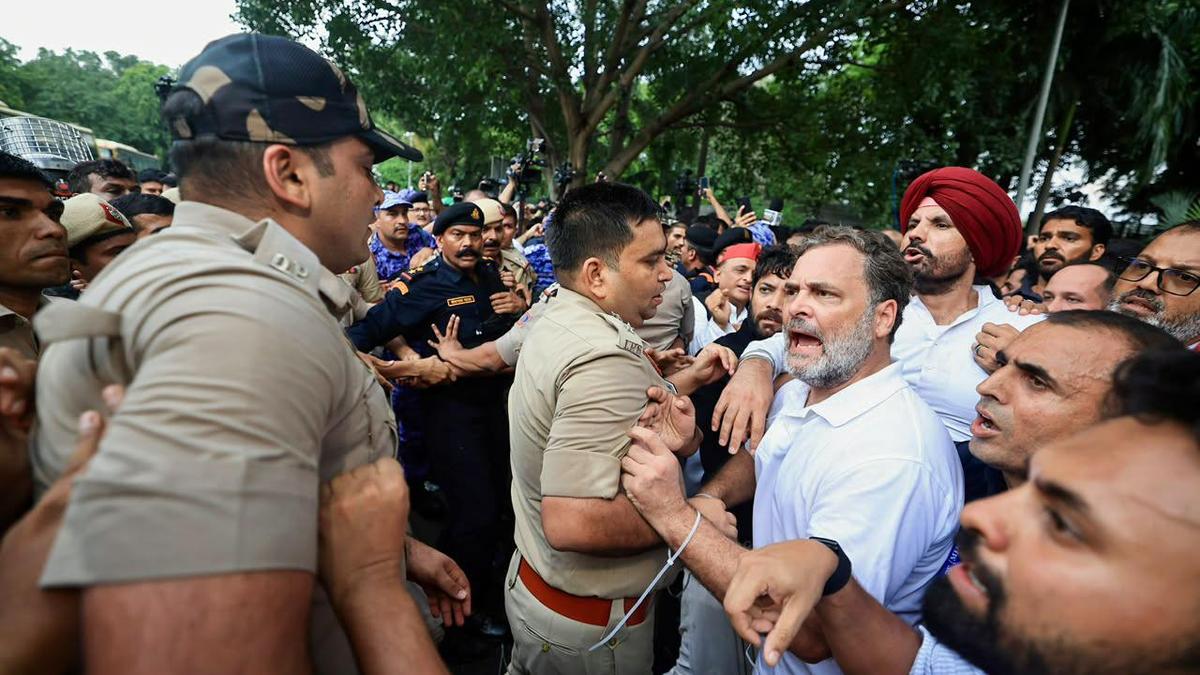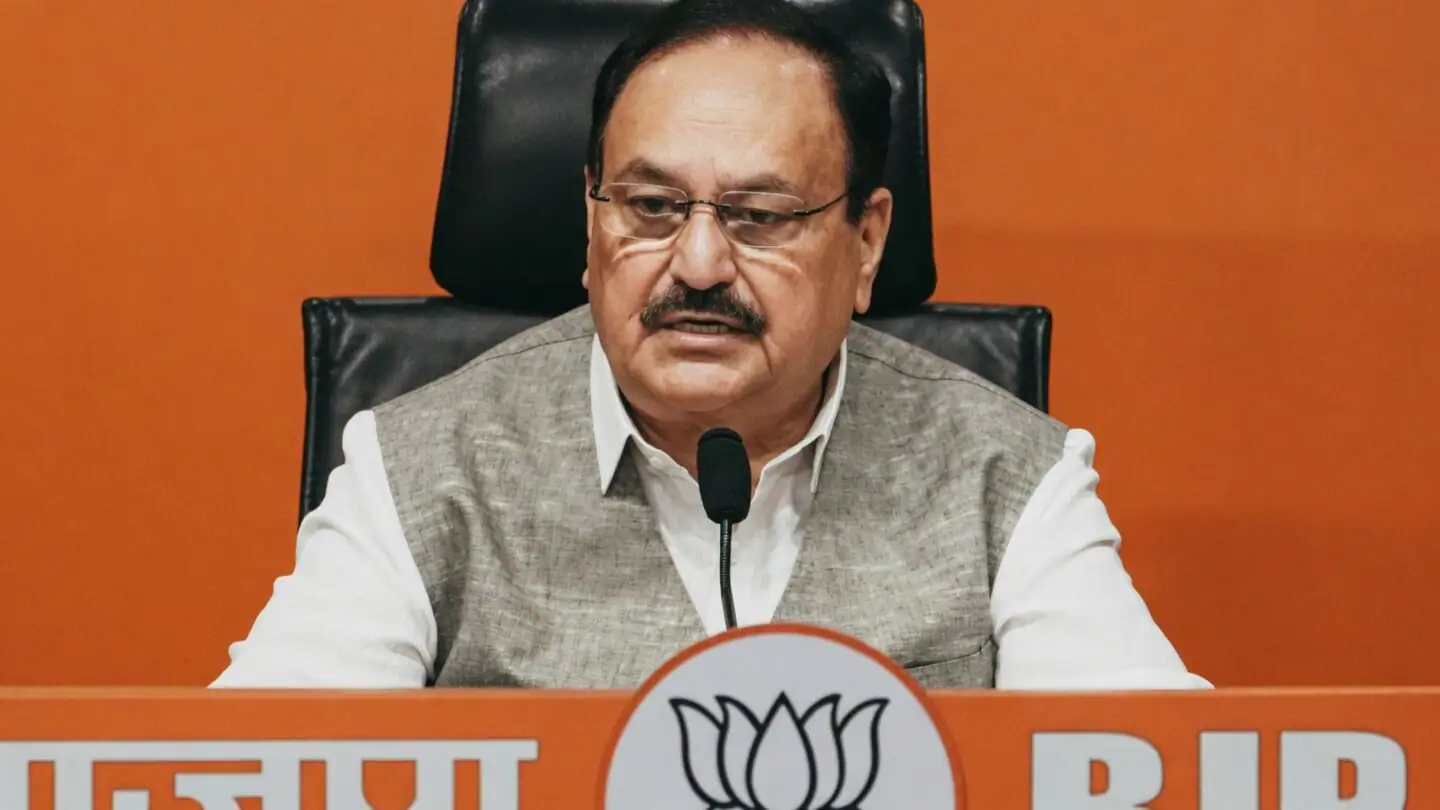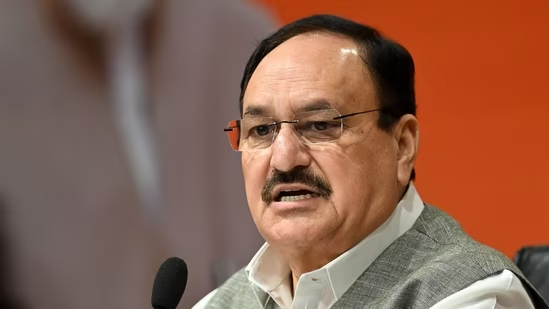
JP Nadda also listed cases of paper leaks and exam irregularities in Opposition-ruled states and questioned Rahul Gandhi's “selective” outrage. Union Minister JP Nadda on Wednesday addressed a press conference amid the CJP, the Opposition and thousands of students seeking accountability over the NEET-UG exam paper leak. While addressing LoP Rahul Gandhi's allegation of there being 152 paper leaks in 10 years in India, Nadda said that the claims will be investigated. However, the ex-BJP national president also listed cases of paper leaks in Opposition-ruled states and questioned Rahul Gandhi's “selective” outrage.Union minister JP Nadda holds press conference in New Delhi amid CJP protest against exam paper leaks. (HT/Sanchit Khanna)“Why are you so selective? Why didn't you question governments part of the INDIA bloc alliance? This clearly shows you have a motive, and you don't prioritise students,” Nadda said. He also accused Gandhi of trying to take “political mileage” on the backs of students' issues.Nadda listed cases of alleged exam irregularities and malpractices in Kerala, Punjab, Karnataka, West Bengal and Tamil Nadu, among others, citing times when the Opposition was in power.In a press conference earlier today, Rahul Gandhi claimed that the education system was rigged and everyone was aware of it. He said that 152 paper leaks have taken place over the past 10 years, which amounts to an average of one leak per month. “What we do know is that 152 paper leaks have taken place over the last decade. If you do the math. So one a month approx,” Gandhi said.He also claimed that zero convictions have taken place over the decade despite the amount of irregularities in examinations.Follow the latest breaking news, major developments and agenda-setting stories from India and around the world with the newsdesk at Hindustan Times. Operating round the clock, the desk brings together experienced editors, reporters and correspondents to deliver fast, accurate and contextual reporting across subjects that influence public policy, governance, business, society and international affairs.
Govt responds to Rahul Gandhi's 150+ paper leaks claim, questions ‘selective outrage’
JP Nadda also listed cases of paper leaks and exam irregularities in Opposition-ruled states and questioned Rahul Gandhi's “selective” outrage. | India News
522 words~2 min read