In a recent post, I mentioned that I wanted to build some tools for a stripped-down Linux running on a 3D printer with a MIPS CPU. I had two options: build a toolchain to cross-compile, or use Zig, which, in theory, has built-in toolchains for MIPS. I had to jump through hoops to get Zig to work, and I did mention Crosstool-Ng, so you might wonder why I didn’t start there. Turns out, it had its own set of hoops to work through.
What is Crosstool-Ng?
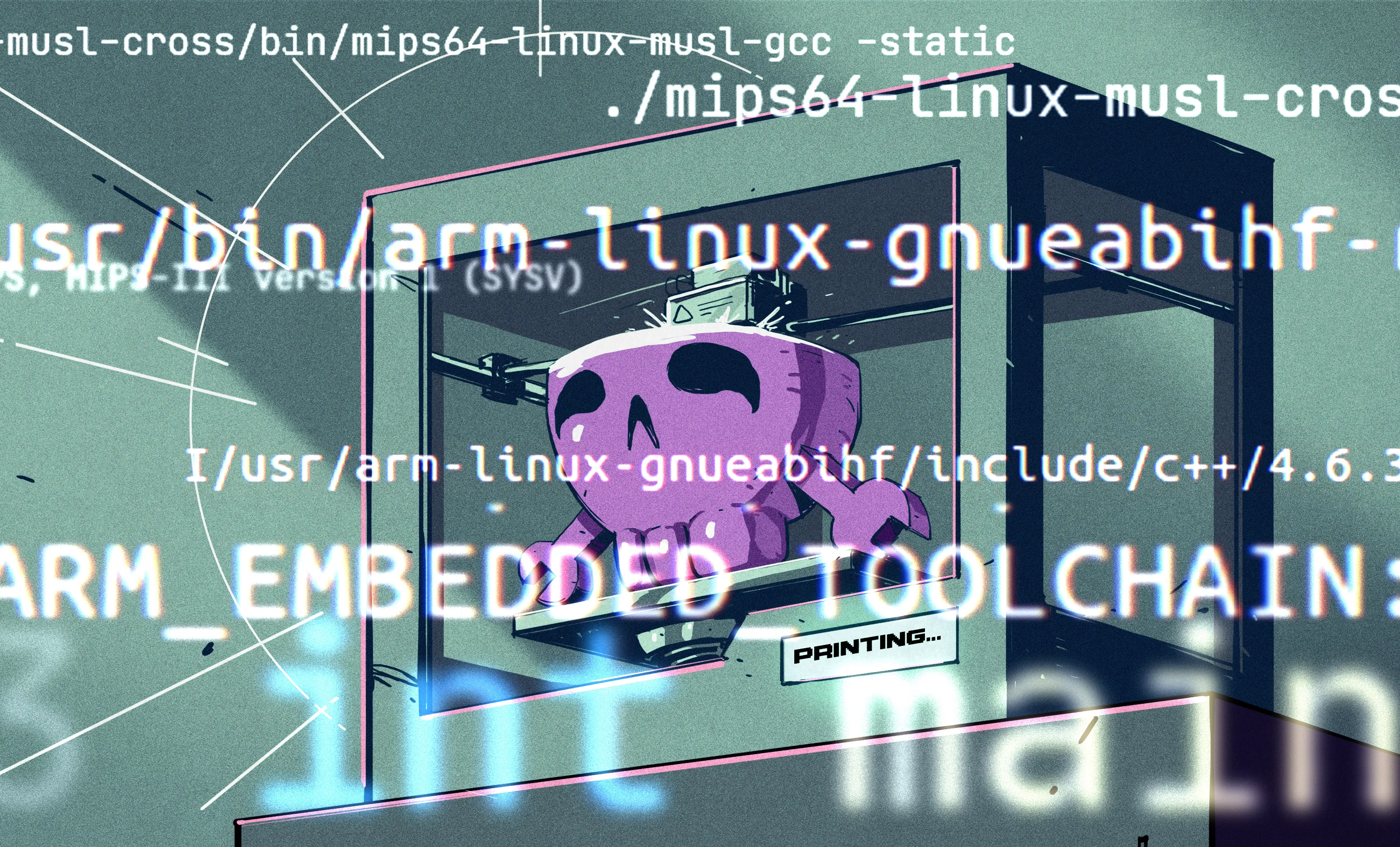
Crosstool-NG is a build system for making cross-compilation toolchains: compilers, assemblers, linkers, C libraries, kernel headers, and all the other pieces needed to build software on one machine that will run on a different kind of machine. Instead of manually matching a particular GCC version with the right binutils, glibc, or musl release, Linux headers, patches, and configuration options, you select the target architecture and let Crosstool-NG download, patch, configure, and build the stack. The result is a self-contained toolchain with commands such as mipsel-linux-musl-gcc or arm-none-eabi-gcc, ready to produce binaries for the target system.
Stock? Zig? Crosstool-Ng? No way to tell from this picture.
The four-part name is in a particular format that is often used in the cross compiling world. For example, consider arm-none-eabi-gcc. The tool here is gcc and, as you might expect, there will also be arm-none-eabi-as and arm-none-eabi-ld, among other things. The first part, arm in this case, will be the target architecture.