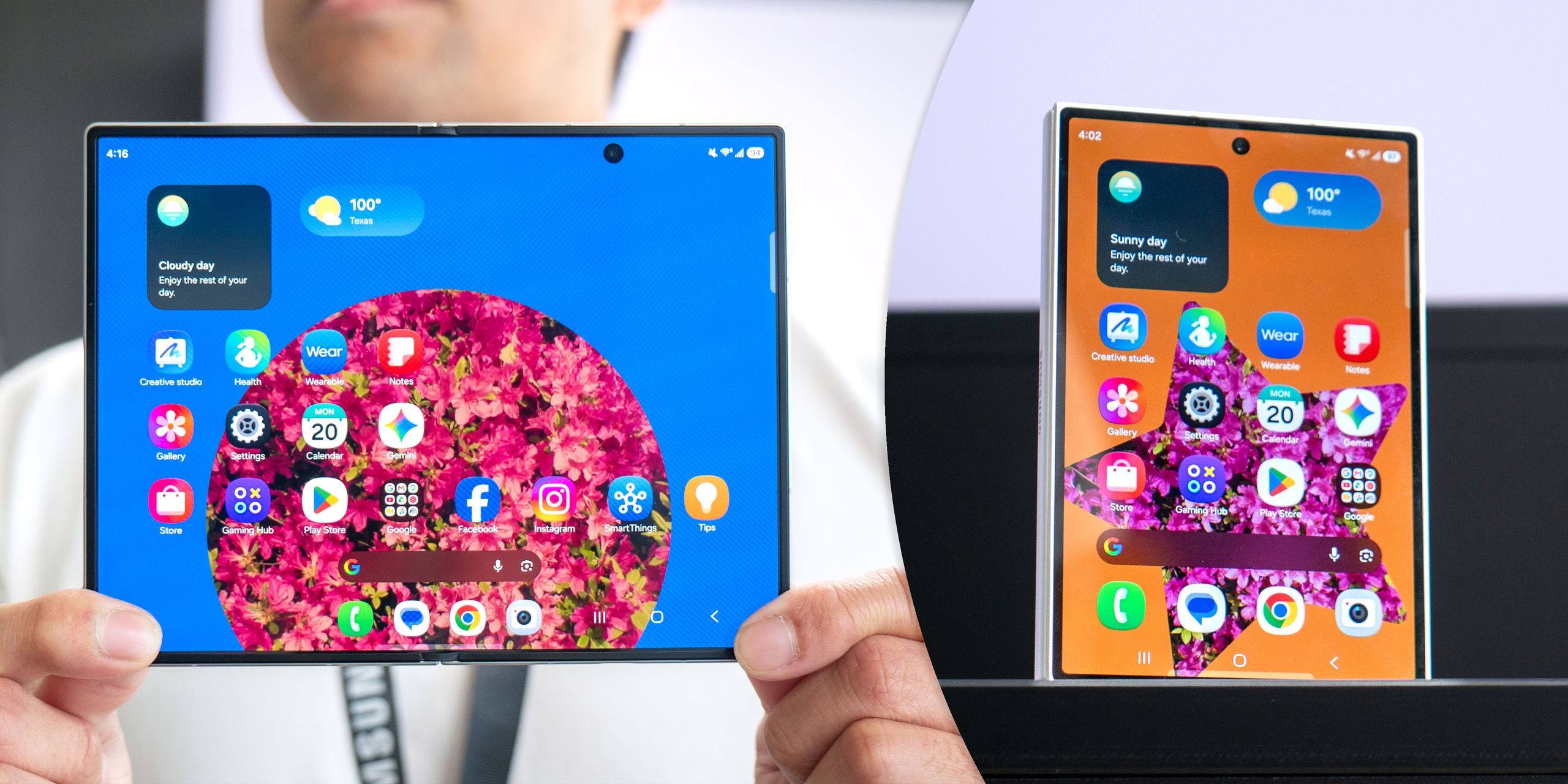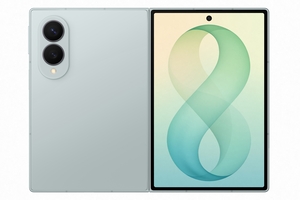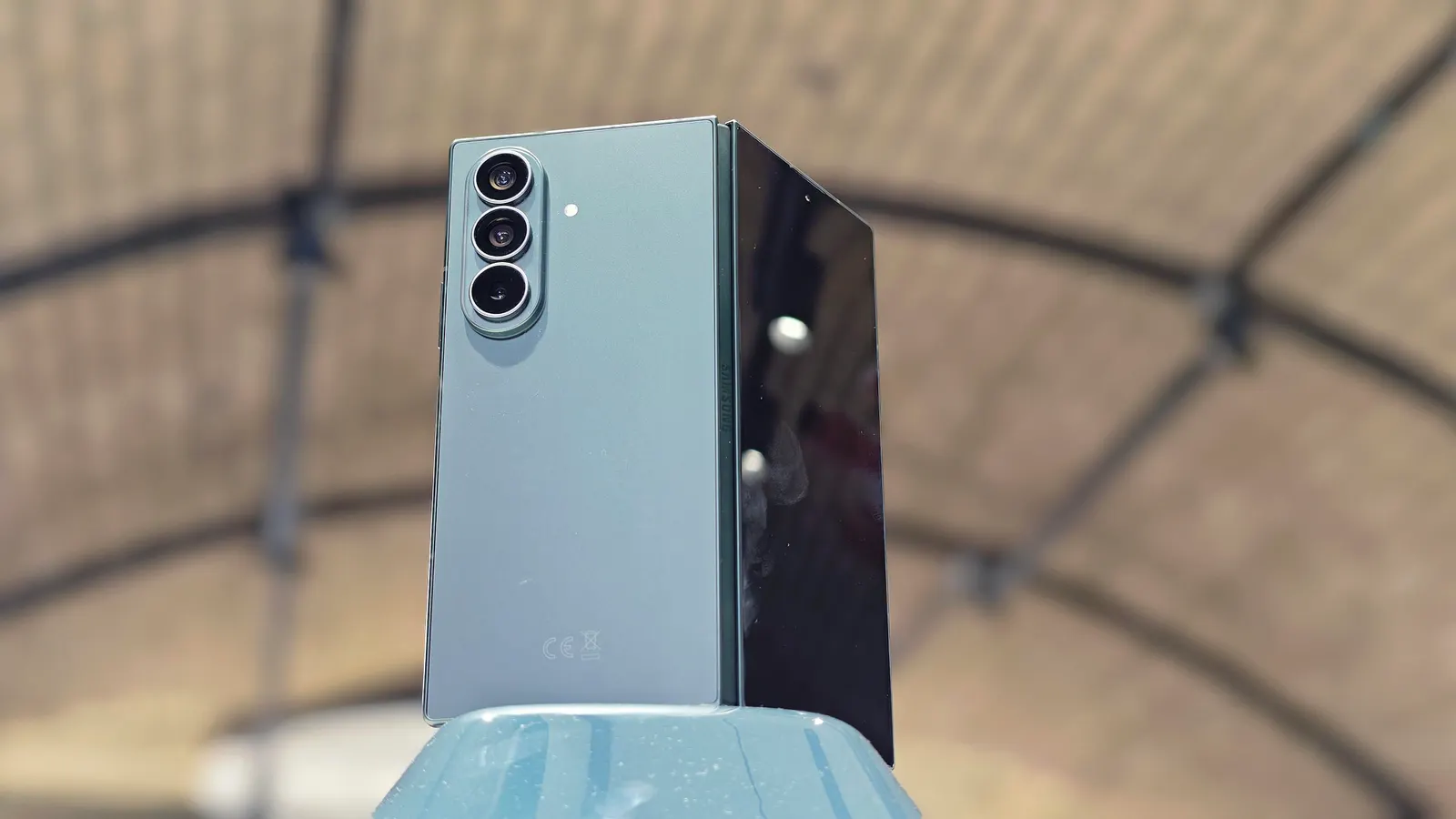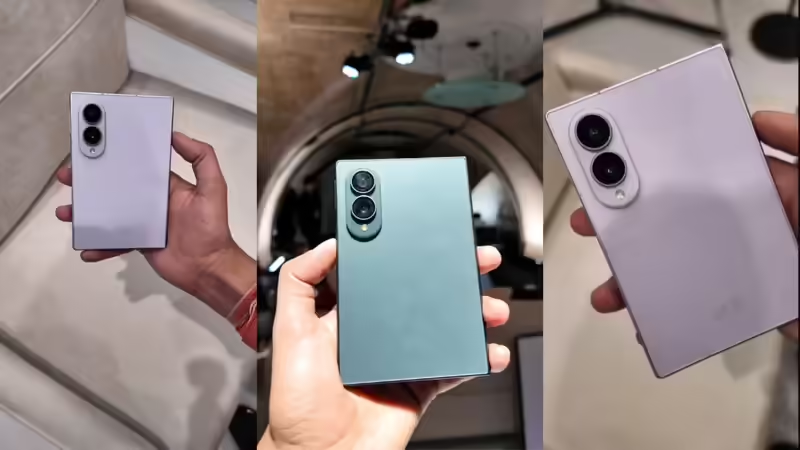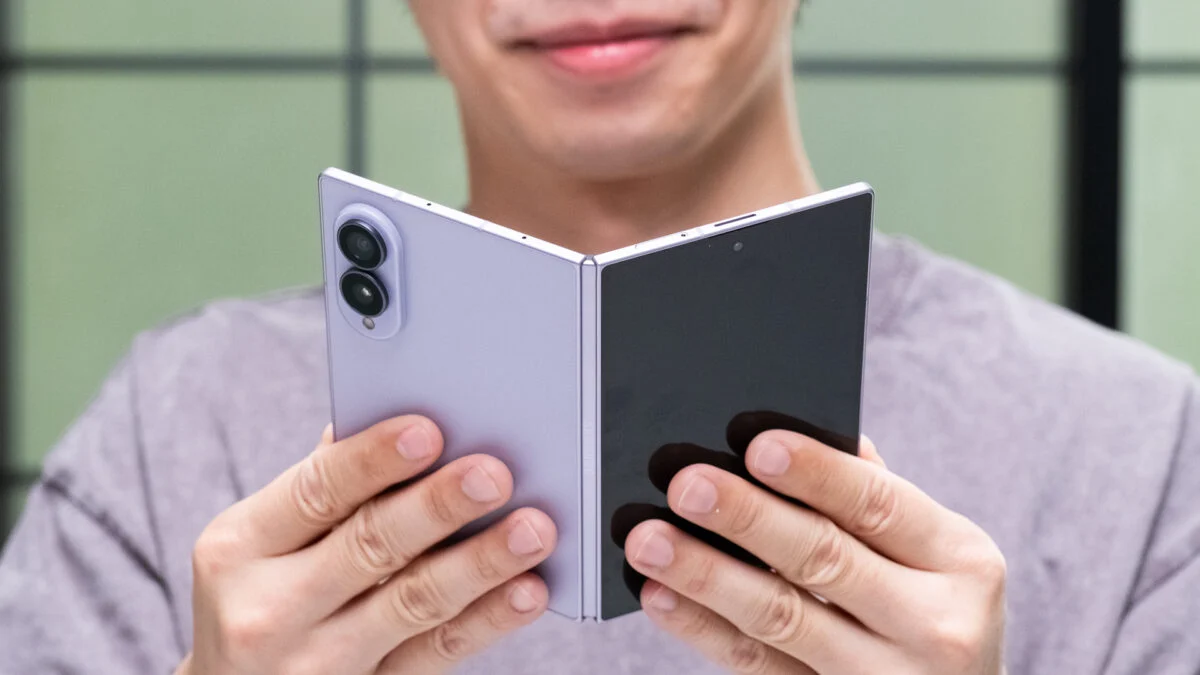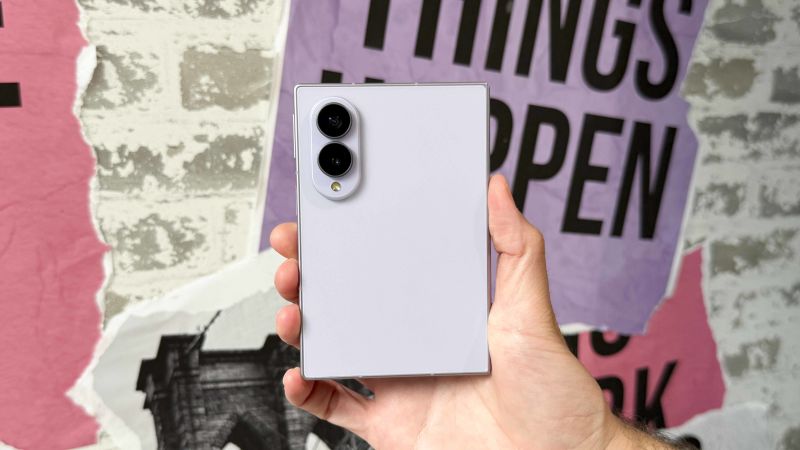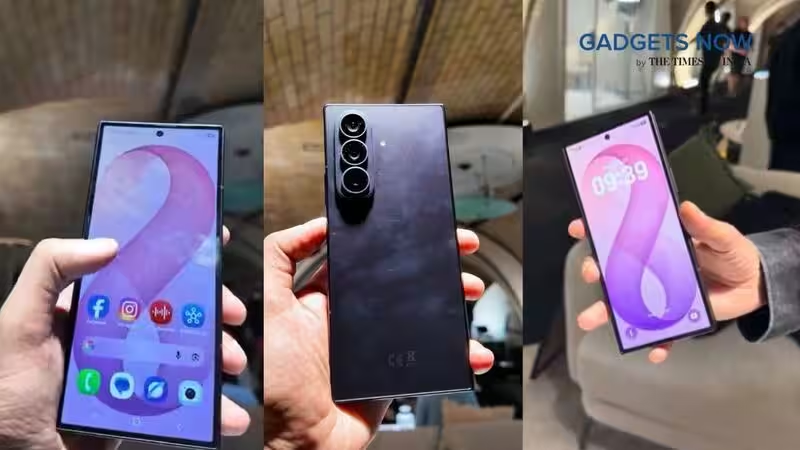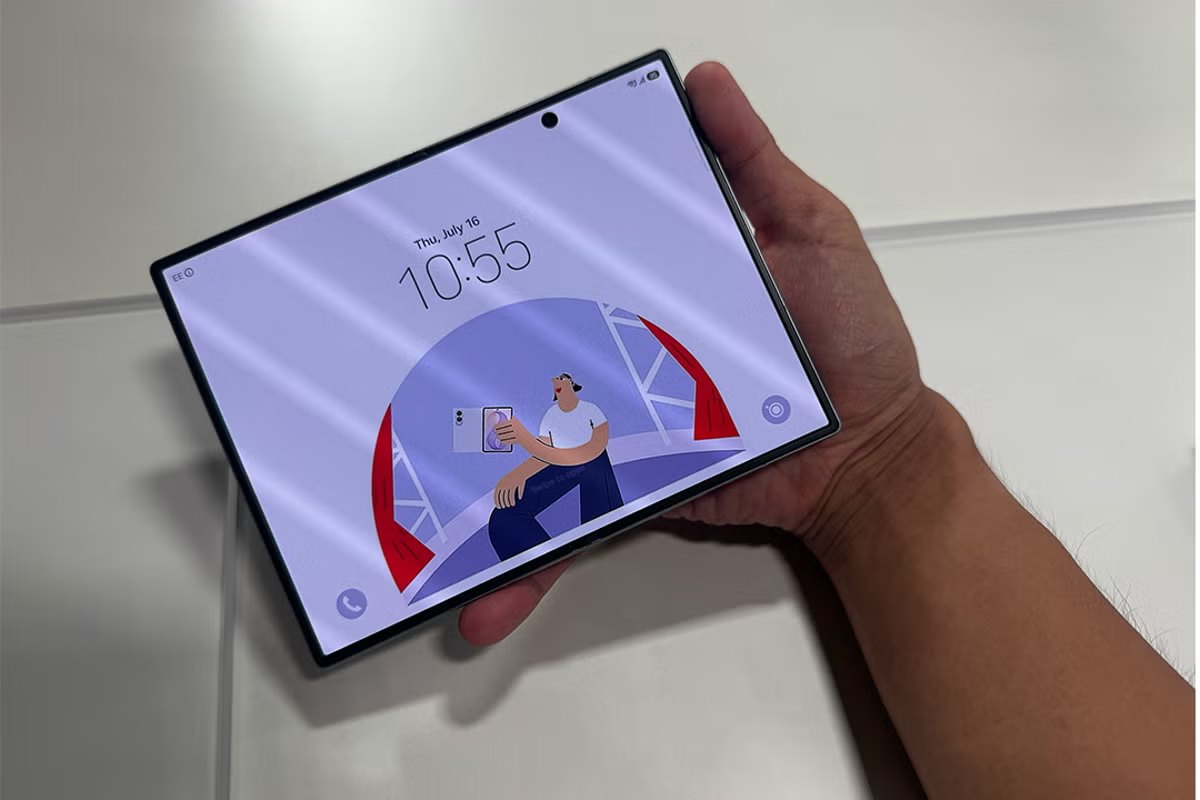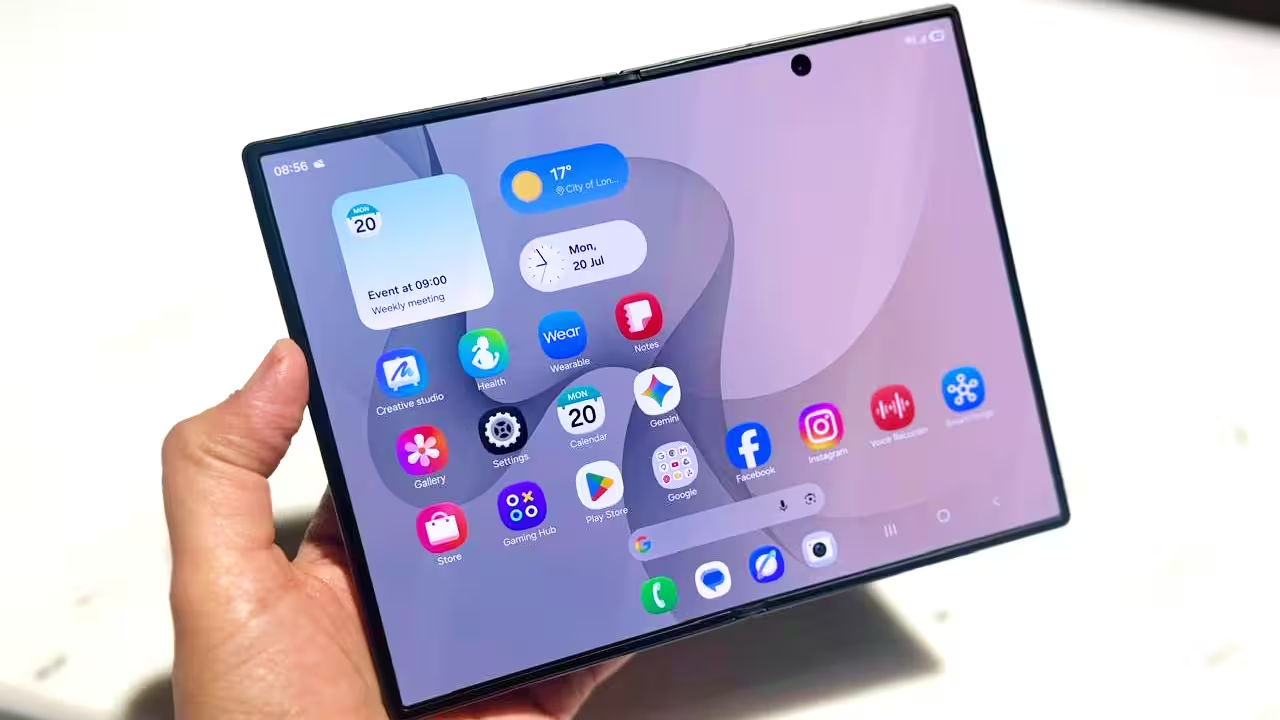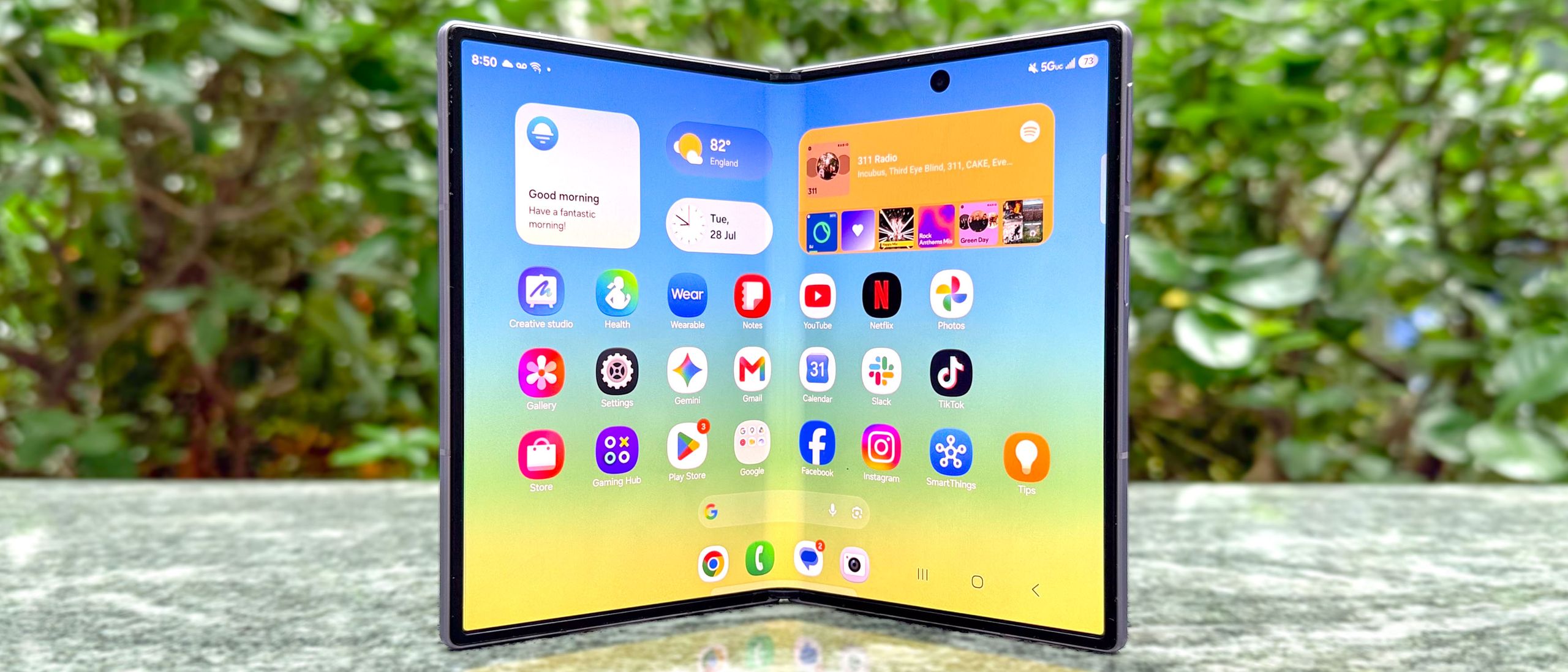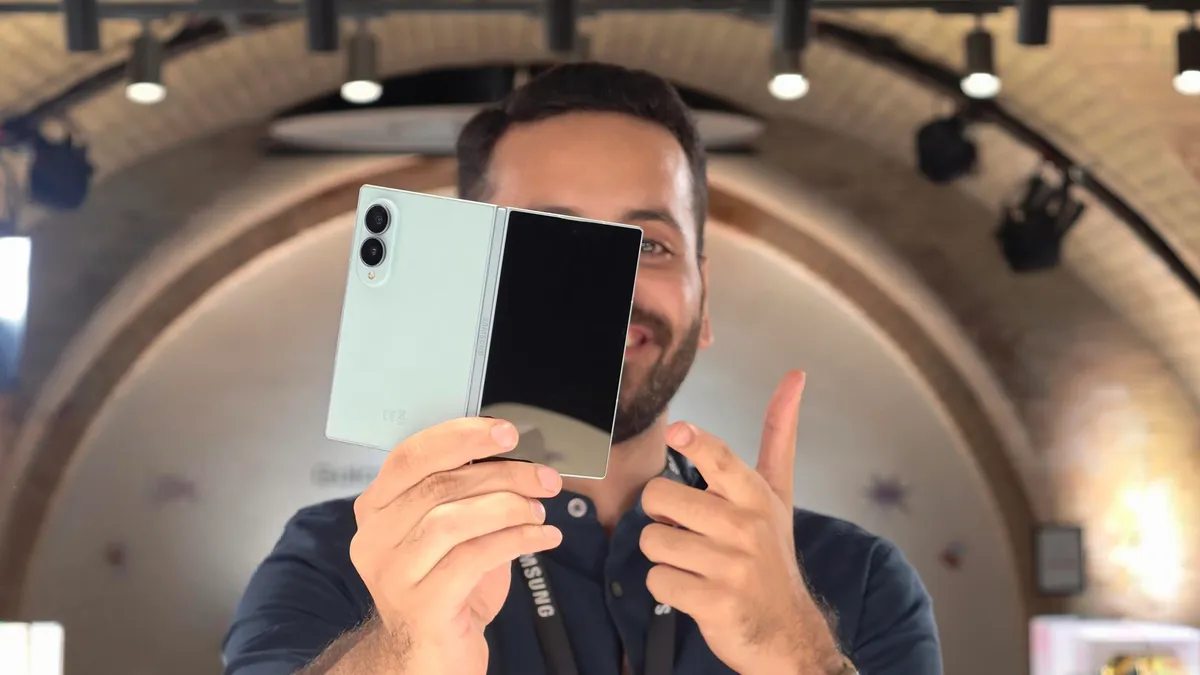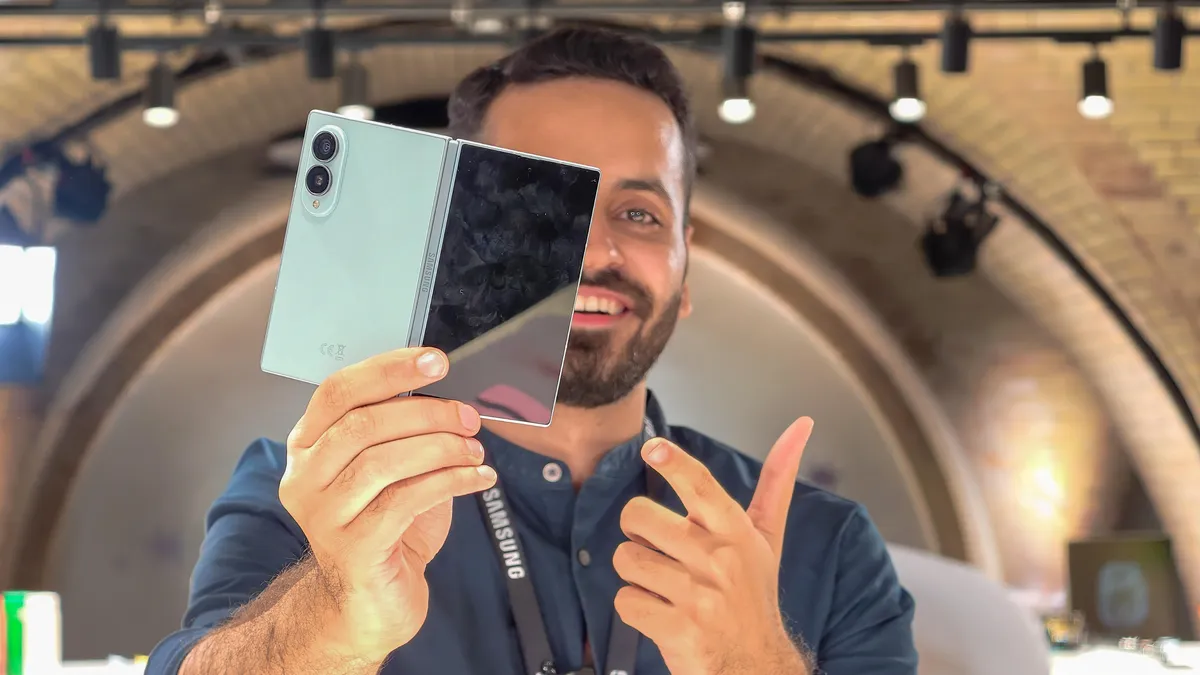
Prakhar Khanna/ZDNETSamsung announced several new products at its July Unpacked 2026 event in London, but the one I've been waiting for is the all-new, wide-format Galaxy Z Fold 8. I was skeptical about how it would feel in the hand when I saw it in leaked photos -- the passport-sized form factor is not the norm in 2026 -- so I went in with low expectations. Also: Everything announced at Samsung Unpacked 2026: New foldables, smartwatches, moreAfter a 30-minute hands-on session, however, I had (mostly) changed my mind. I quite like the size, but I have my doubts about the new aspect ratios. Nonetheless, it is a refreshing foldable and my favorite Samsung product out of the six devices launched today.It's all about the aspect ratios The Galaxy Z Fold 8 (left) offers less letterboxing than the Z Fold 8 Ultra (right) when watching videos. in landscape orientation. Prakhar Khanna/ZDNETThe Galaxy Z Fold 8 has a 7.6-inch AMOLED inner screen (120Hz refresh rate) in a 4:3 aspect ratio that's convenient for both watching video and reading. Personally, I like it as a media consumption device more than the traditional book-style foldables (Galaxy Z Fold 7, Google Pixel 10 Pro Fold, Oppo Find N6, etc.)In comparison, you get less letterboxing (black borders on top and bottom) when watching videos. And if you want to read, you can rotate the device for a readable screen. I quite liked browsing through the web and watching trailers of upcoming movies during my hands-on session.Also: Google Pixel 10 Pro Fold vs. Samsung Galaxy Z Fold 7: We tried both, and here's who winsWhen you close the device, you get a 5.5-inch AMOLED coverscreen (120Hz refresh rate) in a 10:16 aspect ratio. Samsung says it is for "the short moments people return to most often, such as messaging, social updates, browsing and short-form video." I'm not sure if I'd like to scroll through videos on this display, but the reading experience was nice. I have my doubts about how the apps will resize to this aspect ratio, but Android 17's new app scaling abilities should help. The Galaxy Z Fold 8's small form factor might appeal to the flip audience who have always wanted a book-style foldable. Prakhar Khanna/ZDNETThe Galaxy Z Fold 8 is also pretty comfortable to hold. Despite having two unorthodox wide screens, it felt slim and light in the hand. As for the numbers, the new Samsung phone measures 9.7mm thick when closed and 4.5mm when opened. It weighs just 201 grams. Samsung is calling it the lightest Z Fold it has ever made. For comparison, the new Galaxy Z Fold 8 Ultra weighs 215 grams and measures 8.9mm when closed and 4.1mm when open.Two experiential design changes The anti-reflective coating on the Galaxy Z Fold 8 and Fold 8 Ultra is my favorite upgrade on Samsung foldables this year. Prakhar Khanna/ZDNETSamsung's "Flex Titanium" technology adds a titanium-based display structure inside its folding mechanism. It combines a titanium-alloy film with an enhanced titanium plate (Flex Titanium) to strengthen the display and "refine the way the device opens" by balancing the hinge mechanics, display tension and magnetic force -- all in effort to make the folding and unfolding smoother and more natural. Also: Apple's foldable iPhone hinges on one key feature for me - and it's not the hardwareWhile it has decreased the crease to a minimum, the Fold 8 series has received a glow-up on the outside as well. Gone are the completely flat shut sides. Now, you have thinner sides with a minute gap in the middle for a more comfortable grip with your thumb to unfold the phone. They are much more comfortable to open than previous generation models, including the Fold 7. Also, they open fully flat, unlike last year's Fold 7 and Flip 7. Prakhar Khanna/ZDNETSecond, both the Galaxy Z Fold 8 and Fold 8 Ultra have an anti-reflective coating. I've been asking for this feature since I used the Oppo Find N5 and N6. It is immensely helpful when you're using the phone under sunlight or harsh lighting conditions. I held it directly under artificial lighting and could see the difference versus my Fold 7. The new-gen folding screens are also equipped with higher brightness levels (3,000 nits vs. 2,600 nits on the Fold 7) for better outdoor legibility.Also: Samsung Galaxy vs. Google Pixel: I've used both brands extensively, and this one's betterSamsung says the reflectivity has been reduced by 50% (versus the Fold 7). I couldn't test the claims, but under direct light, I could see the Fold 8 series faring better than my Fold 7. I'm hoping it'll be more smudge-resistant, but I'll have to wait to review the device before drawing any conclusions.What about everything else? The Samsung Galaxy Z Fold 8 is pretty comfortable to hold. Prakhar Khanna/ZDNETThe Galaxy Z Fold 8 is powered by the Qualcomm Snapdragon 8 Elite Gen 5 for Galaxy processor, which is the same as its Galaxy S26 Ultra sibling. Samsung says it has reworked the internals to create more space for heat dissipation, which should result in better thermal management.It is paired with 12GB of RAM for the 256GB and 512GB storage variants and 16GB of RAM with 1TB of storage. It runs One UI 9, based on Android 17. There were a few agentic AI demos, one of them including the ability to book a hotel by looking at on-screen content.Also: I compared the Samsung Galaxy S26 Ultra camera to the Vivo X300 Ultra - and it was surprisingly closeFor example, there was a photo of the Eiffel Tower, and the host asked Gemini to "book me a hotel in this place through Expedia for four nights and five days on July 25." It performed the task in the background while I continued using the phone. Prakhar Khanna/ZDNETHowever, it seems like yet another party trick to me. I have never wanted to book myself something just from a photo. I'd rather research and get to know more about the city than blindly book a hotel. Also, Gemini isn't very smart; it detected the location I meant was London instead of Paris in one of my demos. As of now, I wouldn't recommend these AI features because they remain unreliable and frustrating when they get it wrong. On the flip side, contextual AI is much more useful. For instance, Now Nudge shows up contextual actions on the screen based on your on-screen information.Also: I'm a devoted iPhone user but Android 17 is tempting me with its new video and social featuresOne of the compromises of having a shorter phone is one less camera sensor (versus the traditional book-style foldables). You won't find a telephoto camera on the Fold 8; it comes with two 50MP main and ultrawide sensors on the back. Unlike the Fold 8 Ultra, it also doesn't get a 200MP main camera.I'm alright with not having a 10MP tele lens, but I was expecting both Fold 8 phones to have the same main sensor. The higher megapixel count isn't helpful by itself, but 200MP could've allowed me to use the hi-res mode and then crop the image later to get 24MP zoomed-in results. Kerry Wan/ZDNETHowever, it doesn't skip out on the battery. Samsung is using a silicon-carbon anode battery for the first time, allowing the wide-fold to have a 4,800mAh cell inside its short body. For context, that's 400mAh more than the taller Fold 7. The Galaxy Z Fold 8 also supports faster charging speeds, paired with 45W wired charging and 20W wireless charging.The Samsung Galaxy Z Fold 8 is priced at $1,899 for the base 256GB model. It's $200 less than the new Fold 8 Ultra, but remains an expensive phone, and the current chip crunch isn't helping.
I tried Samsung's new wide Galaxy Z Fold 8, and it's my favorite product of Unpacked 2026
The new wide-fold form factor is better than traditional book-style foldables.
1,293 words~6 min read