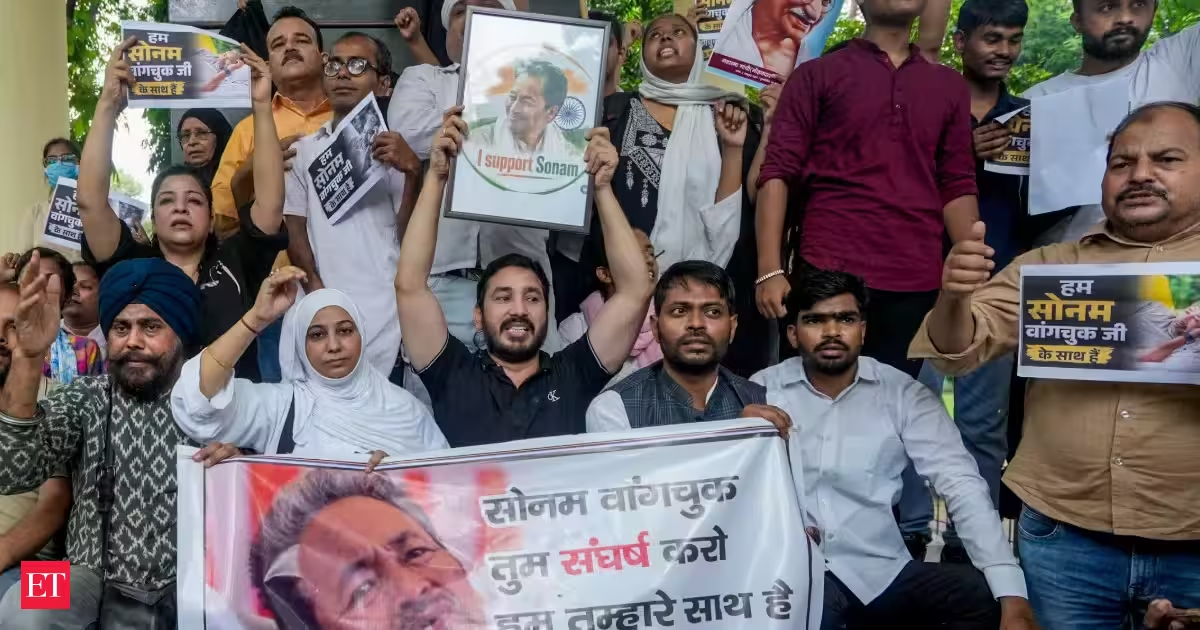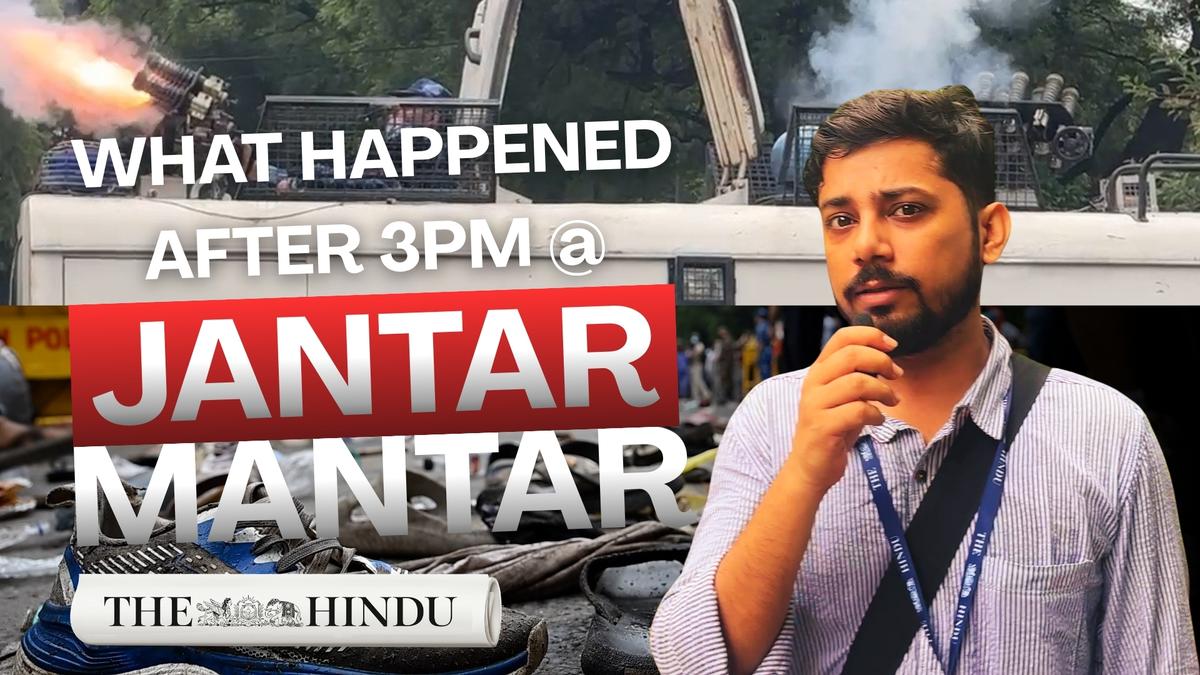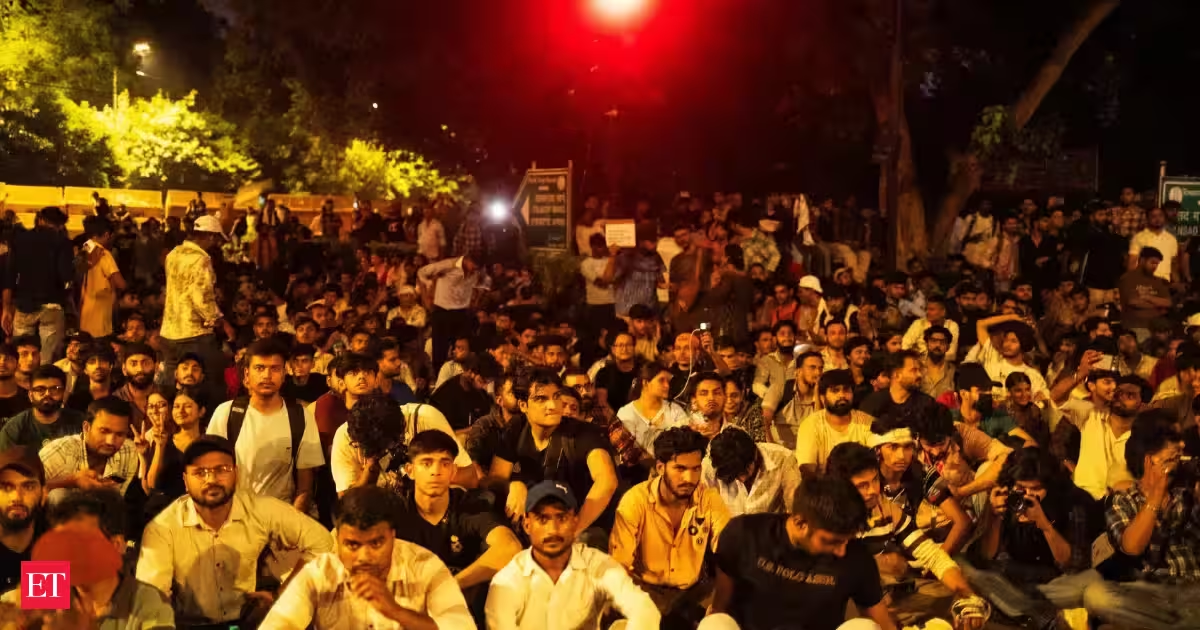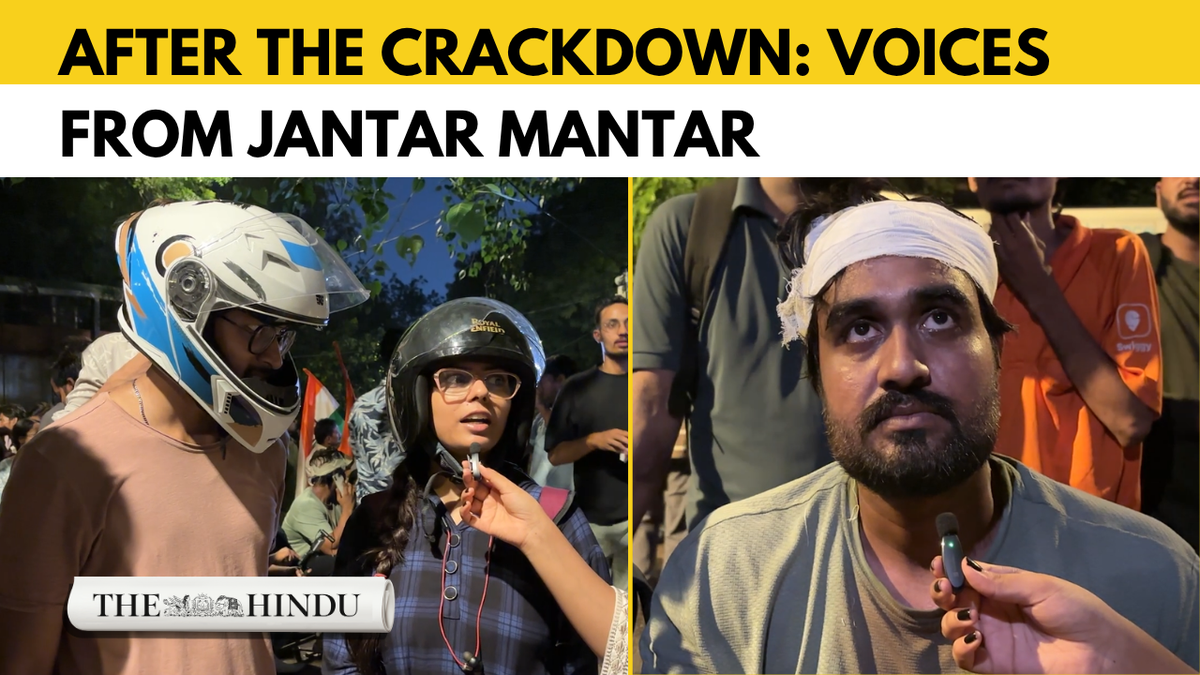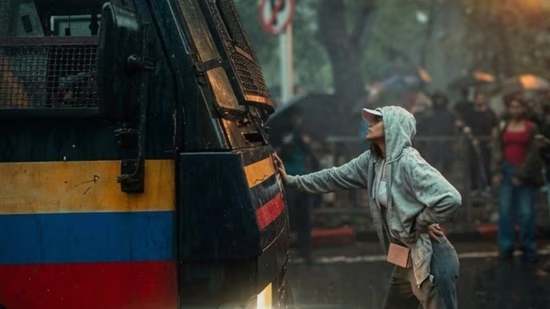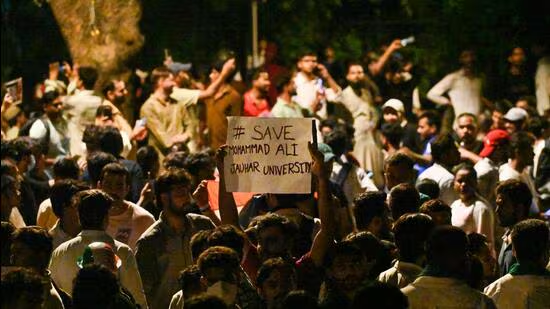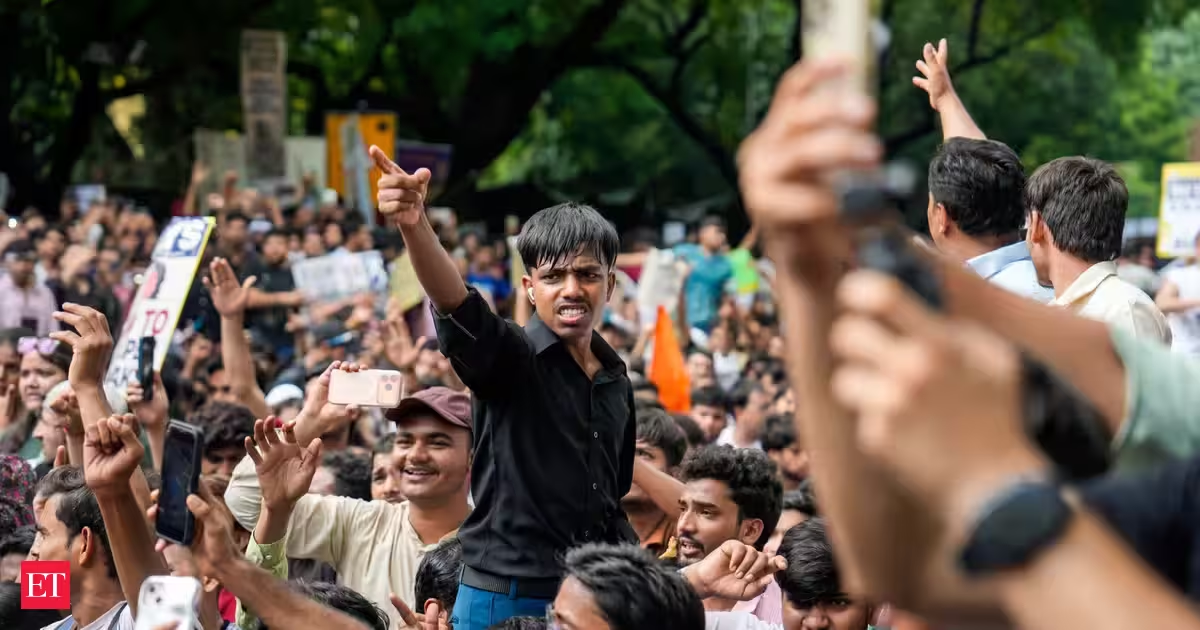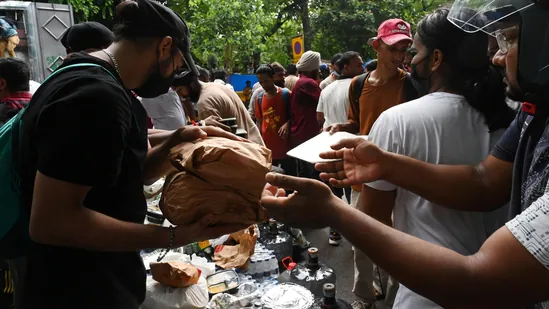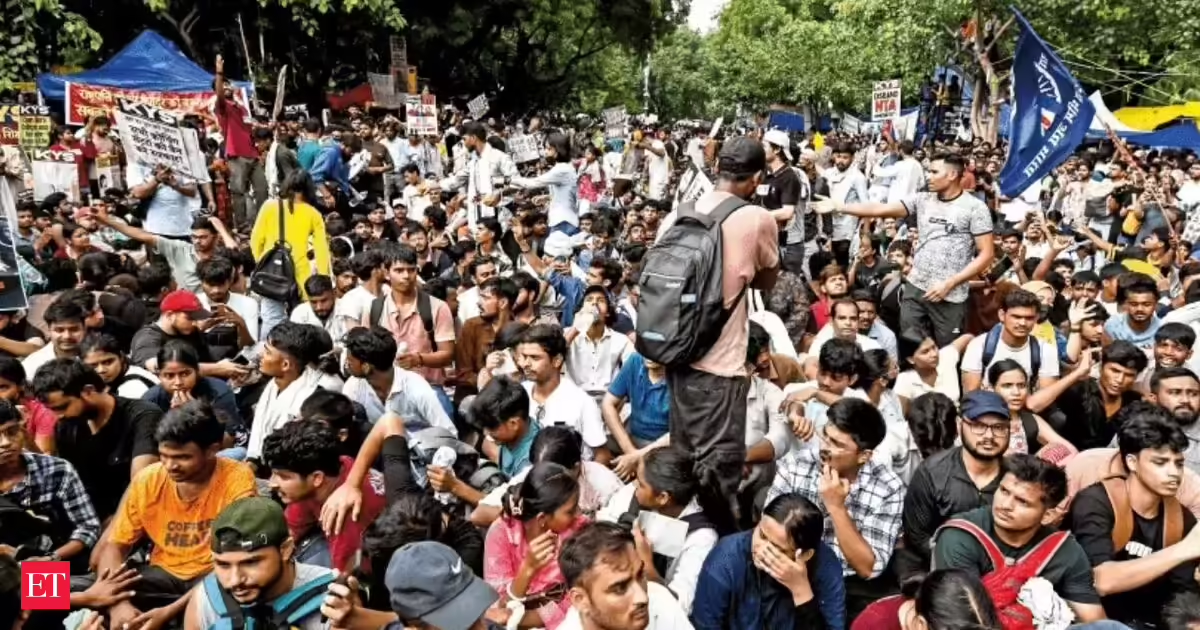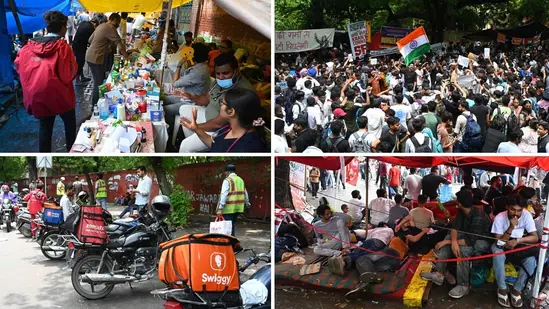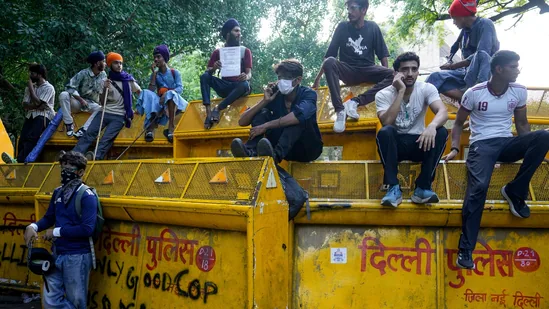
In the heart of Delhi, a pamphlet quoting Bertolt Brecht was distributed at the entrance of Jantar Mantar. It read, “The river that everything drags is known as violent, but the river bed nobody calls violent.” The pamphlet, which featured a hand-drawn image of a spectacled man holding a lathi and wearing a lotus shirt, was handed out by Punya Jain. Her friend explained, “This is a collective effort by my friend and me.” The 21-year-old also included a message asking, ‘Are you able to feel the burn on your arms and shoulders,’ symbolising the police’s lathi charge.By sunrise on July 21st, Abhishek Kumar is back at Jantar Mantar, a ritual he has followed since the sixth of July. The 19-year-old History student from Hindu College sidesteps muddy shoes scattered on the pavement. People in bandanas form a human chain. Rolled, rain-soaked carpets from last night’s storm rest nearby. Hand-painted placards lean against iron barricades, most dented, others lying on the ground.“It looked like a storm had passed,” he says.On 20th July 2026, tensions flared near Jantar Mantar in New Delhi when police blocked the “Chalo Sansad” protest procession with barriers. Under prohibitory orders, police used teargas and lathis. Videos recorded by protestors show them being beaten, dragged, and arrested, with many reportedly injured. Organisers allege excessive force, while police assert it was necessary after protestors allegedly tried to break barriers and attack security forces. The march was described as part of a larger movement for greater government accountability and reform, and it took place after activist Sonam Wangchuk was hospitalised during his ongoing hunger strike.By mid-morning, slogans from Jantar Mantar carried all the way to the Janpath Metro station, where volunteers directed arriving students towards the protest site. Support poured in from across India, with protestors receiving generous food and encouragement from commuters.For the past weeks, Mr. Kumar has watched the protest change shape. He remembers the large gathering on July 6, but the slow decline began after the indefinite sit-in started. During this period, students struggled without functioning toilets or basic facilities. Then, when Sonam Wangchuk began his hunger strike, the crowds returned.“When his health started deteriorating, people started coming back. MPs came, leaders came. Jantar Mantar became alive again,” he says.By noon, volunteers are already moving through the crowd. Someone shook out cartons of Parle-G biscuits into waiting hands; others handed them around. Another volunteer offered bananas. Water bottles circulated from group to group uncounted. Students, who had slept wherever possible, folded damp blankets and stacked wet carpets along the pavement’s edge. Empty shoes evoked the previous day’s violence. Most of those arriving early had nowhere else to spend the night. Some had slept at Bangla Sahib after the police action, then returned to Jantar Mantar after sunrise.Standing across from him was Nikhil Pal, an 18-year-old LLB student from Pratapgarh, Uttar Pradesh, who had been here for three days. He stands holding a hand-painted placard addressed to the Delhi Police. “You used lathis yesterday,” he says. “Use bullets today if you want. We will leave only after getting the resignation.”The drawing on his placard is of Bhagat Singh. “He had shaved his beard while escaping,” Mr. Pal says when someone mistakes the sketch. “It is Bhagat Singh.”Nearby, volunteers spread placards on the pavement to dry. Slogans blurred by rain are painted again. Fresh bandanas are tied around heads before people return to chanting.As the sun sets over Jantar Mantar, the protest regains momentum. Mr. Kumar weaves through the growing crowd, meeting people who have travelled from various places. Mr. Kumar pauses near the volunteers.It is Paaki’s first day at the protest. She holds black garbage bags, her blue gloves tight on her hands, her support expressed through action. The 20-year-old student collects litter before she notices the people. “I’ve never seen such empathy,” she says. “Everyone is helping someone else. This is what it means to be Indian.”Strangers pass biscuits. Someone offers water. Others serve biryani. Students who had never met before sit cross-legged on damp carpets. They talk like old friends. Together, they chant for justice.Priyansh, a BBA Mass Communication student, is speaking to Naman, a film student from Gurugram. Their conversation drifts from filmmaking to journalism schools before another person joins in. Protests, Mr. Kumar thinks, “have their own way of introducing people.”Ritik Jain, a first-year biotechnology student from Rajasthan, walks through the crowd, carrying a meme-inspired placard. “I make memes,” he says. “The system also works like one. We keep speaking, but nobody listens.”By evening, the crowd thickens. New placards jut above heads. The beat of daphlis resurfaces. Volunteers keep handing out fruit, biscuits, and food packets. Some eat tomatoes and foos sent by supporters. Others shuttle food across the protest site.Further down the barricades, Mr. Kumar meets Syed Saad, a recent graduate of Jamia Millia Islamia, who had spent the day moving between Jantar Mantar and Connaught Place. Saad had been moving between Jantar Mantar and Connaught Place throughout the day.By evening, he says, the protest site had become too crowded to enter. “It is totally packed,” Mr. Saad says. “People kept sending food, tomatoes, sweets. Everyone was talking to each other. A lot of conversations were happening.” Around 9 p.m., Mr. Saad says the crowd suddenly began running. He saw officers chasing protesters before witnessing a group surround several RAF personnel in blue uniforms. Others quickly intervened, asking people not to attack.“Some officers chasing people,” Mr. Saad says, running. Around 10 to 15 protesters are surrounding some RAF personnel in blue uniforms. There was pushing and fighting, but people around intervened. They asked others not to attack.What stays with him, however, is not that moment. “Everyone was in high spirits,” he says. “There was constant sloganeering. Everyone was talking to each other.”Before leaving, Mr. Kumar helps roll another wet carpet into the sun. Around him, volunteers repaint placards blurred by rain. Someone opens another packet of Parle-G. By tomorrow morning, he knows, many of today’s faces will be gone. Others will arrive in their place. The ritual will begin again. Students chant slogans not just to protest, but out of frustration from repeated failures. Some arrive from nearby colleges; others reside at Bangla Sahib. Some stay for hours, others overnight. Each morning, they return before the crowds, laying wet carpets in the sun, repainting placards, sharing biscuits, and waiting for Jantar Mantar to revive.
The road that wakes with slogans
A vivid portrayal of student activism at Jantar Mantar, capturing solidarity, struggle, and the enduring spirit of protest.
1,062 words~5 min read