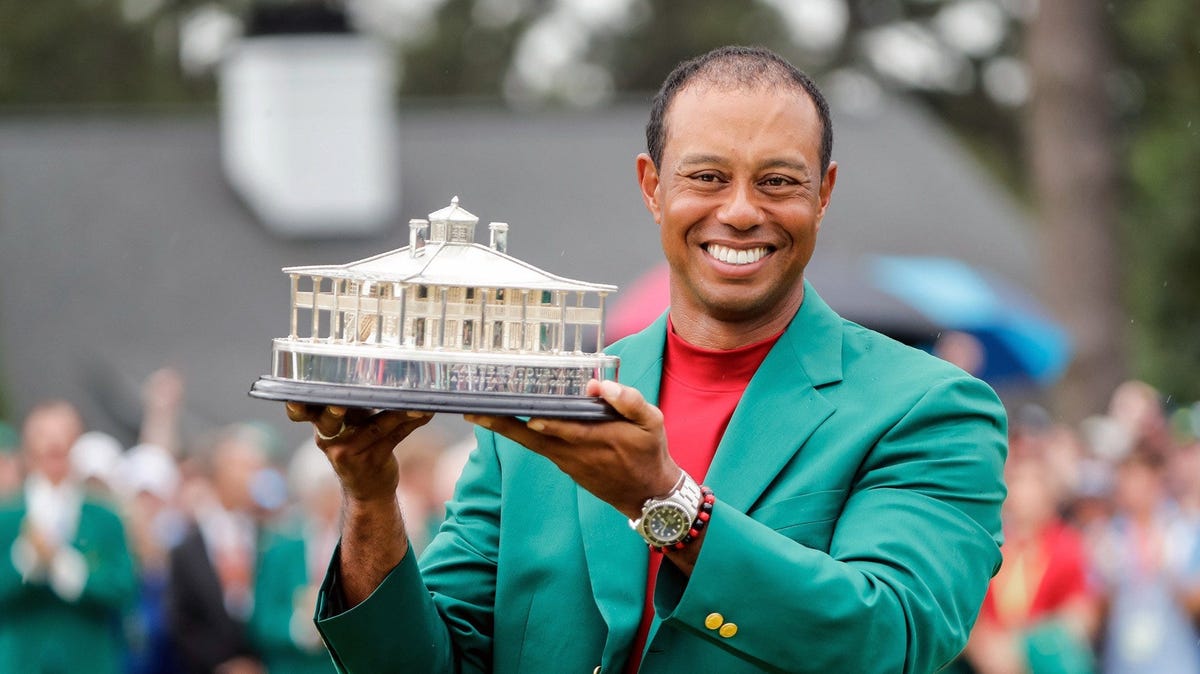
Tiger Woods life lesson (Getty Images)Tiger Woods did not become the greatest golfer of his generation by accident. He won 15 major championships, tied Sam Snead's all-time PGA Tour record with 82 wins, and spent more weeks atop the world rankings than any player in history. What separated him from gifted contemporaries was not raw talent. Woods himself admitted: "People don't understand that when I grew up, I was never the most talented, I was never the biggest, I was never the fastest, I certainly was never the strongest. The only thing I had was my work ethic, and that's been what has gotten me this far." That ethic was built on seven deeply ingrained habits.7 powerful success habits from Tiger WoodsHabit 1: Work ethic was always his real weaponTiger Woods was famously transparent about one thing. "People don't understand that when I grew up, I was never the most talented, I was never the biggest, I was never the fastest, I certainly was never the strongest. The only thing I had was my work ethic, and that's been what has gotten me this far."That is not false modesty. By most physical measures, Woods was not supposed to dominate sport the way he did. He simply outworked everyone around him, season after season, without treating it as sacrifice. He treated it as the point. He famously refused to leave the putting green until he had made 100 consecutive three-foot putts in a row. If he missed on putt number 98, he would start over from zero. That kind of self-imposed standard does not come from desperation. It comes from an entirely different relationship with effort than what most people ever develop.Habit 2: His father engineered a mind that refused to breakEarl Woods, a retired U.S. Army lieutenant colonel and Green Beret, was no ordinary sports dad. Having served two tours in Vietnam, he was trained in psychological warfare, skills he later used to toughen Tiger's mental game. He would deliberately rattle his son during practice, jingling keys or coughing during Tiger's swing to build his focus under pressure.Earl would throw a bag of clubs, toss golf balls in front of Tiger's ball, even taunt his son mid-swing, testing how quickly he could reset and hit perfectly. The result was a young golfer who was practically unshakeable in competition. By the time Tiger turned professional, the noise of a gallery, the pressure of a final round, the weight of history, none of it registered the way it would for someone who hadn't been through that training. His mental game wasn't a natural gift. It was engineered, deliberately, over years.Habit 3: He set goals that frightened other peopleTiger Woods is a firm believer in the power of goal setting. He set high standards for himself and worked tirelessly to achieve them, setting multiple records throughout his career, including the record for the most weeks spent at the No. 1 spot in the Official World Golf Ranking.He completed the Career Grand Slam at age 24, the youngest player ever to achieve the feat. He was the only player to hold all four major titles simultaneously, in what became known as the Tiger Slam. These were not accidents of timing. They were things Woods had pictured long before they happened, targets he oriented his daily work around. Big, specific, almost unreasonably ambitious goals create a different kind of focus than vague aspirations do. That was one of the clearest patterns in his approach.Habit 4: He never let satisfaction become an enemyOne of the more revealing things about Tiger Woods was how consistently unsatisfied he remained, even at the very top. Tiger never allowed himself to be satisfied, because he could see that satisfaction was the enemy of success. His mindset was to delay gratification and stay hungry. While fans talked about his past victories or how he would break Jack Nicklaus' major-championship record, he stubbornly stayed in the present.He changed coaches multiple times across his career, willingly dismantling a swing that was already winning majors because he believed a better one existed. He experimented. He rebuilt. "No matter how good you get you can always get better, and that is the exciting part," he once said. The ceiling, for him, was always somewhere higher.Habit 5: Staying present under the worst possible pressureTiger doesn't give much of his mental game secrets away, but his positive self-talk was key in pressure moments. He remained calm and in the present, accepting errant shots as part of the game rather than panicking or changing his swing thoughts.This is harder than it sounds. When you are leading a major with two holes to play, with thousands of people watching your every breath, the instinct is to race ahead mentally, to start imagining the trophy or dreading the collapse. Woods learned, mostly through his father's training and years of competitive experience, to resist that completely. Nothing else should get in the way. Focus on the work to be done. One shot. The next shot. That was the entirety of his world.Habit 6: Physical fitness was non-negotiableLong before the PGA Tour's fitness culture became mainstream, Tiger Woods was in the gym in ways that genuinely surprised other players. He had been known to spend hours working on strength and conditioning exercises designed to improve his flexibility and endurance, and was a strong advocate for healthy living, emphasizing the importance of proper nutrition and rest in maintaining optimal performance.Woods also brought a Navy SEAL-style fitness regimen into his preparation, running long distances and training for muscular endurance in ways that had no obvious equivalent in professional golf at the time. The result was a player whose body allowed him to do things with a golf ball that players with prettier swings simply couldn't. His physicality was a competitive weapon, not just a health choice.Habit 7: He came back when most people had written him offPerhaps the most powerful lesson Tiger Woods offers is the one that came not from winning, but from refusing to stop trying. After years of back surgeries, a 2021 car crash that left him with severe fractures in his right leg, and a period where amputation was genuinely on the table, he returned to Augusta National in 2019 and won the Masters for his 15th major title, ending an 11-year drought at the age of 43.From admitting a couple of years before that it was unlikely he would ever compete in golf again, to becoming a major champion at 43, is just incredible. It wasn't just a sports comeback. It was something rarer. It was a person choosing, under genuinely difficult circumstances, not to accept the version of themselves that had stopped. That choice is as applicable off the golf course as it ever was on it.
Life Lesson of the Day: 7 powerful success habits from Tiger Woods that helped him conquer golf and become a legend unlike any other
View this post on Instagram A post shared by The Genesis Invitational (@thegenesisinv)
1,129 words~5 min read