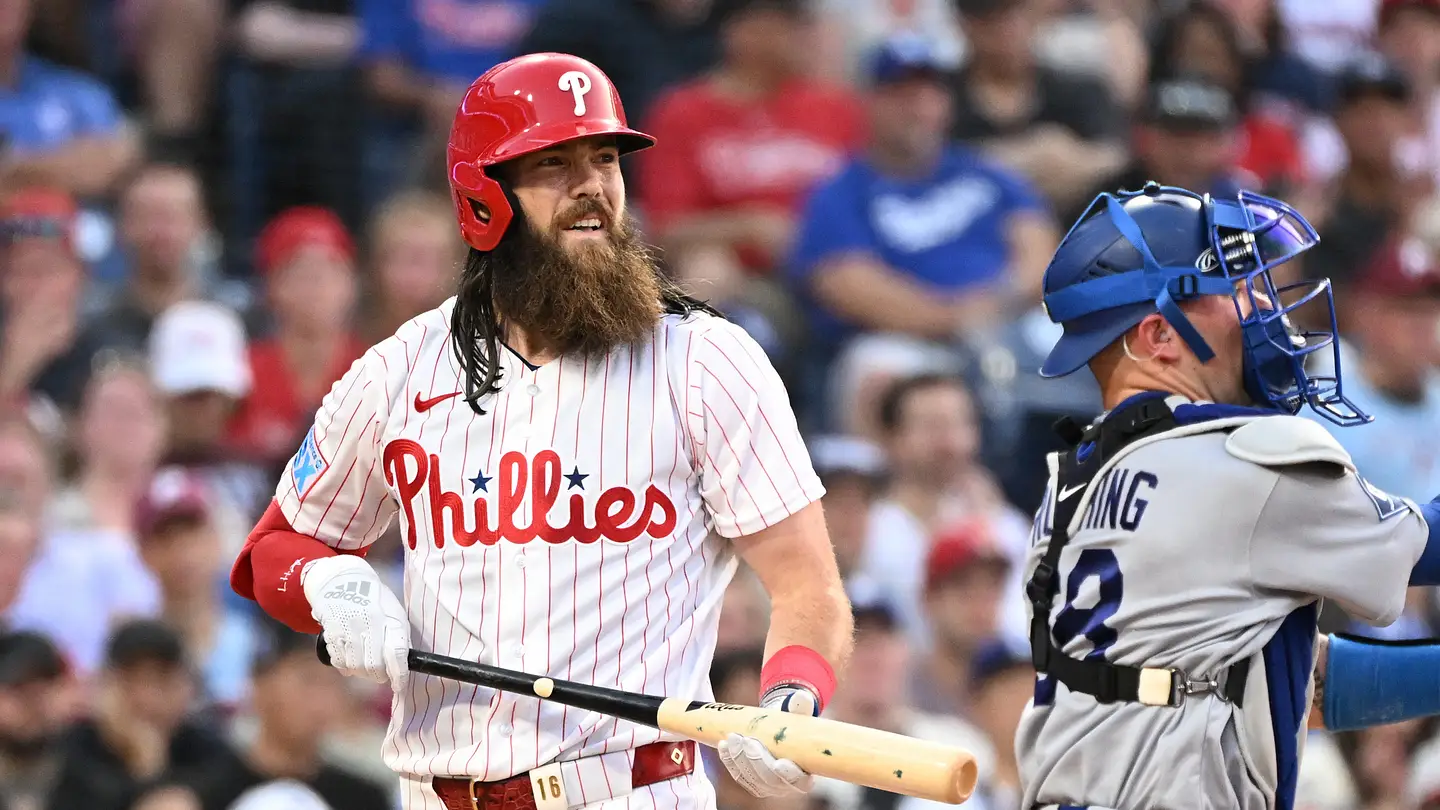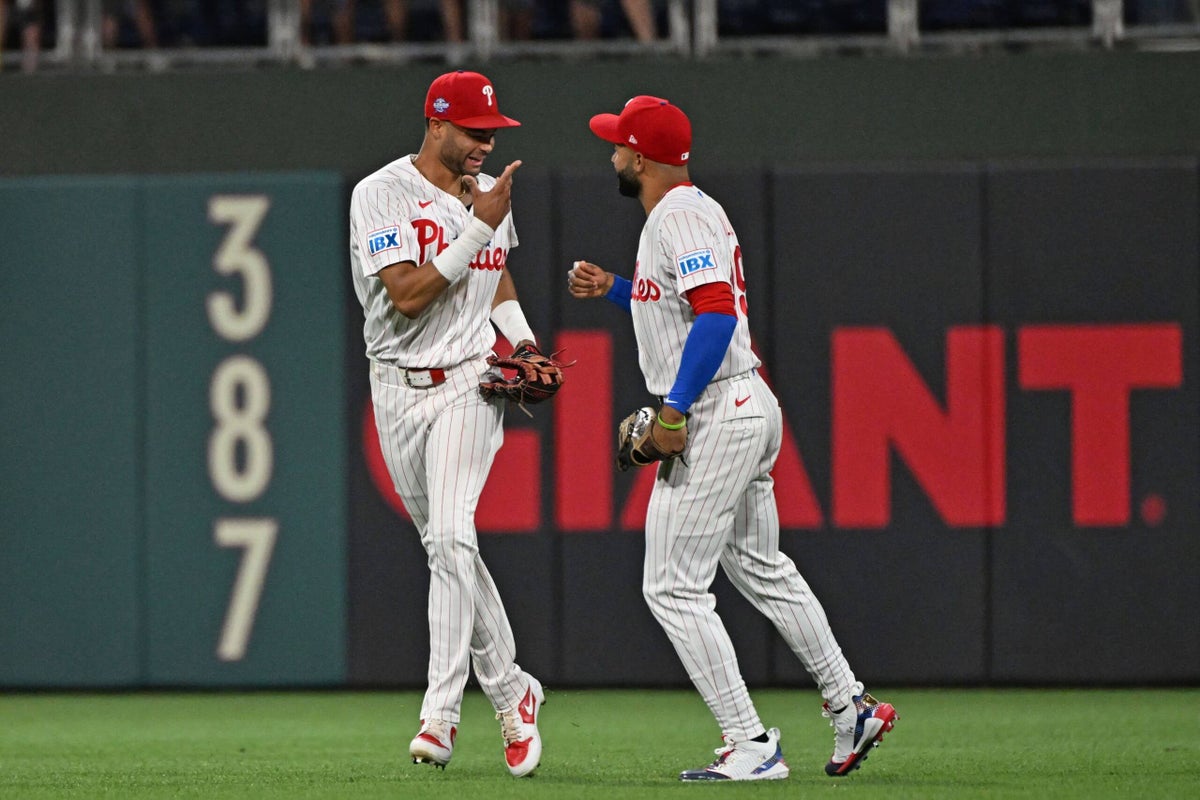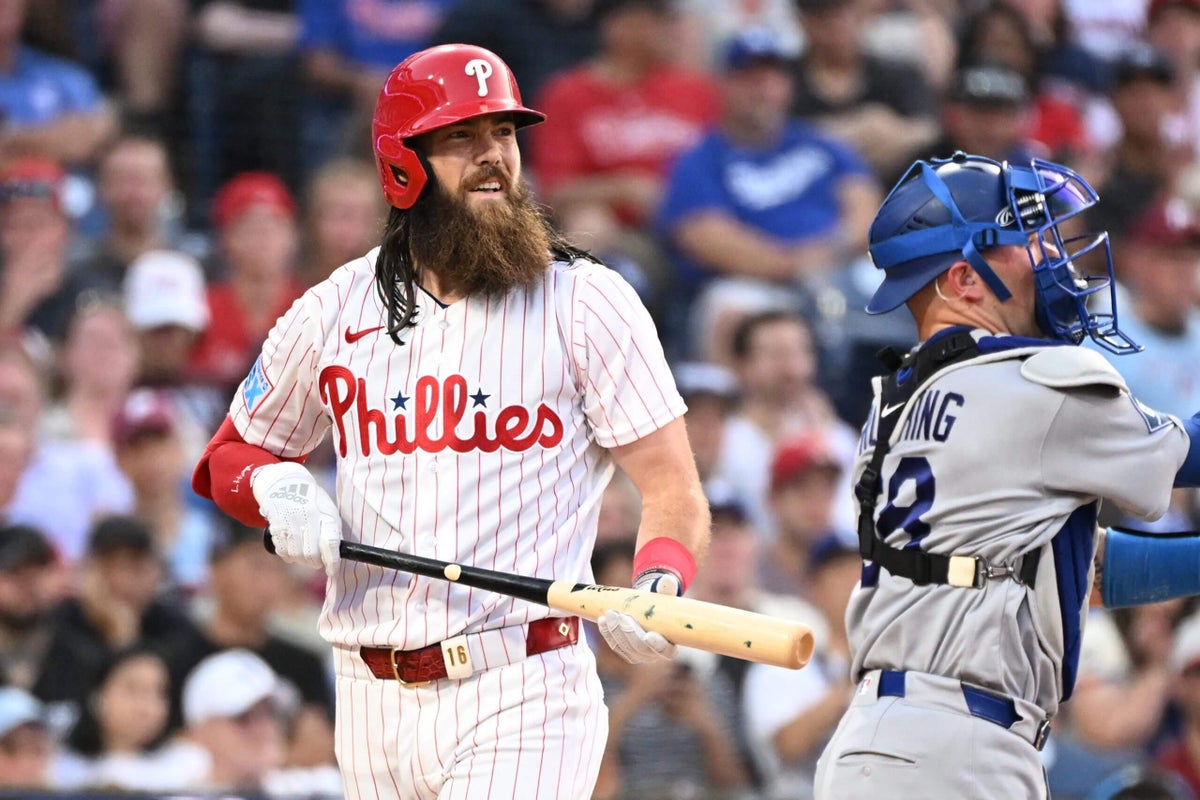
PHILADELPHIA — Before base-running blunders derailed any chance of a comeback Tuesday, Brandon Marsh stepped to the plate to face Los Angeles Dodgers lefty Tanner Scott in the ninth.Marsh batting against a lefty with two runners on and a one-run deficit in the final frame would have been unfathomable just a few months ago — the Philadelphia Phillies outfielder has only consistently played every day for the past few months and has struggled to hit lefties his whole career. And the club was working with six outfielders — as many true outfielders as the team has carried all season. Bryan De La Cruz, a right-handed outfielder called up Tuesday, could have pinch-hit.But Marsh’s season-long numbers against lefties, interim manager Don Mattingly felt, were good enough to allow him to hit Scott — a reliever who has held lefties to a .345 OPS and .163 batting average this season.“I thought about (pinch-hitting for him),” Mattingly said, “but Marsh has been our guy. And he hit the ball well off (Justin) Wrobleski earlier. (Andy Pages) catches it at the wall. It’s something we have to look at.”How Phillies’ Brandon Marsh is finally playing every day — and thriving.Charlotte VarnesMattingly permitting Marsh to hit might be forgotten in what unfolded after the outfielder’s grounder to third base: In a series of poor base-running decisions that led to a 2-1 loss, Justin Crawford got caught in a rundown after hesitating, and J.T. Realmuto was tagged out at second.It was a bizarre ending. The Dodgers capitalized when the Phillies displayed a “lack of judgment,” as Realmuto called his base-running tactic. It all feels so familiar.Ultimately, the decision to allow Marsh to hit — along with the decision to permit Derek Hill, a career .209/.263/.301 hitter against righties, to face righty Evan Phillips in the seventh inning — might not be the most memorable choice of the game. But how the Phillies deploy the platoon advantage will carry implications beyond Tuesday’s late innings.
How will Phillies use their outfield options ahead of the trade deadline?
The Phillies have several platoon options in the outfield. Will manager Don Mattingly use them?
909 words~4 min read